GO! Assistance has 50% off in October and, with our link, you get an extra 20%.
Pick origin, destination, dates and ages and see the price of your travel assistance in a minute.
Affiliate link: we earn a commission.
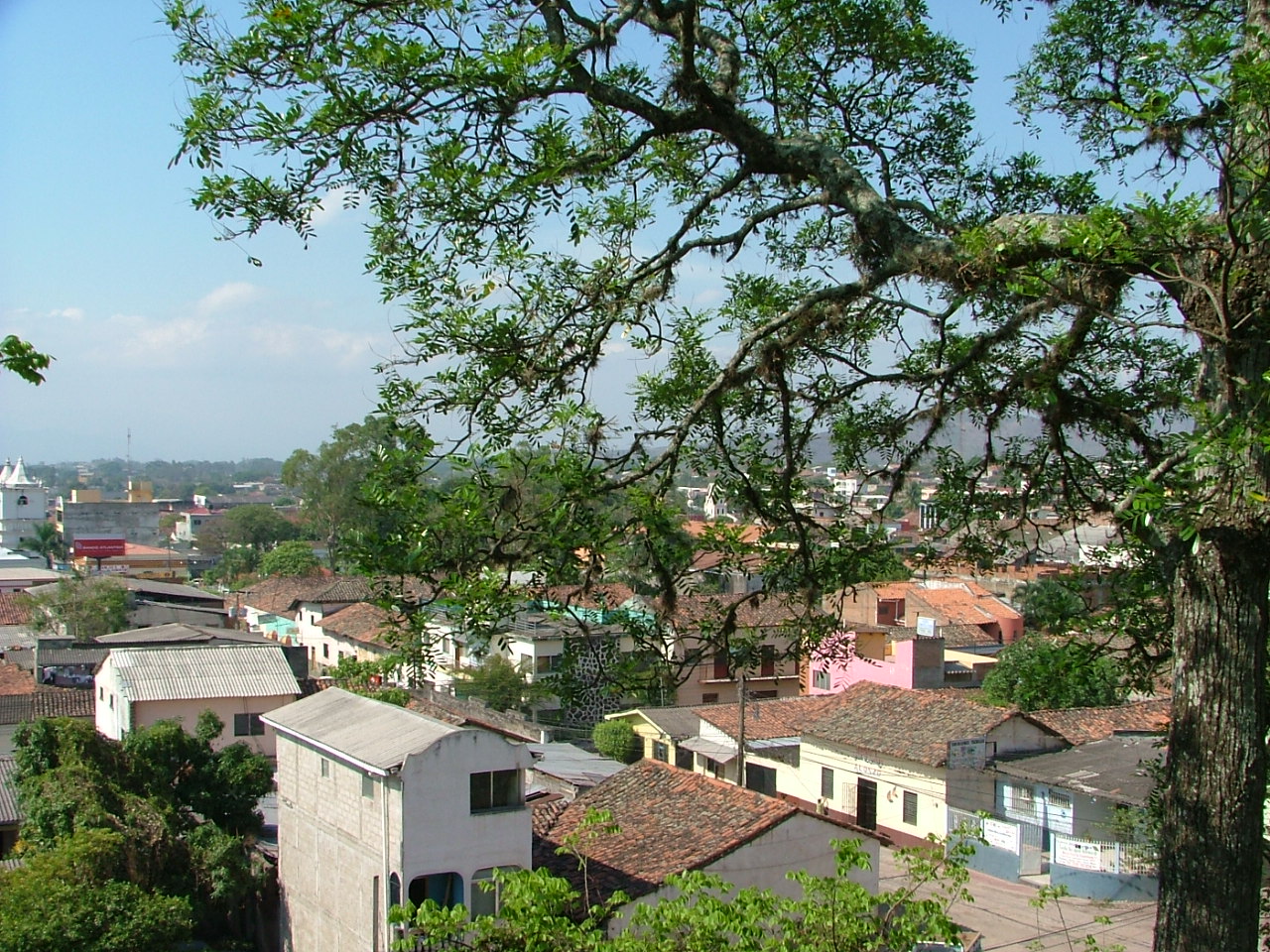
Juticalpa is the capital of the department of Olancho, the largest in Honduras, and the main urban, commercial and service center of the country's east. Settled in a valley among mountain ranges, in a region of strong cattle-ranching and farming tradition, it's a warm city with a relaxed pace, with its central park, its cathedral and the bustle of a town that supplies an entire rural district.
For the traveler, Juticalpa is above all a place to pass through and a logistics base: it's the obligatory stop on the route from Tegucigalpa toward Catacamas, the Talgua Caves, Sierra de Agalta National Park and, beyond, the roads to La Mosquitia. It concentrates banks, hospitals, hotels, restaurants and bus terminals, which makes it a good place to restock and organize the exploration of eastern Honduras.
This guide covers Juticalpa with a practical eye: what the city and its surroundings are like, what to see downtown and nearby, how to get around, where to sleep and eat, and how to get there from Tegucigalpa and connect with the rest of Olancho. More than a tourist destination in itself, Juticalpa is the gateway to the deep Olancho and its natural and archaeological attractions.
Juticalpa grew in colonial times as the seat of cattle-ranching Olancho, a region famous from early on for the gold in its rivers and, above all, for its cattle plains. Its name, of Nahuatl root, is usually linked to the abundance of jícaro or calabash trees in the area. Over time it consolidated as the departmental capital and commercial center of the country's east. The full story is on our history page.
Read the full history ↓The vast cattle-ranching east of Honduras: the largest department in the country, land of plains, cowboys and forests, with the Talgua Caves —the 'cemetery of the lights'— the Sierra de Agalta and a reputation for tough, independent people summed up in the motto 'Olancho, independent republic'.
Read the history of Olancho →They depart from Tegucigalpa, 124 km away. Affiliate link: we earn a commission.
Abroad, getting sick is more than a bad day. In many destinations public healthcare depends on appointments, queues and availability, and private care is paid upfront. An emergency can cost thousands of USD, right when you are far from home and on a tight budget. That is why I recommend you never leave without travel assistance.
I recommend GO! Assistance because it covers what matters: medical care, emergencies, medication and hospitalization depending on the plan. It protects you 24 hours a day, anywhere in the world, with real-time solutions on the ground. GO! 365 ECO and GO! 365 give you USD 45,000 of global coverage: the first with a USD 100 deductible, the second with none.
If you quote from Argentina, in October GO! also offers 12 interest-free instalments on all its products.
GO! Assistance has 50% off in October and, with our link, you get an extra 20%.
Pick origin, destination, dates and ages and see the price of your travel assistance in a minute.
I have never been left without internet on a trip. I land and my phone connects to the strongest network in the country I am visiting: I can let people know I arrived, sort out transport, book tours and keep posting content at a super affordable price (really cheap!). I always use the Maya Mobile eSIM, check out its plans by clicking the banner. See Maya Mobile plans →
Affiliate link: we earn a commission.
No exact prices: a scale from $ (budget) to $$$$$ (luxury), with 2-3 options per category.
Origins, formation and what the sources say.
The Spanish came to Olancho chasing the gold carried by rivers like the Guayape, and stayed for the cattle; less than an hour from today's Juticalpa, in the Talgua Caves, skulls more than 3,000 years old gleam under a coating of calcite. Few Honduran cities carry a past as dense —Indigenous, gold-bearing and cattle-ranching— as this capital of the country's largest and fiercest department. And it all begins with its name. The name Juticalpa is of Nahuatl root, the language of Mexican origin that left numerous place names in Honduras and Central America. The most widespread interpretation links it to the terms alluding to the jícaro or calabash tree (from the Nahuatl 'xicalli,' the vessel made from its fruit) and to a place or house, so the name is usually translated as something like 'place of jícaros' or 'place of calabashes,' in reference to the abundance of these trees in the area.
The presence of a Nahuatl place name reflects the influence of Mesoamerican languages in eastern Honduras, a region of contact between different Indigenous peoples. Before the arrival of the Spanish, the present-day department of Olancho was inhabited by groups of various cultural affiliations, among them the ancestors of the Pech (Payas) and Nahua-speaking populations, in an ethnic mosaic that left traces in the toponymy and in archaeological sites like the nearby Talgua Caves.
That Indigenous substratum is the first layer of the long history of Juticalpa and its district, upon which Spanish colonization and the cattle-ranching identity that defines Olancho would later be built.
Long before Juticalpa existed as a colonial town, the region of Olancho was inhabited by Indigenous groups whose most eloquent testimony is the Talgua Caves, near Catacamas, a short distance from the current departmental capital. There the remains known as 'the glowing skulls' were found, burials more than 3,000 years old covered in calcite that gives them a characteristic shine, evidence of complex societies that inhabited eastern Honduras in the Preclassic period.
These groups were part of a Central American cultural mosaic distinct from the Maya core of western Honduras: they are more closely related to traditions of southern Central America (the so-called 'intermediate area'), with ties toward Nicaragua, Costa Rica and Colombia, as well as contacts with Mesoamerica. They practiced farming, stonework and probably long-distance trade in goods, using the rivers and valleys of Olancho as natural corridors.
At the arrival of the Spanish in the 16th century, the territory of Olancho was populated by the ancestors of today's Pech (or Payas), an Indigenous people who still inhabit areas of eastern Honduras and La Mosquitia, along with other smaller groups. The resistance and subsequent subjugation of these populations marked the beginning of the colonial period in the region.
During the colonial era, Olancho was one of the interior regions of Honduras that most quickly attracted the Spanish, largely because of the gold in its rivers. The panning of gold in channels like the Guayape drove the first settlements and the arrival of population, though the gold wealth gradually ran out over time. It's said that the Guayape River itself became famous for its gold deposits, feeding legends about Olancho's wealth that circulated for centuries.
The region's lasting vocation turned out to be cattle ranching. The wide plains and grasslands of the Olancho valleys lent themselves to raising cattle, which became the basis of the economy and an identity trait that endures to this day. Juticalpa grew as one of the centers of this cattle-ranching Olancho, organized around its church and its plaza, following the model of Honduran colonial towns, and gained weight as the district seat throughout the 17th and 18th centuries.
The remoteness from the capital, the difficult roads and a rural society of ranchers, cowboys and farmers forged in Olancho a strong and independent personality, with a reputation as a fierce and proud land, that appears again and again in the history and imagination of Honduras. Juticalpa, as the regional capital, was witness to and protagonist of that history.
Like the rest of Honduras, Juticalpa lived through the process of independence from Spain in 1821 without major local military upheaval, but fully caught up in the political swings of 19th-century Central America: the brief annexation to Iturbide's Mexican Empire, the Central American Federation and the civil wars between liberals and conservatives that marked the region for decades.
Olancho, because of its distance from the capital and its frontier character toward La Mosquitia and Nicaragua, maintained its own profile within those disputes, with local strongmen and leaders who often acted with considerable autonomy from the central power. Cattle ranching remained the economic axis, and Juticalpa consolidated its role as a commercial hub where transactions in cattle, hides and other products of the Olancho countryside were concentrated.
Toward the end of the 19th century, with the more defined administrative organization of the Honduran state, Juticalpa was established as the seat of the department of Olancho, a status that reinforced its urban growth and its role as a service center for a vast rural region that stretched to the edges of La Mosquitia.
Over time, Juticalpa consolidated as the seat of the department of Olancho, the largest in Honduras. That status as departmental capital made it the main administrative, commercial and service center of the entire eastern region, a role it maintains to this day: Juticalpa concentrates the institutions, banks, hospitals, commerce and transport terminals that supply a vast rural district.
The city grew around its central park and its cathedral, and expanded along the highways connecting it with Tegucigalpa to the west and with Catacamas and the interior of Olancho to the east. Its economy remains tied to the countryside, especially to ranching and farming, as well as to the commerce that structures the life of the Olancho municipalities. The National University of Agriculture, based nearby in Catacamas, and other educational institutions have added an academic profile to the region's traditionally rural vocation.
In recent decades, Juticalpa has also gained importance as a transit point for nature and archaeology tourism in the east: it's a logistics base for visiting the Talgua Caves, Sierra de Agalta National Park and the routes toward the Río Plátano Reserve and La Mosquitia. It preserves, however, its character as a regional capital of deep Honduras, faithful to the ranching traditions and the tough spirit of Olancho that has shaped its identity since colonial times.