Affiliate link: we earn a commission.
📌Country
Atlántida Department (Honduras). La Ceiba is the most important city on the Honduran Caribbean coast and the country's third city, with hundreds of thousands of inhabitants. It sits on the shore of the Caribbean Sea, at the foot of the imposing Pico Bonito massif. It's known as 'the bride of Honduras' and as the country's party capital, thanks to its famous Feria de San Isidro (the Grand Carnival of La Ceiba) in May. It works as the great gateway to the Honduran Caribbean: from here you head to the Bay Islands, to Pico Bonito National Park, to Cuero y Salado and to Cayos Cochinos
📌Service city
La Ceiba itself is a full-fledged service city. It has Golosón International Airport (LCE), with domestic flights and connections to the islands; the ferry terminal at Muelle de Cabotaje, from where the catamarans to Roatán and Utila depart; a large bus terminal; hospitals, banks, ATMs, hotels, supermarkets and a varied dining and nightlife scene. It's the ideal base for exploring the Caribbean and the nature of northern Honduras, and an unavoidable stopover for almost every traveler in the region
📌Best time to go
La Ceiba has a warm, humid tropical climate. The relatively drier season runs from February to April and in September, with sunny days ideal for the beach, rafting and excursions; the rainy season is more marked between October and January, and the peak hurricane risk runs from August to November. The big moment of the year is May, with the Feria de San Isidro (the Carnival of La Ceiba), the most famous party on the coast, with parades, floats, live music and crowds: to experience the Carnival you have to book well in advance; to avoid the crowds, other dates are better
📌Suggested days
La Ceiba is often used as a base or a stopover, but it deserves time of its own. With 1 to 2 days you can see the city, its beaches, the Zona Viva district and the nightlife. With 3 to 5 days you can add the best of the region: a day of rafting or hiking in Pico Bonito National Park, a visit to the Cuero y Salado Wildlife Refuge (manatees and birds), an excursion to Cayos Cochinos, and use it as a springboard to Roatán or Utila. In May, add days for the Carnival
💱 HNL exchange rate
Loading rate…
La Ceiba is the great city of the Honduran Caribbean and, for almost every traveler crossing the north of the country, an unavoidable stopover. Nicknamed 'the bride of Honduras', it sits on the Caribbean coast at the foot of majestic Pico Bonito, the green massif that crowns it and gives its name to one of the most spectacular national parks in the country. But La Ceiba is much more than a stopover: it's the capital of the Honduran party, famous throughout Central America for its Feria de San Isidro, the Grand Carnival of La Ceiba, which every May fills the streets with floats, music, parades and overflowing joy.
Its great advantage is location: from here the ferries to the islands of Roatán and Utila depart, the excursions to the Cuero y Salado reserve and to Cayos Cochinos set out, and you can reach Pico Bonito National Park in minutes, a paradise of jungle, waterfalls, whitewater rivers and biodiversity. That combination of Caribbean city, beaches, spectacular nature and nightlife makes it a perfect base for exploring the Caribbean and the north coast of Honduras, as well as having a character of its own, warm and festive.
This guide covers La Ceiba with a practical and warm eye: what to see and do in the city and its beaches, how to make the most of its Zona Viva and its nightlife, how to organize the excursions to Pico Bonito, Cuero y Salado and Cayos Cochinos, how to catch a boat to the islands and how to get around the region. Whether you're passing through on your way to the insular Caribbean or staying to enjoy its nature and its parties, La Ceiba welcomes you with open arms and the rhythm of the Caribbean.
📖 History of La Ceiba
The La Ceiba region was inhabited in pre-Hispanic times by Indigenous peoples, among them the Pech and the Tolupan, and later by Garifuna communities that settled on the Caribbean coast after their arrival in the region in the late 18th century. The city as such is relatively young: it was founded in the mid-19th century (its founding is usually dated to around 1877) and owes its name, according to tradition, to a large ceiba tree that stood by the coast, in whose shade people gathered. La Ceiba's great boom came in the late 19th and early 20th centuries with the banana rush: the north coast of Honduras became one of the world's great centers of banana production, and companies like the Standard Fruit Company (later Dole) set up their operations in La Ceiba, building railways, docks and infrastructure. The city grew to the rhythm of the banana and became the main port and economic center of the Caribbean coast, with a mix of Hondurans, Garifuna, islanders and workers of different origins. Over time, as the weight of the banana declined, La Ceiba diversified its economy toward commerce, services and tourism, taking advantage of its position as the gateway to the Bay Islands and to the nature of Pico Bonito. Its Feria de San Isidro, in honor of the city's patron saint, established itself as the most famous carnival in Honduras. The full story is on our history page.
Read the full history ↓🏛️ La Ceiba is in Atlántida
The heart of the Caribbean coast and of the old 'banana republic': land of La Ceiba and Tela, of Standard Fruit and United Fruit, of a massive Carnival and a vibrant Garífuna culture, where the jungle of Pico Bonito descends to the sea amid national parks and reefs.
Read the history of Atlántida →🗺️ What to see
Tours you can book
Affiliate link: we earn a commission. Prices and availability come from Civitatis.
1
Pico Bonito National Park
One of the most spectacular parks in Honduras: jungle, waterfalls, whitewater rivers and biodiversity, just steps from the city.
Read more ↓
Pico Bonito National Park is the great natural jewel of the surroundings of La Ceiba and one of the most impressive parks in Honduras. It protects a huge mountain massif covered in humid tropical jungle and cloud forest, crowned by the peak that gives it its name, which rises over 2,400 meters and looms imposingly right behind the city. It's a sanctuary of biodiversity: home to hundreds of bird species, mammals like monkeys and cats, crystal-clear rivers, waterfalls and lush vegetation.
The park offers activities for every taste. The star, for adrenaline lovers, is the rafting (whitewater descent) down the Cangrejal River, which runs along the edge of the park among giant rocks and class III and IV rapids, on one of the best rivers for this activity in Central America. There are also trails of varying difficulty leading to waterfalls, viewpoints and pools of crystal-clear water where you can cool off, ideal for hiking and for watching birds and wildlife.
The Cangrejal River area, at the park entrance, is where the lodges, adventure operators and the visitor center are concentrated, and it's the base for rafting, canopy (zipline), hikes and tubing. It's best to hire certified guides and operators, bring clothes you don't mind getting wet, suitable footwear, repellent and sunscreen, and to check conditions by season (the river runs higher in the rainy season). How to get there: 20-30 min by car or taxi from downtown La Ceiba to the Cangrejal area. Best time to go: all year; rafting more intense in the rains (May-January).
ℹ️ Distance: 20-30 min from downtown (Cangrejal River area) · Best time to go: All year; rafting more intense in the rains (May-January) · Entry: L 100-150 per person (verified July 2026); adventure activities separate · Duration: Half a day to a full day
2
Cuero y Salado Wildlife Refuge
A reserve of mangroves, canals and lagoons where you can see manatees, monkeys, birds and caimans, touring by boat.
Read more ↓
The Cuero y Salado Wildlife Refuge, west of La Ceiba, is one of the most important wetlands on the Honduran Caribbean and a paradise for wildlife watching. It protects a system of mangroves, canals, lagoons and the mouths of the Cuero and Salado rivers, an extremely rich ecosystem that is a refuge for emblematic and threatened species. It's one of the few places where you can still try to see the Antillean manatee (Caribbean manatee), the docile aquatic mammal that gives the reserve its fame.
The classic visit begins with a picturesque ride on a small railway (the 'burra', a rail car left over from the banana era, powered by motor or sometimes by hand) that crosses plantations and vegetation from La Unión to the heart of the reserve. From there, you tour the canals and mangroves by boat, in silence, seeking to spot manatees, howler and white-faced monkeys, caimans, turtles, otters and a huge variety of aquatic and jungle birds.
Cuero y Salado is ideal for those who love wildlife watching and mangrove landscapes. It's best to go early (animals are more active in the early hours, the first trip leaves around 7:00), to book the visit with the rangers or authorized operators, and to bring binoculars, repellent, sunscreen, water and patience for the sightings. How to get there: by car or bus to La Unión (about 20 km, 1 h), then the 'burra' to the reserve (30 min). Best time to go: early morning, all year.
ℹ️ Distance: 30 km from La Ceiba (via La Unión) · Best time to go: Early morning, all year (wildlife more active) · Entry: Full tour from La Ceiba US$ 40-115 depending on operator; entry + burra + boat on-site only, from L 300-400 (verified July 2026) · Duration: Half a day (ideal departure 7:00 am)
3
Feria de San Isidro (Carnival of La Ceiba)
The most famous carnival in Honduras, every May, with floats, parades, music and a party that takes over the whole city.
Read more ↓
The Feria de San Isidro, popularly known as the Grand Carnival of La Ceiba, is the most famous party in Honduras and one of the great popular events in Central America. It's held every May, in honor of San Isidro Labrador, the city's patron saint, and over several weeks it transforms La Ceiba into an explosion of music, color and joy that draws hundreds of thousands of visitors from all over the country and abroad.
The high point is the great carnival parade, which runs down the main avenue (Avenida San Isidro) with spectacular floats, comparsas, costumed dancers, queens, folk groups and marching bands, in an atmosphere of total celebration. During the carnival, the streets fill with stages of live music (punta, reggaeton, Caribbean rhythms and bands), food and drink stalls, and the famous 'carnavalitos' of the different neighborhoods, which liven up the whole city day and night.
To experience the Carnival of La Ceiba you have to be ready for crowds, heat and lots of energy; it's best to book lodging well in advance (prices rise and everything fills up), watch your belongings among the crowds and simply let yourself be carried away by the joy. How to get there: the parade runs down Avenida San Isidro, downtown. Best time to go: May (the exact date of the grand parade varies each year, generally the third Saturday).
ℹ️ Distance: Avenida San Isidro, downtown · Best time to go: May (grand parade, generally the third Saturday) · Entry: Watching the parade from the street is free; grandstands and VIP areas L 200-800 depending on location (verified July 2026, confirm each edition) · Duration: Several days of festivities; main parade, one day
4
La Ceiba's beaches and the Caribbean coast
Urban and nearby beaches on the Caribbean Sea, with Pico Bonito as a backdrop and nearby Garifuna villages.
Read more ↓
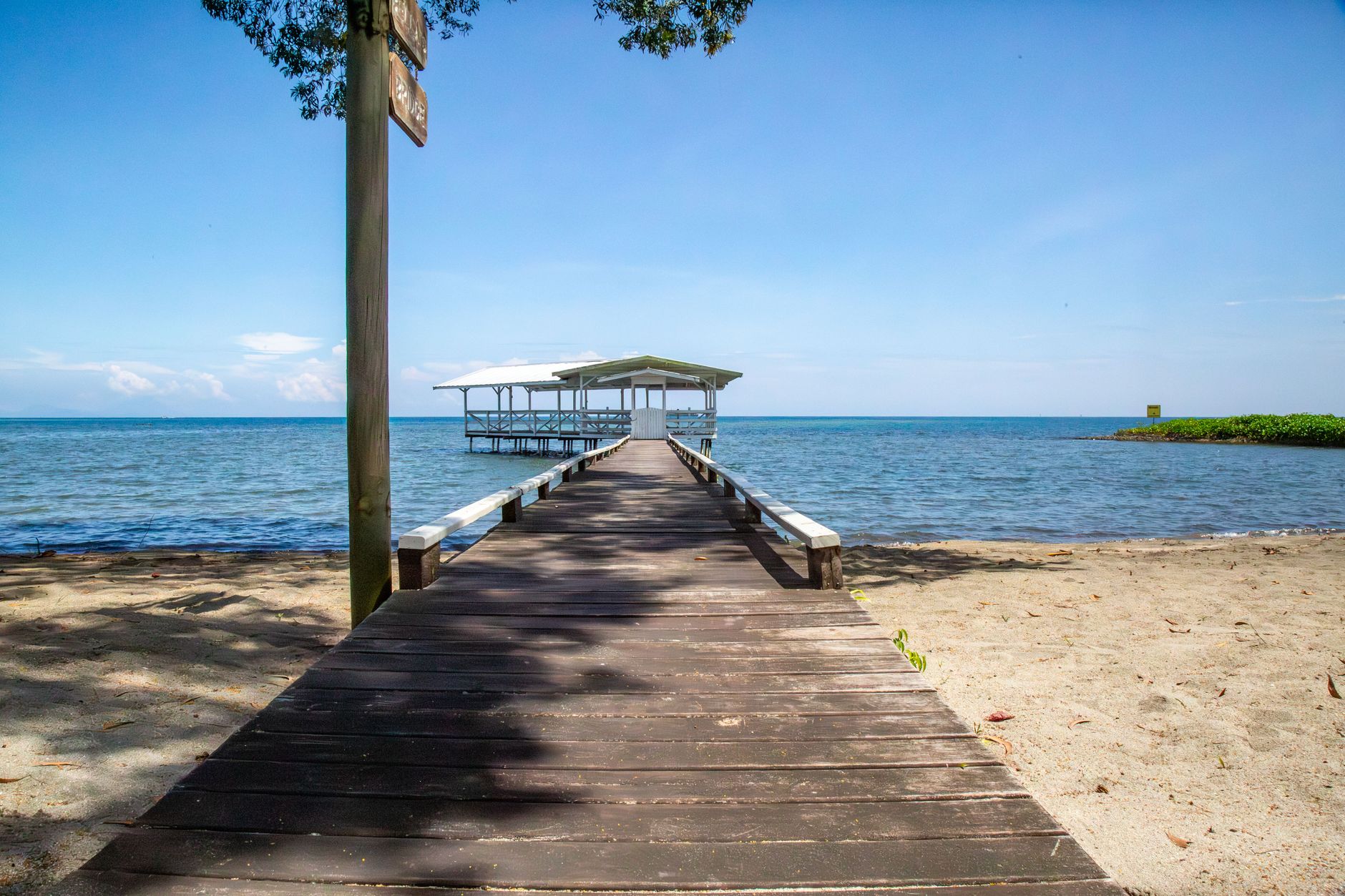
La Ceiba is bathed by the Caribbean Sea and has several beaches, both urban and in its surroundings, offering the classic landscape of sand, palm trees and imposing Pico Bonito as a backdrop. The city beaches, like the coastal area near downtown and the Muelle de Cabotaje, are frequented by locals, especially on weekends, and have a local atmosphere, with kiosks and diners where you can eat fried fish and have a drink by the sea.
Beyond the city, to the east and west, stretch quieter beaches and coastal villages, several of them Garifuna communities like Sambo Creek and Corozal, where you can experience this Afro-Caribbean culture, its music (punta, drums), its cuisine based on coconut and fish, and its way of life.
The combination of Caribbean Sea and green mountain right behind is one of the great charms of the La Ceiba coast. Bring sunscreen, water and small cash for the diners, and take the chance to try fresh fish and Garifuna dishes. How to get there: urban beaches on foot or by taxi from downtown; Sambo Creek about 20 min by car to the east. Best time to go: sunny days; weekends for more local atmosphere.
ℹ️ Distance: Urban beaches in the city; Sambo Creek and Corozal 20-30 min to the east · Best time to go: Sunny days; weekends for more local atmosphere · Entry: Access to public beaches free; diners separate L 80-250 per dish (verified July 2026) · Duration: Half a day
5
Zona Viva and nightlife
La Ceiba's party district, with bars, clubs and music, true to its reputation as the Caribbean's festive city.
Read more ↓
La Ceiba has a well-earned reputation as the most festive city in Honduras, and that energy is concentrated above all in its 'Zona Viva', the area of bars, clubs, restaurants and night spots by the coast, in the Barra district and its surroundings. When night falls, especially on weekends, the Zona Viva fills with music —from punta and Caribbean rhythms to reggaeton and electronic— and with people ready to have a good time, in a lively, easygoing atmosphere.
It's the place to go out for a drink, dance and live the local nightlife, with options for different tastes: quieter bars for a beer by the sea, restaurants for dinner of fish and seafood, and clubs for those who want to dance until late.
As with any night out, it's wise to use common sense: go and come back by taxi, don't flash valuables, watch your belongings and drink in moderation. How to get there: by taxi from anywhere in the city (recommended at night). Best time to go: weekend nights; the biggest scene during Carnival (May).
ℹ️ Distance: Barra district, coastal area · Best time to go: Weekend nights; the biggest scene during Carnival (May) · Entry: Bars free; cover up to L 100 at weekend clubs; national beer L 40-70, a drink L 100-200 (verified July 2026) · Duration: One night
6
A boat trip to the Cayos Cochinos marine reserve, with snorkeling, reef and the Garifuna community of Chachahuate.
Read more ↓
From La Ceiba (or from the Garifuna village of Sambo Creek) excursions set out to Cayos Cochinos, an archipelago of two larger islands and a dozen tiny cays, designated a protected area (Cayos Cochinos Archipelago Marine Natural Monument). It's one of the best-preserved corners of the Honduran Caribbean, with intact reefs that are part of the Mesoamerican Barrier Reef System, crystal-clear waters and an almost pristine setting, since access is regulated.
The typical full-day excursion (about 7 hours) includes the boat crossing from Sambo Creek, snorkeling over reefs in good condition, beach time at Cayo Bolaños and a visit to Chachahuate, a Garifuna community settled on a tiny cay, where you can experience their culture, buy crafts and have a lunch of fresh fish.
It's best to hire responsible operators who respect the protected-area rules (don't touch the coral, don't take anything, use reef-safe sunscreen), to prepare for a day at sea and to bring water, cash for Chachahuate, a hat and sun protection. How to get there: most tours include a transfer from your hotel in La Ceiba to Sambo Creek. Best time to go: dry season, calmer seas (February-April).
ℹ️ Distance: Departure from Sambo Creek (20-30 min from La Ceiba) · Best time to go: Dry season, calmer seas (February-April) · Entry: Full-day tour with hotel pickup US$ 35-45 per person; leaving directly from Sambo Creek L 1,000-1,200; includes protected-area fee (verified July 2026) · Duration: Full day (about 7 h)
🛡️ Getting sick far from home shouldn't cost you thousands of USD
Abroad, getting sick is more than a bad day. In many destinations public healthcare depends on appointments, queues and availability, and private care is paid upfront. An emergency can cost thousands of USD, right when you are far from home and on a tight budget. That is why I recommend you never leave without travel assistance.
I recommend GO! Assistance because it covers what matters: medical care, emergencies, medication and hospitalization depending on the plan. It protects you 24 hours a day, anywhere in the world, with real-time solutions on the ground. GO! 365 ECO and GO! 365 give you USD 45,000 of global coverage: the first with a USD 100 deductible, the second with none.
If you quote from Argentina, in October GO! also offers 12 interest-free instalments on all its products.
An emergency abroad can cost thousands of dollars. Travel with assistance.
GO! Assistance has 50% off in October and, with our link, you get an extra 20%.
Pick origin, destination, dates and ages and see the price of your travel assistance in a minute.
📶 Internet from the moment you land
I have never been left without internet on a trip. I land and my phone connects to the strongest network in the country I am visiting: I can let people know I arrived, sort out transport, book tours and keep posting content at a super affordable price (really cheap!). I always use the Maya Mobile eSIM, check out its plans by clicking the banner. See Maya Mobile plans →
Affiliate link: we earn a commission.


💵 Prices
Tickets
| Type | Price |
|---|
| Pico Bonito National Park (entry to the Cangrejal area) | L 100-150 per person approx. (verified July 2026; verify on visiting); adventure activities separate |
| Rafting on the Cangrejal River (half day, with gear and guide) | US$ 45-65 per person (verified July 2026) |
| Cuero y Salado Refuge (full tour from La Ceiba: transport + burra + boat + guide) | US$ 40-115 per person depending on operator (verified July 2026; verify on visiting) |
| Full-day excursion to Cayos Cochinos (with hotel pickup) | US$ 35-45 per person (verified July 2026); includes protected-area fee |
| La Ceiba's urban beaches | Free (open access) |
| Feria de San Isidro / Carnival (parade from the street) | Free on the public street; grandstands and VIP areas L 200-800 approx. (verified July 2026, verify each edition) |
| Ferry to Roatán (Galaxy Wave) | US$ 30-35 per trip, adult (verified July 2026) |
| Ferry to Utila (Utila Dream / Utila Princess) | US$ 20-22 (approx. L 400) per trip (verified July 2026) |
🔄 updated monthlyOfficial / reference values · double-check when buying
Activities and tours
| Activity | Price | Duration | Operator |
|---|
| Rafting (whitewater, class III-IV) on the Cangrejal River | US$ 45-65 per person, includes gear and a bilingual guide | Half a day (1.5-2 h of navigation) | Pico Bonito/Cangrejal adventure operators: La Moskitia Ecoaventuras, Cangrejal Tours and others |
| Hiking and waterfalls in Pico Bonito | US$ 20-40 per person with a guide (half day); park entry separate | Half a day to a full day | Park guides and lodges (verify availability) |
| Canopy (zipline) and tubing on the Cangrejal | US$ 25-40 per person depending on the circuit | 2-3 h | Adventure parks in the Cangrejal area |
| Guided visit to Cuero y Salado (manatees and birds) | US$ 40-115 per person (full tour from La Ceiba, depending on operator) | Half a day (early departure, ideal 7:00 am) | Rangers and authorized operators: La Moskitia Ecoaventuras, Reservaciones La Ceiba |
| Full-day excursion to Cayos Cochinos | US$ 35-45 per person with hotel pickup; L 1,000-1,200 leaving from Sambo Creek | Full day (about 7 h) | Tourist Options, Cayos Tours and other agencies in Sambo Creek/La Ceiba |
| Visit to a Garifuna village (Sambo Creek and others) | Free to wander the village; food and cultural activities separate, L 100-300 | Half a day | Cultural tours and local guides |
| Night out in the Zona Viva | Cover L 0-100; beer L 40-70; a drink L 100-200 | One night | The city's bars and clubs |
🔄 updated monthlyOfficial / reference values · double-check when buying
🚌 How to get there and distances
Getting around
Taxi (shared and private)
PriceShared around L 25 per person; private L 80-150 per short trip (verified July 2026); agree before getting in
NotesThe most practical way to get around the city. There are colectivos (fixed shared route, cheaper) and private ones. The shared taxi rose nationally to about L 25 per passenger in April 2026 (source: IHTT / Infobae). You pay in cash, in lempiras, to the driver; there's no card or payment app. Recommended at night instead of walking
NotesCommon for short trips within the city and the neighborhoods. Cheap; you pay in cash, agree the fare beforehand
NotesBuses and minibuses ('rapiditos') that cross the city and connect with nearby villages like Sambo Creek. You pay in cash to the driver or the assistant; there's no rechargeable card, QR or fare-payment app in Honduras. The city-bus fare stayed stable in 2026 after the transport subsidy agreement (source: La Tribuna, May 2026)
NotesTo locate and plan, people use Google Maps; Moovit has its best coverage in Tegucigalpa and San Pedro Sula and only partial in La Ceiba, so it's best to confirm routes with locals. There's no official real-time app for the local rapiditos (verified July 2026)
Intercity buses (terminal)
PriceDepending on destination (see the llegarCiudad table); paid in cash or at the ticket office
NotesFrom the terminal (La Ceiba opened in 2026 a new intercity terminal in a piloting phase to organize the flow of passengers) buses leave for San Pedro Sula, Tegucigalpa, Trujillo, Tela and other destinations. There are direct first-class services (Hedman Alas) and budget ones (Diana, Catisa). Source: La Prensa, verified July 2026
Ferry to the Bay Islands (Muelle de Cabotaje)
PriceRoatán (Galaxy Wave) US$ 30-35; Utila (Utila Dream/Princess) US$ 20-22 (verified July 2026)
NotesThe catamarans leave from Muelle de Cabotaje. The main gateway to the islands; the ticket is bought at the ticket office or the official website (Roatán Ferry / Dream Ferries), by cash or card. Book in advance in high season
🔄 updated monthlyOfficial / reference values · double-check when buying
How to get there
| Route | Airlines / operators | Avg. price | Duration |
|---|
| Flight to La Ceiba (Golosón Airport, LCE) from Tegucigalpa or San Pedro Sula | Aerolíneas Sosa, CM Airlines | US$ 80-180 one way (verified July 2026, depending on how far ahead you book) | 45 min to 1 h flight |
| Bus from San Pedro Sula | Hedman Alas (first class), Diana Express, Catisa | US$ 15-22 (Hedman Alas, direct service); L 200-280 (Diana, budget) (verified July 2026) | About 3 to 4 h |
| Bus from Tegucigalpa | Hedman Alas, Cotraibal and other national lines | About US$ 20-28 (verified July 2026) | About 6 to 7 h |
| Bus from Tela or Trujillo (coast) | Intercity coastal buses (Diana, Cotuc) | About L 80-150 depending on the leg (verified July 2026) | Tela ~1.5 h; Trujillo ~3 h approx. |
| Ferry from Roatán or Utila (arrival in La Ceiba) | Galaxy Wave (Roatán); Utila Dream / Utila Princess (Utila) | US$ 30-35 from Roatán; US$ 20-22 from Utila | 1 to 2 h depending on the island |
🔄 updated monthlyOfficial / reference values · double-check when buying
🏨 Where to stay
No exact prices: a scale from $ (budget) to $$$$$ (luxury), with 2-3 options per category.
Hostels and budget options
Recommended optionsHostels and budget hotels in the city, with dorms or simple rooms: US$ 20-35 a night (verified July 2026). Very popular with backpackers heading to the islands or to Pico Bonito
Mid-range hotels in the city and Zona Viva
Recommended optionsA wide range of mid-range hotels downtown and near the Zona Viva and the coast, with AC and wifi: US$ 40-75 a night (verified July 2026). Comfortable for using La Ceiba as a base for excursions and for catching the ferry to the islands
Higher-end hotels in the city
Recommended optionsHotels like Quinta Real and similar, with pool, restaurant and better services: US$ 80-150 a night (verified July 2026)
Eco-lodges in the Cangrejal River / Pico Bonito area
Recommended optionsLodges like Omega Tours Eco-Jungle Lodge, Villas Pico Bonito and Casa Cangrejal B&B, deep in nature at the park's doorstep, ideal for rafting and hiking: US$ 60-160 a night (verified July 2026)
🍴 Where to eat
Typical Honduran food (baleadas, plato típico)
Options / signature dishBaleadas, plato típico (meat, beans, rice, plantain, cheese), chicken and home cooking at diners and stalls: L 60-150 per dish (verified July 2026)
Seafood and fresh Caribbean fish
Options / signature dishRestaurants and diners by the sea and in the city with fried fish, shrimp, conch and coconut seafood soup: L 200-450 per dish (verified July 2026)
Garifuna cuisine (coconut, fish, cassava)
Options / signature dishGarifuna dishes like tapado (a fish and seafood stew with coconut and plantain), casabe and coconut fish, at diners in the city and Sambo Creek: L 180-400 per dish (verified July 2026)
Zona Viva restaurants and bars
Options / signature dishRestaurants and bars with international and Caribbean cooking, and to go with a night out: L 200-500 per main course (verified July 2026)
📖 History of La Ceiba
Origins, formation and what the sources say.
Indigenous peoples and Garifuna of the Caribbean coast
Legend has it that it all began in the shade of a tree: a giant ceiba, sacred to Mesoamerican cultures, that grew by the sea and under which people gathered. Hence the name of the city that a century and a half later would be 'the bride of Honduras', capital of the country's most famous carnival and gateway to the insular Caribbean. But long before that famous ceiba existed, the Caribbean coast of Honduras where the city now stands was inhabited in pre-Hispanic times by Indigenous peoples. Among them were the Pech (also called Payas) and the Tolupan (or Jicaque), groups that lived from hunting, fishing, gathering and farming in the mountainous and coastal region of today's Atlántida department. These peoples kept a close contact with the lush nature of the area, dominated by the jungle of the massif that would later be called Pico Bonito.
In the late 18th century, a new people joined the coast's cultural mosaic: the Garifuna. After their deportation to the island of Roatán in 1797, this Afro-Caribbean people —born on St. Vincent from the mixing of Africans and Carib Indigenous people— spread along the Central American Caribbean shore, founding communities all along the coast of Honduras, including the La Ceiba region. Even today, numerous Garifuna villages dot the coast near the city, keeping alive their language, their music, their cuisine based on coconut and fish, and their traditions.
This meeting of peoples —Indigenous natives, Afro-Caribbean Garifuna and, later, mestizos from the country's interior— shaped the rich cultural identity of the Honduran north coast. La Ceiba, which would be born as a city only in the 19th century, would inherit that diversity and combine it with the new waves of population that the banana boom would bring.
The Indigenous peoples of Atlántida
The sources associate the pre-Hispanic population of the La Ceiba region (Atlántida department) with peoples like the Pech and the Tolupan. The Garifuna presence on the coast dates from the late 18th century, after their arrival in the region in 1797.
Source: https://es.wikipedia.org/wiki/Atl%C3%A1ntida_(departamento)
The founding of the city and the ceiba tree (19th century)
La Ceiba is a relatively young city compared with other Honduran urban centers. Its founding is usually dated to around 1877, in the second half of the 19th century, when a small settlement of fishermen and farmers began to grow by the Caribbean coast, at the foot of the Pico Bonito massif. Until then, the area was sparsely populated, dominated by the jungle and the coastal wetlands.
The city's name has an endearing origin tied to nature. According to tradition, it owes its name to a large ceiba tree (the ceiba is a majestic tree sacred to many Mesoamerican cultures) that stood by the coast, near the mouth of a river. In the shade of that imposing ceiba people gathered, and the place came to be known as 'La Ceiba', a name it kept as it grew into a town and then a city.
In its first decades, La Ceiba was a modest coastal town, but its strategic location on the Caribbean, in an area of fertile land with access to the sea, placed it in a privileged position for what was to come. In the late 19th century, a new and powerful economic engine would completely transform the small city's fate: the banana.
The origin of the name 'La Ceiba'
Tradition holds that the city owes its name to a large ceiba tree that grew by the coast, in whose shade people gathered. The city's founding is usually dated to around 1877, though the dates may vary slightly among sources.
Source: https://es.wikipedia.org/wiki/La_Ceiba
The banana boom: Standard Fruit and the great growth (late 19th - 20th century)
The event that transformed La Ceiba from a modest town into one of the main cities of Honduras was the banana boom, which erupted in the late 19th century and continued through much of the 20th. The north coast of Honduras, with its warm, humid climate and its fertile land, proved ideal for growing bananas, a fruit that in those decades became a product in enormous demand in the markets of the United States and Europe.
Large American fruit companies set up in the region to exploit this business. In La Ceiba, the protagonist was the Standard Fruit Company (later Dole), which established there major operations, plantations and its infrastructure: railways to transport the bananas, docks to ship them, industrial facilities and services. The city grew dizzyingly to the rhythm of the fruit, becoming the main port and economic center of the Honduran Caribbean coast, and drawing workers from all over the country and abroad.
This period left a deep mark on La Ceiba: it shaped its urban layout, its economy, its demographics (with a mix of Hondurans, Garifuna, islanders and migrants) and even its cosmopolitan, festive character. The power of the banana companies in Honduras was so great that the country came to be known as a 'banana republic', a term that reflected the enormous influence of these firms in national politics and economics. The 'banana fever' was, for better and for worse, the engine that made La Ceiba great.
The Standard Fruit Company and La Ceiba
The sources agree that the growth of La Ceiba was tied to the banana boom of the late 19th and early 20th centuries, with the Standard Fruit Company (later Dole) as the protagonist, which set up operations, railways and docks, making the city the main banana port of the Honduran Caribbean.
Source: https://es.wikipedia.org/wiki/Standard_Fruit_Company
From banana port to capital of tourism and celebration
As the 20th century wore on, the weight of the banana in La Ceiba's economy gradually declined, hit by pests, market changes, the reorganization of the companies and the country's productive diversification. The city, which had been born and grown to the rhythm of the fruit, had to reinvent itself and steer its economy toward new directions: commerce, services, light industry and, increasingly, tourism.
La Ceiba discovered that its greatest asset was its location. On one hand, it's the natural gateway to the Bay Islands (Roatán, Utila and Guanaja), with its ferries and flights to the country's most famous diving destinations. On the other, it's surrounded by extraordinary nature: Pico Bonito National Park, with its jungle, its waterfalls and the rafting of the Cangrejal River; the Cuero y Salado Refuge, with its manatees and birds; and Cayos Cochinos. That combination made it a key tourist base on the north coast.
But if La Ceiba is famous across the country for anything, it's for its festive character. Its Feria de San Isidro, in honor of the city's patron saint, is held every May and over time became the Grand Carnival of La Ceiba, the most famous carnival in Honduras, with its parades of floats, comparsas, music and crowds. That reputation as a joyful city, together with its vibrant nightlife, earned it nicknames like 'the bride of Honduras'. Today La Ceiba combines its banana heritage, its Caribbean and Garifuna cultural diversity, its spectacular nature and its party spirit into one of the cities with the most personality in the country.
Whoever walks through La Ceiba today treads, without realizing it, on the layers of that history: the old lines of the banana railway, the docks from which the fruit went out to the world, the Garifuna neighborhoods that arrived from St. Vincent and Roatán, and an avenue —San Isidro— that every May becomes the stage of the Grand Carnival. Understanding where the city comes from helps you read it better: it's not just a stopover on the way to Roatán and Utila, but the cultural and festive heart of the Honduran Caribbean, a place where the banana past and the tourism present coexist at the foot of Pico Bonito.
The Carnival of La Ceiba
La Ceiba's Feria de San Isidro, held every May in honor of the city's patron saint, established itself as the most famous carnival in Honduras, with its great parade of floats and comparsas. It's a symbol of the city's festive identity and an important tourist attraction.
Source: https://es.wikipedia.org/wiki/La_Ceiba
❓ Frequently asked questions
Is it worth staying in La Ceiba or is it just a stopover?+
Although many use it only as a stopover on the way to the islands, La Ceiba deserves time of its own. It's the gateway to the nature of Pico Bonito (rafting, waterfalls, hiking), to the Cuero y Salado refuge (manatees and birds) and to Cayos Cochinos, it has beaches, a vibrant nightlife and, in May, the country's most famous carnival. Giving it 2 to 4 days lets you enjoy much more than just the ferry.
How do I get from La Ceiba to Roatán or Utila and how much does it cost?+
By ferry, from Muelle de Cabotaje. The Galaxy Wave catamaran goes to Roatán (about US$ 30-35, 1.5 to 2 hours) and the Utila Dream/Utila Princess goes to Utila (about US$ 20-22, roughly 1 hour). There are also short flights from Golosón airport to the islands (US$ 80-180). It's wise to book in advance in high season.
How much does rafting on the Cangrejal River cost?+
A half-day tour with gear and a bilingual guide costs between US$ 45 and 65 per person (verified July 2026), depending on the operator and whether it includes hotel transfer. The river has class III and IV rapids, highly recommended within Pico Bonito National Park.
What is the Carnival of La Ceiba and when is it?+
It's the Feria de San Isidro, the most famous party in Honduras, held every May in honor of the city's patron saint. Over several weeks there's music, events and 'carnavalitos' around the neighborhoods, and the high point is the great parade of floats and comparsas down Avenida San Isidro (free from the street). If you go in May, book lodging well in advance.
What do I do if I love nature?+
La Ceiba is a paradise for that. Just steps from the city is Pico Bonito National Park, with rafting on the Cangrejal River, trails to waterfalls, canopy and birdwatching. Nearby is the Cuero y Salado refuge, with manatees, monkeys and birds among the mangroves (tour from US$ 40). And from here excursions set out to Cayos Cochinos (from US$ 35). It's one of the best nature bases in the whole country.
Is La Ceiba safe?+
Like any large city, it has better and worse areas. The tourist areas, the Pico Bonito lodges and the organized excursions are enjoyed normally by taking basic precautions: move around by taxi at night, don't flash valuables, watch your belongings (especially during the Carnival and in the Zona Viva) and ask locally which areas are best avoided.
What typical food should I try?+
Garifuna cuisine is the most characteristic: tapado (a fish and seafood stew with coconut milk, plantain and cassava), coconut fish, casabe. Plus fresh Caribbean fish and seafood, and Honduran classics like baleadas and plato típico. Eating fish by the sea is one of the city's great pleasures.
How do I get around La Ceiba and how do you pay for transport?+
Within the city, the most practical options are taxis (fixed-route colectivos at about L 25 per person, or private ones at L 80-150 per short trip), mototaxis (L 20-40) and city buses and 'rapiditos' (L 8-15), which also connect with Sambo Creek. Everything is paid in cash, in lempiras, directly to the driver or the assistant: in La Ceiba (and in Honduras in general) there's no rechargeable card, QR or fare-payment app. The shared taxi rose to about L 25 nationally in April 2026, while the city bus kept its fare thanks to the state subsidy. To get your bearings Google Maps is best; Moovit has better coverage in Tegucigalpa and San Pedro Sula. At night, get around by taxi (verified July 2026).
Sources consulted (22)
- Wikipedia (ES) — «La Ceiba»: https://es.wikipedia.org/wiki/La_Ceiba
- Wikipedia (EN) — «La Ceiba»: https://en.wikipedia.org/wiki/La_Ceiba
- Wikipedia (ES) — «Departamento de Atlántida»: https://es.wikipedia.org/wiki/Atl%C3%A1ntida_(departamento)
- Wikipedia (ES) — «Standard Fruit Company»: https://es.wikipedia.org/wiki/Standard_Fruit_Company
- Wikipedia (ES) — «Parque nacional Pico Bonito»: https://es.wikipedia.org/wiki/Parque_nacional_Pico_Bonito
- Wikipedia (ES) — «Refugio de Vida Silvestre Cuero y Salado»: https://es.wikipedia.org/wiki/Refugio_de_Vida_Silvestre_Cuero_y_Salado
- Wikipedia (ES) — «Cayos Cochinos»: https://es.wikipedia.org/wiki/Cayos_Cochinos
- Instituto Hondureño de Turismo — Honduras Travel: https://honduras.travel/
- Roatán Ferry (Galaxy Wave, official, schedules and fares): https://www.roatanferry.com/schedule-fares/
- Honduras Ferry / Dream Ferries — horarios y precios: https://hondurasferry.com/horarios-y-precios/
- Wikipedia (EN) — «Golosón International Airport»: https://en.wikipedia.org/wiki/Golos%C3%B3n_International_Airport
- Civitatis — Rafting en el río Cangrejal: https://www.civitatis.com/en/la-ceiba/rafting-cangrejal-river/
- Reservaciones La Ceiba — Tour Cuero y Salado: https://www.reservacioneslaceiba.com/tour/tour-cuero-y-salado/
- Civitatis — Tour Cayos Cochinos: https://www.civitatis.com/en/la-ceiba/cayos-cochinos-tour/
- Infobae — «Ajuste al taxi colectivo en Honduras: pasaje sube a L 25 (abril 2026)»: https://www.infobae.com/honduras/2026/04/21/ajuste-al-taxi-colectivo-en-honduras-pasaje-sube-l5-019-usd-a-partir-del-proximo-lunes-27-de-abril/
- La Tribuna — «Transporte urbano mantendrá precios» (mayo 2026): https://www.latribuna.hn/2026/05/07/transporte-urbano-mantendra-precios/
- La Prensa — «Comienza el pilotaje en la nueva terminal de autobuses de La Ceiba» (2026): https://www.laprensa.hn/honduras/honduras-laceiba-terminal-autobuses-transporte-pasajeros-PL28679006
- Tripadvisor — Hoteles en La Ceiba: https://www.tripadvisor.com/Hotels-g292023-La_Ceiba_Atlantida_Department-Hotels.html
- Booking.com — Alojamiento en La Ceiba: https://www.booking.com/placestostay/city/hn/la-ceiba.html
- Honduras Travel (IHT) — gastronomía y destinos: https://honduras.travel/
- Wikipedia (ES) — «Gastronomía de Honduras»: https://es.wikipedia.org/wiki/Gastronom%C3%ADa_de_Honduras
- Wikipedia (EN) — «Garifuna»: https://en.wikipedia.org/wiki/Garifuna