📌Department
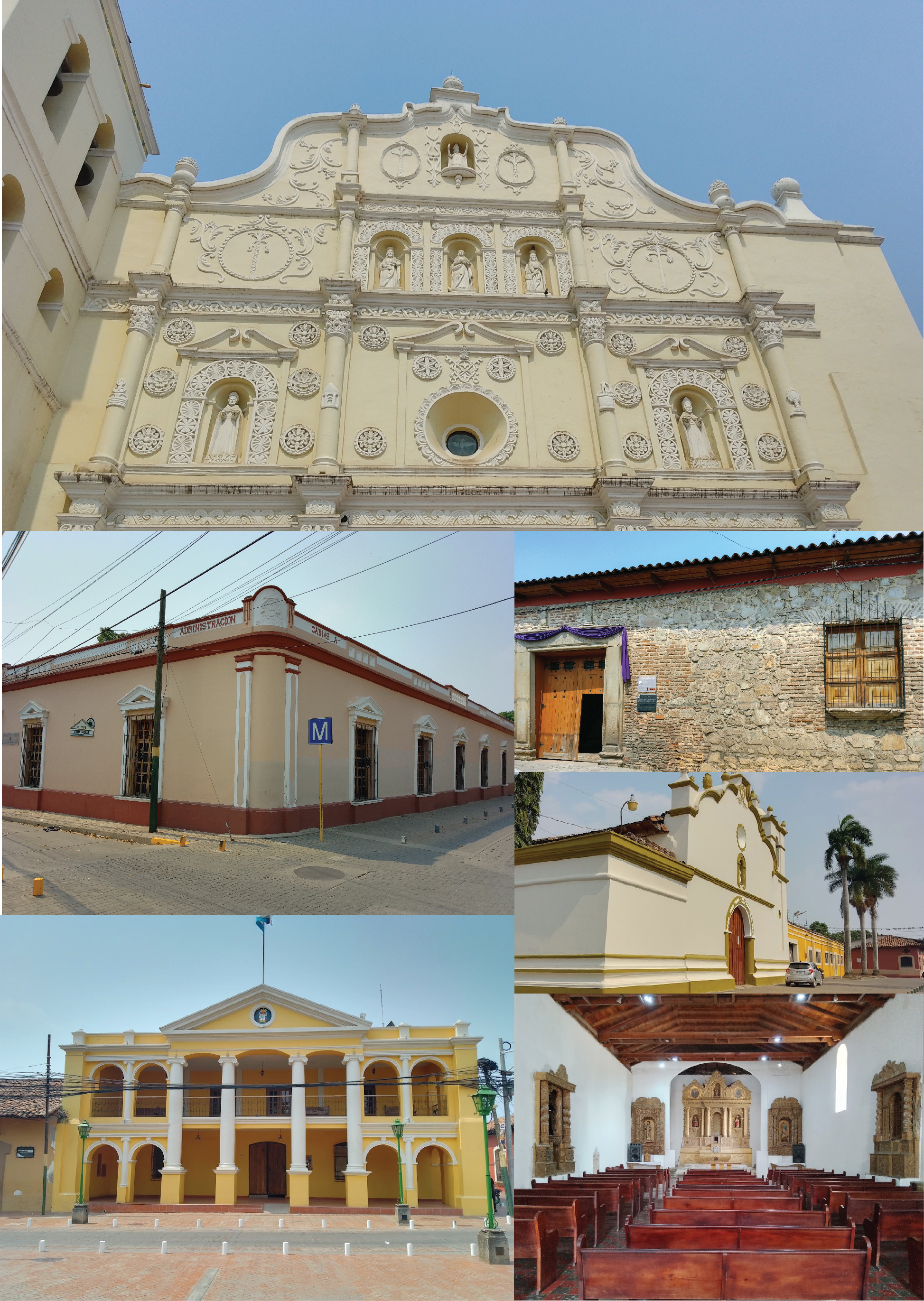
Comayagua (Honduras), of which it is the capital, in the central region of the country. Comayagua is one of the most important and best-preserved colonial cities in Honduras, and was the country's capital for centuries. Its most famous treasure is the Comayagua Cathedral, which houses one of the oldest clocks in the world still working, brought from Spain. It has a magnificent colonial historic center, centuries-old churches and museums. It's on the highway linking Tegucigalpa with San Pedro Sula, next to the new Palmerola international airport, which makes it very accessible
📌Service city
Comayagua is a service city, with hotels, restaurants, cafés, banks and commerce, increasingly oriented toward cultural tourism. It's very well located: on the main highway (CA-5) between Tegucigalpa (about 1.5 h) and San Pedro Sula, and steps from Palmerola International Airport (Comayagua, XPL), the new airport that has taken on much of the capital's traffic. This makes it a comfortable and accessible stop. Temperate climate, somewhat cooler than the lowlands
📌Best time to go
Comayagua is in a valley in the central region, with a temperate and pleasant climate. The dry season (November to April) is ideal for touring its historic center, with sunny days. The rainy season (May to October) brings greenery and afternoon showers. An especially notable moment to visit is Holy Week, when the city fills with the famous colored sawdust carpets that cover the streets for the processions, one of the most beautiful and traditional celebrations in Honduras
📌Suggested days
With 1 day you can see the essentials of Comayagua's colonial historic center: the Cathedral with its ancient clock, the Central Plaza, the historic churches and a museum or two. With 2 days you can tour it all at leisure, delve into its churches and museums, and enjoy the colonial atmosphere. It's an ideal destination for a one- or two-day cultural getaway from Tegucigalpa or as a stop on the route toward San Pedro Sula and the Caribbean, especially appealing during Holy Week for its sawdust carpets
💱 Cambio de USD
Loading rate…
🌤️ Clima en Comayagua
Loading weather…
Comayagua is, without a doubt, one of the colonial jewels of Honduras and an essential destination for anyone who loves history and heritage. This beautiful city in the central region was, for centuries, the country's capital, and it preserves one of the richest and best-preserved colonial historic centers in Honduras: cobbled streets, tiled houses, stately squares and centuries-old churches that speak of its splendid past. Walking through Comayagua is stepping back to the era when it was the political and religious heart of the province.
Its most famous treasure is the majestic Comayagua Cathedral, which keeps in its tower a true marvel: one of the oldest clocks in the world still working, a piece with more than six centuries of history, brought from Spain, that still marks the hours in the very heart of Honduras. But the city offers much more: several colonial churches of great value, museums that safeguard religious art and history, charming squares and a serene, heritage atmosphere. And during Holy Week, its streets are transformed with the famous colored sawdust carpets, in one of the most beautiful traditions in the country.
This guide covers Comayagua with a practical and warm eye: what to see of its exceptional colonial heritage (the Cathedral and its ancient clock, the churches, the museums), how to enjoy its historic center and its traditions, and how to get there and get around. Very well located on the highway between Tegucigalpa and San Pedro Sula, and next to the new Palmerola airport, Comayagua is at once an ideal cultural getaway and a convenient stop. For the traveler seeking historic, colonial Honduras, this former capital is a memorable visit.
📖 History of Comayagua
The Comayagua region was inhabited in pre-Hispanic times by Indigenous peoples, mainly Lenca. The city was founded by the Spanish in 1537 (its founding is attributed to Alonso de Cáceres, by order of governor Francisco de Montejo), with the name of Santa María de Comayagua or Villa de Santa María de la Nueva Valladolid de Comayagua. For its central position in the territory, Comayagua gained great importance during the colony: it became the capital of the province of Honduras and the seat of the bishopric (its cathedral was the religious center of the region), a role of political and ecclesiastical primacy it held for centuries. After Central America's independence in 1821 and throughout the 19th century, Comayagua continued to be the capital of Honduras, alternating that role with the thriving Tegucigalpa amid the political disputes of the time, until in 1880, under President Marco Aurelio Soto, the capital moved definitively to Tegucigalpa. Although it lost capital status, Comayagua preserved its extraordinary colonial heritage, the fruit of those centuries of splendor: its cathedral with the famous ancient clock (brought from Spain, one of the oldest working clock pieces in the world), its numerous churches and its historic center. In recent decades, the city has restored and showcased that heritage, establishing itself as one of the main cultural-tourism destinations in Honduras. The full story is on our history page.
Read the full history →🏛️ Comayagua is in Comayagua
The old colonial capital of Honduras: an intact historic center, a 17th-century cathedral with one of the oldest clocks in the Americas, celebrated sawdust carpets during Holy Week, the geographic heart of the country and site of the new Palmerola International Airport.
Read the history of Comayagua →
🗺️ What to see
1
Comayagua Cathedral and the oldest clock
The majestic colonial cathedral that houses one of the oldest clocks in the world still working.
The Comayagua Cathedral, dedicated to the Immaculate Conception, is the city's most important and emblematic monument and one of the great treasures of Honduras's colonial heritage. This majestic church, built during the colonial period (completed in the 18th century), presides over the Central Plaza with its imposing baroque façade and houses inside valuable gilded retables, religious art and an atmosphere of solemnity befitting a cathedral that was the center of the province's bishopric.
But what makes the cathedral truly famous is the treasure it keeps in its tower: the Comayagua Clock, considered one of the oldest mechanical clocks in the world still working. This extraordinary piece of clockwork, more than six centuries old (its origins go back to the Middle Ages, in Arab Spain), was brought from Spain and donated to Comayagua in colonial times. That a clock of such antiquity still marks the hours atop a cathedral in the heart of Honduras is something astonishing and unique.
Visiting the cathedral, contemplating its architecture and its art, and learning the story of the ancient clock (it's sometimes possible to see the mechanism from the tower, depending on conditions) is the central experience of Comayagua. It's best to combine it with a tour of the Central Plaza and the historic center. It's an unmissable visit that connects Comayagua with centuries of history, from medieval Spain to colonial Honduras. It's best to check visiting and Mass hours, and to respect the religious character of the church.
ℹ️ Distance: On the Central Plaza of Comayagua; on foot · Best time to go: During the day; outside Mass hours to tour it; any day · Entry: Free (open access to the church; a voluntary donation is appreciated). 2025; verify on visiting · Duration: 1 hour
2
Colonial historic center and Central Plaza
One of the best-preserved colonial ensembles in Honduras, with cobbled streets, squares and churches.
The historic center of Comayagua is one of the richest and best-preserved colonial ensembles in Honduras, the fruit of its centuries as capital and religious center of the province. Touring its cobbled streets, lined with white tiled houses, arcades and colonial façades, is to immerse yourself in the history of one of the most stately cities in the country, in a serene, heritage atmosphere that has been the subject of major restorations.
The heart of the historic center is the Central Plaza (Parque Central), presided over by the majestic Cathedral, a beautiful and well-kept space, surrounded by historic buildings, ideal for sitting and enjoying the atmosphere. From the square unfolds a web of streets leading to other squares, churches and colonial mansions, making up one of the most pleasant and charming urban walks in Honduras.
Walking the historic center of Comayagua unhurriedly, discovering its corners, its churches and its architecture, is one of the great experiences of the city. It's best to do it during the day, with comfortable footwear for the cobblestones, stopping at the cafés and enjoying the calm pace. The historic ensemble, declared and protected for its heritage value, is a source of pride for Honduras. It's the best way to appreciate why Comayagua is considered one of the country's colonial jewels, and the perfect complement to visits to the cathedral and the museums.
ℹ️ Distance: City center; explored on foot · Best time to go: During the day; any day; spectacular during Holy Week (sawdust carpets) · Entry: Free (touring the center and the square) · Duration: Half a day
3
Colonial churches (La Merced, San Francisco, La Caridad)
A notable ensemble of centuries-old colonial churches, testimony to the religious past of the former capital.
As the former capital and seat of the bishopric of the province of Honduras, Comayagua preserves a notable ensemble of colonial churches, several of them among the oldest and most valuable in the country, which bear witness to its important religious past. Touring them is one of the great attractions of the historic center and an immersion in colonial sacred art and architecture.
Among the most notable is the Church of La Merced, considered one of the oldest in the city and in Honduras (with origins going back to the 16th century), linked to the colonial origins of Comayagua. The Church of San Francisco, also colonial, is another of the relevant historic churches, with its characteristic tower and architecture. The Church of La Caridad (San Sebastián) and other churches complete the city's rich religious heritage. Each keeps its own history, its retables, its religious art and its particular atmosphere.
Visiting these churches, along with the Cathedral, lets you appreciate the richness of Comayagua's colonial heritage and understand its central role in the religious life of colonial Honduras. It's best to tour them on foot as part of the walk through the historic center, check the opening and Mass hours, and visit them with respect for their sacred character. For lovers of history, colonial art and religious architecture, this ensemble of churches is one of the city's greatest treasures and one of the reasons Comayagua is a first-rate cultural destination in Honduras.
ℹ️ Distance: In the historic center of Comayagua; on foot between the churches · Best time to go: During the day, outside Mass hours; any day · Entry: Free (open access; voluntary donation). 2025; verify on visiting · Duration: Half a day (several churches)
4
Colonial Museum of Religious Art
A museum safeguarding a notable collection of colonial sacred art from the former seat of the bishopric.
The Colonial Museum of Religious Art, managed by the Diocese of Comayagua and located beside the Central Plaza, safeguards one of the most valuable collections of colonial sacred art in Honduras: carved images, religious paintings, liturgical ornaments, silverwork and furniture accumulated during the centuries when the city was the seat of the province's bishopric.
Its rooms let you appreciate the artistic richness that Comayagua's ecclesiastical status brought with it, with pieces ranging from the 16th to the 19th century, many of them from the city's own churches. It's an ideal complement to the visit to the Cathedral and the colonial churches, because it explains in detail the religious and artistic context of the former capital.
It's a small museum but of great historical density, recommended for those who want to delve into Comayagua's religious heritage. It's best to check the opening hours, which are usually Tuesday to Sunday during the day, as they may vary depending on the diocesan administration.
ℹ️ Distance: Beside the Central Plaza of Comayagua; on foot · Best time to go: Tuesday to Sunday, daytime (check the current hours when visiting) · Entry: L 30–50 per person (2025; for reference, verify on visiting) · Duration: 45 minutes to 1 hour
5
Museum of Comayagua (Anthropology and History / IHAH)
An archaeological museum of the Honduran Institute of Anthropology and History, with ten rooms on the Comayagua valley.
The Museum of Comayagua, founded in 1940 and managed by the Honduran Institute of Anthropology and History (IHAH), is one of the most complete regional museums in the country. Its ten exhibition rooms cover the history of the Comayagua valley from pre-Hispanic times —with pieces from the Lenca peoples— to the colonial and republican era, also including content on paleontology and the region's intangible heritage.
The tour includes pre-Hispanic pottery and lithic pieces, colonial objects, historic documents and photographs, and exhibits on the valley's living traditions, like Holy Week and its sawdust carpets. It's a highly recommended visit for understanding in depth the history of central Honduras and Comayagua's role over the centuries.
The museum operates in a historic building in the city center. It's best to check the opening hours before going, since as a public institution it may adjust its days and hours of service.
ℹ️ Distance: In the historic center of Comayagua; on foot · Best time to go: Tuesday to Sunday (check the current hours when visiting) · Entry: L 30–60 per person; foreigners may pay a somewhat higher fee (2025; for reference, IHAH, verify on visiting) · Duration: 1 to 2 hours
6
Holy Week and the sawdust carpets
Comayagua's famous Holy Week, with its streets covered in colorful sawdust carpets for the processions.
Holy Week in Comayagua is one of the most beautiful and traditional religious and cultural celebrations in Honduras, and an extraordinary time to visit the city. During those days, the former capital displays all its colonial and religious heritage in a solemn and spectacular commemoration, which combines faith, art and the tradition of centuries.
The most famous and photographed element is the sawdust carpets: true ephemeral works of art that residents craft by covering the streets of the historic center with brightly colored dyed sawdust, forming religious, geometric and floral designs of great beauty and detail. Over these carpets then pass the Holy Week processions, with their images and their solemnity, in a ritual that unites the whole community and draws numerous visitors. The tradition of the carpets has roots going back to colonial times and Spanish influences.
Experiencing Holy Week in Comayagua, walking the streets covered in sawdust carpets and witnessing the processions through the beautiful colonial center is a unique and moving experience, one of the great expressions of Honduras's intangible cultural heritage. To experience it, it's best to travel on the Holy Week dates (which vary each year), book lodging well in advance (the city fills up and lodging prices rise), arrive early to see the carpets before the processions, and enjoy with respect the religious character of the celebration. It's, without a doubt, the most magical moment to get to know this colonial jewel.
ℹ️ Distance: In the historic center of Comayagua · Best time to go: Holy Week (movable dates, March or April) · Entry: Free (on the public street); book lodging well in advance, the city fills up · Duration: Several days (Holy Week)
What nobody tells you💵 Prices
Tickets
| Type | Price |
|---|
| Comayagua Cathedral (access to the church) | Free (open access; voluntary donation). 2025; verify on visiting |
| Historic center and Central Plaza | Free (touring) |
| Colonial churches (La Merced, San Francisco, La Caridad) | Free (open access; voluntary donation). 2025; verify on visiting |
| Colonial Museum of Religious Art | L 30–50 per person (2025; verify on visiting) |
| Museum of Comayagua (IHAH, Anthropology and History) | L 30–60 per person (2025; verify on visiting) |
| Holy Week (sawdust carpets, public street) | Free (on the street) |
🔄 updated monthlyOfficial / reference values · double-check when buying
Activities and tours
| Activity | Price | Duration | Operator |
|---|
| Guided tour of the colonial historic center | L 300–600 per person (small group, 2025) | Half a day | Local guides / operators in Comayagua |
| Visit to the Cathedral and the ancient clock (with a guide) | Free access; tip/informal guide L 50–100 (2025) | 1 h | Local guides on the Central Plaza |
| Colonial churches route with a guide | L 300–500 per person (2025) | Half a day | Local guides in Comayagua |
| Visit to the city's two museums (Colonial + IHAH) | L 60–110 per person in total (combined entries, 2025) | 2 to 3 hours | Colonial Museum and Museum of Comayagua (IHAH) |
| Holy Week experience (carpets and processions) | Free (public street); lodging rises in price those days | Several days | The Church and local community |
🔄 updated monthlyOfficial / reference values · double-check when buying
🚌 How to get there and distances
Getting around
| Mode | Price | Duration | Notes |
|---|
| On foot | Free | Variable | The historic center of Comayagua is compact and perfectly walkable. Almost all the attractions (Cathedral, churches, museums) are a few blocks from the Central Plaza |
| Mototaxi / tuk-tuk | L 20–40 per short trip within the city, in cash (fuente: tarifas locales, verificado julio 2026) | 5 to 15 min | Very common and cheap for getting around the city or reaching the outskirts. Paid in cash (lempiras); agree the fare before getting in |
| Taxi | L 60–150 per trip in the city; L 200–400 to the Palmerola airport (fuente: taxistas locales, verificado julio 2026) | Variable | For transfers to the Palmerola airport (XPL), the bus terminal or nearby destinations. They don't use a meter: agree the price before getting in. Payment in cash. There's no Uber or InDrive with stable coverage in Comayagua |
| Intercity bus (CA-5) | L 30–60 depending on the leg, in cash to the driver (fuente: terminal de Comayagua, verificado julio 2026) | Depending on destination | The buses between Tegucigalpa and San Pedro Sula pass through the Comayagua Terminal; very practical for arriving and continuing on. Paid in cash on boarding or at the window |
| Transfer to Palmerola Airport (XPL) | L 200–400 by taxi; some hotels offer a shuttle (check) (fuente: hoteles y taxistas de Comayagua, verificado julio 2026) | 10–15 min | Palmerola (Comayagua International Airport) is about 10-15 min from the center. There's no direct city bus to the airport: you go by taxi, or with the hotel shuttle/transfer if offered; companies like Maya VIP provide private Tegucigalpa–Palmerola–Comayagua transfers when booked in advance |
| Transport apps and maps | No cost (data usage) | — | There's no app showing the colectivo in real time in Comayagua: Moovit doesn't cover the city. Google Maps is useful for getting your bearings on foot around the center (everything is close) and for calculating driving times on the CA-5, but it doesn't have intercity bus schedules (fuente: cobertura de Moovit, verificado julio 2026) |
🔄 updated monthlyOfficial / reference values · double-check when buying
How to get there
| Route | Airlines / operators | Avg. price | Duration |
|---|
| From Tegucigalpa (via the CA-5) | Transporte Ejecutivo Cinco Estrellas (V Estrellas), Toritos and other intercity lines; also your own car | US$ 5–7 (approx. L 120–175) per person by bus, in cash (fuente: Rome2Rio / terminal de Comayagua, verificado julio 2026) | About 1.5 h (frequent departures) |
| From San Pedro Sula (via the CA-5) | Transportes Sáenz, Viana, El Rey Express and other intercity lines (note: Hedman Alas ceased operating in 2023) | About US$ 8–15 (L 200–370) per person depending on the company and class, in cash (fuente: Rome2Rio, verificado julio 2026) | About 2 to 2.5 h |
| Flight to Palmerola (Comayagua International Airport, XPL) | Avianca, United, American Airlines and domestic airlines (verify current routes) | Variable depending on origin and season; check fares when booking | Depending on origin; the airport is about 10-15 min from the city center |
| From Lago de Yojoa | Intercity buses on the CA-5 or your own car | L 60–100 per person by bus (2025) | About 1 to 1.5 h |
| A stop on the Tegucigalpa–San Pedro Sula route | Any transport on the CA-5 (line buses or car) | Depending on the company and leg | Comayagua is on the main highway, ideal for a stopover |
🔄 updated monthlyOfficial / reference values · double-check when buying
🏨 Where to stay
No exact prices: a scale from $ (budget) to $$$$$ (luxury), with 2-3 options per category.
| Category | Price | Recommended options |
|---|
| Charming colonial and higher-end hotels | $$$$$ | US$ 55–100 a night; charming hotels in historic-center mansions like Hotel Antigua Comayagua and Hotel Santa María de Comayagua, with colonial courtyards and a good location near the Central Plaza (2025-2026) |
| Mid-range hotels downtown | $$$$$ | US$ 35–55 a night; mid-range hotels like Park Place Hotel and Hotel Vuestra Casa, comfortable, with air conditioning, for touring Comayagua and continuing on via the CA-5 (2025-2026) |
| Hostels and budget options | $$$$$ | US$ 20–35 a night; budget lodgings like El Patio de Joan and downtown hostels, basic but well located, for travelers on a tight budget (2025-2026) |
| Hotels near the Palmerola airport | $$$$$ | US$ 40–70 a night; convenient options a few minutes from Palmerola International Airport, practical for early flights or connections, given the airport's growing traffic (2025-2026) |
🍴 Where to eat
| Type | Price | Options / signature dish |
|---|
| Typical Honduran food (baleadas, plato típico) | $$$$$ | L 60–150 per dish; baleadas, plato típico, chicken with tajadas and home cooking at diners and general stores in the center of Comayagua (2025) |
| Restaurants in the historic center | $$$$$ | L 150–350 per dish; restaurants like Alas, Vino and Ricardo's on the Central Park, with Honduran and international cooking, several with colonial charm (2025) |
| Grill and meats (steakhouse) | $$$$$ | L 200–450 per dish; El Torito and Lo de Kerpo, known for their grilled meats and pleasant atmosphere, among the best in the city (2025) |
| Cafés and Honduran coffee | $$$$$ | L 40–120 per item; downtown cafés with quality Honduran coffee and pastries, pleasant for a break in the city's temperate climate (2025) |
❓ Frequently asked questions
Why is Comayagua historically important?+
Because it was, for centuries, the capital of Honduras and the seat of the province's bishopric: the political and religious heart of the country in colonial times and much of the 19th century. Although the capital moved to Tegucigalpa in 1880, Comayagua preserved an extraordinary colonial heritage: its cathedral, its centuries-old churches and its historic center, which make it one of the colonial jewels of Honduras.
What's special about the cathedral's clock?+
It's one of the oldest mechanical clocks in the world still working: a piece with more than six centuries of history, whose origins go back to the Middle Ages (to Arab Spain), brought from Spain and donated to Comayagua in colonial times. That a clock of such antiquity still marks the hours atop the cathedral, in the heart of Honduras, is something astonishing and unique on the continent.
Is it worth going during Holy Week?+
If you're interested in traditions, very much. Comayagua's Holy Week is one of the most beautiful in Honduras: the streets of the historic center are covered with spectacular colored sawdust carpets, true ephemeral works of art, over which the processions pass. It's a unique and moving experience. That said: it's best to book lodging well in advance, because the city fills up and prices rise. The dates vary each year.
How do you get to Comayagua?+
Very easily. It's on the main highway (CA-5) between Tegucigalpa (1.5 h away, bus from about US$ 5-7) and San Pedro Sula (2-2.5 h away), with frequent buses. Plus, it's a few minutes from the new Palmerola International Airport (XPL), which has taken on much of the capital's traffic, which makes it very accessible even to arrive by plane. It's also near Lago de Yojoa.
How much does lodging cost in Comayagua?+
There are options for every budget: budget hostels and lodgings from about US$ 20-35 a night, mid-range hotels of US$ 35-55, and charming colonial hotels or ones near the Palmerola airport between US$ 55-100 a night (2025-2026). During Holy Week prices rise and it's best to book well in advance.
How much time should I dedicate?+
With 1 day you can see the essentials: the cathedral with its ancient clock, the Central Plaza, the colonial churches and a museum. With 2 days you can tour it all at leisure and enjoy the atmosphere. It's ideal for a one- or two-day cultural getaway from Tegucigalpa, or as a stop on the route toward San Pedro Sula and the Caribbean. During Holy Week it's worth adding days to experience the celebrations.
What else is there to see besides the cathedral?+
Quite a lot. Comayagua has a notable ensemble of colonial churches (like La Merced, one of the oldest in the country, and San Francisco), a lovely historic center of cobbled streets and squares, and two museums —the Colonial Museum of Religious Art and the IHAH Museum of Comayagua— that safeguard colonial religious art and the history and archaeology of the region. The whole center is a very rich heritage walk, ideal for lovers of history and colonial art.
What's the climate like?+
Comayagua is in a valley in the central region, with a temperate and pleasant climate, somewhat cooler than the Caribbean lowlands. The dry season (November to April) is ideal for touring the historic center with sunny days; the rainy one (May to October) brings greenery and afternoon showers. It's a comfortable climate for walking and enjoying the city almost all year.
How do I get around Comayagua and how do I get from the Palmerola airport?+
The historic center is compact: the Cathedral, the churches and the museums are toured on foot from the Central Plaza. For the outskirts there are mototaxis (L 20-40) and taxis, always in cash (there's no Uber or transport card). From the Palmerola Airport (XPL), which is 10-15 minutes away, there's no direct city bus: you get there by taxi (L 200-400) or with the hotel shuttle if offered; some agencies like Maya VIP provide private transfers when booked ahead. Moovit doesn't cover the city, so to get your bearings use Google Maps (verified July 2026).
Sources consulted (16)
- Wikipedia (ES) — «Comayagua»: https://es.wikipedia.org/wiki/Comayagua
- Wikipedia (EN) — «Comayagua»: https://en.wikipedia.org/wiki/Comayagua
- Wikipedia (ES) — «Historia de Honduras»: https://es.wikipedia.org/wiki/Historia_de_Honduras
- Wikipedia (ES) — «Marco Aurelio Soto»: https://es.wikipedia.org/wiki/Marco_Aurelio_Soto
- Wikipedia (ES) — «Catedral de Comayagua»: https://es.wikipedia.org/wiki/Catedral_de_Comayagua
- Wikipedia (EN) — «Comayagua Cathedral»: https://en.wikipedia.org/wiki/Comayagua_Cathedral
- IHAH — Museo de Comayagua: https://ihah.hn/museo-de-comayagua/
- Wikipedia (ES) — «Museo de Comayagua»: https://es.wikipedia.org/wiki/Museo_de_Comayagua
- Municipalidad de Comayagua — Museo Colonial: https://www.amcomayagua.com/museo-colonial.htm
- Instituto Hondureño de Turismo — Honduras Travel: https://honduras.travel/
- Wikipedia (EN) — «Comayagua International Airport (Palmerola)»: https://en.wikipedia.org/wiki/Comayagua_International_Airport
- Rome2Rio — Tegucigalpa a Comayagua: https://www.rome2rio.com/es/s/Tegucigalpa/Comayagua
- Instituto Hondureño de Turismo — Honduras Travel, transporte: https://honduras.travel/transporte.php
- Tripadvisor — Hoteles en Comayagua Department: https://www.tripadvisor.com/Hotels-g3367700-Comayagua_Department-Hotels.html
- Tripadvisor — Restaurantes en Comayagua: https://www.tripadvisor.com/Restaurants-g292021-Comayagua_Comayagua_Department.html
- Wikipedia (ES) — «Gastronomía de Honduras»: https://es.wikipedia.org/wiki/Gastronom%C3%ADa_de_Honduras