Viajá con Gus
HomeHondurasCayos Cochinos
Cayos Cochinos
🇭🇳 Honduras · Bay Islands and Caribbean

Cayos Cochinos

📌Location
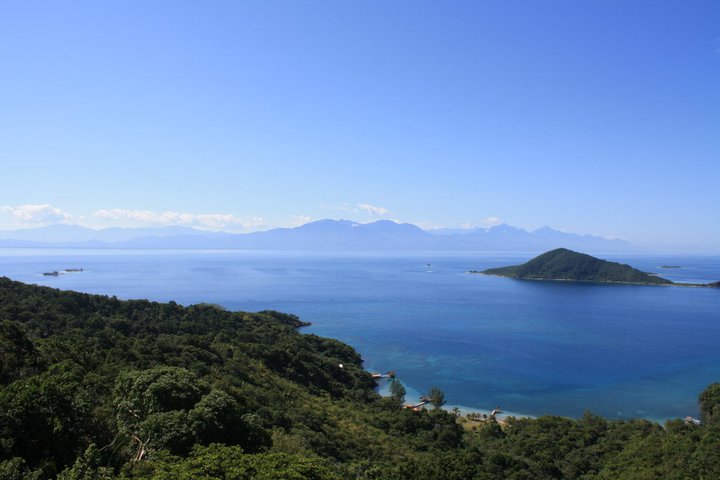
Cayos Cochinos (the Cochinos Cays) are a small archipelago in the Honduran Caribbean Sea, off the north coast, about 30 km northeast of La Ceiba (Atlántida department) and south of the large Bay Islands (Roatán and Utila). They're made up of two larger forest-covered islands —Cayo Mayor (Cayo Grande) and Cayo Menor (Cayo Pequeño)— and a constellation of about thirteen coral cays of white sand and palm trees. The whole group forms the Cayos Cochinos Archipelago Marine Natural Monument, a protected area on the Mesoamerican Reef, the second-largest coral reef system in the world after Australia's
📌Service city
The natural logistics base is La Ceiba, the main city of the Caribbean coast, with its Golosón airport (LCE), hospitals, banks, hotels and diving and excursion agencies. From the La Ceiba dock (or from Sambo Creek, a Garifuna village a few kilometers to the east) the speedboats set out to the cays. The Garifuna community of Chachahuate, on one of the cays, offers very basic lodging and food. There's no airport, bank or major services within the archipelago: you have to bring everything you need from the mainland
📌Best time to go
The climate is warm tropical all year, with water temperatures ideal for snorkeling and diving. The drier, sunnier season runs roughly from March to September and usually offers better underwater visibility and calmer seas for navigation. The rainy season runs from October to February, with more chance of choppy seas and cloudy days; the Caribbean hurricane season (June to November) rarely strikes head-on, but it's best to follow the forecast. Any clear day with calm seas is ideal for a visit
📌Suggested days
Most people visit Cayos Cochinos on a full-day excursion from La Ceiba or Sambo Creek: a morning boat departure, snorkeling on the reefs, a fish lunch in Chachahuate, beach time and an afternoon return. For those seeking total disconnection, you can spend one or two nights in the basic lodging at Chachahuate or a lodging in the archipelago, which allows several dive spots, walks through the Cayo Mayor forest (to the lighthouse) and crowd-free sunsets
💱 Cambio de USD
Loading rate…
🌤️ Clima en Cayos Cochinos
Loading weather…

There are places in the Caribbean that look like they came off a postcard before postcards existed, and Cayos Cochinos is one of them. This small archipelago of two forested islands and a dozen white-sand cays floats in the turquoise sea off the north coast of Honduras, between La Ceiba and the large Bay Islands. What makes it special is that it's almost untouched: it's a protected natural area, with no big hotels or resorts, where development is strictly limited to care for one of the healthiest stretches of the Mesoamerican Reef.

Beneath the surface, Cayos Cochinos holds coral gardens, giant sponges, fish of every color, turtles and the fauna of the second-largest coral reef on the planet. Above, the cays are palm trees leaning over the water, tiny beaches and the quiet life of the Garifuna communities, that Afro-descendant people of the Honduran coast who keep alive their culture, their music and their cuisine based on fish and coconut. The cay of Chachahuate, with its little palm houses on the sand, is one of the most authentic scenes of the Central American Caribbean.

This guide covers the essentials of Cayos Cochinos with a practical and warm eye: how to get there from La Ceiba or Sambo Creek, what you can do (snorkeling, diving, beach, a walk to the lighthouse), how the protected area works and why it's worth visiting with respect. It's a destination of pure nature, ideal for those seeking a Caribbean without luxuries but with a sea and communities that win you over.

📖 History of Cayos Cochinos

The Cayos Cochinos archipelago was part, like the whole Honduran Caribbean coast, of the territory of Indigenous peoples and later of the colonial Caribbean disputed between the Spanish Crown and English powers and interests, with pirates, corsairs and traders roaming these waters between the 16th and 18th centuries. The deepest and most lasting presence on the cays and the nearby coast is that of the Garifuna people: descendants of Africans and of Carib and Arawak Indigenous people who, after being deported by the British from the island of St. Vincent in 1797, settled on the island of Roatán and from there spread along the north coast of Honduras. Garifuna communities like that of Chachahuate, in Cayos Cochinos, have lived for generations from artisanal fishing. In 1994 the Honduran Foundation for the Protection and Conservation of Cayos Cochinos (HCRF, by its English acronym) was created, which drove the declaration of the archipelago as a protected area: today it's the Cayos Cochinos Archipelago Marine Natural Monument, managed jointly with that foundation, which regulates fishing, tourism and the conservation of the Mesoamerican Reef. The full story is on our history page.

Read the full history →

🏛️ Cayos Cochinos is in Atlántida

The heart of the Caribbean coast and of the old 'banana republic': land of La Ceiba and Tela, of Standard Fruit and United Fruit, of a massive Carnival and a vibrant Garífuna culture, where the jungle of Pico Bonito descends to the sea amid national parks and reefs.

Read the history of Atlántida →

🗺️ What to see

1
Snorkeling and diving reefs
Coral gardens of the Mesoamerican Reef, with excellent visibility and abundant marine life, around the cays.
The great treasure of Cayos Cochinos is underwater. The archipelago sits on the Mesoamerican Reef, the second-largest coral reef system in the world after Australia's Great Barrier Reef, and being within a protected area with regulated fishing, its corals and fauna are preserved in very good condition. For many divers and snorkeling enthusiasts, it's one of the healthiest and most pristine corners of the Honduran Caribbean. Around the islands and cays there are numerous dive and snorkel sites, with hard and soft coral formations, giant sponges, sea fans, walls and shoals. Marine life includes parrotfish, angelfish, butterflyfish, groupers, moray eels, lobsters, rays and, with luck, sea turtles and harmless nurse sharks. Water visibility is usually very good, especially in the dry season. Most full-day excursions from La Ceiba or Sambo Creek include one or two snorkel stops with gear provided, plus the stop at the Cayo Menor Scientific Research Station, where the Cayos Cochinos Foundation (HCRF) explains its conservation work. To scuba dive, it's best to book with certified dive centers in La Ceiba or on the islands themselves, which know the best spots and respect the protected-area rules. Tips: don't touch or stand on the coral, use reef-safe (biodegradable) sunscreen so as not to harm the reef and always follow the guide's instructions.
ℹ️ Distance: Sites around the cays; accessed by boat from La Ceiba or Sambo Creek · Best time to go: Dry season (March to September) for better visibility and calm seas · Entry: Included in the tour (US$ 35-40); protected-area fee (HCRF) included in most packages (2025) · Duration: Half a day to a full day
2
Chachahuate Cay (Garifuna community)
The cay inhabited by a Garifuna community, with little palm houses on the sand and a fresh-fish lunch.
Chachahuate is the human heart of Cayos Cochinos and one of the most authentic scenes of the Central American Caribbean. It's a tiny cay of white sand and palm trees where a Garifuna community lives, dedicated for generations to artisanal fishing. Its wooden and palm houses, set almost over the water, occupy the whole surface of the cay, which is walked in a few minutes. Visiting Chachahuate is a glimpse into Garifuna culture, that Afro-descendant people of African and Carib roots who keep alive their language, their music (the punta rhythm and the drums) and, above all, their cuisine. The star dish served on the excursions is fresh fried fish with plantain slices, sometimes accompanied by coconut rice, a simple and delicious treat prepared with what the sea gives that same day. Most full-day excursions stop at Chachahuate for lunch and to spend time on its little beaches (lunch is usually included in the US$ 35-40 package). For those seeking more, the community offers very basic lodging (simple cabins, no luxuries), a form of community tourism that leaves income directly in the hands of the inhabitants. Tips: bring cash in lempiras (there are no ATMs), buy crafts or spend in the community to support the local economy, and treat the place with respect: it's a village, not a set.
ℹ️ Distance: One of the archipelago's cays; a usual stop on the excursions · Best time to go: All year; on the full-day excursion · Entry: No formal entry; lunch usually included in the tour (US$ 35-40); crafts separate, L 50-150 · Duration: 1 to 2 hours (lunch and beach)
3
Cayo Mayor and the lighthouse
The largest island in the archipelago, with tropical forest and a walk up to the lighthouse with panoramic views.
Cayo Mayor (also called Cayo Grande) is the larger of the archipelago's two forested islands and a total contrast to the flat sandy cays: here the terrain rises, covered in tropical forest, and holds part of the terrestrial biodiversity of the protected area. It's a place to combine the sea with a short walk through the vegetation. The main attraction is the trail that climbs up to the Cayos Cochinos lighthouse, at the top of the island. It's an uphill walk over steps and trails through the forest, rewarded with a spectacular panoramic view over the archipelago, the turquoise sea dotted with cays and, in the distance, the silhouette of the large islands and the coast. It's one of the best viewpoints in the Honduran Caribbean. The Cayo Mayor forest harbors fauna typical of the protected area; the most famous is the pink boa of Cayos Cochinos, a variety of boa with a particular coloration endemic to the archipelago, along with birds and reptiles. Some excursions include the walk to the lighthouse; others focus on snorkeling and the beach. Tips: bring comfortable footwear for the climb, water and repellent; respect the wildlife and don't collect plants or animals, as it's a protected zone.
ℹ️ Distance: The archipelago's larger island; lighthouse trail from the island's coast · Best time to go: Morning, before the strong heat; clear days for the view · Entry: Included in the excursion (US$ 35-40, depending on the itinerary, 2025) · Duration: 1 to 2 hours (walk and viewpoint)
4
Beaches and sandy cays (Cayo Bolaños and others)
The small cays of white sand and leaning palm trees, perfect for beach, rest and photos.
Beyond the two forested islands, Cayos Cochinos includes a dozen small white-sand cays, some barely a sandbank with a handful of palm trees leaning over the turquoise water. Cayo Bolaños is one of the most visited on the excursions, with white-sand beaches and crystal-clear waters ideal for swimming and relaxing. They're the classic image of the deserted Caribbean and one of the great pleasures of the visit: stepping off the boat, walking along the sand, getting into warm, clear water and simply enjoying the calm. Several of these cays are ideal for combining with snorkeling, since the reef is usually very close to shore, so you can swim directly from the beach to the corals. Others are perfect for lying in the shade of a palm tree, taking photos or sunbathing with the sound of the sea in the background. Being a protected area with little infrastructure, don't expect services: it's a natural Caribbean, with no rented umbrellas or stalls on every corner. The excursions usually include beach time on one or several cays, along with the snorkel stops and lunch in Chachahuate. Tips: bring everything you need from the mainland (water, food if your tour doesn't include it, reef-safe sunscreen, a hat), leave no litter (whatever comes in, goes out) and respect the coral zones when swimming so as not to step on or damage it.
ℹ️ Distance: Various cays of the archipelago; accessed by boat · Best time to go: Clear days with calm seas (dry season) · Entry: Included in the full-day excursion (US$ 35-40, 2025) · Duration: Variable, within the excursion
5
Scientific Research Station (Cayo Menor)
The seat of the Cayos Cochinos Foundation (HCRF), where the reef conservation work is explained.
On Cayo Menor (Cayo Pequeño) is the Scientific Research Station of the Honduran Foundation for the Protection and Conservation of Cayos Cochinos (HCRF), the organization that has managed the protected area since 1994 together with the Honduran state. Many full-day excursions include a brief stop here, where researchers or guides explain the reef monitoring programs, the protection of species like the pink boa and the lobsters, and the challenges of conserving such a fragile ecosystem in the face of fishing and climate change. It's a brief but valuable stop to understand why Cayos Cochinos stays in such good condition compared with other, more touristically developed areas of the Caribbean, and the role that tourism income (entry fees, tours) plays in financing that conservation. How to get there: included in the route of most full-day excursions. Best time to go: all year. Tips: it's a good chance to ask questions about the archipelago's ecosystem and fauna; keep in mind it's a working station, not a conventional tourist museum.
ℹ️ Distance: Cayo Menor, within the archipelago · Best time to go: All year; a stop within the excursion route · Entry: Included in the full-day excursion (2025) · Duration: 20 to 30 minutes
6
Sambo Creek (Garifuna gateway)
A Garifuna village on the coast near La Ceiba, a departure point for boats and for Garifuna culture on the mainland.
Although it's on the mainland and not in the archipelago, Sambo Creek deserves a mention because it's one of the most common gateways to Cayos Cochinos and, in itself, a cultural destination. It's a Garifuna village on the Caribbean coast, a few kilometers east of La Ceiba, from whose dock many of the boats to the cays set out (the speedboat trip, about 40 minutes, is shorter than from downtown La Ceiba). Sambo Creek lets you get closer to Garifuna culture in its everyday setting: fishing, drum music, the punta dance and cuisine based on fish, plantain and coconut. Some people combine the excursion to the cays with a cultural experience in the village or a typical Garifuna meal. Some hotels and operators in the Sambo Creek and La Ceiba area arrange the transfers and excursions to Cayos Cochinos, which makes it an alternative or complementary base to La Ceiba. Tips: confirm from which dock your excursion leaves (La Ceiba or Sambo Creek), respect the Garifuna community and take the chance to try their cuisine, one of the tastiest and most distinctive in Honduras.
ℹ️ Distance: Atlántida coast, east of La Ceiba; a boat departure point · Best time to go: All year; depending on the excursion departure · Entry: Free-access village; typical meals US$ 5-12 per dish (2025) · Duration: A stopover point; or half a day for the cultural experience
What nobody tells you

💵 Prices

Tickets

TypePrice
Full-day excursion from La Ceiba / Sambo Creek (boat, snorkel, guide, lunch, area fee)about L 1,950 per person (~US$ 75-80) on a standard tour with lunch; from US$ 35-40 per person in large groups or promotions (fuente: Cayos Cochinos Tours / Reservaciones La Ceiba, verificado julio 2026)
All-inclusive package with lodging (Chachahuate, 2 days / 1 night, 3 meals)L 3,200 nationals / US$ 150 foreigners (fuente: Cayos Cochinos Tours, verificado julio 2026)
Garifuna lunch in Chachahuate (if paid separately, directly to the community)from L 300 (~US$ 12) per dish (fuente: operadores de La Ceiba, verificado julio 2026)
Scuba dive (certified center)US$ 45-70 per dive (2025, for reference)
Cay beaches and walk to the lighthouseIncluded in the full-day excursion
🔄 updated monthlyOfficial / reference values · double-check when buying

Activities and tours

ActivityPriceDurationOperator
Full-day boat excursion (snorkel + Chachahuate + beach)~L 1,950 (~US$ 75-80) per person with lunch; from US$ 35-40 in large groups (verified July 2026)Full day (about 7:00 to 15:30)Agencies and hotels in La Ceiba and Sambo Creek (e.g. Tourist Options, Reservaciones La Ceiba)
Scuba diving on the cays' reefsUS$ 45-70 per dive (2025)Half a dayCertified dive centers in La Ceiba and Roatán
Guided snorkeling on the Mesoamerican ReefIncluded in the full-day excursion1-2 hLocal guides and operators
Walk to the Cayo Mayor lighthouse (archipelago viewpoint)Included in the excursion (2025)1-2 hProtected-area guides
Garifuna cultural and culinary experience (Chachahuate / Sambo Creek)Included in the tour; crafts L 50-150 separateVariableLocal Garifuna communities
Overnight stay in the basic lodging at Chachahuate (all-inclusive package)L 3,200 nationals / US$ 150 foreigners, 2 days/1 night with 3 meals (verified July 2026)1-2 nightsChachahuate community tourism
🔄 updated monthlyOfficial / reference values · double-check when buying

🚌 How to get there and distances

Getting around

ModePriceDurationNotes
Speedboat (from La Ceiba or Sambo Creek)Included in the excursion price (~L 1,950 / US$ 75-80)About 40 to 60 min depending on the departure pointIt's the only way to reach the archipelago and to move between the cays. The trip from Sambo Creek (about 40 min) is shorter than from downtown La Ceiba. Calmer seas in the morning
Fishermen's boat / local transfers between caysUS$ 10-20 per short trip, cash (2025, negotiable) (verified July 2026)VariableTo move between cays once in the archipelago; it's coordinated with the community or the operator and paid in cash (there's no ticket office or ATMs on the cays)
Taxi / mototaxi in La Ceiba and Sambo Creek (gateway)L 40-100 in La Ceiba; L 20-40 mototaxi; Golosón airport-dock transfer US$ 5-15, cash (2025) (verified July 2026)VariableOn the mainland, the transport to reach the dock is taxi or mototaxi (tuk-tuk), flagged down on the street and paid in cash in lempiras. Many operators include pickup from the La Ceiba hotel in the tour price
On foot within the caysFreeMinutesThe sandy cays are tiny and walked on foot; on Cayo Mayor there are forest trails
App / transport paymentThere's no public transport to the archipelago: you only get there by boat with an operator. In La Ceiba (the base city) there's no city bus with a rechargeable card or QR, and no consolidated Uber/InDrive; taxis and mototaxis are paid in cash in lempiras and it's best to agree the fare beforehand. Within the cays there's NO reliable signal, no ATMs, and no real-time transport app: bring all the cash from the mainland and coordinate the transfers in person (verified July 2026)
🔄 updated monthlyOfficial / reference values · double-check when buying

How to get there

RouteAirlines / operatorsAvg. priceDuration
La Ceiba (dock) → Cayos Cochinos by boatExcursion operators and local boatmen (Tourist Options, Reservaciones La Ceiba)US$ 35-40 per person, included in the tour (2025)About 45 to 60 min by speedboat
Sambo Creek (dock) → Cayos Cochinos by boatSambo Creek hotels and operatorsUS$ 35-38 per person, included in the tour (2025)About 40 min (closer than La Ceiba)
Golosón Airport (LCE, La Ceiba) → departure dockTaxis and hotel transfersAbout US$ 5-15 depending on destination (2025)Depending on the dock (downtown La Ceiba or Sambo Creek)
Flights to La Ceiba (LCE) from Tegucigalpa, San Pedro Sula and RoatánHonduran domestic airlines (CM Airlines, Avianca)US$ 60-150 depending on route and how far ahead you book (2025)Depending on origin (30-60 min flight)
🔄 updated monthlyOfficial / reference values · double-check when buying

🏨 Where to stay

No exact prices: a scale from $ (budget) to $$$$$ (luxury), with 2-3 options per category.

CategoryPriceRecommended options
Resorts and beach hotels on the coast (La Ceiba / Sambo Creek)$$$$$US$ 60-130 a night; beach hotels and the odd resort around La Ceiba and the Sambo Creek area, from where the excursions to the cays set out
Mid-range hotels in La Ceiba$$$$$US$ 35-60 a night; La Ceiba has most of the mid-range hotels, ideal as a base for visiting Cayos Cochinos, Pico Bonito and other attractions on the north coast
Basic lodging / community tourism on the cays$$$$$US$ 20-35 per person per night with meals; within the archipelago, the Garifuna community of Chachahuate offers very simple, rustic cabins (no luxuries), a community-tourism experience for those who want to stay overnight on the cays
Hostels and budget in La Ceiba$$$$$US$ 12-25 a night; La Ceiba has hostels and budget hotels chosen by backpackers and travelers on a tight budget who use the city as a base for the cays and the nature of Atlántida

🍴 Where to eat

TypePriceOptions / signature dish
Garifuna cuisine (fish, plantain and coconut) in Chachahuate$$$$$US$ 8-15 per dish (or included in the tour); fresh fried fish with plantain slices and, sometimes, coconut rice, prepared by the Garifuna community. It's the typical food of the excursion, simple and delicious
Seafood and typical food in La Ceiba$$$$$US$ 8-20 per dish; a wide range of restaurants with fresh seafood, conch soup, fish and Honduran and international cooking, ideal before or after the excursion
Garifuna food in Sambo Creek$$$$$US$ 5-12 per dish; diners and culinary experiences with typical dishes based on fish, coconut and plantain, one of the tastiest cuisines on the coast
Provisions and budget food$$$$$US$ 2-6; since there are almost no services on the cays, it's best to bring water and snacks from La Ceiba or Sambo Creek, where there are general stores, diners and budget food

❓ Frequently asked questions

How much does an excursion to Cayos Cochinos cost?+
A full-day excursion from La Ceiba or Sambo Creek, with transport, boat, snorkeling, guide, lunch in Chachahuate and the protected-area fee, costs around L 1,950 per person (about US$ 75-80) on a standard tour, though in large groups or promotions it can drop to US$ 35-40 per person. The all-inclusive package with a night in Chachahuate and three meals is around L 3,200 for nationals and US$ 150 for foreigners. It's paid in cash or by transfer depending on the operator; verify the price when booking (fuente: Cayos Cochinos Tours / Reservaciones La Ceiba, verified July 2026).
How do you get to Cayos Cochinos?+
You only get there by sea, by boat, from the Atlántida coast. The most common departure points are the La Ceiba dock and the Garifuna village of Sambo Creek, a few kilometers to the east (from where the trip is shorter, about 40 minutes). The most practical option is to book an organized excursion that includes the boat transfer, since there's no regular public transport service to the archipelago.
Do you have to pay an entry fee because it's a protected area?+
Cayos Cochinos forms the Cayos Cochinos Archipelago Marine Natural Monument, managed by the Cayos Cochinos Foundation (HCRF) to conserve the reef, and an entry fee to the protected area is charged. Practically all organized excursions already include it in the US$ 35-40 price. Those funds help finance the conservation and surveillance of the reef.
Can you sleep on the cays?+
Yes, though the offering is very limited and basic. The Garifuna community of Chachahuate offers simple, rustic cabins, a no-frills community-tourism experience. Operators sell an all-inclusive 2-day / 1-night package with three meals, transfers, snorkeling and a walk to the pink boa for about L 3,200 for nationals and US$ 150 for foreigners. Most visitors, however, go just for the day and sleep in La Ceiba or Sambo Creek, where there are more hotels and services (verified July 2026).
What should I bring on the excursion?+
Since there are almost no services on the cays, bring cash in lempiras (there are no ATMs), water, biodegradable (reef-safe) sunscreen so as not to harm the coral, a hat, sunglasses, a swimsuit, a towel and walking footwear if you're going up to the lighthouse. Confirm whether your tour includes lunch and snorkel gear; if not, bring them.
Is it a good place for snorkeling and diving?+
Excellent. Cayos Cochinos sits on the Mesoamerican Reef (the second-largest in the world) and, being a protected area with regulated fishing, its corals and fauna are very well conserved. There's good visibility and abundant marine life. A scuba dive costs between US$ 45 and 70; it's one of the best snorkeling and diving destinations in the Honduran Caribbean.
When is the best time to go?+
The archipelago can be visited all year, but the dry season (roughly March to September) usually offers better underwater visibility and calmer seas for navigation. In the rainy season (October to February) there's more chance of choppy seas and cloudy days. Any clear day with calm seas is ideal.
How do you pay for transport and is there an app to get around?+
Cayos Cochinos is only reached by boat with an operator (there's no public transport to the archipelago), and that boat is usually included in the tour price. On the mainland, La Ceiba and Sambo Creek are the bases: to reach the dock you use a taxi or mototaxi, flagged down on the street and paid in cash in lempiras (there's no city bus with a card, no QR, and no consolidated Uber/InDrive). Many operators include pickup from your hotel. Within the cays there are no ATMs, no reliable signal, and no real-time transport app: bring all the cash from the mainland and coordinate the transfers in person with the community or the guide (verified July 2026).
Sources consulted (18)
Still planning?
Explore more destinations in Honduras
See all destinations →