GO! Assistance has 50% off in October and, with our link, you get an extra 20%.
Pick origin, destination, dates and ages and see the price of your travel assistance in a minute.
Affiliate link: we earn a commission.
Nahuizalco is one of those towns where El Salvador holds onto its Indigenous root most strongly. Set in the mountains of the department of Sonsonate, on the Ruta de las Flores, it's a municipality of Nahuat-Pipil origin where the Nahuat language still survives —today endangered and the subject of revival programs—, along with the traditional dress of some of the grandmothers and, above all, a living craft tradition you can feel on every corner: the weaving of wicker, reed and wood.
Its great symbol is the candlelit night market. While most markets in the country close at dusk, in Nahuizalco the vendors —many of them older women who come down from the outlying villages— set up at nightfall and offer fruit, vegetables, herbs and typical food by the light of oil lamps and candles, a scene that looks frozen in time. It's a tradition the town has managed to keep as part of its identity and that has become one of its greatest draws for visitors.
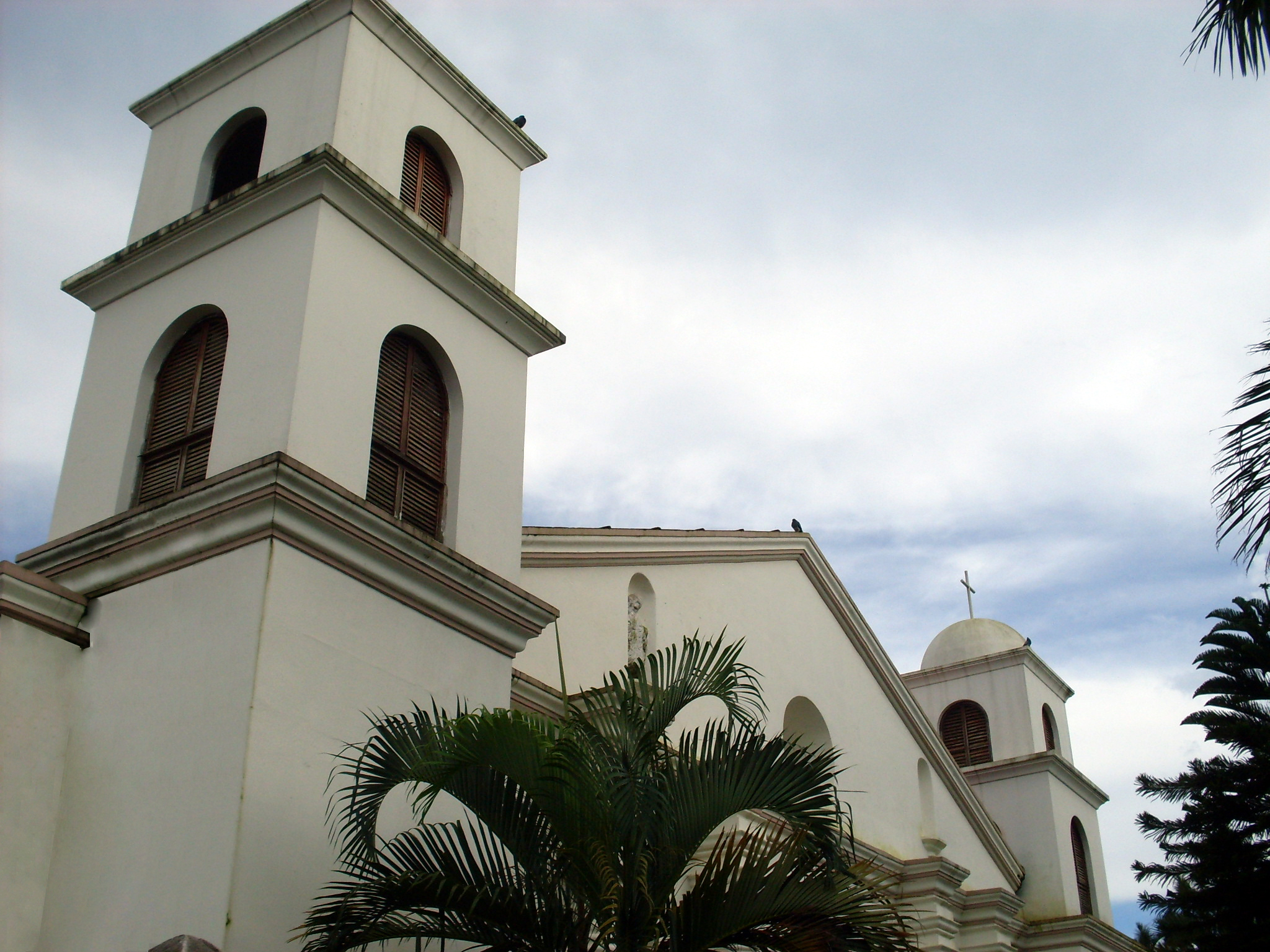
This guide covers the practical side of Nahuizalco with a warm eye: what to see among its wicker workshops and its colonial church, how to make the most of the market by day and by night, how to get there from Sonsonate or San Salvador and how to chain it with the rest of the Ruta de las Flores. It's a brief but intense stop, ideal for understanding where much of Salvadoran handicraft comes from and for taking home something made by hands that inherited the craft from their grandparents.
Nahuizalco is a settlement of Nahuat-Pipil root that long predates the arrival of the Spanish. Its name comes from Nahuat and is usually read as 'the four Izalcos' or 'place of the four Izalcos', in allusion to the Pipil families or lineages that founded it, related to nearby Izalco. After the Spanish conquest in the 16th century, the Indigenous population was evangelized and reorganized into a 'pueblo de indios' (Indian town), keeping much of its customs, its language and its communal organization. During the colonial period and the 19th century, the area was drawn into the economy of indigo first and coffee later, the latter the engine of the entire western region. Nahuizalco was marked, like much of the country's Indigenous west, by the tragic events of 1932: the peasant and Indigenous uprising and the state repression that followed (known as 'La Matanza') struck the Pipil communities of Sonsonate with particular harshness, which accelerated the loss of the Nahuat language and of many cultural traits that families stopped passing on out of fear. Despite everything, the town kept its craft calling —the work of wicker, reed and wood— and its Indigenous identity, today reclaimed and revalued. The full history, with its nuances and debates, is on our history page.
Read the full history ↓The west of cacao and processions: cradle of the ancient Izalco Pipil, living Nahuat land of Nahuizalco and Izalco, epicenter of the Matanza of 1932, with coffee towns of the Ruta de las Flores such as Juayúa and the perfect cone of the Izalco volcano, 'the lighthouse of the Pacific'.
Read the history of Sonsonate →They depart from Santa Ana, 31 km away. Affiliate link: we earn a commission.
Abroad, getting sick is more than a bad day. In many destinations public healthcare depends on appointments, queues and availability, and private care is paid upfront. An emergency can cost thousands of USD, right when you are far from home and on a tight budget. That is why I recommend you never leave without travel assistance.
I recommend GO! Assistance because it covers what matters: medical care, emergencies, medication and hospitalization depending on the plan. It protects you 24 hours a day, anywhere in the world, with real-time solutions on the ground. GO! 365 ECO and GO! 365 give you USD 45,000 of global coverage: the first with a USD 100 deductible, the second with none.
If you quote from Argentina, in October GO! also offers 12 interest-free instalments on all its products.
GO! Assistance has 50% off in October and, with our link, you get an extra 20%.
Pick origin, destination, dates and ages and see the price of your travel assistance in a minute.
I have never been left without internet on a trip. I land and my phone connects to the strongest network in the country I am visiting: I can let people know I arrived, sort out transport, book tours and keep posting content at a super affordable price (really cheap!). I always use the Maya Mobile eSIM, check out its plans by clicking the banner. See Maya Mobile plans →
Affiliate link: we earn a commission.
No exact prices: a scale from $ (budget) to $$$$$ (luxury), with 2-3 options per category.
Origins, formation and what the sources say.
As night falls, when almost all the markets in El Salvador have closed, in Nahuizalco they light the oil lamps. Elderly women who come down from the villages lay out their baskets by candlelight and speak, some of them still, a language the country nearly lost: Nahuat. That scene —a town that resists oblivion— is the best gateway to its history. And that history begins with its very name. Nahuizalco's comes from Nahuat, the language of the Pipil who populated the west of what is today El Salvador. The most widespread interpretation breaks it down into the number four ('nahui') and Izalco, so that the place name is usually translated as 'the four Izalcos' or 'the place of the four Izalcos'. The traditional explanation holds that the town was founded or populated by Pipil families or lineages related to nearby Izalco, another of the great Indigenous centers of the Sonsonate region.
This etymology reflects a central trait of the place's identity: Nahuizalco is not a town of Spanish foundation, but an Indigenous settlement much older than the conquest, whose original name was preserved. The whole area of Sonsonate and Izalco was part of the territory of the Cuzcatlán chiefdom and of the Pipil peoples who dominated the Salvadoran west, with a dense network of villages dedicated to agriculture, especially corn, cacao and other traditional crops.
As happens with many Nahuat place names, the translations vary among authors and should be taken as approximations. What is not in doubt is the Indigenous root of the name and of the town itself, which maintains to this day one of the most marked Nahuat-Pipil identities in the country.
Before the arrival of the Spanish, the west of El Salvador was inhabited by the Pipil, a Nahuat-speaking people related to the Nahua groups of Mesoamerica who migrated south in different waves. The Pipil organized chiefdoms and city-states, the most important being that of Cuzcatlán. The region of Sonsonate, Izalco and Nahuizalco was one of the most densely populated and productive areas, thanks to the fertility of its volcanic lands and the importance of cacao, which came to be a crop of great commercial value throughout Mesoamerica.
In that context, Nahuizalco already existed as an Indigenous settlement, integrated into the economic, religious and social life of the Pipil. The population lived in villages, cultivated the land communally, maintained its Nahuat language and its religious practices, and connected with the great neighboring centers like Izalco. That pre-Hispanic root explains why, centuries later, Nahuizalco continued to be a town of marked Indigenous identity.
The Spanish conquest of the region, from the third decade of the 16th century, was resisted by the Pipil, who led memorable confrontations against the forces of Pedro de Alvarado and his successors. Once subdued, the Indigenous population was reorganized under the colonial system, but preserved much of its communal structure and its culture, which laid the foundations of the cultural continuity that distinguishes Nahuizalco.
After the conquest, Nahuizalco was reorganized by the Spanish administration as a 'pueblo de indios' (Indian town), a category that grouped the Indigenous communities under colonial guardianship, with their own traditional authorities (mayors and cofradías) but subject to the payment of tribute and to evangelization. The region fell within the jurisdiction of the town of Sonsonate (Villa de la Santísima Trinidad de Sonsonate), one of the administrative and commercial centers of the colonial west.
During the colonial centuries, the area's economy revolved around agriculture and, notably, cacao first and indigo later, export products that structured the economic life of the west. Indigenous towns like Nahuizalco contributed labor and tribute to that system, while maintaining their subsistence crops and their trades. It's in this period that the town's craft tradition consolidated, based on the use of plant fibers like reed and wicker, as well as wood, materials abundant in the humid, mountainous area.
Catholic religiosity intertwined with Indigenous beliefs, giving rise to a syncretism visible in the cofradías, the patron-saint festivities and the devotion to the saints. The parish church and the religious celebrations became axes of community life, a role they retain to this day. Despite the changes, Nahuizalco maintained its character as an Indigenous community with its own language, organization and customs.
With the independence of Central America (1821) and the subsequent formation of the Republic of El Salvador, Nahuizalco was integrated into the department of Sonsonate. The great change of the 19th century was the rise of coffee as the country's main export product, which completely transformed the landscape and the economy of the west, precisely the region of highlands and volcanic lands most suited to the bean.
This coffee boom had an enormous cost for the Indigenous communities. From the 1880s, a series of liberal laws abolished the communal and ejidal lands —the traditional form of collective land tenure of the Indigenous peoples— to favor private property and the expansion of the coffee estates. Many Pipil communities, including those of the Nahuizalco area, lost access to lands they had worked for generations, and much of the Indigenous population came to depend on wage and seasonal labor on the coffee estates.
Despite these transformations and the growing pressure on their way of life, Nahuizalco preserved its strong Indigenous identity: the Nahuat language, the traditional dress, the communal organization and the handicrafts remained present. That cultural resistance, however, coexisted with growing social tensions over land and working conditions, which would explode dramatically in the following century.
The most painful episode of the history of Nahuizalco and of the whole Indigenous Salvadoran west occurred in January 1932. In a context of deep economic crisis (aggravated by the collapse of the coffee price after the world crisis of 1929), of land dispossession and of accumulated social tensions, a peasant and Indigenous uprising took place in several areas of the west, in which Pipil communities of Sonsonate, Izalco, Juayúa, Nahuizalco and surroundings took part, partly driven by sectors linked to the nascent communist movement.
The state's response, under the regime of General Maximiliano Hernández Martínez, was a massive repression known as 'La Matanza' (The Massacre). Thousands of people —the estimates vary widely and are the subject of historical debate, ranging from several thousand to tens of thousands— were killed, many of them Indigenous people singled out for their dress or their features, regardless of their actual participation in the revolt. The Sonsonate area, and towns like Nahuizalco and Izalco, were among the hardest hit.
The cultural consequences were devastating and long-lasting. For fear of being identified and persecuted, many Indigenous families stopped speaking Nahuat, abandoned the traditional dress and hid their identity. That collective trauma accelerated the loss of the language and of numerous cultural traits throughout the west. That's why, in towns like Nahuizalco, the revival of Nahuat and the traditions today has a strong component of memory repair and of reclaiming an identity that was nearly extinguished.
Despite the historical wounds, Nahuizalco has managed to preserve and revalue its identity. Today it's recognized as one of the towns with the strongest Nahuat-Pipil heritage in El Salvador and as an important craft center, specialized in the weaving of wicker, reed and wood. Its family workshops produce baskets, furniture, lamps and decorative objects that are sold both in the town and in other cities, keeping alive a craft passed down from generation to generation.
One of its most famous traits is the candlelit night market, where vendors —many of them elderly women who come down from the villages— offer their products at nightfall, by the light of oil lamps and candles. This tradition, almost unique in the country, has become a symbol of the town and one of its main tourist attractions, especially within the Ruta de las Flores circuit, of which Nahuizalco is one of the gateways.
In recent decades, the effort to revive the Nahuat language, today in grave danger of extinction, has gained strength. Community, educational and cultural initiatives —with the leading role of the few elderly native speakers, known as guardians of the language— seek to teach it to the new generations and preserve the Pipil memory. Thus, Nahuizalco combines its tourist and craft appeal with a deep work of identity recovery, becoming a reference point for the living Indigenous culture of El Salvador.