Affiliate link: we earn a commission.
📌Department
Chalatenango, Cuscatlán and Cabañas (El Salvador). Lake Suchitlán, formed by the Cerrón Grande reservoir on the Lempa River, is the largest body of fresh water in El Salvador. It's a wetland of international importance (Ramsar site) for its value to migratory and resident birds, and its most visited shore sits beside the colonial town of Suchitoto. It's a destination for nature, birds, boat rides and fishing, in the heart of the country
📌Service city
The reference town is Suchitoto (Cuscatlán), on the southern shore of the lake, with the full tourist offering: hotels, restaurants, boats and services. The capital, San Salvador, is about 45-50 km away (around 1 to 1,5 hours). The reservoir also reaches Chalatenango and Cabañas; the port of San Juan, next to Suchitoto, is the main departure point for boat rides on the lake
📌Best time to visit
The dry season (November to April) is the best time to visit the lake: sunny days, calm water and, above all, the migratory bird season, when they arrive to spend the boreal winter in the wetland (the peak is usually around November-February). The rainy season (May to October) brings greenery and a rising reservoir, with afternoon showers. Dawn and sunset are the best moments for wildlife and for photos over the water
📌Currency
US dollar (USD), legal tender in El Salvador. Bring cash in small bills for the boat rides, the entrance to the tourist center at the port of San Juan, the fish eateries and local transport; the boatmen don't take cards
📌Suggested days
The lake works in half a day or a day, almost always from Suchitoto. The essentials: a boat ride on the reservoir and its islands (such as Isla de los Pájaros), birdwatching —herons, ducks, hawks, migratory birds—, a visit to the port of San Juan and a nearby waterfall (Los Tercios). Combine it with the town of Suchitoto and its colonial heritage and you easily fill a weekend in the center-north of the country
💱 USD exchange rate
Loading rate…
🌤️ Weather in Cerrón Grande Reservoir (Lake Suchitlán)
Lake Suchitlán is El Salvador's great mirror of water: the largest body of fresh water in the country, formed by the Cerrón Grande reservoir on the mighty Lempa River. Its calm waters stretch across the heart of the country, touching the departments of Chalatenango, Cuscatlán and Cabañas, and its most famous shore looks out beside the charming colonial town of Suchitoto, which lends it its name and its atmosphere.
Beyond its beauty, Suchitlán is a wetland of international importance, recognized as a Ramsar site for its enormous value to birds: every year, especially in the dry season, its waters and shores fill with migratory birds that arrive to spend the boreal winter, joining the many resident species —herons, ducks, coots, hawks, ospreys—. That makes it one of the great birdwatching destinations in Central America.
This guide covers Lake Suchitlán with a practical, warm eye: how to take a boat ride on the reservoir and its islands, where and when to watch the birds, what to see around the water (the port of San Juan, the Los Tercios waterfall), how to combine it with the town of Suchitoto and how to get there. It's a must-see for anyone who wants to enjoy nature, birds and lake life in the center of El Salvador.
📖 History of Cerrón Grande Reservoir (Lake Suchitlán)
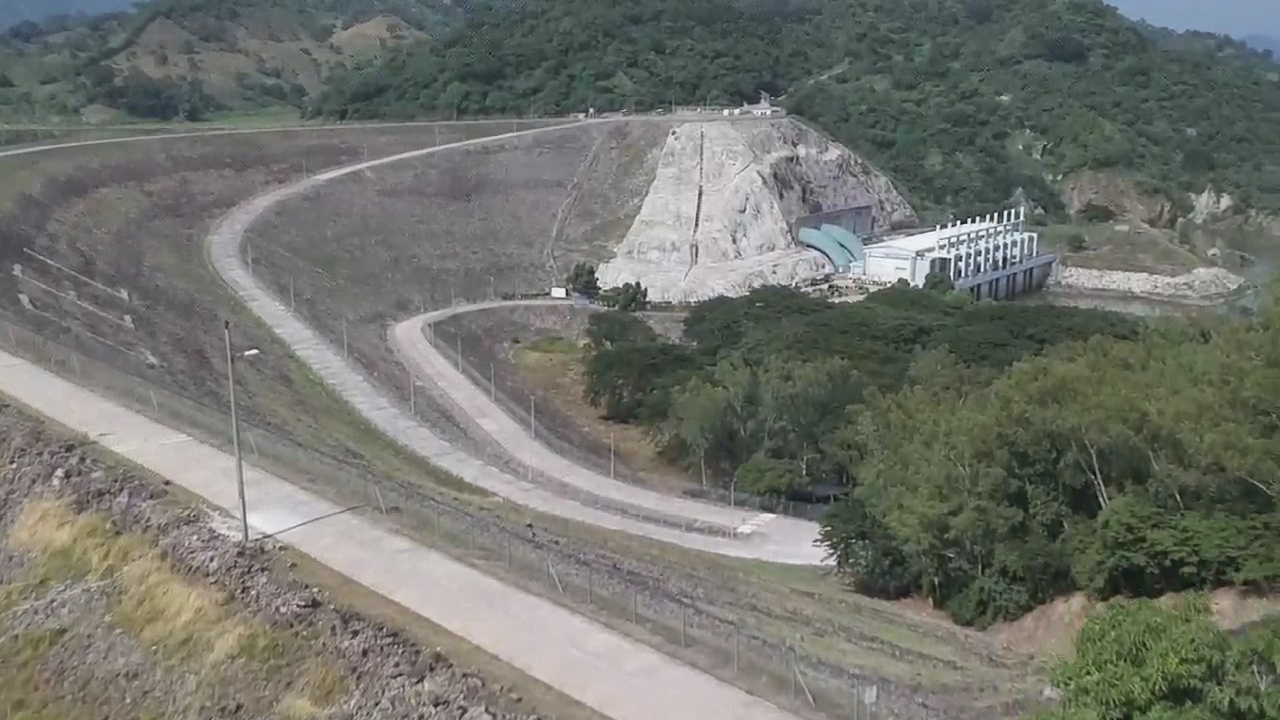
Lake Suchitlán is not a natural lake but an artificial reservoir: it was formed in 1976 with the construction of the Cerrón Grande dam on the Lempa River, the most important river in El Salvador, in order to generate hydroelectric power for the country. By damming the Lempa, the water flooded broad valleys and land in the center of the country, giving rise to the largest body of fresh water in El Salvador, which stretches across the departments of Chalatenango, Cuscatlán and Cabañas. Building the reservoir transformed the landscape and the life of the region: farmland and corners that existed before the dam were left under its waters, and new dynamics of fishing and water use grew up around the new lake. Over time, the reservoir revealed itself as a valuable wetland: its waters, islands and shores became an extraordinary refuge for birds, both resident and migratory, which led to its recognition as a Ramsar site (a wetland of international importance). The lake popularly took the name Suchitlán, after the nearby colonial town of Suchitoto, which looks out over its southern shore and preserves a rich historical heritage. Today, Lake Suchitlán serves hydroelectric and ecological functions, and it's also a nature tourism destination: boat rides, birdwatching, fishing and simply enjoying the scenery, closely tied to the appeal of the town of Suchitoto. The full history is on our history page.
Read the full history ↓🏛️ Cerrón Grande Reservoir (Lake Suchitlán) is in Cuscatlán
The department that bears the name of the ancient Pipil dominion, in the center of the country: home to Suchitoto, the cultural capital of El Salvador, on the shores of Lake Suchitlán, with Cojutepeque, Ilobasco and a deep memory of colonial indigo and of the war.
Read the history of Cuscatlán →🗺️ What to see
Tours nearby, in Suchitoto
They depart from Suchitoto, 4 km away. Affiliate link: we earn a commission.
1
Boat ride on the reservoir and its islands
Cruising the largest lake in El Salvador, among islands, birds and scenery, from the port of San Juan.
Read more ↓
The great draw of Lake Suchitlán is cruising it by boat, crossing the largest body of fresh water in El Salvador. The rides leave from the port of San Juan, next to Suchitoto, and let you take in the enormous extent of the reservoir, its shores, its islands and the abundant birdlife of the wetland.
Along the way you visit famous spots such as Isla de los Pájaros and Isla del Ermitaño, and you hear the stories of the villages that ended up submerged under the lake when the dam was built. Prices for the rides run from about US$ 3 (short, shared trips) up to US$ 30 depending on the length, the number of passengers and the itinerary; the island trips usually run from US$ 15 to US$ 30. It's a calm, very photogenic ride, especially at sunset, when the golden light washes over the reservoir.
The boats and the local boatmen offer different routes; agree on the itinerary, the length and the fare before setting off, and ask about life jackets. Payment is in cash (the boatmen don't take cards). Bring sunscreen, a cap, water, insect repellent and a camera.
ℹ️ Distance: From the port of San Juan, next to Suchitoto · Best time: Dry season; sunset/dawn · Admission: Boat ride approx. US$ 3–30 depending on length and passengers; islands US$ 15–30 (source: ElSalvador.com, verified July 2026) · Duration: 30 min to 2 hours
2
Birdwatching (Ramsar site)
Suchitlán is a wetland of international importance, a refuge for migratory and resident birds; a paradise for birdwatchers.
Read more ↓
Lake Suchitlán is a wetland of international importance (Ramsar site) and one of the best places in El Salvador and in Central America for birdwatching. Its waters, islands and shores host a great diversity of resident birds —herons, egrets, coots, ducks, jacanas, cormorants, ospreys and hawks— and receive, in the dry season, enormous numbers of migratory birds arriving to spend the boreal winter.
The migratory season (peaking around November-February) is the star moment: the reservoir becomes a gathering point for water birds that have traveled thousands of kilometers, an extraordinary natural spectacle. Watching is done from the boat —getting close to Isla de los Pájaros and the areas where birds concentrate— or from the shores, ideally at dawn. A watching tour with a specialist guide runs about US$ 15–40 per person (verified July 2026).
The ornithological value of Suchitlán is recognized internationally and draws nature watchers and photographers. Bring binoculars, a camera with a good zoom, neutral-colored clothing and patience.
ℹ️ Distance: On the reservoir, the islands and the shores (by boat or from the shoreline) · Best time: Dry season; migratory birds Nov-Feb; dawn · Admission: Tour with a specialist guide approx. US$ 15–40 per person (source: guides and operators in Suchitoto, verified July 2026) · Duration: 1 to 3 hours
3
Port of San Juan and the fish eateries
The tourist dock next to Suchitoto, with eateries serving fresh lake fish right by the water.
Read more ↓
The port of San Juan, next to Suchitoto, is the main tourist spot on the lakeshore: a dock where the boats leave from, with eateries, stalls and a lively atmosphere, especially at weekends. It's the place to arrange rides, eat fresh lake fish facing the water and enjoy the views over the reservoir. A meeting point between the life of the town and the lake.
Access to the tourist center at the port has a token entrance fee (US$ 1 per person, plus US$ 1 for parking per vehicle), and the access that includes use of the family and children's pools costs about US$ 3. The eateries serve lake fish —mojarra and guapote— fried or in soup, with vegetables, rice and tortillas, for about US$ 6–12 a dish (simple dishes from US$ 3–6). Everything is paid in cash.
It's the tourist heart of the shore and the best place to combine a boat ride with a meal facing the water, in a down-to-earth, family atmosphere.
ℹ️ Distance: Port of San Juan, a short way from Suchitoto · Best time: Dry season; weekends have more of a buzz · Admission: Tourist center US$ 1 per person + US$ 1 parking; with pools US$ 3 (source: ElSalvador.com, verified July 2026) · Duration: 1 to 2 hours (with a meal)
4
Los Tercios waterfall (basalt columns)
A curious waterfall with hexagonal basalt columns, near Suchitoto, spectacular in the rainy season.
Read more ↓
Near Suchitoto is the Los Tercios waterfall, a curious cascade known for its hexagonal basalt columns, a singular geological formation over which the water falls in the rainy season. The columns, lined up like organ pipes, are the result of ancient lava flows cooling, and they make for a very photogenic geological oddity.
The waterfall is at its best in the rainy season (May to October), when it's flowing; in the dry season it may carry very little water or be dry altogether, though the basalt columns are still worth seeing. You reach it after a short walk from the access track, near the town.
It's an ideal visit to combine with the lake and with Suchitoto, especially if you're after nature and geology. Check whether it's flowing and what state the access is in before you go, and wear suitable footwear for the walk.
ℹ️ Distance: A few km from Suchitoto (taxi/moto-taxi or car + a short walk) · Best time: Rainy season (May-October) to see it flowing · Admission: Free or a low fee (approx. US$ 1); access via a local track (verified July 2026) · Duration: 1 to 2 hours
5
The charming colonial town beside the lake, with its church, cobbled streets and cultural life.
Read more ↓
The southern shore of the lake looks out over the colonial town of Suchitoto, one of the prettiest and best preserved in El Salvador, and a strong reason to combine the reservoir with a visit to the town itself. Its cobbled streets, white tile-roofed houses, its church of Santa Lucía (white-fronted and colonial in feel) and its cultural life make it a charming destination in its own right.
Suchitoto has a rich artistic and cultural life, with galleries, workshops, festivals and a strong historical identity (it was an important indigo center in colonial times). Walking its center, its lookout over the lake, its museums and its cafés and restaurants is a perfect complement to the lake scenery.
The combination of nature (the lake, the birds, the boats) and heritage (the colonial town) makes Suchitoto and Lake Suchitlán one of the most complete and rewarding destinations in the center-north of El Salvador, ideal for a weekend.
ℹ️ Distance: The town is right by the lake; the port of San Juan a short way off · Best time: Year-round; weekends and festivals for the cultural buzz · Admission: Free to walk around the town; museums and specific attractions US$ 1–5 (verified July 2026) · Duration: Half a day to a day
6
Sunsets and lookouts over the reservoir
Sunsets over the country's largest lake from the lookouts of Suchitoto and the shore.
Read more ↓
One of the free pleasures of Lake Suchitlán is watching the sunset over the water. From the lookouts of Suchitoto —such as the one in the upper part of the town— and from the shore, the sun drops over the reservoir, tinting the sky and the water in golden and pink tones, one of the loveliest moments of the day, and the hour when the birds head back to their roosts.
The sheer breadth of the country's largest body of fresh water, with the mountains of Chalatenango in the background, makes these sunsets a memorable sight. It's a perfect moment for photos, for a quiet stroll or to pair with a drink or dinner at a restaurant overlooking the lake.
Combining a boat ride at the end of the afternoon with the sunset seen from the water or from a lookout is one of the most rewarding experiences at Suchitlán, and an ideal way to close out the day in this natural corner of central El Salvador.
ℹ️ Distance: The lookouts of Suchitoto and the lakeshore (on foot or a short trip) · Best time: Sunset, year-round (clearer skies in the dry season) · Admission: Free (public lookouts) · Duration: 1 hour
🛡️ Getting sick far from home shouldn't cost you thousands of USD
Abroad, getting sick is more than a bad day. In many destinations public healthcare depends on appointments, queues and availability, and private care is paid upfront. An emergency can cost thousands of USD, right when you are far from home and on a tight budget. That is why I recommend you never leave without travel assistance.
I recommend GO! Assistance because it covers what matters: medical care, emergencies, medication and hospitalization depending on the plan. It protects you 24 hours a day, anywhere in the world, with real-time solutions on the ground. GO! 365 ECO and GO! 365 give you USD 45,000 of global coverage: the first with a USD 100 deductible, the second with none.
If you quote from Argentina, in October GO! also offers 12 interest-free instalments on all its products.
An emergency abroad can cost thousands of dollars. Travel with assistance.
GO! Assistance has 50% off in October and, with our link, you get an extra 20%.
Pick origin, destination, dates and ages and see the price of your travel assistance in a minute.
📶 Internet from the moment you land
I have never been left without internet on a trip. I land and my phone connects to the strongest network in the country I am visiting: I can let people know I arrived, sort out transport, book tours and keep posting content at a super affordable price (really cheap!). I always use the Maya Mobile eSIM, check out its plans by clicking the banner. See Maya Mobile plans →
Affiliate link: we earn a commission.


💵 Prices
Tickets
| Type | Price |
|---|
| Boat ride on the lake (port of San Juan) | Approx. US$ 3–30 depending on length and number of passengers; islands US$ 15–30 (source: ElSalvador.com, verified July 2026; agree it with the boatmen, cash) |
| Port of San Juan tourist center (entrance) | US$ 1 per person + US$ 1 parking; with pools US$ 3 (source: ElSalvador.com, verified July 2026) |
| Birdwatching with a guide | US$ 15–40 per person depending on the tour (source: operators in Suchitoto, verified July 2026) |
| Los Tercios waterfall (access) | Free or a low fee (approx. US$ 1); check the access (verified July 2026) |
| Food (fresh lake fish) | US$ 6–12 per dish (mojarra/guapote); simple dishes from US$ 3–6 (verified July 2026) |
🔄 updated monthlyOfficial / reference values · double-check when buying
Activities and tours
| Activity | Price | Duration | Operator |
|---|
| Boat ride on the reservoir and Isla de los Pájaros | US$ 3–30 depending on length and passengers; islands US$ 15–30 (verified July 2026) | 30 min to 2 h | Boatmen of the port of San Juan |
| Birdwatching (Ramsar site) with a guide | US$ 15–40 per person (verified July 2026) | Half a day | Local nature guides |
| Artisanal fishing on the lake | By arrangement with the fishermen, approx. US$ 20–50 per outing (verified July 2026) | Variable | Local fishermen |
| Combined excursion with Suchitoto from San Salvador | US$ 45–90 per person depending on the group (verified July 2026) | Full day | Tourism agencies (e.g. Gringo Tours, Suchitoto) |
🔄 updated monthlyOfficial / reference values · double-check when buying
🚌 How to get there and distances
Getting around
Tourist / fishermen's boat
PriceUS$ 3–30 per ride depending on the route and passengers; islands US$ 15–30 (verified July 2026)
NotesThe main way to get around the lake; boats leave from the port of San Juan. Agree on the fare and the route beforehand; payment is in cash (no card, no app)
Minibus / moto-taxi (tuk-tuk) from Suchitoto to the port
PriceLocal minibus approx. US$ 0,20; moto-taxi US$ 1–5 (verified July 2026)
NotesFrom the town of Suchitoto down to the port of San Juan (a long descent) there's a very cheap local minibus (~US$ 0,20) and moto-taxis/tuk-tuks. Everything in cash; agree on the moto-taxi fare before you get in. Ideal so you don't have to walk back up
On foot from Suchitoto
Free
NotesThe port of San Juan is downhill from the town; you can walk down, but the climb back is hard work under the sun: for the return, take the minibus or a moto-taxi
PriceApprox. US$ 25–40 from San Salvador; within Suchitoto availability is low (verified July 2026)
NotesUber works in El Salvador and can take you from San Salvador to Suchitoto, but in the town itself there are hardly any cars on the app: for getting around locally, moto-taxis are more reliable. There's no public transport app specific to the town; for intercity buses, Moovit and Google Maps cover the San Salvador area better than the rural routes
NotesConvenient for getting there from San Salvador and moving between Suchitoto, the port and the area around the lake (Los Tercios). Parking at the port US$ 1
🔄 updated monthlyOfficial / reference values · double-check when buying
How to get there
| Route | Airlines / operators | Avg. price | Duration |
|---|
| From San Salvador → Suchitoto / Lake Suchitlán | Bus 129 (with air conditioning) or minibus 140 from the Terminal de Oriente; cars, Uber and shuttles/tours | Bus 129 US$ 1; minibus 140 US$ 0,90 (cash); tour/shuttle US$ 45–90 (verified July 2026) | Approx. 1 to 1,5 h (about 45-50 km) |
| From Suchitoto → port of San Juan | Local minibus, moto-taxis (tuk-tuk), car or on foot | Minibus ~US$ 0,20; moto-taxi US$ 1–5 (verified July 2026) | Short trip (about 4 km) |
| Boat crossing of the lake (toward Chalatenango / San Luis del Carmen) | Boats from the port of San Juan | Approx. US$ 1–5 per person depending on the route (cash, verified July 2026) | Depends on the route |
| Combined with northern Chalatenango | Cars, buses and boats | Depends on the route; boat + bus from US$ 2 (verified July 2026) | Depends on the route |
🔄 updated monthlyOfficial / reference values · double-check when buying
🏨 Where to stay
No exact prices: a scale from $ (budget) to $$$$$ (luxury), with 2-3 options per category.
Charming hotels in Suchitoto
Recommended optionsUS$ 70–160 a night; boutique hotels such as Los Almendros de San Lorenzo, Casa 1800 and inns with views over the reservoir (verified July 2026)
Mid-range lodgings and inns
Recommended optionsUS$ 35–70 a night; e.g. Hotel El Tejado, Posada de Suchitlán and mid-range lodgings in Suchitoto, handy as a base for the lake and the town (verified July 2026)
Budget lodgings and hostels
Recommended optionsUS$ 15–35 a night; simple lodgings and hostels in Suchitoto for tight budgets, a short way from the lake (verified July 2026)
🍴 Where to eat
Fresh fish eateries at the port of San Juan
Options / signature dishUS$ 6–12 per dish; mojarra and guapote from the lake, fried or in soup, with rice and tortillas, right by the water
Restaurants and cafés in Suchitoto
Options / signature dishUS$ 8–20 per dish; Salvadoran and international cooking in charming restaurants with views, e.g. at the town's boutique hotels
Pupuserías and typical food
Options / signature dishUS$ 0,75–5 per person; pupusas at about US$ 1 and typical Salvadoran food at good prices in Suchitoto
📖 History of Cerrón Grande Reservoir (Lake Suchitlán)
Origins, formation and what the sources say.
The Cerrón Grande dam on the Lempa River
Lake Suchitlán is not a natural lake, but an artificial reservoir created by the hand of man. It was formed in 1976 with the construction of the Cerrón Grande dam on the Lempa River, the most important and mighty river in El Salvador, which crosses the country from north to south. The work was built with the main goal of generating hydroelectric power, a key need for the country's development in those decades.
By damming the Lempa, the waters accumulated and flooded broad valleys and lands of central El Salvador, giving rise to the country's largest freshwater body. The reservoir extends across the departments of Chalatenango, Cuscatlán and Cabañas, shaping a new lake landscape in a region until then of rivers and valleys.
The Cerrón Grande hydroelectric plant became one of the main ones in the Salvadoran energy system. But, beyond its electric function, the creation of the reservoir would have deep consequences on the territory, the landscape and the life of the communities of the country's center, forever transforming this part of El Salvador.
The transformation of the landscape and the life of the region
The construction of the reservoir radically transformed the landscape and the life of the central region of El Salvador. As the water level rose, valleys, farmlands and corners that existed before the dam were submerged, altering the territory irreversibly and forcing adaptations in the nearby communities.
Around the new lake, new dynamics emerged. Fishing became an important activity for the lakeside communities, which began to harness the resources of the reservoir. The water, moreover, modified the routes and the connection between shores, and over time boat crossings appeared that link the different sides of the lake, integrating lake life into the region.
The reservoir popularly took the name Suchitlán, associated with the nearby town of Suchitoto, a colonial town of rich historical heritage that looks out over its southern shore. The relationship between the lake and the town became close: Suchitoto gave identity and name to the mirror of water, and the lake became one of the great natural attractions around the town, together marking the character of this area of the country.
Suchitoto, the indigo town by the lake
The history of Lake Suchitlán is inseparable from that of the town that gives it its name, Suchitoto, settled on its southern shore. Suchitoto is one of the oldest and most important colonial towns in El Salvador: its name, of Nahuat origin, is usually translated as 'place of the flower-bird' or 'bird of the flowers', and the area was populated since pre-Hispanic times by communities of Pipil root.
During the colonial period and the 19th century, Suchitoto flourished thanks to the cultivation and trade of indigo, the blue dye that was one of the great export products of Central America before the coffee boom. The indigo haciendas of the region generated wealth and gave the town a heritage of colonial houses, cobbled streets and churches, like that of Santa Lucía, which are still preserved today and earned it recognition as one of the most charming towns in the country. Suchitoto came to be a significant economic and cultural center in central El Salvador.
When, in 1976, the Cerrón Grande dam was built and the reservoir was formed, the old indigo town came to have, at its feet, the largest lake in the country. That new geography —a colonial town over the water— reinforced over time the appeal of Suchitoto and definitively intertwined its destiny with that of the lake, which popularly adopted the name Suchitlán in its honor.
The civil war and the recovery of the region
The center-north region of El Salvador, around Suchitoto and the reservoir, was one of the settings of the armed conflict the country experienced between 1980 and 1992. Because of its geography, its proximity to Chalatenango and its strategic position, this area fully suffered the years of the Salvadoran civil war: many inhabitants were displaced or emigrated, towns were left depopulated and life around the lake was deeply affected.
Suchitoto itself, which had been a prosperous indigo town and a cultural center, was hard hit during the conflict, with much of its population displaced. After the signing of the Peace Accords of Chapultepec in 1992, a slow process of recovery and return began, in which the community gradually rehabilitated the town, its heritage and its social fabric, and rebuilt life around the lake.
In the following decades, Suchitoto resurged strongly as a cultural and tourist destination: it recovered its colonial heritage, drove festivals, galleries and artistic activities, and took advantage of the beauty of the reservoir and its wealth of birds to develop nature tourism. The recent history of Lake Suchitlán is, thus, also a story of resilience: that of a region that, after the war, knew how to reinvent itself around its heritage and its great mirror of water.
A Ramsar wetland and a nature destination
Over time, the Cerrón Grande reservoir revealed a value that went far beyond the hydroelectric: that of a valuable wetland. Its waters, its islands and its shores became an extraordinary refuge for birds, both resident and migratory. Every year, especially in the dry season, the lake receives great numbers of migratory birds that come to spend the boreal winter, joining a rich local birdlife.
This ecological value led, on November 22, 2005, to Lake Suchitlán being recognized as a Ramsar site —a wetland of international importance—, a category that highlights its relevance to the conservation of biodiversity and, in particular, of aquatic birds; it was one of the first Salvadoran wetlands to obtain that status. Its waters are a decisive habitat for thousands of migratory aquatic birds, like several species of ducks (the northern shoveler, among others), plus resident herons, cormorants and ospreys. The reservoir thus established itself as one of the most important spots in El Salvador and the region for birdwatching.
Today, Lake Suchitlán serves hydroelectric, ecological and tourist functions all at once. Together with the appeal of the colonial town of Suchitoto, the lake offers the visitor boat rides on the reservoir and its islands, birdwatching, fishing and the enjoyment of a serene landscape in the heart of the country. What was born as an engineering work to produce energy ended up becoming a wetland of international relevance and one of the most valuable nature destinations in El Salvador.
❓ Frequently asked questions
How much does a boat ride on Lake Suchitlán cost?+
The rides leave from the port of San Juan, next to Suchitoto, and cost roughly between US$ 3 (short, shared trips) and US$ 30 depending on the length, the itinerary and the number of passengers; the island trips usually run from US$ 15 to US$ 30 (verified July 2026). You visit islands such as Isla de los Pájaros and Isla del Ermitaño. Agree on the route and the fare before setting off (payment is in cash) and ask about life jackets. There's also an entrance to the tourist center of US$ 1 per person and US$ 1 for parking.
What is Lake Suchitlán?+
It's the largest body of fresh water in El Salvador, an artificial reservoir formed by the Cerrón Grande dam on the Lempa River (built in 1976). It's also a wetland of international importance (Ramsar site) for its enormous value to migratory and resident birds. Its most visited shore sits beside the colonial town of Suchitoto.
Why is it famous for birds and how much does a tour cost?+
Because it's a Ramsar wetland that acts as a bird refuge: it hosts many resident species and, especially in the dry season, receives enormous numbers of migratory birds arriving to spend the boreal winter (peaking around November-February). It's one of the best places in El Salvador and in Central America for birdwatching. A tour with a specialist guide runs about US$ 15–40 per person (verified July 2026); go at dawn and bring binoculars.
How do I get to Lake Suchitlán?+
It's in the center-north of the country, beside Suchitoto, about 45-50 km from San Salvador (1 to 1,5 hours). By bus from the Terminal de Oriente: the 129 (with air conditioning) costs US$ 1 and the 140 minibus about US$ 0,90, always in cash. By tour, shuttle or Uber, about US$ 25–90 depending on the service. From Suchitoto down to the port of San Juan you go by local minibus (~US$ 0,20), moto-taxi (US$ 1–5) or on foot. It's a very easy destination to combine with the colonial town on the same day or over a weekend.
How do I get around Suchitoto and the port, and how do I pay?+
Suchitoto is small and easy to walk. To go down to the port of San Juan (a long hill, about 4 km) take the local minibus (~US$ 0,20) or a moto-taxi/tuk-tuk (US$ 1–5), especially for the climb back. All local transport, the boats and the eateries are paid in cash (the boatmen don't take cards): bring small bills. Uber works from San Salvador, but within the town there are hardly any cars on the app, so for local trips a moto-taxi is the way to go. There's no rechargeable card or bus payment app in this area; for finding intercity buses, Google Maps and Moovit cover San Salvador better than the rural routes.
What is the Los Tercios waterfall?+
It's a curious waterfall near Suchitoto, known for its hexagonal basalt columns, a singular geological formation over which the water falls, above all in the rainy season (May to October). In the dry season it may carry little water, though the columns are still worth seeing. Access is free or low-cost; check the state of the track before you go.
What currency is used at the lake?+
El Salvador uses the US dollar (USD). Bring cash in small bills, above all for the boats, the entrance to the tourist center, the fish eateries and local transport, since the boatmen don't take cards. The prices in this guide are verified as of July 2026; even so, agree them and confirm them on the ground before setting off.
Is it worth combining it with the town of Suchitoto?+
Very much so. Suchitoto is one of the prettiest colonial towns in El Salvador, with cobbled streets, its church of Santa Lucía, galleries, museums and a rich cultural life. Combining the lake (boats, birds, sunsets) with the town's heritage makes this area one of the most complete destinations in the center-north of the country, ideal for a weekend.
More places in El Salvador
Sources consulted (12)
- Wikipedia (ES) — «Embalse Cerrón Grande»: https://es.wikipedia.org/wiki/Embalse_Cerr%C3%B3n_Grande
- El Salvador Travel (official tourism site): https://elsalvador.travel/
- El Salvador.com — Lago Suchitlán: cinco experiencias (lanchas US$ 3–30, entrada US$ 1 + parqueo US$ 1, piscinas US$ 3, comida US$ 3–6): https://www.elsalvador.com/turismo/rutas-y-aventuras/lago-suchitlan-actividades/1240165/2025/
- El Salvador.com — Dónde hospedarte en Suchitoto (hoteles): https://www.elsalvador.com/turismo/rutas-y-aventuras/turismo-cultural-suchitoto-hoteles-vacaciones/1245762/2025/
- Los Almendros de San Lorenzo — Qué hacer en Suchitoto: https://www.losalmendrosdesanlorenzo.com/que-hacer-en-suchitoto
- Centro Coasting — Suchitoto Bus Travel Guide (bus 129 US$ 1, microbus 140 US$ 0.90): https://centrocoasting.com/elsalvador/suchitoto/
- Nomadic Backpacker — How to get from San Salvador to Suchitoto: https://www.nomadicbackpacker.com/how-to-get-from-san-salvador-to-suchitoto.html
- Moovit — Public transport San Salvador (coverage) — a crowdsourced public transport app (the data is uploaded by users; it is not an official source for fares or timetables): https://moovitapp.com/index/en/public_transit-San_Salvador-6110
- Wikipedia (ES) — «Río Lempa»: https://es.wikipedia.org/wiki/R%C3%ADo_Lempa
- Wikipedia (ES) — «Suchitoto»: https://es.wikipedia.org/wiki/Suchitoto
- El Salvador Travel — Lago de Suchitlán / Suchitoto: https://elsalvador.travel/
- Convención de Ramsar — Sitios Ramsar de El Salvador: https://www.ramsar.org/