Affiliate link: we earn a commission.
📌Department
La Libertad (El Salvador). Playa El Tunco is El Salvador's most famous beach and the country's surf capital, located on the Pacific coast (the so-called Costa del Bálsamo, now promoted as 'Surf City'), a short distance from the city of La Libertad. It's a small, backpacker town of dirt streets, with world-famous waves, nightlife, hostels, restaurants and a very relaxed international atmosphere. Its name comes from a rock formation in the sea that, according to tradition, resembles a 'tunco' (pig)
📌Service city
The nearest service city is La Libertad (port and seafood market), a few kilometers away, and the larger base is San Salvador, about 40-45 km away via the coastal highway. El Salvador International Airport (SAL) is relatively close to the coast, about 50 km away (25-45 min). El Tunco has hostels, hotels, restaurants, surf schools, board rentals and tourist services; for banks and larger shopping, the reference is La Libertad or the capital
📌Best time to visit
El Tunco can be enjoyed year-round thanks to its warm climate. For surfing, the best wave season is usually from March to October, with the biggest swell in the months of May to September (which coincides with the rainy season). The dry season (November to April) offers sunnier, drier days, ideal for the beach and town life, with gentler waves. El Tunco comes especially alive on weekends, when visitors arrive from San Salvador, and it has nightlife during much of the year
📌Suggested days
El Tunco can be seen in a day as a beach getaway from San Salvador, but its atmosphere invites you to stay 2 or 3 nights (or more, if you take surf lessons). The essentials: enjoy the beach and the sunset by the El Tunco rock, take a surf lesson or watch the surfers, tour the neighboring beaches (El Sunzal, El Zonte) and experience the town's nightlife. It's an ideal base for exploring the Costa del Bálsamo and combining with La Libertad and El Zonte (Bitcoin Beach)
📌Currency
El Salvador uses the US dollar (USD); bitcoin ceased to be mandatory legal tender in 2025, though in the area (especially in El Zonte) some businesses still accept it. In El Tunco many hostels, surf schools and eateries charge in cash, so it's best to bring small bills; larger hotels and restaurants accept cards
💱 USD exchange rate
Loading rate…
🌤️ Weather in Playa El Tunco
Playa El Tunco is, without question, the most famous beach destination in El Salvador and one of the unmissable spots of any trip to the country. This small town on the Pacific coast, in the department of La Libertad, became world-famous for its surf waves, its backpacker and international atmosphere and its spectacular sunsets over the ocean, with the unmistakable El Tunco rock silhouetted in the sea.
El Tunco is informal, barefoot and relaxed: dirt streets that slope down toward the beach, hostels and hotels of all prices, restaurants with tables on the sand, bars with music and a surf community that comes from all over the world. By day you live the ritual of surf and beach; at sunset, everyone gathers to watch the sun go down; and at night, the town comes alive with bars and music, especially on weekends. It's the young, party face of the Salvadoran coast.
This guide covers El Tunco with a practical and warm eye: where and how to surf, which neighboring beaches to visit, where to see the best sunset, where to eat seafood and enjoy the nightlife, how to get there and how to use it as a base for touring the Costa del Bálsamo. Whether you come to learn to surf, to party or simply to relax facing the Pacific, El Tunco is a stop you'll hardly forget.
📖 History of Playa El Tunco
The coast of La Libertad, where El Tunco is located, has historically been an area of fishing and ports. The nearby city of La Libertad functioned during the 19th century and much of the 20th as one of the main ports of El Salvador, especially for exporting the coffee grown in the interior; its pier is a historical point of the region. The coastal strip of this area is known as Costa del Bálsamo (Balsam Coast), for the balsam (a resinous product) traditionally extracted from the trees of the range of the same name, a product that gave the region renown from colonial times. El Tunco, specifically, was a small fishing village whose name derives from a rock formation in the sea that, according to local tradition, resembles the silhouette of a 'tunco' (a Salvadoran word for pig). From the last decades of the 20th century and, above all, in the 21st century, El Tunco transformed into an internationally famous tourist destination thanks to the quality of its waves, which drew surfers from all over the world. Word of mouth among the surf community, together with the proximity to San Salvador and the airport, turned this old fishing village into the Salvadoran surf capital and one of the engines of the country's tourism. In recent years, El Salvador has bet heavily on surf tourism along this whole coast —the Surf City plan boosted the infrastructure and the country even hosted international competitions—, and El Tunco, together with neighboring beaches like El Sunzal and El Zonte, established itself as a regional reference. The full history is on our history page.
Read the full history ↓🏛️ Playa El Tunco is in la Libertad
The surfing coast of El Salvador: the Costa del Bálsamo with El Tunco, El Sunzal and El Zonte —the 'Bitcoin Beach'—, heart of the 'Surf City' project, plus the Maya ruins of Joya de Cerén and San Andrés, the garden city of Santa Tecla and the El Boquerón crater of the San Salvador volcano.
Read the history of La Libertad →🗺️ What to see
Tours you can book
Affiliate link: we earn a commission. Prices and availability come from Civitatis.
1
The beach and the El Tunco rock
The dark volcanic sand beach with the iconic El Tunco rock in the sea, the setting for the town's sunset.
Read more ↓
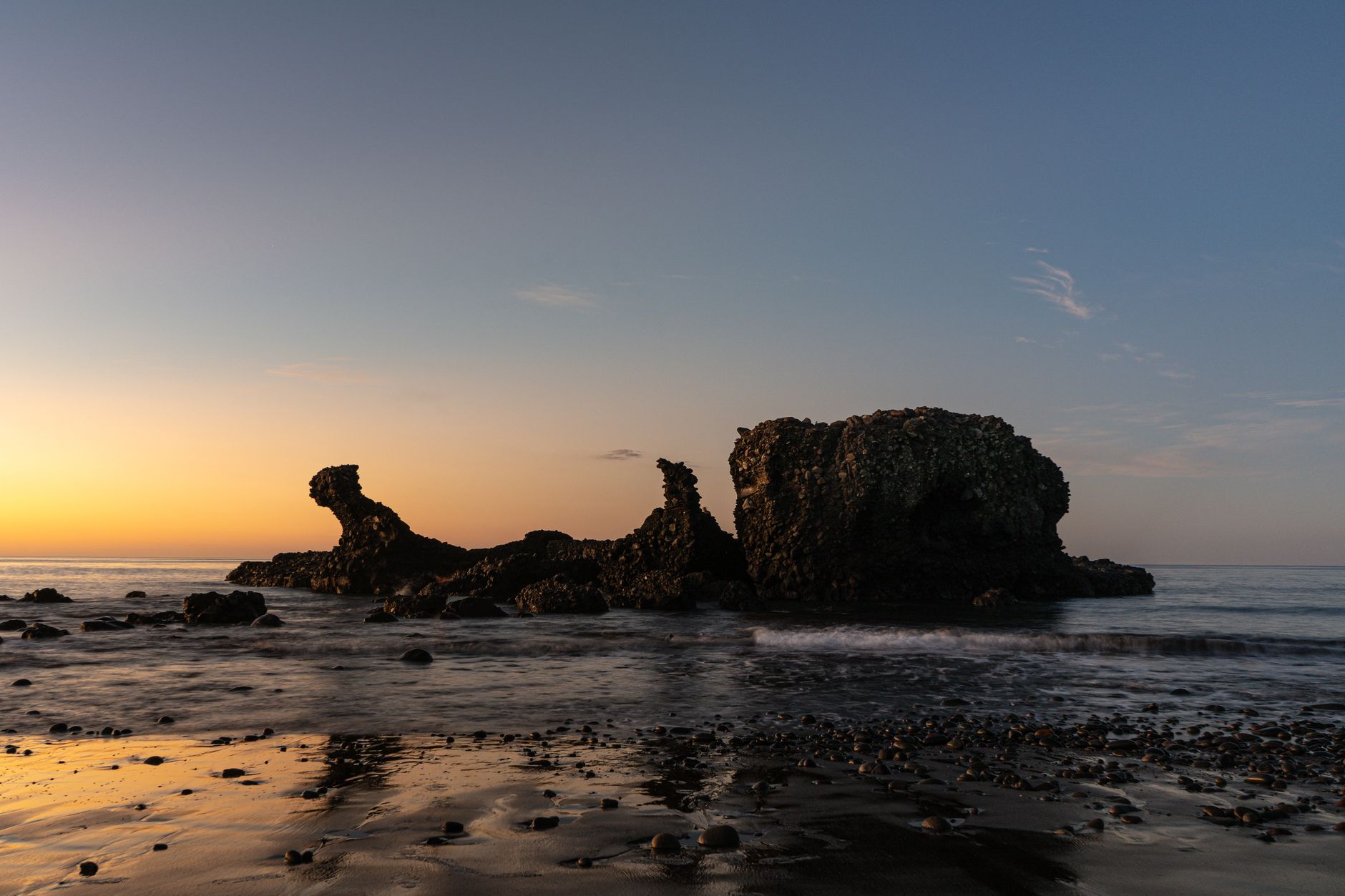
El Tunco's beach is the heart of the town and the reason for its name. It's a beach of dark sand of volcanic origin, typical of the Salvadoran Pacific coast, with breaking waves and, above all, its great protagonist: the El Tunco rock, a rock formation that emerges from the sea in front of the beach and that, according to local tradition, resembles the silhouette of a lying 'tunco' (pig). That rock is the iconic image of the place and appears in all the sunset photos.
The beach combines sandy sectors with areas of stones and rocks, so it's best to find out where it's best to swim and to be careful when entering the water (there are rocky stretches and currents). The surf, which is the place's fame, makes it more a beach for surfing and contemplating than for a calm swim at all its points. Even so, it's perfect for walking, sunbathing and soaking up the atmosphere.
The great moment of the day is the sunset: every evening, locals and visitors gather on the beach, at the bars with a view or on the rocks to watch the sun fall over the Pacific, with the silhouette of El Tunco cut out against the sky. It's one of the most beautiful sunsets in El Salvador and an unmissable ritual.
Getting there: on foot from any point in the town, which is small. Best time: sunset for the best atmosphere and photos; during the day for the beach and surf. Tips: be careful with the rocks and the currents when entering the water; use footwear for the stony areas. Carry little with you and watch your things on the sand. The sunset is the star moment, arrive early.
ℹ️ Distance: In the town of El Tunco itself (on foot) · Best time: Sunset for the atmosphere; during the day for beach and surf · Admission: Free (public beach) · Duration: Half a day or more
2
Surfing in El Tunco and El Sunzal
The waves that made the town famous: world-class point breaks for surfers and areas for learning.
Read more ↓
Surfing is the soul of El Tunco and what put it on the world map. The area offers some of the best waves in El Salvador and Central America, with breaks that attract both experienced surfers and beginners who come to learn. The waves of this coast are known for their consistency and their long ride, especially the 'point break' type that break over rocky bottoms.
Very close to El Tunco is El Sunzal beach, renowned for its long, gentler wave, ideal for intermediate surfers and for taking lessons, while in front of El Tunco itself more demanding waves break, over a rocky bottom, for surfers with more experience. This combination means the area works for all levels: there are surf schools that offer lessons for beginners (typically US$ 25 for a 1 to 1,5-hour lesson, with board included), board rentals (approx. US$ 10–15 per day) and guides for the more advanced.
The quality of these waves has led El Salvador to organize international surf competitions on this coast, which reinforced its prestige. For the visitor, whether to take a first lesson, improve their level or simply sit and watch the surfers, surfing is a central experience of El Tunco.
Getting there: El Tunco's waves are in front of the town; El Sunzal is a short distance away (on foot along the beach depending on the tide, or by transport). Best time: the biggest swell season usually runs from March/May to October; check local conditions. Tips: for beginners, El Sunzal is better and take a lesson with a school; be careful with the rocky bottoms. Respect the instructors' instructions and the priorities in the water. Rent equipment in the town.
ℹ️ Distance: Waves in front of El Tunco; El Sunzal a short distance away · Best time: Biggest swell approx. from Mar/May to Oct (check local conditions) · Admission: Surfing is free; surf lesson approx. US$ 25–35 (1-1,5 h, board included); board rental US$ 10–15/day (source: Surf Lesson El Tunco, Dos Palmas and Sunzal.com, verified July 2026) · Duration: 1-2 h for a lesson; as long as you want to surf
3
Sunset in El Tunco
The town's daily ritual: watching the sun fall over the Pacific with the El Tunco rock in the background.
Read more ↓
If there's one experience that defines El Tunco, it's its sunset. Every evening, the small town turns toward the sea to watch the sun sink into the Pacific, tinging the sky with oranges, pinks and violets, with the silhouette of the El Tunco rock cut out over the water. It's a daily ritual that gathers surfers, backpackers, couples, families and locals in a relaxed and magical atmosphere.
There are many places to enjoy it from: directly on the beach, sitting on the sand or on the rocks; from the bars and restaurants with seafront terraces, drink or beer in hand; or from a lookout in the town. Many choose a bar with a view to accompany the sunset with music and a drink, in one of the most typical plans of the place.
This sunset is, moreover, the prelude to El Tunco's nightlife: as the sun goes down, the town starts up its scene of bars and music. But even for those not looking to party, the moment of the sunset is an unmissable appointment and one of the most beautiful memories El Salvador leaves.
Getting there: on foot, from the beach or from any bar with a sea view in the town. Best time: year-round; the skies vary, but the sunset rarely disappoints. Tips: arrive a little early to get a good spot (especially on weekends), watch your belongings and, if you like, choose a seafront bar to enjoy it with a drink. Bring repellent as the evening falls.
ℹ️ Distance: On the beach and the town's bars (on foot) · Best time: Year-round, as the evening falls · Admission: Free from the beach; drink at a bar with a view approx. US$ 2–6 · Duration: 1 hour (for the sunset)
4
Town nightlife
The bars, the music and the international atmosphere that make El Tunco a party spot on the coast.
Read more ↓
El Tunco is not just surf and sunsets: it's also one of the best-known nightlife spots on the Salvadoran coast. When the sun goes down, the town's dirt streets come alive with bars, live music, parties and an international atmosphere that mixes surfers, backpackers and visitors from San Salvador, especially on weekends.
The offering ranges from quiet bars with tables facing the sea, ideal for having a drink and chatting after the sunset, to spots with louder music and dancing that liven up until late. The town is small, so everything is a few steps away and you can go from one place to another on foot, in a relaxed, barefoot atmosphere very typical of surf destinations.
On weekends in particular, El Tunco receives many people from the capital who come up to enjoy the night, which makes it one of the liveliest places in the country to go out. During the week, the atmosphere is calmer, ideal for those seeking tranquility.
Getting there: on foot around the town, which is very compact. Best time: weekends (Friday and Saturday) for the maximum atmosphere; during the week it's quieter. Safety tips: it's a touristy, busy area, but the usual common sense of nightlife applies: watch your belongings, moderate your consumption and return to your lodging with caution. Carry little cash on you.
ℹ️ Distance: In the town of El Tunco (on foot) · Best time: Weekends for the atmosphere; during the week quieter · Admission: Free to the bars; beer/drink approx. US$ 2–6; cocktails US$ 5–8 · Duration: A night
5
The nearby beaches of the Costa del Bálsamo, perfect for combining surf, tranquility and the famous Bitcoin Beach.
Read more ↓
El Tunco is the gateway to the Costa del Bálsamo, a strip of surf beaches that follow one another along the La Libertad coastline and that is worth exploring. Two of the most notable and nearby are El Sunzal and El Zonte, easily combined with a stay in El Tunco.
El Sunzal, practically next to El Tunco, is famous for its long, gentler wave, considered one of the best for intermediate surfers and for learning; it also has a somewhat quieter atmosphere and seafront restaurants. It's ideal for a day of surf or beach with less bustle than El Tunco.
El Zonte, a little farther to the west, gained world fame as 'Bitcoin Beach', the place where a pioneering experience of adopting bitcoin as a means of payment in the local economy was developed, even before El Salvador adopted that cryptocurrency as legal tender in 2021. In January 2025, the country reformed its Bitcoin Law (by agreement with the IMF) and removed bitcoin's status as mandatory legal tender: today its use is voluntary and the dollar is the reference currency, though in El Zonte several businesses still accept it. Beyond that story, El Zonte is a beautiful, quiet surf beach, with good waves and a relaxed atmosphere.
Getting there: El Sunzal is a short distance from El Tunco; El Zonte a little farther (about 12 km to the west), by coastal bus (approx. US$ 0,50–1, cash), Uber/taxi or tour. Best time: similar to El Tunco; check surf conditions. Tips: you can combine the three beaches in one stay; each has its personality. In El Zonte, it's interesting to see the dynamics of the 'Bitcoin Beach'. Be careful with currents and rocks when swimming.
ℹ️ Distance: El Sunzal next to El Tunco; El Zonte about 12 km to the west (transport) · Best time: Year-round; surf season depending on the swell · Admission: Free (public beaches); coastal bus to El Zonte approx. US$ 0,50–1; paid surf lessons · Duration: Half a day to a day each
6
The historic port of La Libertad, with its fishing pier, the tourist boardwalk and the fresh seafood market.
Read more ↓
A few kilometers from El Tunco is the city of La Libertad, the country's old coffee port and today one of the poles of the Surf City plan. Its most popular attraction is the fishing pier, where you can see the boats arrive with the day's catch and buy seafood directly from the sea; next to it a modern tourist boardwalk was renovated with restaurants, shops and views of the Pacific.
The pier's seafood market is an experience: super-fresh fish, shrimp, lobsters, cockles and curiles at source prices, which many restaurants in the area buy right there. It's the best place in the region to eat seafood without intermediaries and to get to know the port and fishing life of the coast.
La Libertad thus combines port history, sea cuisine and the energy of the new surf tourism, and it links easily with El Tunco and the other beaches. Getting there: 15-20 min from El Tunco via the coastal highway, by bus, taxi or car. Best time: the morning to see the catch and the market most active. Tips: try the seafood at the pier or the boardwalk, haggle respectfully at the market, and combine the visit with a sunset back in El Tunco.
ℹ️ Distance: City of La Libertad, 15-20 min from El Tunco (coastal highway) · Best time: Morning for the market and the pier most active · Admission: Free to walk the pier and the boardwalk; seafood depending on consumption · Duration: Half a day
🛡️ Getting sick far from home shouldn't cost you thousands of USD
Abroad, getting sick is more than a bad day. In many destinations public healthcare depends on appointments, queues and availability, and private care is paid upfront. An emergency can cost thousands of USD, right when you are far from home and on a tight budget. That is why I recommend you never leave without travel assistance.
I recommend GO! Assistance because it covers what matters: medical care, emergencies, medication and hospitalization depending on the plan. It protects you 24 hours a day, anywhere in the world, with real-time solutions on the ground. GO! 365 ECO and GO! 365 give you USD 45,000 of global coverage: the first with a USD 100 deductible, the second with none.
If you quote from Argentina, in October GO! also offers 12 interest-free instalments on all its products.
An emergency abroad can cost thousands of dollars. Travel with assistance.
GO! Assistance has 50% off in October and, with our link, you get an extra 20%.
Pick origin, destination, dates and ages and see the price of your travel assistance in a minute.
📶 Internet from the moment you land
I have never been left without internet on a trip. I land and my phone connects to the strongest network in the country I am visiting: I can let people know I arrived, sort out transport, book tours and keep posting content at a super affordable price (really cheap!). I always use the Maya Mobile eSIM, check out its plans by clicking the banner. See Maya Mobile plans →
Affiliate link: we earn a commission.


💵 Prices
Tickets
| Type | Price |
|---|
| Playa El Tunco | Free (public beach) |
| Surf lesson (with school, board included) | Approx. US$ 25–35 for a 1 to 1,5-hour lesson (source: Surf Lesson El Tunco / Dos Palmas, verified July 2026) |
| Surfboard rental | Approx. US$ 10–15 per day (source: Sunzal.com and local schools, verified July 2026) |
| Bars and nightlife | Free entry; beer/drink US$ 2–6; cocktails US$ 5–8 |
| Neighboring beaches (El Sunzal, El Zonte) | Free (public beaches); coastal transport US$ 0,50–1 by bus |
🔄 updated monthlyOfficial / reference values · double-check when buying
Activities and tours
Surf lesson for beginners (El Sunzal / El Tunco)
PriceApprox. US$ 25–35 (1-1,5 h, with board; sometimes includes the board for the rest of the day); e.g. Dos Palmas, Surf Lesson El Tunco (verified July 2026)
Surf tour of the Costa del Bálsamo (El Tunco, El Sunzal, El Zonte)
Day trip from San Salvador to the coast
Visit to El Zonte (Bitcoin Beach)
🔄 updated monthlyOfficial / reference values · double-check when buying
🚌 How to get there and distances
Getting around
On foot around the town
Free
NotesEl Tunco is very compact; everything (beach, bars, hostels, surf schools) is covered on foot along its dirt streets in a few minutes
PriceShort trips US$ 3–10; to La Libertad US$ 5–10; to the airport/San Salvador US$ 25–45 (verified July 2026)
NotesUber works in El Salvador and reaches El Tunco: it's the most convenient and transparent way to get around, with the fare and route visible in the app and payment by card or cash. Coverage is better to/from San Salvador and La Libertad; in the town itself there may be few cars available, so it's best to request it in advance. There's no consolidated Cabify or DiDi on the coast
Bus 80 (La Libertad ↔ El Sunzal, passes through El Tunco)
NotesThe key urban-rural bus of the area: it links La Libertad with El Sunzal passing through El Tunco, every 15-20 min approx. from 4:30 to 17:30. Paid in cash to the driver/conductor (no card or QR); there's no rechargeable card on the coast. For real-time location, Google Maps and Moovit cover San Salvador well but the coverage of these rural coastal buses is limited: the most reliable thing is to ask a local what time the last one passes
Bus 102 / 102A of the coast (El Tunco ↔ San Salvador)
NotesIt connects El Tunco with San Salvador via the coastal highway; the 102A has air conditioning and passes every 20-30 min approx. from 6 to 19 h. You catch it at the entrance to the town, on the highway. Payment in cash; there's no payment app
PriceFrom the airport/San Salvador approx. US$ 15–30 per person shared; private US$ 40–60 (verified July 2026)
NotesDoor-to-door services (Tunco Life, Salvadorean Tours, Sunzal, etc.) between SAL airport/San Salvador and El Tunco or El Zonte, convenient for arriving with luggage and boards. They're booked online and paid in advance; very used by backpackers
🔄 updated monthlyOfficial / reference values · double-check when buying
How to get there
| Route | Airlines / operators | Avg. price | Duration |
|---|
| From San Salvador → El Tunco | Car, Uber, shuttles and coastal bus 102/102A | Bus US$ 1,25–1,50; shared shuttle US$ 15–30; Uber/transfer US$ 25–45 (verified July 2026) | Approx. 45 min to 1 h (about 40-45 km) |
| From the International Airport (SAL) → El Tunco | Shuttles, Uber and metered taxis | Uber approx. US$ 25–40; private transfer/shuttle US$ 40–60; shared shuttle US$ 15–30 (verified July 2026) | Approx. 25 to 45 min (about 50 km) |
| From La Libertad → El Tunco | Bus 80 and Uber/taxi | Bus 80 approx. US$ 0,25–0,35 (cash); Uber/taxi US$ 5–10 (verified July 2026) | Approx. 15 to 20 min |
| Along the coastal highway from other beaches (El Zonte, etc.) | Buses, taxis/apps and tours | Bus US$ 0,50–1; taxi/tour depending on origin | Depending on origin (El Zonte approx. 20-30 min) |
🔄 updated monthlyOfficial / reference values · double-check when buying
🏨 Where to stay
No exact prices: a scale from $ (budget) to $$$$$ (luxury), with 2-3 options per category.
Backpacker hostels and surfcamps
Recommended optionsUS$ 12–30 per dorm bed; private room from approx. US$ 35–60. Hostels and surfcamps with an international atmosphere, the essence of El Tunco (e.g. Papaya Lodge, Sunset Surf Villa)
Mid-range hotels and hostels
Recommended optionsUS$ 60–120 a night; mid-range hotels and hostels with a private room a few steps from the beach and the nightlife, good value for money
Recommended optionsUS$ 120–250 a night; boutique hotels on the beach with a pool and views (e.g. Boca Olas), for comfort next to the surf
Recommended optionsUS$ 200–350+ a night; higher-category and design options facing the sea (e.g. Casa de Mar Hotel), with premium services and privacy
🍴 Where to eat
Pupuserías and typical food
Options / signature dishUS$ 1–6 per person; pupusas, snacks and Salvadoran food at good prices in the town and surroundings
Seafood and fresh fish restaurants
Options / signature dishUS$ 6–20 per dish; fish, shrimp, seafood cocktails and Pacific ceviche, in El Tunco and the nearby La Libertad pier
Seafront restaurants with sunset views
Options / signature dishUS$ 8–25 per dish; spots with terraces facing the beach, ideal for eating or having a drink while the sun goes down
International cuisine, bowls and specialty cafés
Options / signature dishUS$ 6–18 per dish; a large international offering (Mexican, Asian, vegetarian, healthy bowls, specialty coffee) in line with the surfer and international crowd
📖 History of Playa El Tunco
Origins, formation and what the sources say.
The Costa del Bálsamo: a resin that traveled as 'balsam of Peru'
It's hard to imagine looking at the barefoot surfers who fill El Tunco today, but these green mountains that fall to the Pacific yielded one of the most coveted products of colonial America: balsam. The coastal strip where the town is located is known as Costa del Bálsamo (Balsam Coast), and the name is no coincidence: it comes from the Bálsamo range, the mountains that border the coastline of La Libertad and Sonsonate, where the balsam tree (Myroxylon balsamum) grows, from which an aromatic resin of medicinal uses is extracted.
That resin has a curious story of mistaken identity. As early as 1493, the Spanish physician and botanist Nicolás Monardes documented its properties, and during the colonial period Salvadoran balsam became so valuable that it was exported to Europe. Since it left through the port of Acajutla and traveled in the trade circuits that passed through the Viceroyalty of Peru, it ended up known in the world as 'balsam of Peru', despite coming from these Central American slopes. Balsam was so important to the region that in 1939 it was declared the national tree of El Salvador, along with the maquilíshuat.
The historical reference point of this coast is the city of La Libertad, very close to El Tunco. La Libertad functioned during the 19th century and much of the 20th as one of the main ports of El Salvador, especially for exporting coffee, the great product of the Salvadoran economy. Its pier, from which goods were loaded and unloaded and fishing activity took place, is a historical landmark of the region and remains today an emblematic place, with its seafood market.
In that context of balsam, coffee, port and fishing, the beaches of the area —among them El Tunco— were small fishing villages, still unaware of the tourist fame that would come much later. Life revolved around the sea as a source of livelihood, not as an attraction for visitors.
The origin of the name 'Costa del Bálsamo'
The sources associate the name of the Costa del Bálsamo and of the range of the same name with the traditional extraction of balsam, an aromatic and medicinal resin from the trees of the area, traded since colonial times. The geographic name derives from that historical activity.
Source: https://es.wikipedia.org/wiki/Cordillera_del_B%C3%A1lsamo
El Tunco: from fishing village and the origin of its name
Before becoming the surf capital of El Salvador, El Tunco was a small fishing village on the Costa del Bálsamo, one more of the beaches of this coastline traditionally dedicated to fishing. Daily life revolved around the sea, with families that lived off artisanal fishing and the activities of the coastal environment.
The place's name has a picturesque origin, tied to the geography. According to local tradition, 'El Tunco' derives from a rock formation that emerges from the sea in front of the beach and that, seen from a certain angle, resembles the silhouette of a lying 'tunco' —'tunco' is the Salvadoran word (and of other areas of Central America) for pig or hog—. That pig-shaped rock gave the town its name and became, over time, its most recognizable symbol, present in all the sunset photographs.
For a long time, El Tunco was a quiet place, little known outside the region. The transformation that would bring it international fame as a surf destination would only come in recent decades, driven by the quality of its waves and the growth of tourism on the Salvadoran coast.
The origin of the name 'El Tunco'
The most widespread traditional explanation attributes the name 'El Tunco' to a rock in front of the beach that resembles the shape of a pig ('tunco' in Salvadoran speech). It's an explanation of local tradition; it should be taken as the popular tale of the place name.
Source: https://es.wikipedia.org/wiki/El_Tunco
The surf boom and international fame
El Tunco's great transformation came with surfing. It was above all in the 1990s that traveling surfers began to spread the word about this coast: consistent, long-riding breaks that break over rocky bottoms —the famous La Bocana point break, in front of El Tunco, and the long, gentler wave of neighboring El Sunzal—. Those waves, often compared to those of top-tier destinations, put El Salvador on the world surf map and quickly gained fame among the international community.
Word of mouth among surfers, together with the proximity of the area to San Salvador and the international airport (less than an hour away), meant that more and more visitors came to El Tunco in search of waves. The old fishing village gradually filled with hostels, surfcamps, surf schools, restaurants and bars, developing a backpacker, young and international atmosphere that became part of its appeal. The sunset by the El Tunco rock, the nightlife and the surf culture forged the identity of the place, where today surfers are the vast majority of visitors.
Thus, El Tunco went from being an unknown village to becoming the most famous beach destination in El Salvador and a surf reference in Central America, drawing travelers from all over the world. Together with neighboring beaches like El Sunzal and El Zonte, it consolidated the La Libertad coast as a first-order tourist hub.
Surf City and the bet on Pacific tourism
In recent years, El Salvador made a decisive bet on surf tourism along its whole Pacific coast under the brand 'Surf City', a strategy of promotion and investment in infrastructure (coastal highway, La Libertad boardwalk, services) that sought to position the country as a world surf destination. This coastal strip of La Libertad —with El Tunco, El Sunzal and El Zonte as star spots— was at the center of that bet.
The most visible move was bringing top-level competitions. In May-June 2021, the beaches of El Sunzal and La Bocana, in El Tunco, hosted the ISA World Surfing Games, with hundreds of surfers from more than 50 nations, an event that also served as an Olympic qualifier. El Salvador repeated as host in 2023, again with a qualifying stage toward the Paris 2024 Games, and continued organizing ISA world championships in the following years. All that media exposure reinforced the country's image as a surf paradise, and El Tunco, thanks to its prior fame and its atmosphere, established itself as one of the hearts of that movement.
In parallel, the nearby El Zonte beach gained global renown as 'Bitcoin Beach', for a pioneering community experience of using bitcoin as a means of payment, prior to the national adoption of bitcoin as legal tender in 2021. That adoption, however, was reversed in January 2025: by agreement with the IMF, El Salvador reformed its Bitcoin Law and the cryptocurrency ceased to be mandatory legal tender, with its use remaining voluntary and the dollar as the reference currency. Even so, the nickname and part of the crypto dynamic survive in El Zonte. All of this made this coast a point of international attention, combining surf, tourism and innovation. Today, El Tunco embodies that new tourist face of the country: an old fishing village turned into a showcase of the Salvadoran Pacific.
The promotion of surf and bitcoin on the Salvadoran coast
The sources note that El Salvador in recent years drove surf tourism on its Pacific coast and organized international competitions, giving prominence to beaches like El Tunco. For its part, El Zonte became known as 'Bitcoin Beach' for a local experience of using bitcoin prior to its national adoption as legal tender. The details of these initiatives and their results are subject to monitoring and debate.
Source: https://en.wikipedia.org/wiki/El_Zonte
❓ Frequently asked questions
Why is it called El Tunco?+
For a rock formation that emerges from the sea in front of the beach that, according to local tradition, resembles the silhouette of a lying 'tunco' (a Salvadoran word for pig). That rock is the iconic image of the place and the center of the sunset photos.
How much does a surf lesson or renting a board cost?+
A surf lesson for beginners runs about US$ 25 and includes a 1 to 1,5-hour session with a board (they often let you keep the board for the rest of the day). Renting a board costs about US$ 10–15 per day. There are several schools in the town and in El Sunzal with similar prices; it's best to compare and check the swell level of the day.
Is it a good place to learn to surf?+
Yes. The area has waves for all levels: the nearby El Sunzal beach, with its long, gentler wave, is ideal for beginners and for taking lessons, while in front of El Tunco more demanding waves break over a rocky bottom, for experienced surfers. There are surf schools, instructors and board rentals in the town.
How do I get to El Tunco from the airport or San Salvador?+
From the International Airport (SAL) it's just 25 to 45 minutes: a private taxi costs about US$ 30–40 and a shuttle/transfer US$ 40–60. From San Salvador (40-45 km, 45 min to 1 h) you can go by shared shuttle (US$ 15–30), taxi/transfer (US$ 40–60) or by coastal bus (US$ 1–2 with a transfer in La Libertad), cheaper but slower.
Can you swim calmly in El Tunco?+
You have to be careful: the beach combines sand with rocky stretches and has surf and currents, since it's famous precisely for the waves. It's best to find out locally where it's safest to swim, use footwear in the stony areas and enter the water with caution. For calmer swims, ask about the best areas and tide times.
What is 'Bitcoin Beach' and is it nearby?+
It's the nickname of El Zonte beach, about 12 km from El Tunco via the coastal highway, where a pioneering experience of using bitcoin as a means of payment in the local economy was developed, even before the adoption of bitcoin as legal tender in El Salvador (2021). In January 2025 the country reformed the law and bitcoin ceased to be mandatory legal tender (today its use is voluntary and the dollar is the reference currency), though in El Zonte several businesses still accept it. It's a beautiful, quiet surf beach, easy to combine with El Tunco (coastal bus US$ 0,50–1, cash).
How do I get around El Tunco and how do I pay for the bus?+
The town is so small that almost everything is done on foot. For the neighboring beaches and La Libertad, bus 80 (La Libertad–El Sunzal, passes through El Tunco) costs about US$ 0,25–0,35 and is paid only in cash to the conductor (no rechargeable card or QR). For San Salvador there's bus 102/102A (US$ 1,25–1,50, the 102A with air conditioning). Uber works and reaches El Tunco: it's the most practical for the airport or at night (request it in advance, there are few cars in the town). To locate buses in real time, Google Maps and Moovit work well in San Salvador, but the coverage of the rural coastal buses is limited: it's best to ask a local what time the last one passes.
More places in El Salvador
Sources consulted (15)
- Wikipedia (ES) — «El Tunco»: https://es.wikipedia.org/wiki/El_Tunco
- El Salvador Travel (official tourism site) — Surf City: https://elsalvador.travel/
- Wikipedia (ES) — «La Libertad (El Salvador)»: https://es.wikipedia.org/wiki/La_Libertad_(El_Salvador)
- Dos Palmas — Surf lesson (US$ 25): https://www.dospalmassv.com/promotions/surf-lesson.html
- Surf Lesson El Tunco — Clases y alquiler de tablas (prices): https://surflessonseltunco.com/surfboard-rentals/
- Sunzal.com — Surfboard rentals y clases en El Tunco: https://www.sunzal.com/things-to-do/surf-board-rentals/
- Hostelworld — Alojamiento en El Tunco (prices): https://www.hostelworld.com/hostels/p/323281/sunset-surf-villa-el-tunco/
- Centro Coasting — El Tunco Bus Travel Guide (routes 80, 102/102A, fares, cash payment): https://centrocoasting.com/elsalvador/el-tunco/
- Everything El Salvador — Getting Around (Uber comes to El Tunco; buses take cash): https://everythingelsalvador.com/getting-around-el-salvador/
- Moovit — Transporte público San Salvador (cobertura de buses) — app colaborativa de transporte público (data is uploaded by users; not an official source for fares or schedules): https://moovitapp.com/index/en/public_transit-San_Salvador-6110
- Tunco Life — Airport transfers El Salvador (shuttles): https://tuncolife.com/airport-transfers-el-salvador-san-salvador/
- Wikipedia (ES) — «La Libertad (El Salvador)»: https://es.wikipedia.org/wiki/La_Libertad_(El_Salvador)
- Wikipedia (ES) — «Cordillera del Bálsamo»: https://es.wikipedia.org/wiki/Cordillera_del_B%C3%A1lsamo
- El Salvador Travel — Surf City / La Libertad: https://elsalvador.travel/
- Wikipedia (EN) — «El Zonte (Bitcoin Beach)»: https://en.wikipedia.org/wiki/El_Zonte