📌Province / location
Cayo Guillermo is a small cay in the Jardines del Rey archipelago (also called Sabana-Camagüey), on the north coast of Ciego de Ávila province, in central Cuba. It lies just west of Cayo Coco, to which it is connected by road, and forms part of one of the country's great sun-and-beach tourism hubs. It is famous for its natural beauty, its sand dunes —among the highest in the Caribbean— and for the literary legacy of Ernest Hemingway, who immortalized it in his novels
📌Service town
Cayo Guillermo is a resort destination: it's not a town, but a tourist cay of all-inclusive hotels. The service base on the mainland is the city of Ciego de Ávila and, closer, Morón. It's reached by the long causeway that crosses the sea from the mainland passing through Cayo Coco. The airport serving the area is Jardines del Rey (CCC), on Cayo Coco, which receives international charter flights. Outside the resorts, services are limited, so it's best to handle money exchange, shopping and errands in Ciego de Ávila or Morón
📌Best time to go
The best time is the dry season, from November to April, with sunny days, a calm sea, low humidity and ideal beach temperatures; it's the high season. Summer (May to October) is hotter and more humid, with the Caribbean rainy and cyclone season (especially from August to October), when there can be storms and occasional closures. December to April concentrates the best combination of weather, calm sea and good visibility for diving and snorkeling
📌Suggested days
Cayo Guillermo is, above all, a destination for spending several beach days on an all-inclusive basis: stays of 3 to 7 nights at a resort are common. To see the essentials —the famous Playa Pilar, the dunes, the sandbanks of Cayo Media Luna and a snorkeling or boat outing— 2 to 3 days are enough. It combines very well with Cayo Coco (right next door) and with excursions to Morón, the Leche and Redonda lagoons, or even to Remedios and Cayo Santa María
💱 Cambio de USD
Loading rate…
🌤️ Clima en Cayo Guillermo
Loading weather…
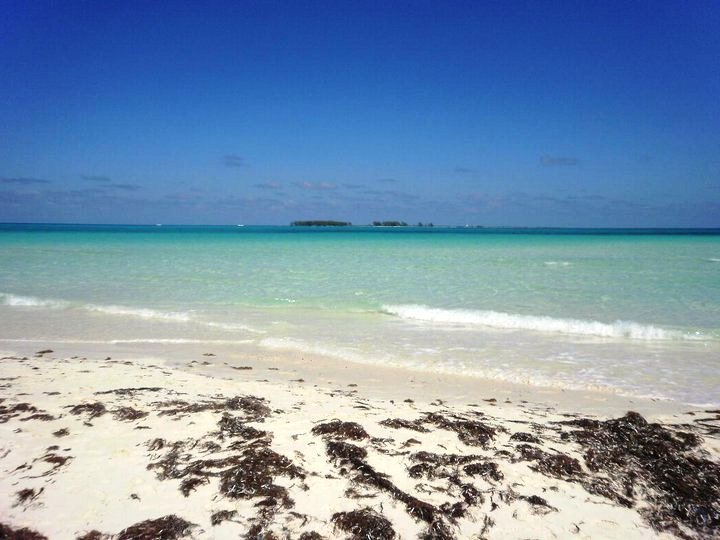
Cayo Guillermo is one of those corners of the Cuban Caribbean that seem lifted from a postcard: dazzling white sand, waters that range from turquoise to emerald green, mangroves, sandbanks in the middle of the sea and some of the highest dunes in the Caribbean. It's a small cay in the Jardines del Rey archipelago, right next to Cayo Coco, on the north coast of Ciego de Ávila province, and it forms part of one of Cuba's great sun-and-beach destinations.
Its great fame has a name of its own: Ernest Hemingway. The writer sailed these waters and immortalized them in his novels —especially in 'Islands in the Stream'—, and the cay's jewel owes its name to him: Playa Pilar, named after the author's yacht, considered one of the most beautiful beaches in Cuba. In front of it, the sandbanks of Cayo Media Luna invite you to walk out to sea with the water at your waist.
This guide covers the essentials of Cayo Guillermo with a practical eye: which beaches and corners not to miss, how to arrive via the causeway, what water activities to do, how to combine it with Cayo Coco and the attractions of the mainland, and what to keep in mind when staying at its resorts. It's the ideal destination for anyone seeking a first-rate Caribbean beach with a touch of literary legend.
📖 History of Cayo Guillermo
Cayo Guillermo forms part of the Jardines del Rey archipelago, a group of cays in northern Cuba that was named in the 16th century by the conquistador Diego Velázquez in honor of King Ferdinand the Catholic ('Jardines del Rey', the King's Gardens). For centuries, these cays remained practically uninhabited, a refuge for fishermen, seabirds and, in times past, pirates and smugglers who took advantage of their labyrinths of mangroves and islets. The cay's international fame came thanks to Ernest Hemingway, who sailed these waters in his yacht Pilar during the 1930s and 1940s and made them the setting of his literature, especially of the posthumous novel 'Islands in the Stream'. The cay's most famous beach bears exactly the name of his boat. The great change came at the end of the 20th century, when Cuba developed the tourism of the Jardines del Rey: the long causeway that links the cays with the mainland was built and the great all-inclusive resorts were raised that today make Cayo Guillermo and neighboring Cayo Coco one of the country's main beach destinations. That development, however, has generated debate over its impact on the fragile ecosystems of mangroves and reefs. The full history is on our history page.
Read the full history →
🗺️ What to see
1
Playa Pilar
The cay's most famous beach and one of the most beautiful in Cuba, named after Hemingway's yacht.
Playa Pilar is the jewel of Cayo Guillermo and one of the most famous and photographed beaches in all of Cuba. Its name pays tribute to Ernest Hemingway's yacht 'Pilar', which sailed these waters. It's a strip of very fine white sand, bathed by a sea of turquoise and emerald-green tones of extraordinary transparency, backed by sand dunes that rank among the highest in the Caribbean (some exceed 15 meters).
The landscape combines the beach, the vegetation-covered dunes and, off the coast, the sandbanks and the nearby Cayo Media Luna, which lets you walk out to sea for meters with the water at your waist. It's an ideal place to swim, snorkel, sunbathe and enjoy the Caribbean in its purest form. On the beach there are usually basic services (bar, umbrella and water-gear rental) and from here catamaran or boat outings depart toward the sandbanks.
Getting there: at the western tip of Cayo Guillermo; reached by car, taxi, transfer or excursion from the cay's resorts or from Cayo Coco. Best time to go: the dry season (November to April), with a calm sea. Tips: bring sunscreen, water and water shoes; the sunset from the dunes is spectacular. It's best to go early to enjoy it with fewer people.
ℹ️ Distance: Western tip of Cayo Guillermo (car, taxi, transfer or excursion) · Best time to go: Dry season (November to April), calm sea; sunset from the dunes · Entry: Free access to the beach; lounger/umbrella approx. US$ 3–5; water sports and excursions separate (2025; check) · Duration: Half a day or more
2
Cayo Media Luna and the sandbanks
Sandbanks and an islet off Playa Pilar, a paradise for walking out to sea and snorkeling.
Off the coast of Cayo Guillermo, especially in front of Playa Pilar, stretch sandbanks and the little Cayo Media Luna, one of the great natural attractions of the area. The waters are so shallow and transparent that you can walk out to sea for a good stretch with the water barely at your waist, over a bottom of white sand, a magical experience that is a trademark of the place.
The area is ideal for snorkeling, since there are coral formations and marine life nearby, and for water sports. The usual way to visit it is on a catamaran or boat excursion from Playa Pilar or from the resorts, which usually combines swimming at the sandbanks, a snorkeling stop and, sometimes, lunch on board or on an islet.
Getting there: by boat (catamaran or launch) from Playa Pilar or the cay's resorts. Best time to go: the dry season, with a calm sea and good visibility. Tips: boat excursions are usually booked at the resort or at Playa Pilar; bring water-resistant sunscreen, a cap and, if you have it, your own snorkeling gear.
ℹ️ Distance: Off Playa Pilar (by catamaran or launch) · Best time to go: Dry season; calm sea and good visibility · Entry: Catamaran/launch excursion approx. US$ 50–90 per person, usually includes snorkeling and lunch (2025; check) · Duration: Half a day (excursion)
3
The resort beaches and the tourist front
The cay's main beach strip, with white sand, calm sea and the all-inclusive hotels.
The tourist front of Cayo Guillermo concentrates a series of all-inclusive resorts along its main beach, a strip of white sand and calm sea, generally protected by reefs and banks, which creates calm waters ideal for families. This is the area where most visitors stay and from where the water activities and excursions are organized.
Unlike Playa Pilar (wilder and famous for its dune landscape), the beaches in front of the hotels are more 'resort-like': comfortable, with services, loungers, beach bars and non-motorized water sports included in many packages. They're perfect for relaxing several days, alternating beach, pool and hotel dining.
Getting there: they are the beaches in front of the cay's own resorts. Best time to go: the dry season (November to April). Tips: if you're after the most spectacular scenery, take at least one getaway to Playa Pilar; the resort beaches are ideal for the day-to-day of your stay. Check which water activities are included in your package.
ℹ️ Distance: In front of the cay's resorts · Best time to go: Dry season (November to April) · Entry: Free access to the beach; services depending on the resort (all-inclusive) · Duration: The whole stay
4
Diving and snorkeling on the Jardines del Rey reefs
Coral reefs with abundant marine life, part of one of the great coral ecosystems of the Caribbean.
The waters of Cayo Guillermo and of the whole Jardines del Rey archipelago form part of one of the great coral reef systems of the Caribbean, which makes them a notable destination for diving and snorkeling. The reefs are home to corals, sponges, gorgonians and a great diversity of tropical fish, and the good visibility of the waters (especially in the dry season) lets you enjoy them to the full.
There are dive centers in the cays' area that organize dives for different levels, from intro dives for beginners to reef and wall dives for certified divers, as well as snorkeling outings for those who prefer to explore from the surface. It's one of the best ways to discover the underwater natural richness of the Jardines del Rey.
Getting there: the outings depart from the cay's water-sports centers or on organized excursions. Best time to go: the dry season, with better visibility and a calm sea. Tips: dives and outings are usually booked in advance at the resort or dive center; respect the reef protection rules (don't touch or stand on the coral).
ℹ️ Distance: Reefs off the cay (outings from water-sports centers) · Best time to go: Dry season; better visibility and calm sea · Entry: Two-tank dive approx. US$ 40–60; intro dive US$ 60–80; snorkeling outing US$ 25–45 (2025; check) · Duration: Half a day
5
Excursions to the mainland (Morón, lagoons and Cayo Coco)
Getaways from the cay toward Cayo Coco, Morón and the Leche and Redonda lagoons.
Although Cayo Guillermo invites you not to leave the beach, it's worth doing at least one excursion to see the surroundings. The most immediate is neighboring Cayo Coco, connected by road, with its own beaches, its flamingo lagoon and more services on offer. But it's also highly recommended to go down to the mainland.
In Ciego de Ávila province are Morón, 'the city of the rooster', a quiet, charming town; the Leche lagoon, the largest natural lagoon in Cuba, ideal for boat rides and bird watching; and the Redonda lagoon, famous for fishing and launch trips among mangrove channels. Many excursions combine these points with the rural life and Cuban culture of the interior, an interesting contrast with the world of the resorts.
Getting there: by rental car, taxi or organized excursion from the cay, over the causeway to the mainland. Best time to go: the dry season for comfortable touring; at dawn or dusk for the birds. Tips: excursions are booked at the resort or with operators; some also include Remedios and Cayo Santa María, farther west.
ℹ️ Distance: Cayo Coco right next door; Morón and lagoons on the mainland (car, taxi or excursion) · Best time to go: Dry season; dawn or dusk for the birds · Entry: Excursion to Morón and lagoons approx. US$ 30–55 per person; boat ride on the Redonda lagoon US$ 10–20 (2025; check) · Duration: Half a day to a full day
6
Sport fishing and Hemingway's legacy (bonefish flats)
The waters Hemingway fished: sandy flats famous for fly-fishing for bonefish, permit and tarpon.
Cayo Guillermo owes much of its fame to Ernest Hemingway, who sailed these waters in his yacht Pilar in the 1930s and 1940s and made them the setting of his literature, above all the posthumous novel 'Islands in the Stream'. That world of fishing and adventure is still alive: the extensive sandy flats surrounding the cay are today an elite destination for sport fly-fishing, much valued by anglers from around the world.
The star species are the bonefish (macabí), the permit and the tarpon (sábalo), fished on the flats and mangrove channels in catch-and-release mode. There is also deep-sea fishing (marlin, mahi-mahi, tuna) in the deeper waters off the cays. The season and conditions vary, and the activity is organized with specialized guides and boats from the area's marinas (largely operated by Marlin/Avalon).
Beyond fishing, traveling these flats by boat or kayak, among mangrove channels and sandbanks, is a beautiful way to connect with the landscape that inspired Hemingway. How to book: fishing outings are reserved in advance at the resort or with specialized operators. Tips: fly-fishing is usually catch-and-release; check the season, licenses and what each outing includes (guide, boat, gear).
ℹ️ Distance: Flats and channels around Cayo Guillermo (by boat, from the marinas) · Best time to go: Dry season and depending on species; check the season with the operator · Entry: Fly-fishing outing approx. US$ 300–500 per day and boat (1–2 anglers, 2025); deep-sea fishing from US$ 250 for a half day (check) · Duration: Half a day to a full day
What nobody tells you💵 Prices
Tickets
| Type | Price |
|---|
| Playa Pilar (access) | Free (public beach); lounger/umbrella approx. US$ 3–5; water sports separate (2025) |
| Resort beaches | Free access; services depending on the hotel plan (all-inclusive) |
| Boat excursion to Cayo Media Luna and the sandbanks | Approx. US$ 50–90 per person, usually includes snorkeling and lunch (2025; check) |
| Diving / reef dive | Two-tank dive US$ 40–60; intro dive US$ 60–80 (2025; check) |
| Access to the cays via the causeway | Toll approx. US$ 2 per car each way (2025; check) |
🔄 updated monthlyOfficial / reference values · double-check when buying
Activities and tours
| Activity | Price | Duration | Operator |
|---|
| Beach day and non-motorized water sports at the resort | Included in the all-inclusive plan (kayak, small catamaran, shore snorkeling) | Full day | Cay resorts |
| Catamaran excursion to Cayo Media Luna (sandbanks + snorkeling) | Approx. US$ 50–90 per person (includes snorkeling and lunch) | Half a day | Marlin and water-sports operators |
| Diving on the Jardines del Rey reefs | Two-tank dive US$ 40–60; intro dive US$ 60–80 | Half a day | Marlin dive centers on the cays |
| Sport fishing (deep-sea or bonefish on the flats) | Fly-fishing US$ 300–500 per day and boat; deep-sea fishing from US$ 250 for a half day | Half a day to a full day | Marlin / Avalon and water-sports operators |
| Excursion to Morón and the Leche / Redonda lagoons | Approx. US$ 30–55 per person with guide and transfer | Full day | Cubatur, Ecotur and local operators |
🔄 updated monthlyOfficial / reference values · double-check when buying
🚌 How to get there and distances
Getting around
| Mode | Price | Duration | Notes |
|---|
| Cay transfers and taxis | Between resorts and to Playa Pilar US$ 10–30 per car; to Cayo Coco US$ 15–35 (source: traveler reports, verified July 2026) | Variable | The usual way to move between the resorts, Playa Pilar and Cayo Coco; it's best to agree the fare in advance |
| Rental car | Approx. US$ 70–120 per day plus insurance and fuel (source: rental agencies and forums, verified July 2026) | Variable | It offers independence to explore Cayo Guillermo, Cayo Coco and go down to the mainland over the causeway; it's best to book in advance |
| Panoramic cays bus (hop-on hop-off) | US$ 5 per person for the day pass on the Cayo Coco–Cayo Guillermo circuit; US$ 10 for the one that adds Cayo Paredón; paid on board in cash (source: cayococococuba.net, verified July 2026) | All day | Open-top panoramic bus that connects the main points and beaches of Cayo Coco and Cayo Guillermo (hotels, plazas, dolphinariums, Playa Pilar, docks); the ticket is bought on board and the schedule is posted at each hotel entrance. It's the cheapest transport between the two cays, but it does NOT cross the causeway to the mainland |
| Scooter / bicycle (rental) | Scooter approx. US$ 25–40 per day; bicycle US$ 5–10 (sometimes included at the hotel) (source: hotels and forums, verified July 2026) | Variable | Some resorts offer scooter or bicycle rental to get around the cay independently |
| Transport payment and apps (how it's paid today) | Cash in USD for the panoramic bus, taxis, rentals and the causeway toll (40 CUP per car) (source: cayococococuba.net and official Granma/Cubadebate fare, verified July 2026) | — | On the cays everything is paid in cash, preferably in USD: the panoramic bus (on board), the taxis, the rentals and the causeway toll (official fare of 40 CUP per car since February 2025; the old CUC charge became obsolete when that currency was eliminated in 2021). There is no real-time transport app: in Cuba apps like Moovit or Transit don't work, and 'La Nave' (the 'Cuban Uber') only operates in Havana; for the panoramic bus, the schedule posted at each hotel is enough. The QR payment (Transfermóvil/EnZona) from Ómnibus Nacionales is for state interprovincial buses and requires a Cuban account, so it doesn't apply on the cays. Bring enough cash: there are few ATMs and foreign cards rarely work |
🔄 updated monthlyOfficial / reference values · double-check when buying
How to get there
| Route | Airlines / operators | Avg. price | Duration |
|---|
| International charter flight → Jardines del Rey Airport (CCC, Cayo Coco) | Charter airlines (Canada, Europe) and scheduled | Depending on origin and season; the resort transfer is usually included in the package (or taxi US$ 20–35) | Depending on origin; resort transfer of about 30-60 min |
| Havana → Ciego de Ávila → cays (bus + transfer) | Víazul + transfer/taxi | Víazul Havana–Ciego de Ávila approx. US$ 30; plus transfer to the cays US$ 35–55 (2025) | Approx. 6-7 h to Ciego de Ávila + 1.5 h over the causeway |
| Ciego de Ávila / Morón → Cayo Guillermo (over the causeway) | Rental car, taxi or transfer | Taxi approx. US$ 35–55 per car, plus a toll of 40 CUP per car on the causeway (official fare in effect since February 2025; source: taxi drivers and Granma/Cubadebate, verified July 2026) | Approx. 1 to 1.5 h (passing through Cayo Coco) |
| Cayo Coco → Cayo Guillermo (by road) | Car, taxi or transfer | Taxi approx. US$ 15–35 per car (2025) | Approx. 20-30 min |
| Organized transfer from other destinations (Varadero, Havana, Remedios) | Agencies and operators | Approx. US$ 90–280 per car depending on origin (2025) | Depending on origin (several hours) |
🔄 updated monthlyOfficial / reference values · double-check when buying
🏨 Where to stay
No exact prices: a scale from $ (budget) to $$$$$ (luxury), with 2-3 options per category.
| Category | Price | Recommended options |
|---|
| Luxury beachfront all-inclusive resorts (5 stars) | $$$$$ | Large beachfront all-inclusive resorts (e.g. Iberostar Daiquirí, Meliá Cayo Guillermo, Kempinski Cayo Guillermo): approx. US$ 160–320 per person per night in high season, with dining, pools and entertainment (2025) |
| Upper-mid-range all-inclusive resorts (4 stars) | $$$$$ | Upper-mid-range all-inclusive hotels (e.g. Sol Cayo Guillermo, Gran Muthu Imperial): approx. US$ 90–180 per person per night, good value, access to the same beaches (2025) |
| Alternative in Cayo Coco | $$$$$ | If Cayo Guillermo is full, neighboring Cayo Coco offers more all-inclusive resorts (US$ 80–300 per person per night), a few minutes away by road, with easy access to Playa Pilar and the beaches of both cays |
| Casas particulares on the mainland (Morón / Ciego de Ávila) | $$$$$ | For a more authentic and cheaper experience: casas particulares in Morón or Ciego de Ávila, approx. US$ 15–30 per night, from where you visit the cay for the day. There is no private lodging within the cay |
🍴 Where to eat
| Type | Price | Options / signature dish |
|---|
| Resort buffets and restaurants | $$$$$ | International buffets and themed restaurants (Italian, seafood, creole) included in the hotel plan. Extra meals outside the plan approx. US$ 15–30 per person |
| Beach restaurants and bars (Playa Pilar) | $$$$$ | At Playa Pilar and other points of the cay, fish, seafood and light cuisine by the sea outside the hotel plan: approx. US$ 10–20 per person with a drink |
| Fresh fish, lobster and seafood | $$$$$ | The cays' specialty: grilled lobster approx. US$ 12–25; shrimp and catch of the day US$ 8–15; at the à la carte restaurants of the resorts and beaches |
| Paladares and creole food on the mainland | $$$$$ | On the excursions to Morón, paladares with homemade creole cuisine (pork, congrí, root vegetables): approx. US$ 6–12 per main dish, more authentic and cheaper than the resort |
❓ Frequently asked questions
What's the difference between Cayo Guillermo and Cayo Coco?+
They are neighboring cays, connected by road, within the Jardines del Rey. Cayo Coco is larger, with more resorts and services; Cayo Guillermo is smaller and famous for its natural beauty, its high dunes and the famous Playa Pilar. Many travelers stay on one and visit the other: they share beaches, excursions and the same causeway access. Cayo Guillermo usually feels quieter and more intimate.
Why is Playa Pilar famous?+
Playa Pilar is considered one of the most beautiful beaches in Cuba, with dazzling white sand, a turquoise sea and some of the highest dunes in the Caribbean. Its name pays tribute to Ernest Hemingway's yacht 'Pilar', which sailed these waters and immortalized them in his literature. In front of it, the sandbanks of Cayo Media Luna let you walk out to sea with the water at your waist.
How do I get to Cayo Guillermo?+
You get there by a long causeway (a road over the sea) from the mainland, passing through Cayo Coco. The most direct air route is Jardines del Rey Airport (CCC) on Cayo Coco, with international charter flights. By land, it's common to reach Ciego de Ávila (Víazul bus from Havana) and from there take a transfer, taxi or car over the causeway. To enter there is usually a checkpoint: bring your documents.
Is it better to stay on the cay or on the mainland?+
If your goal is the beach and rest, it's best to stay at the cay's all-inclusive resorts, right on the sea. There are no casas particulares within the cay. If you prefer a more authentic and cheaper experience, you can stay at casas particulares in Morón or Ciego de Ávila and visit the cay for the day, though you lose the comfort of having the beach at your doorstep.
What activities can you do besides the beach?+
Catamaran excursions to the sandbanks of Cayo Media Luna, snorkeling and diving on the Jardines del Rey reefs, sport fishing, water sports at the resort, and getaways to the mainland: Morón, the Leche lagoon (the largest in Cuba) and the Redonda lagoon, with boat rides and bird watching. You can also combine it with Remedios and Cayo Santa María.
What's the best time to go?+
The dry season, from November to April, with sunny days, a calm sea and low humidity, is the best time and the high season. Summer (May to October) is hotter and more humid, and coincides with the Caribbean rainy and cyclone season (especially from August to October), when there can be storms and a rougher sea.
How do I get around Cayo Guillermo and how is transport paid?+
In cash, preferably in USD. To move between Cayo Guillermo and Cayo Coco (and to Playa Pilar) the cheapest is the hop-on hop-off panoramic bus (US$ 5 for the day pass; US$ 10 for the one that adds Cayo Paredón), which is paid on board and whose schedule is posted at each hotel entrance. There are also taxis and transfers (US$ 10–35), and you can rent a scooter, bike or car for independence. There is no real-time transport app: in Cuba apps like Moovit or Transit don't work, and 'La Nave' (the 'Cuban Uber') only operates in Havana. The causeway toll is 40 CUP per car. Everything is paid in cash: on the cays there are few ATMs and foreign cards rarely work.
Sources consulted (15)
- Wikipedia (ES) — «Cayo Guillermo»: https://es.wikipedia.org/wiki/Cayo_Guillermo
- Wikipedia (EN) — «Cayo Guillermo»: https://en.wikipedia.org/wiki/Cayo_Guillermo
- Wikipedia (ES) — «Jardines del Rey»: https://es.wikipedia.org/wiki/Jardines_del_Rey
- EcuRed — «Cayo Guillermo»: https://www.ecured.cu/Cayo_Guillermo
- Cuba Travel (MINTUR) — «Jardines del Rey»: https://www.cuba.travel/destino/jardines-del-rey
- Lonely Planet — «Cayo Guillermo»: https://www.lonelyplanet.com/cuba/ciego-de-avila-province/cayo-guillermo
- Wikipedia (EN) — «Ernest Hemingway»: https://en.wikipedia.org/wiki/Ernest_Hemingway
- Víazul (oficial): https://www.viazul.com/
- Cuba Travel (MINTUR) — «Jardines del Rey»: https://www.cuba.travel/destino/jardines-del-rey
- Cayo Coco Cuba (net) — «Getting Around: hop-on hop-off bus, Dotto train, taxis» (US$ 5/10 pase Coco–Guillermo–Paredón): https://www.cayocococuba.net/gettingaround.html
- Granma — «Incrementarán la tasa de peaje a partir del 10 de febrero» (peaje 40 CUP, 2025): https://www.granma.cu/cuba/2025-02-05/incrementaran-tasa-de-peaje-a-partir-del-proximo-10-de-febrero
- Lonely Planet — «Ciego de Ávila Province»: https://www.lonelyplanet.com/cuba/ciego-de-avila-province
- Cuba Travel (MINTUR) — «Jardines del Rey»: https://www.cuba.travel/destino/jardines-del-rey
- EcuRed — «Cayo Guillermo»: https://www.ecured.cu/Cayo_Guillermo