Viajá con Gus
HomePuerto RicoCrash Boat Beach
Crash Boat Beach
🇵🇷 Puerto Rico · West (Porta del Sol)

Crash Boat Beach

Jump to what you need
📌Location
Crash Boat (Crashboat) Beach is in Aguadilla, in the northwest corner of Puerto Rico, within the Porta del Sol tourist region. It's one of the most popular and photographed beaches on the island, famous for its pier of colorful pilings, its fishing boats and its crystal-clear turquoise waters. It's about 130 km from San Juan, a short distance from the Rafael Hernández Airport (BQN) in Aguadilla.
📌Service town
Aguadilla is the nearest service city, with hotels, restaurants, shops, a hospital and the Rafael Hernández Airport (BQN), which receives some direct flights from the United States. San Juan, about two hours away via the PR-22 highway, is the base for full services and the main international airport (SJU). To reach the beach it's best to have a car; public transport in the area is limited and Uber is practically nonexistent in Aguadilla.
📌Best time to go
The climate is warm tropical year-round (26-30 °C). The dry season from December to April is the most comfortable and has the best visibility for snorkeling and diving, though it coincides with the winter's strong-swell season on the west/northwest coast (attractive to surfers at nearby beaches). Crash Boat tends to be more sheltered and calm than the neighboring surf beaches. From June to November is hurricane season, with more rain but often very calm waters.
📌Suggested days
Crash Boat is enjoyed in half a day or a full beach day. It's usual to combine it with a visit to Aguadilla and other beaches and attractions of the northwest (surfing at other beaches, the coastal walk, food). As part of a tour of Porta del Sol, it fits very well into a two-or-three-day base in Aguadilla or surroundings, adding Isabela, Rincón and the west coast.
💱 USD exchange rate
Loading rate…
🌤️ Weather in Crash Boat Beach
Loading weather…

Few images represent the west coast of Puerto Rico so well as that of Crash Boat Beach: its long pier of pilings painted in colors reaching into a turquoise sea, the fishermen's boats bobbing near the shore and the golden sand lined with palms. It's in Aguadilla, in the northwest corner of the island, within the Porta del Sol tourist region, and it's one of the most beloved and visited beaches by Puerto Ricans and travelers.

The name 'Crash Boat' (literally, 'rescue boat') comes from the era when this area housed US military installations, tied to the former Ramey base: the rescue launches that assisted the aircraft were kept here. From that past the pier remains, today the identifying seal of the beach and a magnet for photos, dives by the most daring and sunset strolls.

This guide covers the essentials of Crash Boat with a practical eye: how to get there, what activities to do (from swimming and snorkeling to trying your luck at surfing on neighboring beaches), what services to find, how to get around and where to eat. It's a can't-miss visit for anyone exploring the island's northwest who wants to experience the festive, beachy atmosphere of Porta del Sol.

📖 History of Crash Boat Beach

The Aguadilla area where Crash Boat is today was historically linked to fishing and, in the 20th century, to the US military presence. For decades, the nearby Ramey base of the US Air Force operated in Aguadilla, and this beach was where the rescue launches ('crash boats') meant to assist aircraft and crews in case of an accident were kept: hence the name it's known by to this day. The beach's pier is a legacy of those installations. After the military base closed at the end of the 20th century, the area was repurposed and the beach became public space, becoming one of the most popular beaches in Puerto Rico. Its pier of colorful pilings, its fishing boats and its crystal-clear waters made it an icon of the northwest coast and one of the most reproduced images of the island in tourist promotion. The full story is on our history page.

Read the full history ↓

🏛️ Crash Boat Beach is in Aguadilla

The surfing heart of Porta del Sol, in the northwestern corner, founded in 1775: a municipality of legendary waves and crystal-clear water, heir to the old Cold War Ramey Base, today home to Rafael Hernández Airport and to photogenic Crash Boat Beach with its colored piers.

Read the history of Aguadilla →

🗺️ What to see

1
The Crash Boat pier
The iconic pier of colorful pilings reaching into the turquoise sea, the identifying seal of the beach.
The Crash Boat pier is, without a doubt, the great symbol of the beach and one of the most recognizable postcards in all of Puerto Rico. It's a structure of pilings that reaches into the sea, a legacy of the era when the area housed the rescue launches of the Ramey military base. Over time, the pilings and remains of the structure got covered in colors and became the favorite setting for photographers and visitors. The pier is much more than a photogenic spot: much of the beach's life concentrates around it. The most daring throw themselves into the water from the structure (the famous dives), though it's best to do so only where it's safe and with knowledge of the depth. The waters around the pilings, full of marine life, are an excellent place to snorkel and see fish. Walking to the end of the pier, watching the fishermen and the divers, and contemplating the turquoise sea are an essential part of the Crash Boat experience. At sunset, the golden light on the colorful pilings gives beautiful images. Getting there: the pier is in the heart of the beach. Best time to go: early in the morning or at sunset for the photos and fewer people. Safety tips: if you snorkel near the pilings, be careful with the currents and submerged structures; don't throw yourself into the water without knowing the depth and the conditions.
ℹ️ Distance: Center of Crash Boat Beach, Aguadilla · Best time to go: Early morning or sunset (photos and fewer people) · Admission: Free (open access) · Duration: 1 to 2 hours (can be combined with the beach day)
2
Snorkeling and diving at Crash Boat
Crystal-clear waters and marine life around the pier and the reefs, ideal for snorkeling and diving.
The waters of Crash Boat, especially around the pier and the submerged structures, are one of the best places on the northwest coast for snorkeling and diving. The combination of pilings, submerged remains and rocky formations creates an ideal habitat for colorful tropical fish, sea urchins, starfish and other marine creatures, which can be observed with just a mask and a snorkel. When the sea is calm and the water clear, something frequent in the calmer months, visibility can be excellent, and swimming among the fish around the pier is a very enjoyable experience, suitable for beginners in sheltered areas. For diving, there are operators in the area (like Dive Crash Boat / Crashboat Watersports) that offer guided outings. It's always best to be attentive to the sea conditions: near the pier there can be currents and structures, and on days with swell the visibility drops and snorkeling becomes complicated. Getting there: right on the beach, around the pier. Best time to go: days with calm sea and clear water (often in the dry season and in calm months). Tips: rent the snorkel gear from the local operators on the beach, wear water shoes and never snorkel alone in areas with current.
ℹ️ Distance: Waters of Crash Boat Beach, around the pier · Best time to go: Days with calm sea and clear water · Admission: Snorkeling on your own is free. Snorkel kit rental: about US$18 the combo (source: local operators like West Paradise Water Sports, verified July 2026); lounge chair US$5-10/day, umbrella US$10-20/day · Duration: 1 to 2 hours
3
Beach day and public beach
Golden sand, palms, kiosks and a festive atmosphere: the classic Boricua beach day.
Crash Boat is, above all, a beach for enjoying the classic Puerto Rican beach day. Its strip of golden sand, lined with palms and with the pier in the background, invites you to lie in the sun, swim in the turquoise waters and let the hours pass. It's a very busy public beach, especially on weekends and holidays, when it fills with local families and a cheerful, festive atmosphere reigns. The beach has typical facilities: private parking areas (next to the main road and near the pier), restrooms, shady zones and, above all, kiosks and vendors offering fritters, seafood, piña colada, beer and typical Boricua beach food. It's common to find music, people playing in the sand and a celebratory mood, especially in high season. For a quieter experience, it's best to go on weekdays or early. Getting there: by car, following the signs to Crash Boat in Aguadilla. Best time to go: sunny days; weekdays for more quiet. Tips: the parking only accepts card or ATH Móvil (not cash) in several lots, bring separate cash for the kiosks, sunscreen, water and shade; on weekends expect lots of people and traffic, and arrive early because the parking lots fill up.
ℹ️ Distance: Crash Boat Beach, Aguadilla (access by car) · Best time to go: Sunny days; weekdays for more quiet; arrive early on weekends · Admission: Beach free. Parking in private lots: about US$3-10 per vehicle depending on proximity (some charge US$9/day, card or ATH Móvil only, not cash, verified July 2026) · Duration: Half a day or more
4
Fishing and traditional boats
The colorful fishermen's boats that give life and authenticity to the beach.
Crash Boat keeps its soul as a fishermen's beach. Near the shore and beside the pier you can see the colorful wooden boats of the local fishermen, who still go out to work as they have for generations. Those brightly painted boats are an essential part of the beach's picture and bring authenticity and life to a place that, despite its popularity, hasn't lost its character as a fishing community. Watching the fishermen work, return with the day's catch or mend their nets is part of Crash Boat's charm. In the area you can usually get very fresh fish and seafood, which goes directly to the nearby kiosks and restaurants. For visitors, the boats are also a much-sought photographic subject, especially with the pier and the turquoise sea in the background. It's a good chance to appreciate the traditional side of the place, beyond the tourist atmosphere. Getting there: right on the beach, beside the pier. Best time to go: early in the morning, when there's more fishing activity. Tips: respect the fishermen's work and their boats; it's a good time to buy or try fresh fish at the nearby stalls.
ℹ️ Distance: Beside the Crash Boat pier · Best time to go: Early in the morning (more fishing activity) · Admission: Free (open access) · Duration: Variable
5
Sunsets and the Aguadilla coast
The sunsets over the sea and the northwest coast, with surf beaches and overlooks nearby.
Because of its orientation in the northwest corner of the island, Crash Boat and the Aguadilla coast give spectacular sunsets, with the sun sinking into the sea and tinting the sky, the pier and the boats orange and pink. Staying until the end of the day at the beach, watching the sun set and enjoying the golden light on the colorful pilings is one of the great pleasures of the place. Beyond Crash Boat, the Aguadilla coast offers a string of beaches, many of them known for surfing, given the strong winter swell of this corner of the island. Nearby beaches and breaks draw surfers from all over the world, especially in the winter months, while Crash Boat, more sheltered, remains the more family-friendly and calm option. Combining Crash Boat with a tour of the Aguadilla coast, its surf beaches, its overlooks and its coastal walk, lets you get to know the diversity of the northwest shore. Getting there: by car, along the Aguadilla coast. Best time to go: sunset for Crash Boat; winter to watch surfing at the neighboring beaches. Tips: if you're after surfing, get informed about the recommended beaches and the conditions; for the sunset, arrive with time and enjoy the atmosphere.
ℹ️ Distance: Aguadilla coast (Crash Boat and neighboring beaches, by car) · Best time to go: Sunset at Crash Boat; winter for surfing at neighboring beaches · Admission: Free (open access to the beaches) · Duration: 1 to 2 hours (sunset) or more
6
Ramey's Skate & Splash Park
A free park with a concrete skate rink and water play, on the grounds of the former Ramey base.
A few minutes from Crash Boat, in Ramey Village (the neighborhood built on the grounds of the former Ramey air base), is Ramey's Skate & Splash Park, a public park that combines a water-play area for cooling off, a dry playground and the only concrete skate rink in all of Puerto Rico. It's a good complementary plan to the beach, ideal for families with children or teens who want to skate. The park is part of the repurposing of the former military base into spaces for community and recreational use, a good example (like the Crash Boat pier itself) of how Aguadilla transformed its military heritage into infrastructure for civilian life. Skaters from all over the island come here to make use of the country's only concrete rink. It's a refreshing plan for midday or the afternoon, especially with children who want to play with the water after the beach, or for those traveling with a skateboard. Getting there: by car, in the Borinquen neighborhood of Aguadilla, within Ramey Village. Best time to go: any day; the water area is a relief in the hottest hours. Tips: bring a helmet and protective gear if you're going to skate, a towel and a change of clothes for the water area, and check the opening hours before going.
ℹ️ Distance: Ramey Village, Aguadilla (Borinquen neighborhood), a few minutes from Crash Boat by car · Best time to go: Any day; the hottest hours for the water area · Admission: Free (public park) · Duration: 1 to 2 hours
Advertisements
What nobody tells you

💵 Prices

Tickets

TypePrice
Crash Boat Beach (access)Free (public beach)
Beach parking (private lots)US$3-10 per vehicle depending on proximity (some US$9/day, card/ATH Móvil only, verified July 2026)
Pier and pier areaFree (open access)
Snorkel gear rentalAbout US$18 the full combo (verified July 2026)
Lounge chair / umbrella (rental)Lounge chair US$5-10/day; umbrella US$10-20/day (verified July 2026)
Guided diving toursCheck directly with local operators (Dive Crash Boat / Crashboat Watersports); diving tours in Puerto Rico run about US$80-150 per dive (reference, verified July 2026)
🔄 updated monthlyOfficial / reference values · double-check when buying

Activities and tours

ActivityPriceDurationOperator
Snorkeling around the pier and the reefsFree on your own; kit rental US$18 (verified July 2026)1-2 hOn your own or West Paradise Water Sports / Dive Crash Boat
Diving at the nearby spotsAbout US$80-150 per guided dive (reference; confirm with the operator, verified July 2026)Half a dayDive Crash Boat / Crashboat Watersports
Beach day and swimmingBeach free; parking US$3-10 (verified July 2026)Half a day or moreOn your own
Surf lesson at neighboring beaches (Rincón / Aguadilla)US$60-90 group, US$75+ private (1.5 h, verified July 2026); board rental about US$15/day1.5 to 2 hoursPuntas Surf School, Rincon Surf School and other northwest schools
Coastal walk and pier photography at sunsetFree (open activity)1-2 hOn your own
🔄 updated monthlyOfficial / reference values · double-check when buying
Advertisements

🚌 How to get there and distances

Getting around

ModePriceDurationNotes
Own or rental carRental about US$40-80 per day + fuel (verified July 2026)VariableThe most practical way to arrive and get around, since the beach and the northwest attractions are scattered and public transport is limited. Signposted access to Crash Boat from Aguadilla
Taxi and appsVery limited coverage; Uber practically nonexistent in Aguadilla (verified July 2026)VariableIt's best to arrange the return in advance with a local taxi, especially from the beach; don't count on ride apps in the area
Carros públicos (public carriers)Informal fare depending on the route; paid to the driver in cash (source: Discover Puerto Rico / ATI, verified July 2026)VariableShared vans that connect Aguadilla with western towns and usually drop off at the plaza; limited routes and schedules, not very practical for getting straight to the beach. Aguadilla does NOT have AMA/ATI buses (that network only covers the San Juan metropolitan area)
App and payment method (Google Maps / Waze, ATH Móvil / card)Free (the apps)-There's no real-time bus app in Aguadilla because there's no formal public transport (Moovit and AmaMovil only cover the AMA/ATI network of San Juan); for driving routes and times Google Maps or Waze is used. Key payment note: several Crash Boat parking lots are cashless and charge only by card or ATH Móvil (the Boricua mobile-payment app), not cash; the kiosks, on the other hand, usually charge only in cash, so bring both (source: CrashBoatBeach.com, verified July 2026)
🔄 updated monthlyOfficial / reference values · double-check when buying

How to get there

RouteAirlines / operatorsAvg. priceDuration
San Juan → Aguadilla / Crash Boat (by car on the PR-22)Own or rental car (AutoExpreso toll on the PR-22)Tolls about US$4-6 + fuel about US$15-20 one way (verified July 2026)About 2 h (about 128-130 km)
Rafael Hernández Airport (BQN, Aguadilla) → Crash BoatRental car or local taxiShort taxi about US$10-20 (estimated, verified July 2026)A few minutes (the beach is very close to the airport)
Luis Muñoz Marín Airport (SJU, San Juan) → AguadillaRental car, taxi or private serviceTaxi/private service about US$79-133 depending on category (verified July 2026)About 2 h depending on traffic (about 97 min of driving)
Direct flights to Aguadilla (BQN) from the USAirlines with limited flights to BQN (check current routes)Fare depending on the airline, season and origin (variable, confirm)Depending on origin
🔄 updated monthlyOfficial / reference values · double-check when buying

🏨 Where to stay

No exact prices: a scale from $ (budget) to $$$$$ (luxury), with 2-3 options per category.

CategoryPriceRecommended options
Hotels and resorts in Aguadilla$$$$$US$150-280 a night (verified July 2026). Aguadilla has hotels and resorts, many in the area of the former Ramey base, with sea views and beach access. A good base for touring Crash Boat and the northwest
Mid-range hotels and paradores$$$$$US$80-150 a night (verified July 2026). Mid-range hotels and paradores in Aguadilla and nearby western municipalities, comfortable and well located for exploring Porta del Sol
Vacation rentals and beach houses$$$$$US$90-200 a night (verified July 2026). Vacation-rental houses, apartments and villas near the northwest beaches, ideal for families, groups and surfers. Book ahead in high season
Budget / hostels and guesthouses$$$$$US$35-70 a night (verified July 2026). Hostels, guesthouses and budget lodgings in Aguadilla and the west area, much chosen by surfers and travelers on a tight budget

🍴 Where to eat

TypePriceOptions / signature dish
Kiosks and beach food$$$$$US$2-8 per fritter (verified July 2026). At Crash Boat itself and surroundings, kiosks and stalls with fritters, alcapurrias, bacalaítos, empanadillas, seafood and cold drinks like piña colada. The typical flavor of the Boricua beach day
Seafood and fresh fish$$$$$US$15-35 per dish (verified July 2026). Because of its fishing tradition, the area offers seafood spots and fresh-fish restaurants, perfect after a beach day
Puerto Rican criollo cuisine$$$$$US$12-28 per dish (verified July 2026). Criollo food restaurants in Aguadilla with mofongo, rice with pigeon peas, fried meat and tostones. The soul of the local cuisine
International and surfer cuisine$$$$$US$10-25 per dish (verified July 2026). Because of the influx of surfers and foreign visitors, the northwest area also has international-cuisine restaurants, cafés and varied options
Advertisements

📖 History of Crash Boat Beach

Origins, formation and what the sources say.

The Aguadilla shore and the fishing tradition

The name says it all, though almost no one knows it: the most photographed beach in western Puerto Rico is called Crash Boat, because here, eighty years ago, they kept the launches that went out to rescue airmen fallen into the sea. The tourists who today throw themselves off the pier of colorful pilings pose, without knowing it, over the remains of a Cold War infrastructure. Few Caribbean beaches hide such an unexpected story beneath so much beauty.

Long before that name and that military base, this Aguadilla coast, in the island's northwest corner, was already tied to the sea and to fishing. The waters of the northwest, rich in marine life, sustained communities of fishermen for generations, whose colorful wooden boats remain, to this day, part of the beach's picture. Aguadilla, founded as a town in the colonial era, has a long seafaring history, and the western region, which would later be promoted as Porta del Sol, combines a spectacular shore of beaches, cliffs and breaks with a strong fishing identity.

That root explains why, despite being one of the most visited beaches on the island, Crash Boat keeps an authentic character: the fishermen still go out to work, their boats rest beside the pier and the fresh fish arrives straight to the kiosks. The story of Crash Boat is, at heart, the story of three superimposed layers, fishing, war and tourism, that coexist on the same strip of golden sand.

The place's fishing roots
The sources and local tradition link the beach to the fishing activity of the Aguadilla shore, present since long before its current name and still visible in the fishermen's boats working in the area.
Source: https://www.discoverpuertorico.com/profile/crash-boat-beach/

The Ramey base and the US military presence

The 20th century brought Aguadilla a decisive transformation. In 1939, with the war already ablaze in Europe, the US Army Air Corps sent Major George C. Kenney to scout the island in search of the best site for a large air base; after examining 42 locations, he chose Punta Borinquen, in Aguadilla. That same year the government bought some 3,796 acres of cane fields, and there Borinquen Field was born, which during World War II watched over the Caribbean and Atlantic routes against the threat of German submarines.

With the creation of an independent Air Force in 1947, the installation was renamed in 1948 as Ramey Air Force Base, in honor of Brigadier General Howard Knox Ramey. During the Cold War, Ramey became a key base of the Strategic Air Command (SAC): it housed intercontinental B-36 Peacemaker bombers, later replaced by the B-52 Stratofortress and the KC-135 tanker aircraft, ready to operate at any moment. Aguadilla thus lived, for decades, to the rhythm of one of the most strategic bases in the Caribbean.

The beach we now call Crash Boat was directly linked to those operations. There the rescue launches, 'crash boats' in English, meant to aid the aircraft and crews in case of an accident or water landing, were kept. That is precisely where the name the beach is known by to this day comes from: from the 'rescue boat' that was kept and operated at this point on the coast. The pier of pilings that is today the beach's symbol is a legacy of those military installations.

The military origin of the name
The sources agree that the name 'Crash Boat' derives from the rescue launches ('crash boats') associated with the Ramey base of the US Air Force in Aguadilla, which were kept and operated at this beach to aid the aircraft.
Source: https://en.wikipedia.org/wiki/Ramey_Air_Force_Base

The pier and the origin of the name Crash Boat

The Crash Boat pier is the element that joins the beach's military past with its tourist present. Built as part of the installations tied to the Ramey base, it supported the operations of the rescue launches. When the military presence diminished and, finally, the base closed at the end of the 20th century, the pier remained as an inherited structure that the community and visitors gradually gave new meaning to.

Over time, the pier's pilings, and the submerged remains of the structure, got covered in colors and became the identifying seal of the beach. What had been a functional military installation became a photographic icon, a diving spot for the most daring and a habitat for the marine life that makes the area an excellent place for snorkeling.

The name 'Crash Boat' was fixed forever, recalling that origin. Today, few of the thousands of visitors who come each year to photograph the pier know the story behind the name: that of the rescue launches of a US Air Force base. That layer of historical memory coexists with the cheerful, beachy image that defines the place.

From military pier to tourist icon
The pier, originating in the military installations of the Ramey base, was given new meaning after the base's closure as an icon of the beach, with its colorful pilings turned into one of the most photographed spots in western Puerto Rico.
Source: https://www.discoverpuertorico.com/profile/crash-boat-beach/

The base's closure and the repurposing of the area

The beginning of the end came in 1971, when the closure of Ramey Air Force Base began as part of a reduction of Strategic Air Command bombardment wings across the United States; the process was completed in 1973. The military withdrawal marked a turning point for Aguadilla and for Crash Boat beach. The old installations were repurposed for civilian uses: the base's runway became the Rafael Hernández International Airport (BQN), and the rest of the complex was transformed into residential, commercial, educational and tourist areas, today's Ramey Village keeps the name and layout of that era.

Crash Boat beach remained as public space and, over time, consolidated itself as one of the most popular beaches in Puerto Rico. Its combination of crystal-clear waters, golden sand, marine life and the characteristic colorful pier made it a can't-miss destination of the northwest, drawing both Puerto Ricans and tourists, and appearing frequently in the island's tourist promotion.

This repurposing is an example of how a space of military origin can be transformed into a community and tourist asset. The beach went from being part of a defense infrastructure to being a place of enjoyment and gathering, without entirely losing the memory of its past, present in the name and in the pier. Even the nearby Ramey's Skate & Splash Park, with the only concrete skate rink on the island, today occupies land of the former base.

Repurposing of the Ramey base
The closure of Ramey began in 1971 and was completed in 1973, as part of a reduction of SAC bombardment wings. Its installations were repurposed for civilian uses (Rafael Hernández Airport/BQN, Ramey Village and tourist areas), and the beach remained as a popular public beach.
Source: https://en.wikipedia.org/wiki/Ramey_Air_Force_Base

Crash Boat, icon of Porta del Sol

Today Crash Boat Beach is one of the great tourist icons of the west coast of Puerto Rico and of the region promoted as Porta del Sol, which covers the west and northwest shore of the island. Its image, the pier of colorful pilings over the turquoise sea, with the fishermen's boats and the palms, has become one of the most reproduced in Puerto Rico's tourist promotion and in visitors' social media.

The beach embodies the spirit of the Boricua west: crystal-clear waters, a festive and family-friendly atmosphere, kiosk food, fishing life and a spectacular setting. It's much loved by Puerto Ricans, who fill it on weekends, and a must for tourists touring the northwest, a region also famous for its world-class surf beaches.

Crash Boat thus sums up several layers of the place's history and identity: the fishing tradition, the military past reflected in its name and its pier, and the present as a popular beach and emblem of Porta del Sol. That mix of nature, history and daily life is what makes it much more than a pretty beach: a place with soul.

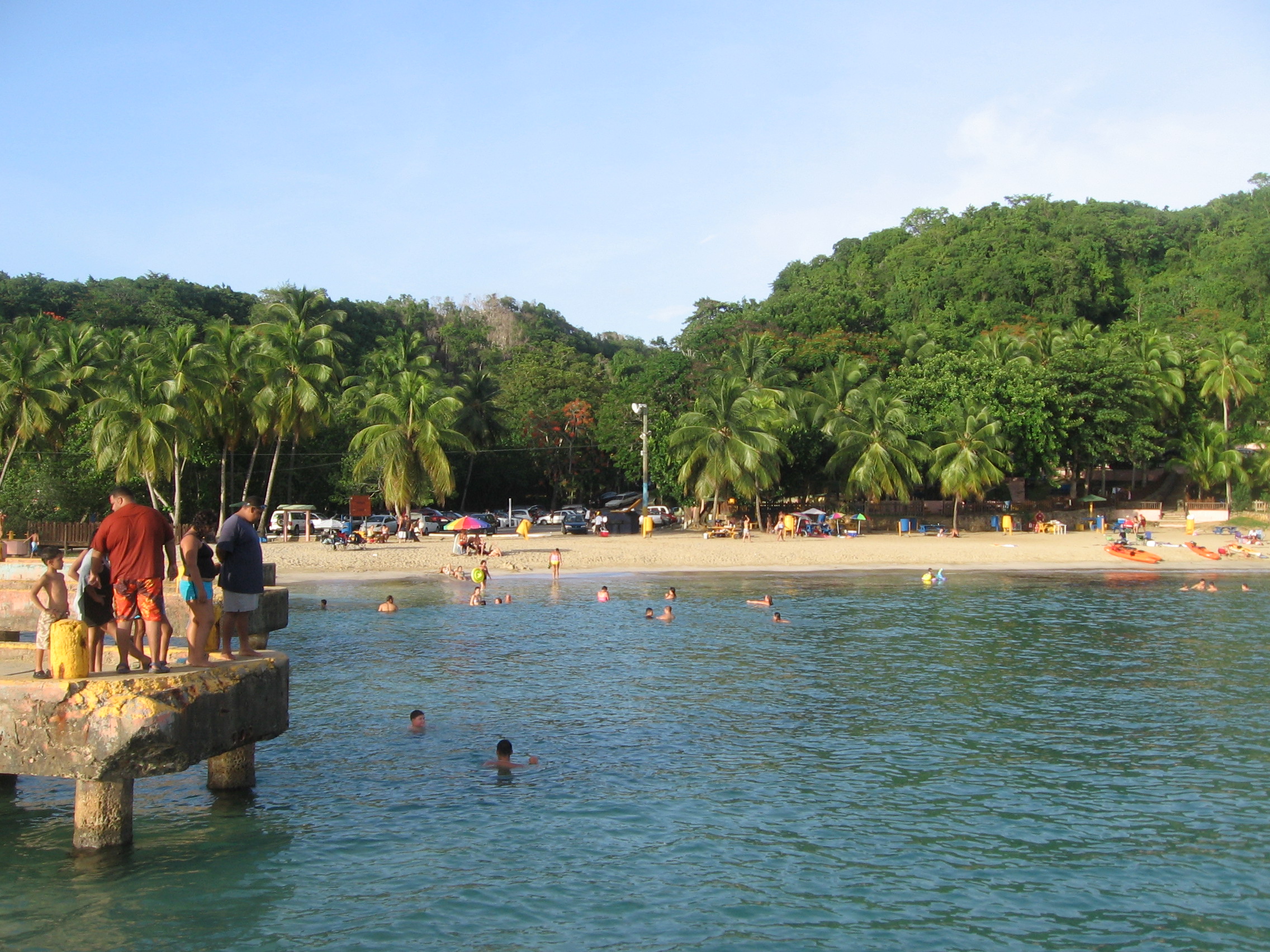
Symbol of western tourism
The sources present Crash Boat as one of the most popular and photographed beaches in Puerto Rico, an icon of the Porta del Sol tourist region in the island's west/northwest, famous for its colorful pier and its crystal-clear waters.
Source: https://www.discoverpuertorico.com/profile/crash-boat-beach/

📚 Bibliography

  • Discover Puerto Rico — «Crash Boat Beach»: https://www.discoverpuertorico.com/profile/crash-boat-beach/
  • Discover Puerto Rico — «Aguadilla»: https://www.discoverpuertorico.com/regions/porta-del-sol/aguadilla
  • Discover Puerto Rico — «Porta del Sol»: https://www.discoverpuertorico.com/regions/porta-del-sol
  • Wikipedia (EN) — «Ramey Air Force Base»: https://en.wikipedia.org/wiki/Ramey_Air_Force_Base
  • Ramey Air Force Base Historical Association — «Air Force Base 1936–1973»: https://rameyafb.net/air-force-base-1936-1973/
  • World War II Database — «Borinquen Field»: https://ww2db.com/facility/Borinquen_Field/
  • Wikipedia (EN) — «Aguadilla, Puerto Rico»: https://en.wikipedia.org/wiki/Aguadilla,_Puerto_Rico
  • PRDayTrips — «Crash Boat Beach in Aguadilla»: https://www.puertoricodaytrips.com/crash-boat-beach/
  • CrashBoatBeach.com — «FAQ: Parking, Activities & Travel Tips»: https://www.crashboatbeach.com/faq

❓ Frequently asked questions

Why is it called Crash Boat?+
The name 'Crash Boat' (rescue boat) comes from the era when the area housed installations of the Ramey military base of the US Air Force in Aguadilla. This beach was where the rescue launches ('crash boats') meant to assist aircraft and crews in case of an accident were kept. The beach's pier is a legacy of those military installations.
Is Crash Boat good for swimming and snorkeling?+
Yes, it's one of the best beaches in the northwest for swimming and snorkeling, especially around the pier, where the water is usually crystal-clear and there's abundant marine life. Renting a full snorkel kit runs about US$18. It's best to go on days with calm sea for better visibility and to be careful with the currents and submerged structures near the pilings.
How do I get to Crash Boat?+
The most practical way is to go by car. From San Juan it's about two hours via the PR-22 highway (tolls about US$4-6); a taxi from San Juan costs between US$79 and US$133 depending on category. From the Aguadilla airport (BQN) it's a few minutes away. Public transport is limited and Uber practically doesn't operate in Aguadilla, so it's best to have your own or a rental vehicle.
Are there services on the beach?+
Yes, Crash Boat is a public beach with services: parking in private lots (US$3-10 per vehicle, some accept only card or ATH Móvil), restrooms, shady areas and food and drink kiosks. On weekends and holidays it fills with people and a festive atmosphere. On weekdays or early in the day it's quieter. It's best to bring cash for the kiosks.
What's the best time to visit?+
The dry season (December to April) offers good weather and usually gives good visibility for snorkeling, though winter brings strong swell to the neighboring surf beaches; Crash Boat, more sheltered, stays calm. From June to November is hurricane season, with more rain but often very calm waters. Any sunny day with calm sea is ideal.
What else can I see near Crash Boat?+
Crash Boat combines very well with a tour of the island's northwest: the surf beaches of Aguadilla, nearby Isabela with its cliffs and beaches, Rincón (the surf mecca, with lessons from US$60-90 per person) and, to the south, the west coast of Porta del Sol. It's an excellent stop within a trip through the west region.
How do I pay for parking and is there public transport to Crash Boat?+
Watch out with payment: several private Crash Boat parking lots are cashless and only accept card or ATH Móvil (the most-used mobile-payment app in Puerto Rico), not cash; they cost between US$3 and US$10 per vehicle, and some charge US$9 for the day (verified July 2026). The beach kiosks, on the other hand, usually charge only in cash, so it's best to bring both. As for transport: Aguadilla has no AMA/ATI buses (that network only covers San Juan) or a real-time bus app, and Uber practically doesn't operate in the area; there are carros públicos with limited schedules, but to get to the beach comfortably the best option is your own or a rental car, guided by Google Maps or Waze.
Sources consulted (13)
Still planning?
Explore more destinations in Puerto Rico
See all destinations →
Advertisements
Image credits
Photos from Wikimedia Commons, each under its own licence (CC BY, CC BY-SA or public domain). Open each file to see its author and licence.
Crash Boat 01