📌City
Filadelfia is the main city of the Paraguayan Central Chaco and capital of the department of Boquerón, in the far northwest of the country. It's the heart of the Mennonite colonies, founded by immigrants of German origin who arrived in the twentieth century and transformed a semi-arid, inhospitable region into a prosperous agricultural and cattle-raising hub. Filadelfia surprises with its order, its prosperity and its unique cultural mix, where Mennonites, Chaco indigenous peoples and Paraguayans from other regions coexist.
📌Service city
Filadelfia is a well-organized city, well equipped for the Chaco: it has hotels, restaurants, supermarkets, banks, a hospital, service stations and cooperatives that structure local life. It's connected to Asunción by the Trans-Chaco Route (Route 9), the great road that crosses the Chaco. It's the ideal base for exploring the Central Chaco, its colonies, its indigenous communities and the Chaco's nature, including the way toward the national parks of the deep Chaco.
📌Best time to go
The best time to visit Filadelfia and the Chaco is winter (May to August/September), when temperatures are more bearable. The Chaco is one of the hottest regions in South America: in summer the heat can be extreme, with very high temperatures, so it's best to avoid it. The dry season also eases travel on the roads of the Chaco interior. It's worth bringing plenty of water, sun protection and checking the state of the roads, especially after rain.
📌Suggested days
With 1 to 2 days you can get to know Filadelfia and Mennonite culture: the museum, the cooperatives, the city's atmosphere and a nearby community. With 3 days or more you can explore the Central Chaco in depth —other colonies (Loma Plata, Neuland), indigenous communities and nature— and even take on an adventure toward the national parks of the deep Chaco, which requires planning, a suitable vehicle and, ideally, a guide.
💱 Cambio de USD
Loading rate…
🌤️ Clima en Filadelfia (Chaco)
Loading weather…
Filadelfia is, perhaps, the most surprising and singular destination in Paraguay: a prosperous, orderly city in the middle of the Central Chaco, one of the most arid, hot and inhospitable regions in South America. Capital of the department of Boquerón, it's the heart of the Mennonite colonies, communities of immigrants of German origin who, from the first half of the twentieth century, turned a very hard land into an agricultural and cattle-raising Eden thanks to their faith, their work and their tenacity.
Visiting Filadelfia is looking into a world apart: tree-lined, clean streets, modern cooperatives, European-style houses and a setting where German (and its dialect, Plautdietsch), Guaraní and Spanish are spoken. But the city is also a multicultural meeting point, where Mennonites coexist with the indigenous peoples of the Chaco —like the Nivaclé, Ayoreo and others— and with Paraguayans arrived from various regions, in a fascinating and sometimes complex cultural mix.
This guide covers Filadelfia with a practical, warm eye: its Mennonite history and culture, its museum, its cooperatives, life in the Central Chaco and the region's natural and human attractions, plus the essential tips for traveling through one of the country's most extreme areas. It's a destination for curious travelers, lovers of singular cultures and of the harsh, fascinating nature of the Gran Chaco.
📖 History of Filadelfia (Chaco)
Filadelfia was born of one of the most extraordinary migratory epics in the Americas. From the 1920s and 1930s, Mennonite communities —a Christian religious group of Anabaptist origin, German-speaking— arrived in the Paraguayan Chaco fleeing persecution and seeking lands where they could live according to their faith and customs. They came mainly from Canada, Russia/Ukraine and other regions, and settled in a semi-arid area then considered practically uninhabitable, known as the 'Green Hell'. The Paraguayan state granted them guarantees to settle and preserve their way of life. With a colossal effort, the Mennonites founded colonies —among them Fernheim, whose capital is Filadelfia, along with Menno (Loma Plata) and Neuland— and transformed the Central Chaco into a prosperous center of agricultural and dairy production, organized around cooperatives. The arrival of the Mennonites also coincided with the years of the Chaco War (1932-1935) between Paraguay and Bolivia, which was fought largely in that same region. Over time, Filadelfia grew to become the main city of the Central Chaco and capital of the department of Boquerón, and a meeting point between Mennonite culture, the Chaco indigenous peoples and Paraguayans from other areas. The detailed history of the colonies and the Chaco is on our history page.
Read the full history →
🗺️ What to see
1
Jakob Unger Museum (MennoSimons-Hof)
The Chaco's natural-history and ethnological museum, free, with the collection of the naturalist and taxidermist Jakob Unger.
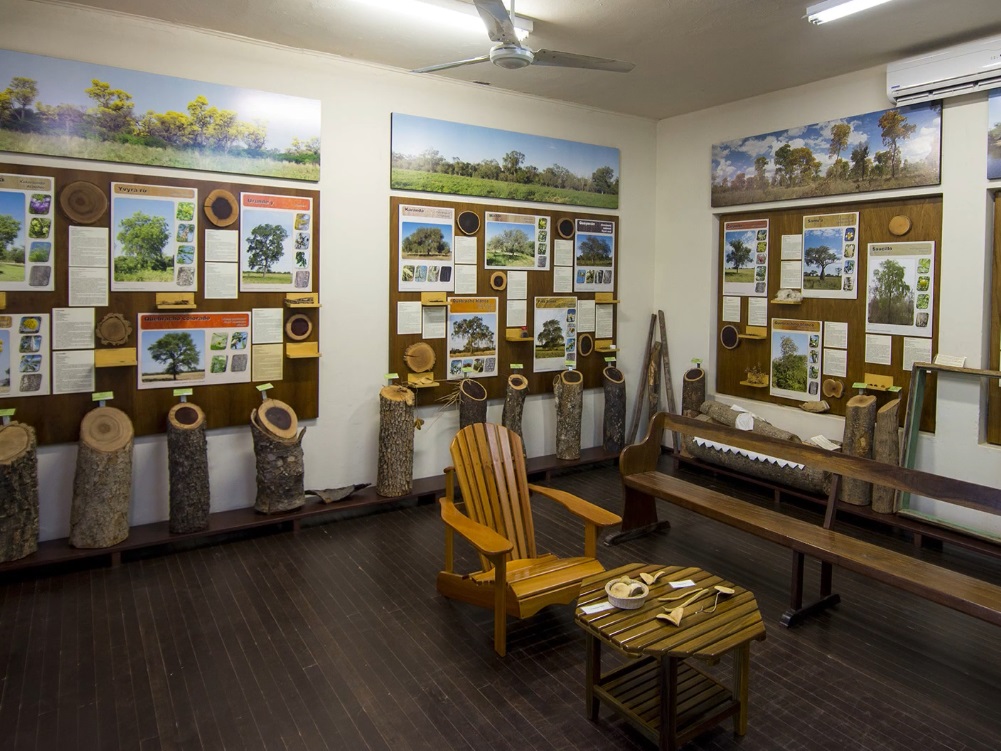
The Jakob Unger Museum, located at the MennoSimons-Hof site in Filadelfia, exhibits the natural-history and ethnological collection assembled by the biologist and taxidermist Jakob Unger (born in Russia in 1894, died in Filadelfia in 1959). The display includes taxidermied animals representative of Chaco wildlife —armadillos, rheas, pumas, maned wolf, snakes— plus a notable collection of butterflies, insects and some 210 species of birds.
The museum operates next to the historic building of the Fernheim Cooperative and also gathers ethnographic objects of the indigenous peoples of the Chaco, as well as pieces linked to the early years of Mennonite colonization. It's a brief but very complete stop for understanding both the extreme nature of the Gran Chaco and the life of its first settlers.
Admission is free, which makes it an unmissable visit before touring the rest of the city. The usual hours are Monday to Saturday in the morning, so it's worth planning the visit early.
Getting there: in the urban core of Filadelfia, on or near Hindenburg Avenue (on foot or a short transfer). Best time: any time of year, in the morning. Tips: check the exact hours on arrival (usually 7:00 to 11:30, Monday to Saturday); it's a good starting point for understanding the wildlife you can later look for in the Chaco's nature.
ℹ️ Distance: Filadelfia town center, Hindenburg Ave. (on foot or a short transfer) · Best time: Year-round, morning (Monday to Saturday) · Admission: Free (open access, 2025; usual hours 7:00–11:30, check when you visit) · Duration: 1 to 1.5 hours
2
Fernheim Cooperative and cooperative center
The economic heart of the colonies: the agricultural and dairy cooperative that structures life in the Central Chaco.
One of the keys to the success of the Mennonite colonies is their cooperative model, and getting to know it up close is a fundamental part of the Filadelfia experience. The Fernheim Cooperative, based in the city, organizes agricultural and dairy production, the shops, the financial services and much of the colony's community life.
The region is an important center of production of meat, dairy (the cooperative's Trébol brand is known throughout Paraguay), peanuts, sesame and other crops, all achieved in extreme climatic conditions through technology, organization and work. Touring the shops, the cooperative supermarket and the administrative headquarters on Hindenburg Avenue lets you appreciate the level of development reached in the middle of the Chaco.
It's fascinating to see how, from nothing and in a hostile land, the Mennonites built a thriving, modern economy. The efficiency, order and prosperity of the colonies contrast with the harshness of the surroundings and with the reality of other communities in the region.
Getting there: in Filadelfia itself, on Hindenburg Avenue (on foot). Best time: weekdays, when activity is underway (morning or mid-afternoon). Tips: access to the shops is free and open; visits to production plants are usually coordinated in advance through the cooperative or a local agency; take the chance to try and buy dairy and regional products.
ℹ️ Distance: Hindenburg Ave., central Filadelfia (on foot) · Best time: Weekdays, morning or mid-afternoon · Admission: Free (shops with open access); visits to production plants: coordinate with the cooperative · Duration: 1 to 2 hours
3
Indigenous communities of the Chaco (Nivaclé, Enlhet, Ayoreo)
The encounter with the Chaco native peoples, an essential part of the region's cultural diversity.
The Central Chaco is not only Mennonite land: it's also the ancestral territory of various Chaco indigenous peoples, such as the Nivaclé, the Enlhet, the Ayoreo and others, who have inhabited the region since long before the arrival of the settlers. Their presence is an essential part of the multicultural identity of Filadelfia and the whole area.
Many of these communities live in villages and neighborhoods within or near the colonies, and maintain, to varying degrees, their languages, traditions and ways of life, in a coexistence with Mennonite society that has been complex and unequal throughout history. Getting to know this reality —with respect and sensitivity— is fundamental to understanding the Chaco beyond the postcard of colonial prosperity.
Some local initiatives and community-tourism agencies let you approach the culture of these peoples, get to know their crafts —basketry, karaguatá weaving— and their worldview. It's a dimension of the trip that adds depth and honesty to the experience, recalling that the Chaco is a mosaic of cultures with very different histories and realities.
Getting there: the communities are in and around the colonies of the Central Chaco (with a guide or local liaisons). Best time: winter, for the weather. Tips: always approach with respect and, preferably, through initiatives or guides who work with the communities; avoid invasive tourism and prioritize buying crafts directly as a form of economic support.
ℹ️ Distance: In and around the colonies of the Central Chaco (with a guide or liaisons) · Best time: Winter, for the weather · Admission: Free to visit; crafts from US$ 5–20 depending on piece (2025, check when you visit) · Duration: Half a day
4
Trébol Park and green spaces of Filadelfia
Squares and tree-lined spaces in the town center, a green respite in the middle of the arid Chaco.
Filadelfia stands out from other Chaco towns for its orderly layout and its well-kept green spaces, the result of decades of deliberate tree-planting in a naturally arid region. Trébol Park and other squares of the town center offer shade from introduced and native trees, benches and paths, a pleasant contrast with the heat and the thorny vegetation of the surrounding Chaco scrubland.
They're the ideal place for a walk at sunset, when the heat drops, and for observing the city's daily life: Mennonite families on bicycles, shops closing and the calm, orderly atmosphere that characterizes Filadelfia.
Getting there: in the urban core of Filadelfia (on foot). Best time: year-round, preferably at sunset because of the heat. Tips: it's a good place to acclimatize to the city's rhythm before heading out to explore the deep Chaco; bring water anyway, even for a short walk.
ℹ️ Distance: Urban core of Filadelfia (on foot) · Best time: Year-round, sunset · Admission: Free (open access) · Duration: 30 to 60 minutes
5
Chaco nature: wildlife and viewing
The unique landscape of the Gran Chaco, with emblematic species like the jaguar, the tagua and the maned wolf.
The Gran Chaco is one of the great natural regions of South America: a vast plain of dry forest, thornbush, palm groves and marshes, with surprising wildlife that includes emblematic species like the jaguar, the tagua (a Chaco peccary believed extinct until its rediscovery in 1975), pumas, the maned wolf, anteaters, armadillos and a rich birdlife of more than 400 species recorded in the region. Filadelfia is a gateway to this extreme, fascinating natural world.
The surroundings of the colonies, the woodlands and the ranches of the area offer viewing opportunities with guides specialized in Chaco wildlife, who know the best spots and times (generally at dawn or dusk, when the heat gives the animals a break).
Getting there: in the surroundings of Filadelfia and the colonies of the Central Chaco (with a specialized guide). Best time: winter (May to September), for the milder weather and greater wildlife activity. Tips: hire a local nature guide to maximize your viewing chances; bring binoculars, neutral-colored clothing and plenty of patience.
ℹ️ Distance: Surroundings of Filadelfia and colonies of the Central Chaco (with a guide) · Best time: Winter (May to September), dawn or dusk · Admission: Free to explore; paid guided outings (see Activities) · Duration: Half a day
6
Defensores del Chaco National Park (adventure excursion)
The largest protected area in Paraguay, in the deep Chaco, with free access but hard to reach.
Several hours northwest of Filadelfia, deep in the Chaco, stretches Defensores del Chaco National Park, the country's largest protected area (about 780,000 hectares), administered by the Ministry of the Environment and Sustainable Development (Mades, formerly Seam). It protects almost pristine Chaco-forest ecosystems, is habitat of the jaguar and the tagua, and preserves vestiges of the Chaco War (1932-1935), which was fought largely in this region.
Access to the park is free and open, with no need for a prior reservation, but getting there is a real expedition: it requires a 4x4 vehicle, supplies, fuel and plenty of water, and if possible a guide or bushman who knows the area, since the roads are dirt, isolated and can become impassable after rain.
For lovers of extreme nature and real adventure tourism, the deep Chaco and this park are an unbeatable experience, very different from the usual Filadelfia circuit.
Getting there: from Filadelfia, several hours on dirt roads to the northwest (4x4 vehicle, planning and a recommended guide). Best time: dry season (May to September), essential for the roads. Tips: don't venture out without preparation or without reporting your route; coordinate with Mades or with a Chaco adventure-tourism operator before setting out.
ℹ️ Distance: Several hours northwest of Filadelfia (4x4 vehicle) · Best time: Dry season (May to September) · Admission: Free (open access, administered by Mades, 2025; check the state of the roads when you visit) · Duration: 2 to 4 days (expedition)
What nobody tells you💵 Prices
Tickets
| Type | Price |
|---|
| Jakob Unger Museum (MennoSimons-Hof) | Free (open access, 2025) |
| Shops and headquarters of the Fernheim Cooperative | Free (open access to shops; visits to production plants are coordinated with the cooperative) |
| Defensores del Chaco National Park | Free (open access, administered by Mades, 2025; check when you visit) |
| Visits to indigenous communities (responsible initiatives) | Free to explore; crafts from US$ 5–20 depending on piece (2025) |
🔄 updated monthlyOfficial / reference values · double-check when buying
Activities and tours
| Activity | Price | Duration | Operator |
|---|
| Cultural city tour of Filadelfia and Mennonite history | US$ 25–45 per person (half day, small group, 2025) | Half a day | Local Chaco guides and agencies (check availability) |
| Tour of the Central Chaco colonies (Loma Plata, Neuland) | US$ 60–100 per person (full day, includes transfers, 2025) | Full day | Local Chaco guides |
| Chaco wildlife and nature viewing with a guide | US$ 40–80 per person (half day, depending on group, 2025) | Half a day | Nature guides specialized in Chaco wildlife |
| 4x4 expedition to the deep Chaco / Defensores del Chaco Park | US$ 200–450 per person (2 to 4 days, includes vehicle, guide and logistics, 2025) | 2 to 4 days | Operators specialized in Chaco adventure tourism |
🔄 updated monthlyOfficial / reference values · double-check when buying
🚌 How to get there and distances
Getting around
| Mode | Price | Duration | Notes |
|---|
| Private or rental car (preferably 4x4 for the interior) | US$ 45–80 per day (rental in Asunción; check availability in the Chaco, 2025) | Variable | The most practical way to get around Filadelfia, the colonies and the Chaco; for the deep Chaco, a suitable vehicle and a lot of planning |
| Taxi, remise and local transfers in Filadelfia | Gs. 15,000–30,000 (about US$ 2–4) for a short trip, 2025 | 5 to 15 min | Filadelfia is a small, orderly town with no formal urban public transport or bus app: within the city you get around on foot, by bike, by taxi or remise (limited supply, best to coordinate by phone or with the hotel) or by your own car. Don't apply big-city logic here (JAHA/Más ticketing or Moovit): those cards and apps are for the urban transport of Asunción, Encarnación or Ciudad del Este, not for the Central Chaco (verified July 2026) |
| Nasa-Golondrina bus on the Trans-Chaco Route | US$ 20–33 per Asunción–Filadelfia trip (2025) | 6 to 8 hours | A company connecting Asunción with the Central Chaco via Route 9 (Trans-Chaco); the long-distance tickets are bought at the Asunción Bus Station, on the Grupo Nasa website or through the Ventanita platform, and paid in cash or by card depending on the point of sale (verified July 2026) |
| On foot or by bicycle in the city | Free | Variable | Filadelfia's town center is orderly and, in the cool season, pleasant for getting around on foot or by bike within the city |
🔄 updated monthlyOfficial / reference values · double-check when buying
How to get there
| Route | Airlines / operators | Avg. price | Duration |
|---|
| Asunción → Filadelfia via the Trans-Chaco Route (Route 9) | Nasa-Golondrina (Grupo Nasa) | US$ 20–33 depending on service (regular or premium, 2025) | 6 to 8 hours (about 460 km) |
| Filadelfia → other Central Chaco colonies (Loma Plata, Neuland) | Private car, transfers or local guides | US$ 15–30 per short trip by private transfer (2025) | 30 to 60 minutes between colonies |
| Filadelfia → deep Chaco / Defensores del Chaco Park | Own 4x4 vehicle or adventure operators | See 4x4 expedition in Activities (US$ 200–450 per person) | Several hours of dirt road; requires planning |
| Connection with the Bolivian border (northern Chaco, Mariscal Estigarribia / Fortín Infante Rivarola) | Transport on the Trans-Chaco to the north (check frequencies) | Variable depending on stretch; ask Nasa-Golondrina | Several hours; long, isolated routes |
🔄 updated monthlyOfficial / reference values · double-check when buying
🏨 Where to stay
No exact prices: a scale from $ (budget) to $$$$$ (luxury), with 2-3 options per category.
| Category | Price | Recommended options |
|---|
| Hotel Florida (the city's benchmark) | $$$$$ | About US$ 60–100 a night (double room with air conditioning, pool and breakfast, 2025; check the rate when booking). It's the most complete hotel in Filadelfia, with 80 rooms, a restaurant and a pool |
| Mid-range hotels and guesthouses | $$$$$ | About US$ 35–55 a night; mid-range hotels in Filadelfia and other Central Chaco colonies, with air conditioning and good value for money |
| Budget / simple guesthouses | $$$$$ | From about US$ 20–35 a night (per Tripadvisor, rates from US$ 37 in high season); budget guesthouses in Filadelfia, handy for budget travelers. The offering is more limited than in other regions |
| Lodging in other colonies (Loma Plata, Neuland) | $$$$$ | About US$ 30–50 a night; Loma Plata (Menno colony) and Neuland also have lodging, useful for spreading out the Central Chaco tour |
🍴 Where to eat
| Type | Price | Options / signature dish |
|---|
| Mennonite and Central European cuisine | $$$$$ | Gs. 40,000–80,000 (about US$ 5–11) per dish, 2025; sausages, dairy and cheeses of the Chaco (Trébol brand), breads and dishes of German tradition at restaurants like the one at Hotel Florida |
| Chaco meats and grill | $$$$$ | Gs. 50,000–100,000 (about US$ 7–14) per dish, 2025; the Chaco is a great cattle producer, so meat is the star at grills and restaurants of the area |
| Traditional Paraguayan cuisine | $$$$$ | Gs. 25,000–50,000 (about US$ 3–7) per dish, 2025; the Paraguayan classics —asado, sopa paraguaya, chipa, cassava— coexist with Mennonite cooking on the Chaco table |
| Dairy products and cooperative shops | $$$$$ | Gs. 10,000–30,000 (about US$ 1.5–4) per product, 2025; the cooperative supermarkets offer the famous Chaco dairy (Trébol brand), sausages and regional products, ideal to take home as a souvenir |
❓ Frequently asked questions
What is Filadelfia and why is it so singular?+
Filadelfia is the main city of the Paraguayan Central Chaco and capital of the department of Boquerón. It's the heart of the Mennonite colonies, founded by immigrants of German origin who, from the 1920s and 1930s, transformed one of the most arid and inhospitable regions of South America into a prosperous agricultural and cattle-raising hub. It surprises with its order, its prosperity and its unique cultural mix of Mennonites, indigenous peoples and Paraguayans.
Who are the Mennonites?+
The Mennonites are a Christian religious group of Anabaptist origin, German-speaking, who arrived in the Paraguayan Chaco fleeing persecution and seeking lands where they could live according to their faith and customs. They came from Canada, Russia/Ukraine and other regions. Organized in cooperatives and through an enormous effort, they founded colonies like Fernheim (Filadelfia), Menno (Loma Plata) and Neuland. The full history is on our history page.
How much does it cost to get to Filadelfia from Asunción?+
The bus of the Nasa-Golondrina company, which covers the Trans-Chaco Route (Route 9), costs between US$ 20 and 33 depending on the service, with a trip of 6 to 8 hours (about 460 km). It's the cheapest and most common way to get there; you can also go by private or rental car. It's worth checking schedules and fares when booking, as they may be updated.
When is the best time to visit the Chaco?+
Winter (May to August/September), when temperatures are more bearable. The Chaco is one of the hottest regions in South America and in summer the heat can be extreme, so it's best to avoid it. The dry season also eases travel on the roads of the Chaco interior. You must bring plenty of water and sun protection any time of year.
Can you visit the indigenous communities?+
Yes, but with respect and sensitivity. The Chaco is the ancestral territory of peoples like the Nivaclé, Enlhet, Ayoreo and others, who coexist with the Mennonite colonies. It's advisable to approach through initiatives or guides who work with the communities, get to know and buy their crafts, and avoid invasive tourism. It's an important dimension for understanding the Chaco in depth.
Can I visit Defensores del Chaco National Park?+
Yes. Access is free and open, administered by the Ministry of the Environment and Sustainable Development (Mades), but getting there requires serious planning: the park is in the deep Chaco, several hours from Filadelfia on dirt roads, with no services, so you need a 4x4 vehicle, plenty of water, fuel and supplies, and if possible a guide. It's a real adventure destination for lovers of extreme nature.
What to eat in Filadelfia?+
The cuisine is singular: Mennonite and Central European cooking (sausages, cheeses and dairy of the Chaco under the Trébol brand, breads and dishes of German tradition), excellent meats from the cattle-raising region and also the Paraguayan classics. Prices are around Gs. 25,000 to 100,000 (about US$ 3 to 14) per dish depending on the type of restaurant. It's a different and very interesting culinary experience within Paraguay.
How do I get around Filadelfia? Is there an urban bus or transport app?+
No. Filadelfia is a small, orderly town of the Central Chaco, with no formal urban public transport or bus app: within the city you get around on foot, by bicycle, by taxi or remise (limited supply, best to coordinate by phone or with the hotel) or by your own car. The ticketing cards (JAHA/Más) and apps like Moovit are for the urban transport of the large cities (Asunción, Encarnación, Ciudad del Este), not for the Chaco. To get there from Asunción, the Nasa-Golondrina bus on the Trans-Chaco (6 to 8 hours) is the usual way; tickets are bought at the terminal, on the Grupo Nasa website or via Ventanita (verified July 2026).
Sources consulted (17)
- Wikipedia (ES) — «Filadelfia (Paraguay)»: https://es.wikipedia.org/wiki/Filadelfia_(Paraguay)
- Wikipedia (ES) — «Menonitas en Paraguay»: https://es.wikipedia.org/wiki/Menonitas_en_Paraguay
- Wikipedia (ES) — «Colonia Fernheim»: https://es.wikipedia.org/wiki/Fernheim
- Wikipedia (ES) — «Departamento de Boquerón»: https://es.wikipedia.org/wiki/Boquer%C3%B3n_(Paraguay)
- SENATUR Paraguay (oficial): https://www.senatur.gov.py/
- Wikipedia (ES) — «Gran Chaco»: https://es.wikipedia.org/wiki/Gran_Chaco
- Mades — Parque Nacional Defensores del Chaco: https://www.mades.gov.py/parque-defensores-del-chaco/
- Mades — SIAM, Área Protegida Defensores del Chaco: https://apps.mades.gov.py/siam/portal/area-protegida/9
- Fernheim — Turismo (Museo Jakob Unger y cooperativa): https://www.fernheim.com.py/es/turismo/
- Lonely Planet — Jakob Unger Museum: https://www.lonelyplanet.com/paraguay/northern-paraguay-and-the-chaco/filadelfia/attractions/jakob-unger-museum/a/poi-sig/1270813/363378
- WhichMuseum — Museo Jakob Unger: https://whichmuseum.com/museum/museo-jakob-unger-filadelfia-22806
- Hotel Florida Chaco — Precios: https://www.hotelfloridachaco.com/es/informaciones/precios/
- Tripadvisor — Hoteles en Filadelfia: https://www.tripadvisor.com/Hotels-g677786-Filadelfia_Boqueron_Department-Hotels.html
- Grupo Nasa — Horarios Golondrina: https://gruponasa.com.py/empresa/golondrina/horarios
- Rome2rio — Asunción a Filadelfia: https://www.rome2rio.com/es/s/Asunci%C3%B3n/Filadelfia-Paraguay
- Wikipedia (ES) — «Ruta Transchaco»: https://es.wikipedia.org/wiki/Ruta_PY09
- Wikipedia (ES) — «Filadelfia (Paraguay)»: https://es.wikipedia.org/wiki/Filadelfia_(Paraguay)