Viajá con Gus
HomeNicaraguaSan Carlos and the San Juan River
San Carlos and the San Juan River
🇳🇮 Nicaragua · Caribbean and the San Juan River

San Carlos and the San Juan River

📌Department
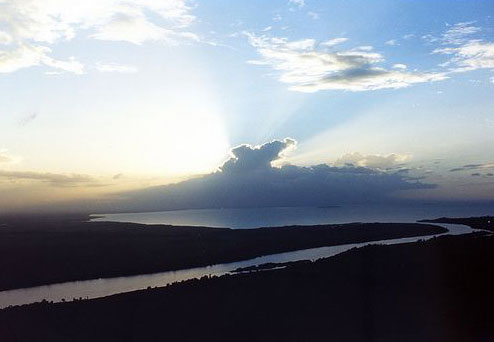
San Carlos, capital of the department of Río San Juan, in the southeast of Nicaragua, where Lake Cocibolca (Lake Nicaragua) drains into the San Juan River, which runs east to the Caribbean Sea, marking a good part of the border with Costa Rica. It's the gateway to a remote, riverine and jungle region: the San Juan River, the Solentiname archipelago, the historic fortress of El Castillo and the immense Indio Maíz Biological Reserve, one of the great jungle lungs of Central America
📌Service town
San Carlos is the service town and transport hub of the region: it has an airport (with flights from Managua), a port on the lake and the river, basic lodgings, shops and banks. From here leave the boats that tour the San Juan River (toward El Castillo and downriver) and those that cross to Solentiname. You get there by air from Managua, by road (a long journey) or by the ferry/boat that crosses Lake Cocibolca from Granada/Ometepe/San Jorge
📌Best time to go
A warm, humid, jungle climate. The San Juan River region is rainy much of the year, characteristic of its tropical-jungle setting. The relatively drier season (roughly the first months of the year) is usually more comfortable for navigating and touring, though the jungle is always humid. It's wise to bring rain and heat clothing, repellent, and to check the conditions, since they affect the river navigation and the flights
📌Suggested days
It's a remote region that asks for time: with 3 to 4 days you can get to know San Carlos, navigate the San Juan River to the historic fortress of El Castillo and get a glimpse of the nature. With 5 to 7 days or more you can add the Solentiname archipelago (with its primitivist art and its birds), forays into the Indio Maíz Reserve and deeper river routes. Because of the distance and the logistics (boats, flights), it's wise to plan with plenty of room
💱 Cambio de USD
Loading rate…
🌤️ Clima en San Carlos and the San Juan River
Loading weather…

San Carlos and the San Juan River are the remote, riverine and jungle Nicaragua, a region very different from the most-traveled routes of the country. Here, in the southeast, the enormous Lake Cocibolca drains into the San Juan River, a historic waterway that runs east, crossing the jungle, until it empties into the Caribbean Sea, marking a good part of the border with Costa Rica. It's a world of rivers, islands, colonial fortresses and deep jungle.

San Carlos, on the shore of the lake and the river, is the gateway and the transport hub of the region. From its port leave the boats that take you to the great treasures of the San Juan River: the imposing colonial fortress of El Castillo, built to defend the route from the pirates; the Solentiname archipelago, famous for its primitivist art, its communities and its nature; and the immense Indio Maíz Biological Reserve, one of the best-preserved jungle lungs of Central America, home to an extraordinary biodiversity. It's a region for travelers of adventurous spirit, seeking nature, history and authenticity far from mass tourism.

This guide covers San Carlos and the San Juan River with a practical and warm eye: how to get to this remote region, how to navigate the river, what to see in El Castillo and Solentiname, how to get a glimpse of the Indio Maíz jungle and what to keep in mind about the river logistics. For anyone who wants to discover the wildest, most historic and deepest face of Nicaragua, the San Juan River is an unforgettable adventure.

📖 History of San Carlos and the San Juan River

The San Juan River had, for centuries, an enormous strategic importance, far beyond what its remote current location might suggest. It's the river that drains the great Lake Cocibolca (Lake Nicaragua) toward the Caribbean Sea, which turned it into a natural route of communication between the Atlantic and the heart of the country, and even —through the lake— into a potential route toward the Pacific. That condition as a possible interoceanic passage marked its history. In the colonial era, the San Juan River was the way by which the rich city of Granada, on the shore of the lake, was accessed; going up it from the Caribbean, the pirates and buccaneers of the 17th century attacked and sacked Granada on several occasions. To defend this route, the Spanish built fortresses on the river, the most famous of which is the Fortress of the Immaculate Conception, in El Castillo, the scene of heroic episodes and of combats against the invaders. Centuries later, in the mid-19th century, the San Juan River was part of Cornelius Vanderbilt's Transit Route, which during the California gold rush connected the two oceans across Nicaragua. It was also, for a long time, one of the routes considered for an interoceanic canal that was finally built in Panama. San Carlos, at the confluence of the lake and the river, grew as a point of control and service of this river route. Today, the region combines that rich historical legacy with an exceptional nature —Solentiname, the Indio Maíz Reserve— and a remote, riverine character unique in Nicaragua. The full history is on our history page.

Read the full history →

🗺️ What to see

1
El Castillo and the Fortress of the Immaculate Conception
The imposing colonial fortress on the San Juan River, built to defend the route from the pirates.
El Castillo is one of the most fascinating and history-laden places in Nicaragua: a village on the shore of the San Juan River, dominated by the imposing Fortress of the Immaculate Conception, built in the 17th century by the Spanish to defend the river route from the attacks of the pirates who went up the river from the Caribbean to sack Granada. The fortress, perched on a hill next to some rapids of the river, is one of the most important colonial monuments in the country. From its walls and bastions, with its cannons pointing at the river, you get a magnificent view of the San Juan, the rapids and the surrounding jungle. The fortress was the scene of heroic episodes and combats against invaders; one of the most famous is tied to the figure of Rafaela Herrera, a young woman who, according to tradition, played a prominent role in the defense of the fortress against an enemy attack. Today you can tour the fortress and its museum, with an entry of about 60-100 córdobas for foreigners (check when you visit). The village of El Castillo, without cars and with wooden houses on the shore of the river, keeps a special charm, with its dock, its pedestrian streets and its river atmosphere. Getting here, navigating the San Juan River from San Carlos on the fast boat (about US$ 6, 1.5 h) or on the slower public panga (about 3 h), is an experience in itself, crossing landscapes of jungle and riverside life. Getting there: by boat along the San Juan River from San Carlos (fast boat about 1.5 h, public panga about 3 h). Best time and hour: during the day to tour the fortress and the village; the relatively drier season for more comfortable navigation. Tips: allow for the navigation time, bring repellent, protection for rain and sun, cash, and enjoy both the fortress and the river journey.
ℹ️ Distance: Village of El Castillo, on the San Juan River; by boat from San Carlos (1.5 to 3 h) · Best time to go: During the day; relatively drier season for navigating · Entry: Fortress/museum: about 60-100 córdobas (market range, verified July 2026) · Duration: Half a day to a full day (with the navigation)
2
Solentiname archipelago
A group of islands in Lake Cocibolca, famous for its primitivist art, its communities and its rich birdlife.
The Solentiname Archipelago is one of the most singular and magical places in Nicaragua: a group of islands at the southern end of Lake Cocibolca, near San Carlos, famous for a unique combination of art, spirituality, community and nature. It's a destination that combines the cultural and the natural in a very special way. Solentiname is world-famous for its primitivist art: a school of painting and craftwork that arose on the islands, in which the inhabitants —peasants and fishermen— capture with vivid colors the nature, the daily life and the imagery of the islands, in paintings and in delicate balsa-wood carvings. This artistic movement is tied to the historic community founded by the poet and priest Ernesto Cardenal, who promoted art, poetry and a communal experience that left a deep mark on Nicaraguan culture. You get there by boat from San Carlos: the public transport leaves Tuesday, Thursday and Saturday for about 150 córdobas (about US$ 4) and takes about 1 h 40; a private boat costs between 1,500 and 2,000 córdobas (US$ 40-54) or up to US$ 60-100 depending on the fuel and the negotiation. A local guide for a half-day tour around the islands watching birds is around US$ 25-40, and simple lodging on the islands costs from about US$ 25 a night with breakfast included. Getting there: by boat from San Carlos, across Lake Cocibolca (check schedules and services). Best time and hour: during the day; navigation is more comfortable in good weather. Tips: allow for the boat logistics (the public services have fixed days), bring cash, repellent and protection for sun and rain; visit the art workshops and support the local artists.
ℹ️ Distance: Islands in the south of Lake Cocibolca; by boat from San Carlos (about 1 h 40) · Best time to go: During the day; navigation more comfortable in good weather · Entry: Public boat 150 córdobas; private US$ 40-100; local guide US$ 25-40 (verified July 2026) · Duration: A day or more (with an overnight on the islands)
3
Navigating the San Juan River
Touring by boat the historic river that joins Lake Cocibolca with the Caribbean, between jungle and riverside life.
Navigating the San Juan River is the backbone of any trip to this region and an unforgettable experience in itself. The river, which rises in Lake Cocibolca and runs east to the Caribbean Sea, crosses landscapes of jungle, wetlands and riverside communities, and is the way by which you access the great attractions of the area, like El Castillo. From San Carlos leave the boats that tour it downriver. The river journey offers scenes of great beauty: the jungle that closes over the banks, the birds (herons, kingfishers, toucans), the caimans and turtles that appear in the water, the ranches and little villages on the edge of the river, the canoes of the inhabitants. It's a trip through a remote and deep Nicaragua, where the river remains the main route of communication, as it was for centuries. The navigation alone, crossing this corridor of nature and history, already justifies the trip. There are different types of vessels: the fast boat (collective, with fixed schedules at about 7:00, 10:25 and 16:30) covers San Carlos-El Castillo in 1.5 hours for about US$ 6 (140 córdobas), while the public panga, slower and cheaper, takes about 3 hours. Beyond El Castillo, the river ventures into even more remote areas toward the Caribbean, with less transport frequency and greater planning needed. Getting there: the boats leave from the port of San Carlos, on the river. Best time and hour: during the day to enjoy the landscape and the wildlife; the relatively drier season for more comfortable navigation. Tips: get information about schedules and types of vessel, bring repellent, protection for sun and rain, water and cash; protect the camera/phone from the water and enjoy the river's wildlife.
ℹ️ Distance: San Juan River, from the port of San Carlos toward the east (boats) · Best time to go: During the day; relatively drier season for navigating · Entry: Fast boat San Carlos-El Castillo: 140 córdobas / US$ 6 (verified July 2026) · Duration: Half a day to several days (depending on the stretch)
4
Indio Maíz Biological Reserve
One of the largest and best-preserved jungles in Central America, home to an extraordinary biodiversity.
The Indio Maíz Biological Reserve is one of the great natural treasures of Nicaragua and Central America: an immense expanse of humid tropical jungle, one of the best-preserved in the region, in the southeast of the country, in the San Juan River area. It's a green lung of enormous value, home to an extraordinary biodiversity and to Indigenous peoples, and a destination for travelers of adventurous spirit and lovers of deep nature. The reserve harbors an astonishing richness of life: jaguars and other felines, monkeys, tapirs, a great quantity of birds (including emblematic species), reptiles, amphibians and countless insects and plants, in a little-altered primary-jungle ecosystem. It's a place for wildlife and plant watching, jungle hikes with a guide and immersion in one of the most intact natural settings of the country. Access to Indio Maíz is limited and must be done responsibly, with authorized guides and operators from communities like El Castillo or Boca de Sábalos, with costs that usually run around US$ 40-80 per person for a guided day excursion, depending on the access point and the duration. It's a demanding and adventurous experience, not a conventional outing, but deeply rewarding for anyone seeking nature in its pure state. Getting there: through access points in the San Juan River area (communities near El Castillo), with authorized guides and operators. Best time and hour: depending on the jungle conditions and the season; always with a guide. Tips: hire authorized guides and operators, strictly respect the reserve's rules, bring jungle gear (repellent, suitable clothing, footwear, rain protection).
ℹ️ Distance: Southeast of Nicaragua, San Juan River area; access with authorized guides from El Castillo/Boca de Sábalos · Best time to go: Depending on the jungle conditions and the season; always with a guide · Entry: Guided day excursion: US$ 40-80 per person (market range, verified July 2026) · Duration: A day or more (depending on the route)
5
San Carlos (port city)
The city on the shore of the lake and the river, gateway and transport hub of the whole region.
San Carlos, capital of the department of Río San Juan, is the port city that serves as the gateway and transport hub of this whole river region. It's strategically located at the confluence of Lake Cocibolca and the San Juan River, a key point that gave it importance throughout history as a place of control and service of the river route. It's the place through which pass, almost obligatorily, those who tour the San Juan River, Solentiname or venture into the jungle. More than a monumental destination, San Carlos is a functional passage city: here are the airport (with flights from Managua operated by La Costeña), the port on the lake and the river, the basic lodgings, the shops, the banks and the services needed to organize the excursions. It has a waterfront and the atmosphere of a riverside city, with the bustle of the boats, the fishermen and the river trade, and from here you can appreciate the meeting of the lake and the river. For the traveler, San Carlos is above all the logistical base: the point where you arrive, organize the boat transfers and set off toward the great attractions of the region. It's wise to view it in that role and to plan the navigations and excursions from here, keeping in mind the schedules and the river logistics, which require patience and flexibility. Getting there: by air from Managua (La Costeña), by road (a long journey, cheap bus of about 7 h) or by the boat/ferry that crosses Lake Cocibolca from Granada/Ometepe/San Jorge. Best time and hour: depending on the chosen connection; during the day to organize the transfers. Tips: use San Carlos as a logistical base, get good information about boat and flight schedules, bring cash (the services can be limited) and allow time for the connections.
ℹ️ Distance: Confluence of Lake Cocibolca and the San Juan River (airport, port) · Best time to go: Depending on the connection; during the day to organize transfers · Entry: City with free access; services and transfers separate · Duration: Logistical base (stopover before the excursions)
6
Boca de Sábalos and the river communities
A riverside village halfway between San Carlos and El Castillo, an access point to the jungle and to river life.
Boca de Sábalos is a small riverside village located at the confluence of the Sábalos River with the San Juan River, between San Carlos and El Castillo, and it's one of the access points to the Indio Maíz Biological Reserve and to nature excursions in the area. It's a common stop for those navigating the river, with simple lodgings, eateries and some nature-tourism operators. The village keeps a genuine river rhythm of life: the boats are the main means of transport, and the jungle surrounds the hamlet on all sides. It's a good place to spend the night and organize outings to the reserve with local guides, or simply to get to know a riverside community away from the conventional tourist circuit. Getting there: by boat along the San Juan River, between San Carlos and El Castillo. Best time to go: year-round, depending on the river conditions. Tips: check with the local operators about excursions to the reserve from here; bring cash, since the services are limited.
ℹ️ Distance: On the San Juan River, between San Carlos and El Castillo (by boat) · Best time to go: Year-round, depending on the river conditions · Entry: Free access to the village; guided excursions separate (check when you visit) · Duration: Half a day to an overnight
What nobody tells you

💵 Prices

Tickets

TypePrice
Fortress of the Immaculate Conception (El Castillo) and museumAbout 60-100 córdobas (market range, verified July 2026)
Fast boat San Carlos ↔ El Castillo140 córdobas / US$ 6 (1.5 h, verified July 2026)
Public panga San Carlos ↔ El CastilloSimilar or somewhat less than the fast boat; 3 h journey
Boat to Solentiname (public, Tue-Thu-Sat)About 150 córdobas / US$ 4 (verified July 2026)
Private boat to SolentinameUS$ 40-100 depending on negotiation and fuel (verified July 2026)
Indio Maíz Biological Reserve (guided excursion)US$ 40-80 per person (full day, verified July 2026)
Flight Managua ↔ San Carlos (La Costeña)Check the current fare with the airline (variable by season, verified July 2026)
🔄 updated monthlyOfficial / reference values · double-check when buying

Activities and tours

ActivityPriceDurationOperator
Navigating the San Juan River to El CastilloUS$ 6 (fast boat) or similar on the public panga (slower)1.5 to 3 h depending on the vesselCollective boat services of San Carlos
Visit to the Fortress of the Immaculate ConceptionAbout 60-100 córdobas1-2 h (plus navigation)Museum / local guides of El Castillo
Excursion to the Solentiname archipelago (art and birds)US$ 4 (public boat) to US$ 100 (private); local guide US$ 25-40A day or moreLake public transport and local operators (Solentiname Tours, Careli Tours)
Guided foray into the Indio Maíz ReserveUS$ 40-80 per personA day or moreAuthorized guides and operators of El Castillo/Boca de Sábalos
Bird and wildlife watching on the river and wetlandsIncluded in guided excursions or by arrangement with local boatmenHalf a dayLocal guides
🔄 updated monthlyOfficial / reference values · double-check when buying

🚌 How to get there and distances

Getting around

ModePriceDurationNotes
Boat (panga) along the river and the lakeUS$ 4-6 (collective) to US$ 40-100 (private, depending on destination)VariableThe main means of transport in the region: the boats connect San Carlos with El Castillo, Solentiname and the points of the river. Check schedules, types of vessel and water conditions
On foot (in the villages)FreeVariableVillages like El Castillo have no cars and are toured on foot through their streets and docks
Plane (Managua ↔ San Carlos, La Costeña)Check the current fare (variable); limited seatsShort flight (about 1 h)The fastest way to reach San Carlos from the capital; it's wise to book in advance
Boat across Lake CocibolcaVariable depending on route and vesselLong crossing (several hours)Vessels that cross the lake between San Carlos and points like Granada, Ometepe or San Jorge; a long journey, check schedules and conditions
How to pay and plan the transportIn Río San Juan the 'collective' is the boat: there are no urban buses or real-time vessel-location app. Everything is paid in cash (córdobas): the river collective boats (San Carlos–El Castillo leave at about 7:00, 10:25 and 16:30), those of Solentiname (public Tuesday, Thursday and Saturday) and the La Costeña tickets are bought at the port or the airline. The TUC electronic card doesn't apply here (it only works in Managua) and there's no QR or app payment. The schedules are checked at the San Carlos dock, because the departures are fixed and few; it's wise to arrive early and bring enough cash because ATMs are scarce (source: riosanjuan.com.ni/en/transport + thesandyfeet.com, verified July 2026)
🔄 updated monthlyOfficial / reference values · double-check when buying

How to get there

RouteAirlines / operatorsAvg. priceDuration
Flight Managua → San Carlos (the fastest)La CosteñaCheck the current fare with the airline (verified July 2026)Short flight (about 1 h)
By road from Managua / the interiorInterurban buses (cheap) and private carsUS$ 5-9 (bus); US$ 35-55 (car/shared taxi)Bus about 7 h; car about 4 h 15 min
Across Lake Cocibolca from Granada/Ometepe/San Jorge (boat)Lake vesselsVariable depending on route; check current schedulesLong crossing; check schedules
San Carlos → El Castillo (boat along the river)Collective boats (fast and public panga)US$ 6 (140 córdobas) fast boat1.5 h (fast) to 3 h (panga)
San Carlos → Solentiname (boat across the lake)Public transport (Tue-Thu-Sat) and private boats150 córdobas (public) or US$ 40-100 (private)About 1 h 40 min
🔄 updated monthlyOfficial / reference values · double-check when buying

🏨 Where to stay

No exact prices: a scale from $ (budget) to $$$$$ (luxury), with 2-3 options per category.

CategoryPriceRecommended options
Lodgings in San Carlos (city)$$$$$US$ 12-30 a night; basic lodgings and hotels in San Carlos, practical as a logistical base before and after the excursions along the river and the lake
Lodgings and lodges in El Castillo$$$$$US$ 20-60 a night; charming lodgings on the shore of the San Juan River in the village of El Castillo, with views of the river and the fortress, ideal for spending the night after the navigation
Lodgings in Solentiname$$$$$US$ 25-50 a night, often with breakfast or meals included (e.g. Albergue Celentiname, Casa de Elvis Chavarría); community and simple lodgings on the islands, to get to know the art, the communities and the nature at leisure
Nature lodges (San Juan River / jungle)$$$$$US$ 50-120 a night; nature lodges on the shore of the San Juan River, aimed at ecotourism and wildlife watching, for an immersive experience in the jungle

🍴 Where to eat

TypePriceOptions / signature dish
River and lake fish$$$$$US$ 6-14 per dish; the specialty of the region: freshwater fish from the San Juan River and Lake Cocibolca (like guapote and others), at riverside eateries and restaurants
Typical Nicaraguan food$$$$$US$ 4-8 per dish; popular cuisine (gallo pinto, grilled meat, plantain, cassava) at simple eateries of San Carlos, El Castillo and the villages
Riverside restaurants in El Castillo$$$$$US$ 8-16 per dish; restaurants on the shore of the river in El Castillo, with a view of the water and the fortress, where you can try fish and local food
Community cuisine in Solentiname$$$$$Usually included in the lodging (US$ 25-50 with meals); home and community cooking at the lodgings of Solentiname, with local products of the lake and the islands

❓ Frequently asked questions

How do you get to San Carlos and the San Juan River?+
The fastest way is by air: La Costeña flies from Managua to San Carlos in about an hour (check the current fare). You can also come by road —a cheap bus of about US$ 5-9 and 7 hours, or car/shared taxi for US$ 35-55 in about four and a quarter hours— or by boat crossing Lake Cocibolca from Granada, Ometepe or San Jorge (a long crossing). From San Carlos, the boats connect with El Castillo (US$ 6, fast boat) and Solentiname (US$ 4 on the public boat, Tue-Thu-Sat).
What is El Castillo and why visit it?+
El Castillo is a village on the shore of the San Juan River dominated by the Fortress of the Immaculate Conception, built in the 17th century by the Spanish to defend the river route from the pirates who went up the river to sack Granada. The fortress, on a hill next to some rapids, is one of the most important colonial monuments in the country, with magnificent views and a history of heroic combats. Entry to the museum/fortress costs about 60-100 córdobas. The village, without cars and with wooden houses, has a special charm. You get there by navigating the river from San Carlos (1.5 to 3 hours depending on the boat).
What is Solentiname and how much does it cost to visit it?+
The Solentiname archipelago is a group of islands in the south of Lake Cocibolca, famous for its primitivist art (painting and vividly colored balsa-wood carvings), tied to the historic community founded by the poet and priest Ernesto Cardenal. The public transport leaves San Carlos Tuesday, Thursday and Saturday for about 150 córdobas; a private boat costs US$ 40-100. Simple lodging on the islands is around US$ 25-50 a night with meals included, and a local guide for birdwatching costs US$ 25-40 for half a day.
Can you visit the Indio Maíz Reserve?+
Yes, but in a limited and responsible way. The Indio Maíz Biological Reserve is one of the best-preserved jungles in Central America, of great fragility and value, home to jaguars, monkeys, tapirs and an extraordinary biodiversity. Access must be done with authorized guides and operators from communities like El Castillo or Boca de Sábalos, with guided day excursions that run around US$ 40-80 per person. It's an adventurous experience, not a conventional outing.
Why is the San Juan River so historically important?+
Because it connects the great Lake Cocibolca with the Caribbean Sea, which turned it for centuries into a strategic route between the Atlantic and the heart of Nicaragua, and even into a possible interoceanic route. Along it the pirates went up to attack Granada (hence the fortresses like El Castillo); it was part of Vanderbilt's Transit Route in the 19th century; and it figured among the routes considered for an interoceanic canal. That history is told on our history page.
How many days do I need for the region?+
It's a remote region that asks for time. With 3 to 4 days you can get to know San Carlos, navigate the river to El Castillo and get a glimpse of the nature. With 5 to 7 days or more you can add Solentiname, forays into Indio Maíz and deeper river routes. Because of the distance and the logistics (boats, flights, ferries), it's wise to plan with plenty of room and flexibility, since the transfers take time and depend on the conditions.
What should I keep in mind for traveling around this area?+
That it's a remote, riverine and jungle Nicaragua, with more limited services than on the classic tourist routes. It's wise to bring cash in córdobas (ATMs and cards can be scarce), repellent, heat and rain clothing, sun protection and patience with the boat and flight logistics, which have fixed and limited schedules. The climate is humid much of the year. In exchange, it offers exceptional nature, history and authenticity, far from mass tourism.
How do you pay for the boat on the San Juan River and is there an app to see the schedules?+
In Río San Juan the boat acts as the collective and is paid in cash, in córdobas: there's no real-time location app or QR payment, and the TUC card only works in Managua. The departures are fixed and few: the fast boat San Carlos–El Castillo leaves around 7:00, 10:25 and 16:30, and those of Solentiname go Tuesday, Thursday and Saturday. The best thing is to check the schedules at the San Carlos dock the day before, arrive early and bring enough cash because ATMs are scarce (verified July 2026).
Sources consulted (15)
Still planning?
Explore more destinations in Nicaragua
See all destinations →