GO! Assistance has 50% off in October and, with our link, you get an extra 20%.
Pick origin, destination, dates and ages and see the price of your travel assistance in a minute.
Affiliate link: we earn a commission.
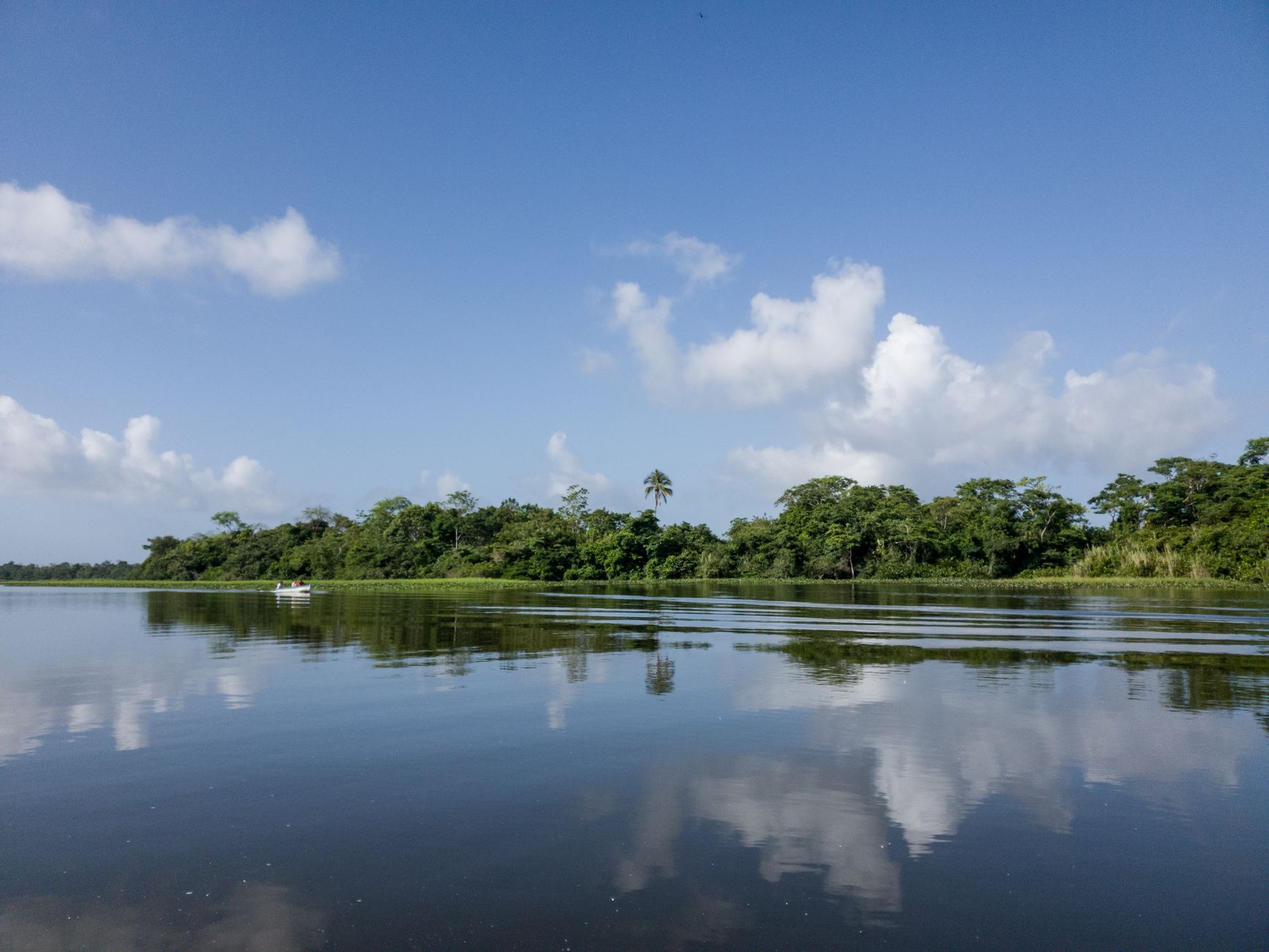
The Indio Maíz Biological Reserve is one of the best-preserved expanses of humid tropical rainforest in all of Central America, in the far southeast of Nicaragua, between the San Juan River and the border with Costa Rica. It protects hundreds of thousands of hectares of virgin forest, home to an extraordinary biodiversity: jaguars, tapirs, monkeys, pumas, manatees, hundreds of bird species, amphibians and reptiles, and lush flora. As a biological reserve, its core is strictly protected and access is limited, which has allowed an almost intact ecosystem to be conserved.
Indio Maíz is not a mass-visit park, but a deep-nature destination for those who want to venture into the rainforest with specialized guides. It's accessed above all from the historic town of El Castillo, on the banks of the San Juan River, or from remote San Juan de Nicaragua (San Juan del Norte), on the Caribbean coast. The boat trips along the San Juan River and its tributaries, such as the Bartola River, and the guided walks along trails on the edge of the reserve, offer wildlife sightings and the experience of one of the last great rainforests in the country.
This guide covers the essentials of Indio Maíz: its biodiversity and the ecosystems it protects, how and from where to visit it, what nature activities it offers, the access and conservation rules, where to stay at the reserve's gates and how to get there. It's a destination for nature lovers, birdwatchers and travelers who seek the rainforest in its purest form.
Indio Maíz was declared a protected area in 1990 and elevated to a biological reserve, the highest category of protection, to conserve one of the most pristine rainforests in Nicaragua. It's part of the Mesoamerican Biological Corridor and of a cross-border system of protected areas with Costa Rica. Within its limits live Indigenous Rama communities and Afro-descendant Kriol people. The full story is on our history page.
Read the full history ↓Nicaragua's riverine, jungle-covered southeast: the great river that joined two seas, the fortress of El Castillo defended by Rafaela Herrera, the Solentiname archipelago and the Indio Maíz rainforest.
Read the history of Río San Juan →A local guide tells you in half an hour what no sign at the site will ever explain. We look ours up on Civitatis: guided in Spanish and booked online with no fuss. They have 14 activities in La Fortuna. Three are below so you get the idea: tap any of them and they all open.
They depart from La Fortuna, 70 km away. Affiliate link: we earn a commission.
Abroad, getting sick is more than a bad day. In many destinations public healthcare depends on appointments, queues and availability, and private care is paid upfront. An emergency can cost thousands of USD, right when you are far from home and on a tight budget. That is why I recommend you never leave without travel assistance.
I recommend GO! Assistance because it covers what matters: medical care, emergencies, medication and hospitalization depending on the plan. It protects you 24 hours a day, anywhere in the world, with real-time solutions on the ground. GO! 365 ECO and GO! 365 give you USD 45,000 of global coverage: the first with a USD 100 deductible, the second with none.
If you quote from Argentina, in October GO! also offers 12 interest-free instalments on all its products.
GO! Assistance has 50% off in October and, with our link, you get an extra 20%.
Pick origin, destination, dates and ages and see the price of your travel assistance in a minute.
I have never been left without internet on a trip. I land and my phone connects to the strongest network in the country I am visiting: I can let people know I arrived, sort out transport, book tours and keep posting content at a super affordable price (really cheap!). I always use the Maya Mobile eSIM, check out its plans by clicking the banner. See Maya Mobile plans →
Affiliate link: we earn a commission.
No exact prices: a scale from $ (budget) to $$$$$ (luxury), with 2-3 options per category.
Origins, formation and what the sources say.
The Indio Maíz Biological Reserve protects one of the last great massifs of humid tropical rainforest in Central America, in the far southeast of Nicaragua, in the department of Río San Juan, between the great border river and the boundary line with Costa Rica. It's a lowland forest, hot and extremely rainy, that keeps a structure and a biodiversity typical of primary rainforests, today increasingly scarce in the region because of deforestation.
This rainforest is part of a corridor of humid forests that extends on both sides of the border, connecting with protected areas in Costa Rica such as the Maquenque Wildlife Refuge and other areas of that country's north. Together, they make up a key link of the Mesoamerican Biological Corridor, the great regional initiative to connect protected areas from southern Mexico to Panama, allowing the movement of wildlife and the conservation of ecosystems on a large scale.
Indio Maíz is home to an exceptional biodiversity: large cats like the jaguar and the puma, tapirs, several species of monkeys, manatees in its rivers, a very rich birdlife that includes the threatened great green macaw, and an enormous variety of amphibians, reptiles, insects and plants. This wealth, together with the good state of conservation of the forest, makes the reserve a natural treasure of importance not only national, but continental.
The region of Indio Maíz and the lower San Juan River were inhabited from pre-Columbian times by Indigenous peoples adapted to life in the rainforest and beside the water. Among them stands out the Rama people, an Indigenous ethnic group of southeastern Nicaragua whose ancestral territory covers part of this area and the Caribbean coast, and who keep a deep cultural and spiritual relationship with the forest, the rivers and the sea. Alongside the Rama, on the nearby coast also settles an Afro-descendant Kriol population, Creole-English-speaking, the fruit of the particular history of the Caribbean Coast.
The San Juan River, which borders the reserve to the south, was for centuries a strategic route connecting Lake Nicaragua with the Caribbean Sea, coveted for its potential as an interoceanic route. Along it circulated pirates, military expeditions, merchants and travelers, and on its banks fortifications like El Castillo's were built. This history of transit and dispute, however, did not manage to profoundly transform the interior rainforest, which remained largely intact due to its difficult access and the harsh conditions of the tropical forest.
The survival of the Rama and Kriol peoples in the reserve's surroundings is today a fundamental part of its value: their traditional knowledge of the forest, their resource-use practices and their defense of the territory against deforestation make them allies of conservation. The recognition of these peoples' territorial rights is, at once, a matter of justice and a tool for protecting the rainforest.
The recognition of this rainforest's value led, from 1990 on, to its declaration as a protected area and, later, to its elevation to the category of biological reserve, the strictest in Nicaragua's National System of Protected Areas. This category means that the reserve's core is fundamentally destined for conservation and scientific research, with very restricted access, while in the buffer zones regulated activities are allowed, including limited, guided nature tourism.
Despite the legal protection, Indio Maíz has faced serious threats. The advance of the agricultural and cattle frontier, the illegal colonization of land, felling and, dramatically, forest fires —such as the great fire of 2018 that affected part of the reserve— have endangered the integrity of the forest. The pressure on the territory, together with the conflicts over the rights of the Indigenous communities, makes the conservation of Indio Maíz a permanent task, not free of tensions.
Today the reserve remains one of the most important green lungs of Nicaragua and Central America, a haven of biodiversity and a destination for responsible nature tourism that, well managed, can contribute to its protection. The balance between conserving the rainforest, respecting the rights of the Rama and Kriol peoples who inhabit it and halting the pressures that threaten it defines the present and future of Indio Maíz, one of the last great virgin rainforests in the region.
Since the 1990s, Indio Maíz also became a natural laboratory for scientific research. On its edges, on the Bartola River, a biological station has operated for years that has hosted generations of biologists, students and international volunteers interested in studying the fauna, flora and ecological processes of a rainforest in a good state of conservation. These research programs, many of them in agreement with Nicaraguan and foreign universities, have generated valuable knowledge about the reserve's biodiversity, from the behavior of primates to the migratory patterns of birds and the state of the cat populations.
This scientific calling coexists with the still incipient development of a nature tourism managed by families and local cooperatives of the Bartola River and El Castillo. Community initiatives have bet on a low-impact model: simple cabins, trained local guides and activities centered on the respectful observation of wildlife, instead of a mass tourist infrastructure that the rainforest could not sustain. This approach seeks to generate income for the families of the area without compromising the integrity of the forest.
The combination of scientific research and community tourism has also helped to better document the threats the reserve faces and to make its importance visible internationally, drawing support from conservation and international cooperation organizations interested in protecting one of the last great biodiversity havens in Central America.
In recent years, Indio Maíz has gained international visibility both for its extraordinary ecological value and for the magnitude of the threats it faces. The fire of April 2018, which consumed thousands of hectares of forest in the southern sector of the reserve, generated strong alarm inside and outside Nicaragua, and highlighted the fragility of these ecosystems in the face of the advance of the agricultural frontier, extensive cattle raising and unauthorized settlements within the protected area.
Environmental organizations, Rama and Kriol Indigenous communities and international observers have documented in recent years an increase in deforestation and colonization within the reserve's limits, which has made Indio Maíz a case study on the challenges of protecting large areas of tropical rainforest in countries with limited resources for territorial control and surveillance. The defense of the territorial rights of the Indigenous peoples who inhabit the area is, in this context, a central piece of any effective conservation strategy.
Despite these pressures, Indio Maíz remains, in comparative terms, one of the best-preserved masses of tropical rainforest in Central America, and it continues to receive travelers, scientists and volunteers willing to venture into its trails from El Castillo and the Bartola River. Every responsible visit, guided by local operators committed to conservation, helps to economically sustain the communities that protect this natural heritage and to keep alive the awareness of its fragility and its incalculable value for Nicaragua and the planet.