📌Parish
Spanish Town is the capital of the parish of Saint Catherine, in southeastern Jamaica, about 20 km west of Kingston. It's the country's most historic city: founded by the Spanish in the 16th century as Santiago de la Vega, it was the capital of Jamaica for more than three centuries, under both Spanish and British rule, until 1872. It keeps a valuable colonial heritage around its historic square (Spanish Town Square), with Georgian buildings, an old cathedral and monuments. It's not a beach destination, but an unmissable historic visit, easy to do from Kingston.
📌Service city
Spanish Town is a sizable city with its own services (market, shops, hospital, banks), but for the visitor it works mainly as a historic excursion from Kingston, about 20-30 minutes away by highway. It has no airport: you arrive via Norman Manley International Airport in Kingston. It's very well connected to the capital. It's best visited preferably by day and, given the concentration of heritage around the historic square, it's usually toured in a morning, combining it with other visits in the southeast.
📌Best time to go
Spanish Town can be visited well year-round, with its warm, tropical southeastern climate. The dry season (mid-December to April) offers the sunniest and most pleasant days for touring the heritage on foot. From May to November it's hotter with brief showers; hurricane season runs from June to November. Since the visit centers on outdoor and indoor historic heritage, any day of good weather is suitable; it's best to go by day, when the buildings and the square are accessible and the area is active.
📌Suggested days
Spanish Town can be seen well in half a day, as an excursion from Kingston. The essentials are concentrated around Spanish Town Square (the historic square): the King's House, the House of Assembly, the Court House, the Rodney Memorial and the historic Cathedral of Saint James (St. Jago de la Vega), considered one of the oldest Anglican churches in the hemisphere. A morning covers the historic ensemble; it's usually combined with a visit to Kingston or Port Royal on the same day or stay.
💱 Cambio de USD
Loading rate…
🌤️ Clima en Spanish Town
Loading weather…
Spanish Town is Jamaica's great history book made city. Just 20 km from Kingston, this former capital holds more than three centuries of the past: it was founded by the Spanish in the 16th century as Santiago de la Vega, survived the English conquest of 1655 and remained the capital of Jamaica —Spanish first, British later— until 1872. Few places on the island condense so much history in so little space.
The heart of that history is Spanish Town Square, a colonial square surrounded by elegant Georgian buildings from the time when the city was the center of power in Jamaica: the old King's House (the governor's residence), the House of Assembly, the court house and an imposing monument to Admiral Rodney. A few steps away is the Cathedral of Saint James, one of the oldest Anglican churches in the Western Hemisphere, raised on the foundations of a Spanish church.
This guide covers Spanish Town with a practical and warm eye: what to see in its colonial historic ensemble, how to understand its role as the capital of Jamaica for centuries, how to visit it sensibly from Kingston and why it's an unmissable stop for history lovers. It's the ideal destination for those who want to understand where Jamaica comes from, in the city where much of its history was written.
📖 History of Spanish Town
Spanish Town is the most historic city in Jamaica. It was founded by the Spanish around 1534 under the name Villa de la Vega or Santiago de la Vega, and became the capital of Spanish Jamaica. When the English conquered the island in 1655, the city —which they called Spanish Town— remained the capital, now of British Jamaica. For more than three centuries, Spanish Town was the political and administrative center of the colony: here were the seat of government, the governor's residence (King's House) and the Assembly. In the 18th century the elegant Georgian ensemble that surrounds the historic square was built, a symbol of colonial power. In 1838, in the square of Spanish Town, the emancipation proclamation that ended slavery in Jamaica was read, a fundamental historic moment. The city lost its status as capital in 1872, when it passed to the growing and commercial Kingston. Since then, Spanish Town has remained the capital of the parish of Saint Catherine and a historic city, which keeps a colonial heritage unique in the country: the Georgian square, the old King's House, the Rodney Memorial and the Cathedral of Saint James, one of the oldest in the hemisphere. The full history is on our history page.
Read the full history →🏛️ Spanish Town is in Parish of Saint Catherine
The most historic parish in Jamaica: here is Spanish Town, the country's capital for more than three centuries (1534-1872) under Spanish and British rule, where emancipation was proclaimed in 1838. Land of Georgian colonial heritage, of the Rodney Memorial that celebrates the 1782 naval victory, of the plains of the Rio Cobre and of the great urban and industrial belt of Portmore, neighbor to Kingston.
Read the history of Parish of Saint Catherine →
🗺️ What to see
1
Spanish Town Square (historic Georgian square)
The old square of Jamaica's colonial power, surrounded by elegant 18th-century Georgian buildings.
Spanish Town Square is the historic heart of the city and one of the most important colonial architectural ensembles in Jamaica and the Caribbean. This square was, for centuries, the center of power on the island: here the buildings of the colonial government were concentrated, and the square was the setting of the great political events. It's surrounded by a remarkable ensemble of Georgian-style buildings built mainly in the 18th century, at the time of Spanish Town's greatest splendor as the capital.
Around the square rise (in varying states of preservation) the emblematic buildings of the old colonial power: the King's House, which was the residence of the governor of Jamaica; the House of Assembly, seat of the colonial legislative body; the old Court House; and the imposing Rodney Memorial, a neoclassical monument dedicated to Admiral George Rodney. This ensemble gives an idea of the weight the city had when it was the capital of the island.
The square was also the setting of one of the most important moments in Jamaican history: here, in 1838, the emancipation proclamation that ended slavery was read. Touring the square is, therefore, to walk through the place where much of Jamaica's history was decided and proclaimed.
Getting there: the square is in the center of Spanish Town; the most comfortable option is to arrive by taxi or excursion from Kingston (20-30 minutes away). Best time: by day, with good light to appreciate the architecture. Safety tips: visit by day, ideally with a local guide or tour, to make the most of the history and for safety; carry little cash, mind your belongings and bring the camera for the buildings.
ℹ️ Distance: Center of Spanish Town; 20-30 min from Kingston (taxi or excursion) · Best time: By day, with good light; ideally with a guide · Admission: Free (public square, open access); some buildings serve an administrative function and are not visited inside (2025) · Duration: 1 to 2 hours
2
Rodney Memorial
An imposing neoclassical monument to Admiral Rodney, a British naval hero, in the historic square.
The Rodney Memorial is one of the most imposing and representative monuments in Spanish Town Square. It's an elegant neoclassical pavilion or temple, completed in 1801 in honor of Admiral George Brydges Rodney, the British naval commander who in 1782 defeated the French fleet at the Battle of the Saintes, a victory considered key to saving Jamaica from a possible French invasion.
In gratitude, the inhabitants of Jamaica commissioned this monument, which includes a statue of Admiral Rodney —depicted, in the style of the era, in classical Roman dress— under a dome supported by columns, flanked by cannons captured from the French. It's a notable work of colonial neoclassicism and a centerpiece of the historic ensemble of the square.
Beyond its artistic value, the monument is a testimony to the military and colonial history of Jamaica, and to the strategic importance the island had in the wars between the European powers in the Caribbean. It's one of the most photographed points in Spanish Town and a good starting point for understanding the square and its history.
Getting there: it's in Spanish Town Square, in the center of the city. Best time: by day, combined with the rest of the square. Tips: combine it with the visit to the ensemble of the square and the cathedral; a local guide can tell the story of the battle and the monument; bring the camera.
ℹ️ Distance: In Spanish Town Square, center of the city · Best time: By day, combined with the square · Admission: Free (in the public square) · Duration: 15 to 30 minutes
3
Cathedral of Saint James (St. Jago de la Vega)
One of the oldest Anglican churches in the Western Hemisphere, on the foundations of a Spanish church.
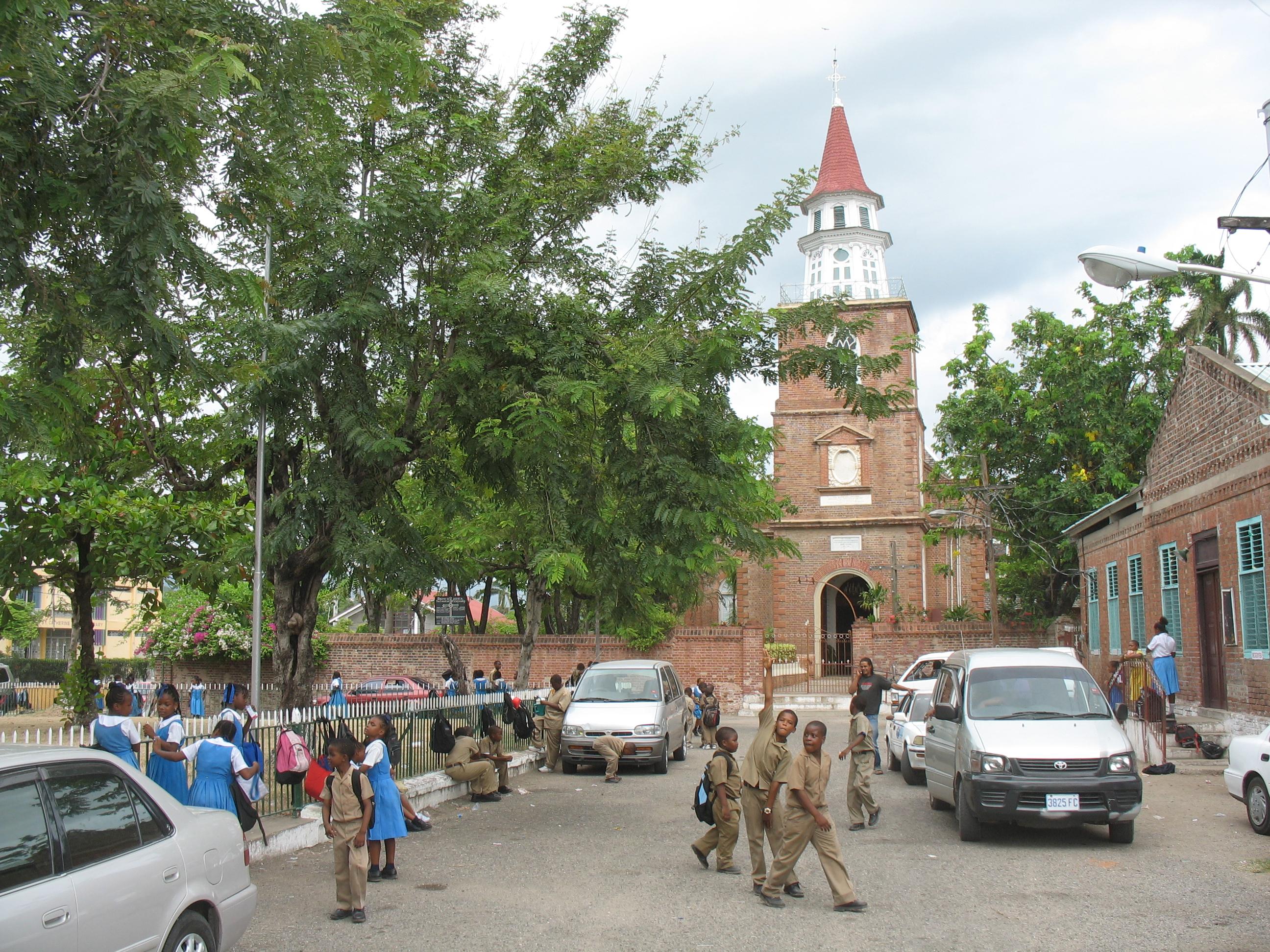
The Cathedral of Saint James, also known as the Cathedral Church of St. James or St. Jago de la Vega, is one of the most important religious and historic monuments in Jamaica and in the whole hemisphere. It's considered one of the oldest Anglican cathedrals outside England, since the British church was raised on the foundations of an old Spanish church from the time when Spanish Town was Santiago de la Vega, the capital of Spanish Jamaica.
The building, mainly Georgian in style (rebuilt after damage over the centuries), has a solemn atmosphere and holds enormous historic value. Its interior houses a remarkable collection of tombstones, commemorative plaques and funerary monuments of figures from Jamaican colonial history —governors, military men, clergy and prominent figures— that constitute a true archive in stone of the island's history.
Visiting the cathedral lets you connect with the historical continuity of Spanish Town: the place where the Spanish and British heritages overlap, and where faith and colonial power left their mark for centuries. It's an essential visit for those interested in history and heritage.
Getting there: it's near Spanish Town Square, in the center; a few minutes' walk from the historic ensemble. Best time: by day; it's best to verify the visiting hours (it's a church in use, generally accessible in the morning on weekdays, outside religious services). Tips: respect that it's a place of worship, dress appropriately, bring cash for a donation and combine it with the historic square.
ℹ️ Distance: Near Spanish Town Square, in the center (on foot) · Best time: By day (verify hours; it's a church in use) · Admission: Free; a voluntary donation is appreciated (2025) · Duration: 30 to 45 minutes
4
King's House and House of Assembly
The old residence of the governor and the seat of the colonial Assembly, symbols of the power of the old capital.
Around Spanish Town Square are preserved the buildings that were the center of Jamaica's political power during the centuries when the city was the capital. The King's House was the official residence of the governors of Jamaica, the most important building in the colony, where the great decisions were taken and personalities were received. Although it suffered a fire in the 20th century and only keeps part of its original structure (above all the façade), it remains a testimony to the splendor of colonial power.
Facing it, the House of Assembly housed the colonial legislative body, where the representatives met and the laws of the island were debated. These buildings, together with the Court House, formed the core of Jamaica's government when Spanish Town was the capital, before power passed to Kingston in 1872.
Touring these buildings —some today house offices, archives or small museum spaces— lets you imagine the political life of colonial Jamaica and understand why Spanish Town was for so long the most important place on the island. It's the ensemble that gives meaning to the whole historic visit.
Getting there: they're in Spanish Town Square, in the center of the city. Best time: by day; it's best to check which buildings are open to visitors, since some serve administrative functions. Tips: a local guide helps to understand the function of each building and the political history; visit by day and combine with the rest of the square and the cathedral.
ℹ️ Distance: In Spanish Town Square, center of the city · Best time: By day (check which buildings are open) · Admission: Exterior view free; interiors restricted due to administrative use/under restoration (2025) · Duration: 30 to 60 minutes (with the square)
5
The legacy of emancipation
The place where the end of slavery in Jamaica was proclaimed in 1838, a milestone of history and freedom.
Spanish Town was not only the center of colonial power, but also the setting of one of the most momentous events in the history of Jamaica: the proclamation of emancipation. In 1838, in the square of Spanish Town, the declaration that ended the 'apprenticeship' system that had followed the abolition of slavery in 1834 was officially read, granting full freedom to the people who had been enslaved on the island.
That event, experienced with enormous emotion by the Afro-Jamaican population, marked the end of centuries of slavery and the beginning of a new era. That it was proclaimed precisely in Spanish Town, the capital, in its square of power, gives this place a deep meaning: the site where colonial power was exercised was also the site where the freedom of those who had suffered under that power was proclaimed.
For the traveler, knowing this history transforms the visit to the square: it's not just an ensemble of beautiful Georgian buildings, but a place laden with memory, where the fate of the island was decided and one of the great triumphs of human dignity was celebrated. It's a dimension worth keeping in mind when touring Spanish Town.
Getting there: the setting is Spanish Town Square itself, in the center. Best time: by day, when touring the square. Tips: ask a local guide to tell you the history of emancipation in the square; it's the key to understanding the true historical meaning of Spanish Town, beyond the architecture.
ℹ️ Distance: In Spanish Town Square, center of the city · Best time: By day, when touring the square · Admission: Free (the historic square) · Duration: Part of the visit to the square
6
White Marl Taíno Museum and the pre-Columbian heritage
A small museum dedicated to the Taíno, Jamaica's original people, on the outskirts of Spanish Town.
On the outskirts of Spanish Town, on the road toward Kingston, is the site of White Marl, one of the most important Taíno settlements studied in Jamaica. Here a small museum dedicated to Taíno culture operated for years, the island's original people who inhabited the area before the arrival of the Spanish and who were decimated after the conquest.
The place lets you complete the historic visit to Spanish Town with the oldest layer of the island's history, prior even to the Spanish founding of Santiago de la Vega. The pieces and panels explain the way of life, the pottery and the customs of the Taíno, a necessary counterpoint to the colonial history that dominates the rest of the visit to the city.
Since the availability and opening status of small heritage sites like this can vary over time, it's best to confirm locally or with the Jamaica National Heritage Trust whether the museum is open to the public before planning the visit.
Getting there: on the road between Spanish Town and Kingston (Bog Walk / main road); by taxi or with a local guide. Best time: by day, combined with the rest of the historic circuit. Tips: confirm the opening hours before going, since it's a small site with more limited visits than the main square.
ℹ️ Distance: Outskirts of Spanish Town, road toward Kingston · Best time: By day; confirm opening before going · Admission: A symbolic low-cost admission when open (verify with the Jamaica National Heritage Trust, 2025) · Duration: 30 to 45 minutes
What nobody tells you💵 Prices
Tickets
| Type | Price |
|---|
| Spanish Town Square (historic square) | Free (public square) |
| Rodney Memorial | Free (in the square) |
| Cathedral of Saint James (St. Jago de la Vega) | Free; voluntary donation (2025) |
| King's House / House of Assembly (exterior) | Free (exterior view; interiors restricted, 2025) |
| White Marl Taíno Museum (if open) | Symbolic low-cost admission (verify with the JNHT, 2025) |
| Guided visit of the historic ensemble | US$ 20-40 per person with a local guide (2025, indicative) |
🔄 updated monthlyOfficial / reference values · double-check when buying
Activities and tours
| Activity | Price | Duration | Operator |
|---|
| Guided historic tour of the colonial ensemble | US$ 20-40 per person (2025) | Half a day | Local guides and Kingston agencies |
| Excursion to Spanish Town from Kingston | US$ 50-90 per person on a tour with transfer (2025) | Half a day | Kingston agencies and driver-guides |
| Visit to the Cathedral of Saint James | Free; voluntary donation (2025) | 30-45 min | Direct access / guide |
| Combined tour Spanish Town + Kingston or Port Royal | US$ 70-130 per person (2025) | Full day | Local agencies and driver-guides |
🔄 updated monthlyOfficial / reference values · double-check when buying
🚌 How to get there and distances
Getting around
| Mode | Price | Duration | Notes |
|---|
| Licensed tourist taxi and apps (from Kingston) | US$ 30-40 direct trip (2025) | Variable | The most comfortable and safe option is to arrive and get around by licensed tourist taxi or app from Kingston, especially with a driver-guide who knows the area. Agree the fare beforehand if they don't use a meter |
| Organized excursion with transfer | US$ 50-90 per person (2025) | Variable | The easiest and safest way to visit Spanish Town, with transport from Kingston and a guide who explains the history. Ideal to make the most of the heritage |
| Shared route taxi from Kingston | J$ 170-260 per person per leg, in cash (fares regulated by the Transport Authority of Jamaica, verified July 2026) | Variable | Shared taxis with red 'PP' plates on fixed routes, very cheap and used by locals; they connect Kingston with Spanish Town. Paid in cash to the driver. They can get full; an option for travelers with more time |
| JUTC city bus from Kingston / Half Way Tree | Low JUTC city fare (in cash or with the rechargeable JUTC Smarter Card); check the current fare at jutc.gov.jm (verified July 2026) | About 40 min to 1 h depending on traffic | Unlike the rest of the destinations in this guide, Spanish Town IS within the Kingston metropolitan area served by the Jamaica Urban Transit Company (JUTC): routes 21, 22, 26 and several express services connect Half Way Tree and downtown Kingston with Spanish Town. Since 2025 the JUTC buses carry the cashless SmartFare system: you can pay with the JUTC Smarter Card (a rechargeable account card, topped up at the Half Way Tree Transport Centre, the Downtown Hub or external points) or still in cash on the regular service (on the premium service only with the Smarter Card) |
| App to plan the route | Free (mobile data) | - | Being in the Kingston area, here there IS some public-transport coverage in Google Maps and Moovit for the JUTC routes; it's still best to confirm the real schedules, which can vary. To get there directly from Kingston, many visitors prefer a taxi or driver-guide for comfort and safety (verified July 2026) |
| On foot around the historic ensemble | Free | Variable | The heritage is concentrated around the square, so it's toured on foot; it's best to do so by day and, ideally, with a guide |
🔄 updated monthlyOfficial / reference values · double-check when buying
How to get there
| Route | Airlines / operators | Avg. price | Duration |
|---|
| Kingston → Spanish Town (via the highway) | Tourist taxis, apps, excursions, route taxis and JUTC city buses (routes 21/22/26 and express) | US$ 30-40 in a direct taxi; J$ 170-260 in a route taxi (cash); JUTC city bus at a low fare (cash or Smarter Card) (verified July 2026) | About 20 to 40 min (roughly 20 km) |
| Norman Manley Airport (KIN) → Spanish Town | Taxis and private transfers | US$ 45-70 (2025) | About 40 min to 1 h |
| Spanish Town → Ocho Rios / north coast (via the north-south highway) | Knutsford Express buses, taxis and transfers | US$ 12-20 by bus (2025) | About 1.5 to 2 h |
| Spanish Town → Mandeville / south coast (via the highway) | Taxis, transfers and buses | US$ 10-18 by bus; more in a private taxi (2025) | About 1 to 1.5 h |
🔄 updated monthlyOfficial / reference values · double-check when buying
🏨 Where to stay
No exact prices: a scale from $ (budget) to $$$$$ (luxury), with 2-3 options per category.
| Category | Price | Recommended options |
|---|
| Lodging in Kingston (recommended base) | $$$$$ | US$ 80-200 per night (2025). Most visitors stay in Kingston (20-30 minutes away) and visit Spanish Town as a half-day excursion. Kingston offers the full range of hotels, from luxury in New Kingston to mid-range and budget options |
| Hotels and guesthouses in Spanish Town | $$$$$ | US$ 40-80 per night (2025). Spanish Town has some mid-range and budget hotels and guesthouses, oriented more to business travelers and locals than to tourism, since most people visit the city from Kingston |
| Budget guesthouses | $$$$$ | US$ 20-40 per night (2025). Guesthouses and budget lodgings in the city and the parish of Saint Catherine, for travelers on a tight budget. It's best to choose the location carefully |
🍴 Where to eat
| Type | Price | Options / signature dish |
|---|
| Traditional Jamaican cuisine | $$$$$ | US$ 6-15 per dish (2025). Ackee and saltfish (the national dish), curry goat, oxtail (stewed oxtail), curried chicken and rice and peas in local restaurants and 'cook shops' in the city |
| Jerk and street food | $$$$$ | US$ 4-10 per portion (2025). Jerk chicken and jerk pork (meat smoked with spices) at stalls and spots, served with festival and a Red Stripe. Fast, authentic food for the visit |
| Patties and bakeries | $$$$$ | US$ 1-3 each (2025). Jamaican patties (pastries filled with meat, chicken or vegetables with spices) and bakery products are a practical and delicious option to eat during the tour |
| Dining options in Kingston | $$$$$ | US$ 15-40 per dish (2025). Since the visit is usually combined with Kingston, that's where the largest and best dining offering is, from fine dining to traditional restaurants |
❓ Frequently asked questions
Why visit Spanish Town?+
Because it's the most historic city in Jamaica: it was the capital of the island for more than three centuries, first Spanish (as Santiago de la Vega) and then British, until 1872. It keeps a valuable colonial ensemble around its historic square, with Georgian buildings, the old King's House, the Rodney Memorial and a cathedral that is one of the oldest Anglican churches in the hemisphere. It's an unmissable visit to understand where Jamaica comes from.
How much does it cost to visit Spanish Town?+
The essentials —the historic square, the Rodney Memorial, the cathedral and the exterior views of the colonial buildings— are free. If you want a guided tour, a local guide or an organized excursion costs between US$ 20 and US$ 90 per person (2025), depending on whether it includes transfer from Kingston or not.
How do I get to Spanish Town?+
It's about 20 km west of Kingston, 20-40 minutes away by highway, so the most practical option is to visit it as a half-day excursion from the capital. A direct taxi costs about US$ 30-40; the shared route taxi is cheaper (J$ 170-260, in cash). Since Spanish Town is within the Kingston metropolitan area, it's also served by JUTC city buses (routes 21, 22, 26 and express from Half Way Tree), very cheap: since 2025 they are paid with the cashless SmartFare system (rechargeable JUTC Smarter Card) or still in cash on the regular service. For the tourist, the taxi or driver-guide remain the most comfortable and safe option (verified July 2026).
How do you pay for the bus and is there a transport app?+
Spanish Town is one of the few destinations in this guide where formal city transport operates: the Jamaica Urban Transit Company (JUTC) connects it with Kingston. Since March 2025 the JUTC buses use the cashless SmartFare system, with which you pay using the JUTC Smarter Card, a rechargeable account card topped up at the Half Way Tree Transport Centre, the Downtown Hub or external points; cash is still accepted on the regular service, but on the premium service only the Smarter Card. To see routes and times you can use Google Maps or Moovit, which do have some coverage in the Kingston area (unlike the rest of the island). The route taxis, on the other hand, are always paid in cash (verified July 2026).
Is it safe to visit Spanish Town?+
Spanish Town is a large city with areas that have social challenges, so it's best to visit it by day and, ideally, with a local guide or an organized excursion, both for safety and to make the most of the history. The heritage is concentrated around the square, which is toured on foot. The usual precautions (little cash, don't flash valuables, mind your phone) are key. With common sense, it can be enjoyed without problems.
What must I absolutely see?+
The ensemble of Spanish Town Square: the old King's House (the governor's residence), the House of Assembly, the Court House and, above all, the imposing Rodney Memorial. A few steps away, the Cathedral of Saint James (St. Jago de la Vega), one of the oldest in the hemisphere. And the historic dimension of the square, where in 1838 the emancipation that ended slavery was proclaimed.
How much time do I need?+
Spanish Town can be seen well in half a day, since the heritage is concentrated around the historic square and is toured on foot in a couple of hours. It's usually visited as a morning excursion from Kingston, combinable with other southeastern visits like Port Royal or Kingston itself on the same stay.
Why did it stop being the capital?+
Spanish Town was the capital of Jamaica for more than three centuries, but in 1872 that role passed to Kingston. The reason was the unstoppable economic and demographic growth of Kingston, which thanks to its enormous natural harbor had become the great port and commercial center of the island, eclipsing the old administrative capital. Spanish Town then remained the capital of the parish of Saint Catherine and a historic city.
Where does the name 'Spanish Town' come from?+
From the fact that it was founded by the Spanish. The city was born around 1534 as Villa de la Vega or Santiago de la Vega, the capital of Spanish Jamaica. When the English conquered the island in 1655, they called the city 'Spanish Town', a name that stuck. It's one of the few places in Jamaica that so visibly keeps the mark of the Spanish period.
Sources consulted (18)
- Wikipedia (EN) — «Spanish Town»: https://en.wikipedia.org/wiki/Spanish_Town
- Wikipedia (ES) — «Spanish Town»: https://es.wikipedia.org/wiki/Spanish_Town
- Wikipedia (EN) — «Saint Catherine Parish»: https://en.wikipedia.org/wiki/Saint_Catherine_Parish
- Wikipedia (EN) — «History of Jamaica»: https://en.wikipedia.org/wiki/History_of_Jamaica
- Visit Jamaica — «Things to do»: https://www.visitjamaica.com/things-to-do/
- Wikipedia (EN) — «Spanish Town Square»: https://en.wikipedia.org/wiki/Spanish_Town
- Wikipedia (EN) — «Cathedral of St. James, Spanish Town»: https://en.wikipedia.org/wiki/Spanish_Town
- Wikipedia (EN) — «George Brydges Rodney, 1st Baron Rodney»: https://en.wikipedia.org/wiki/George_Brydges_Rodney,_1st_Baron_Rodney
- Jamaica Transport Authority — Route and Fares: https://www.ta.org.jm/routes-and-fares
- Rome2Rio — Spanish Town to Kingston: https://www.rome2rio.com/s/Spanish-Town/Kingston-Jamaica
- Numbeo — Taxi Fare in Spanish Town: https://www.numbeo.com/taxi-fare/in/Spanish-Town-Jamaica
- Visit Jamaica — «Getting Around»: https://www.visitjamaica.com/plan-your-trip/getting-around/
- JUTC — Bus Routes (rutas 21/22/26 y express a Spanish Town): https://jutc.gov.jm/bus-routes/
- JUTC — SmartFare / Smarter Card (pago cashless): https://jutc.gov.jm/
- Jamaica Information Service — «JUTC Unveils New SmartFare System» (2025): https://jis.gov.jm/jutc-unveils-new-smartfare-system/
- Transport Authority of Jamaica — Routes and Fares (route taxis): https://www.ta.org.jm/routes-and-fares
- Visit Jamaica — «Food & Drink»: https://www.visitjamaica.com/things-to-do/food-drink/
- Wikipedia (EN) — «Jamaican cuisine»: https://en.wikipedia.org/wiki/Jamaican_cuisine