Viajá con Gus
HomeJamaicaBlack River
Black River
🇯🇲 Jamaica · South coast and interior

Black River

Jump to what you need
📌Parish
Black River is the capital of the parish of Saint Elizabeth, on Jamaica's south coast, at the mouth of the river of the same name, the longest and largest on the island. It is a historic port town that was a pioneer in Jamaica: electricity, the telephone and the country's first automobiles arrived here early. Today it is famous above all for its boat safaris up the Black River, among mangroves and crocodiles, and for its heritage of Georgian wooden houses. The gateway to the nature and history of the south coast.
📌Service city
Black River is the service center of the southwest: as a parish capital, it has a hospital, banks, market, shops, administrative offices, restaurants and the base of the river safari operators. It has no airport: you arrive via Sangster International Airport in Montego Bay (around 1.5 to 2 hours) or via Kingston. It is a base for the Black River safaris, the Pelican Bar, YS Falls and excursions to nearby Treasure Beach, and a stopover on the south coast route.
📌Best time to go
Black River, on the south coast, enjoys a warm and relatively dry climate much of the year. The dry season (mid-December to April) is the best time, with sunny days and good weather for safaris and excursions. From May to November there can be more rain and heat; hurricane season runs from June to November, and after heavy rains the river can rise. For the safaris, a day of good weather is best. The area is less touristy and can be enjoyed peacefully almost year-round.
📌Suggested days
Black River can be seen well in 1 or 2 days, often combined with nearby Treasure Beach. The essentials: the boat safari up the Black River (crocodiles, mangroves and birds), a walk through the historic center with its Georgian wooden houses, and the excursion to the Pelican Bar (the bar on stilts out at sea). With another day you can add YS Falls and other attractions of Saint Elizabeth. Many travelers use Black River as a stop or excursion base rather than a multi-day destination.
💱 JMD exchange rate
Loading rate…
🌤️ Weather in Black River
Loading weather…

Black River is one of those Jamaican towns with more history than its size suggests. Capital of the parish of Saint Elizabeth, on the south coast, it sits at the mouth of the island's largest river, which gives it its name. It was a pioneering and prosperous town: electricity, the telephone and the first automobiles arrived here before anywhere else in Jamaica, in an era of splendor tied to the trade in logwood and other products.

Today, that past prosperity is glimpsed in its elegant Georgian wooden houses, a little run-down but full of charm, along its main street facing the sea. But the great star of Black River is its river: the boat safaris that venture among the mangroves of the Great Morass in search of American crocodiles and abundant birdlife have become one of the most popular nature excursions on the south coast.

This guide explores Black River with a practical and warm eye: how to experience the river safari, what to see in its historic center, how to combine it with the Pelican Bar, YS Falls and neighboring Treasure Beach, and how to discover the most authentic, natural face of the Jamaican south. It is the ideal destination for anyone seeking nature, history and the least touristy Jamaica, far from the big resorts of the north.

📖 History of Black River

Black River, capital of the parish of Saint Elizabeth, owes its name to the river at whose mouth it sits: the longest river in Jamaica, whose waters look dark (hence 'black river') because of the peat bottom and the vegetation, though they are actually clear. The area was inhabited by the Taíno and, after the English conquest of 1655, developed as a port. During the 18th and 19th centuries, Black River enjoyed a time of great prosperity thanks to trade: it was an important export port for sugar and, above all, for logwood, a wood from which a valuable dye in high demand in the European textile industry was extracted. That wealth made Black River one of the most modern and prosperous towns in Jamaica: tradition holds that it was among the first in the country (and sometimes said to be in the hemisphere) to have electricity and telephones, in the late 19th century, and that some of the first automobiles on the island ran through its streets. From that golden age remain the elegant Georgian wooden houses of the center. With the decline of the logwood trade (when synthetic dyes appeared) and of sugar, the town lost its splendor and became a quiet parish center. Today its great attraction is the river safari and its historical heritage. The full history is on our history page.

Read the full history ↓

🏛️ Black River is in Parish of Saint Elizabeth

The quiet and arid south coast of Jamaica: land of Black River —the country's first town with electricity, in 1893— and its safaris among crocodiles, of Treasure Beach and its community tourism, of the iconic Pelican Bar raised over the sea, of the YS Falls waterfalls and of the Maroons of Accompong. The most authentic and relaxed face of the island.

Read the history of Parish of Saint Elizabeth →

🗺️ What to see

1
Black River boat safari
A boat trip up the largest river in Jamaica, among mangroves and American crocodiles, the star attraction.
The Black River safari is the unmissable attraction of the town and one of the most popular nature excursions on Jamaica's south coast. The Black River is the longest and largest river on the island, and it flows into the Great Morass of Saint Elizabeth, an extensive mangrove and wetland ecosystem that is one of the most important in the country and a refuge for biodiversity. The safari is done on a pontoon boat, sailing upriver from the mouth some 6-7 km, venturing among the mangrove tunnels and the dark waters (from the peat bottom) of the river. The great star is the American crocodiles, which live in these waters and can be seen basking on the banks or swimming near the boat; the local guides, who know the river inch by inch, identify some individuals by name. The long-standing operator, J. Charles Swaby's Black River Safari (South Coast Safaris), includes a stop at a crocodile-breeding nursery dedicated to the rescue and rehabilitation of the species. The wetland is also a paradise for bird lovers: herons, kingfishers, jacanas, egrets and many more species live in or visit these mangroves. The excursion, guided by local boatmen, combines the thrill of seeing crocodiles in the wild with the serene beauty of the mangroves and the importance of conserving this unique ecosystem. It is an educational, photogenic experience suitable for all ages, very different from beach tourism. Getting there: the safaris leave from the town of Black River itself, at the river mouth; there are several operators in the area, with fixed departures during the day. Best time: in the morning or mid-afternoon, when the crocodiles are usually more active; days of good weather. Tips: bring repellent, a cap, sunscreen, water and a camera; don't feed the crocodiles, don't put your hands outside the boat and follow the guides' instructions.
ℹ️ Distance: From the town of Black River, at the river mouth · Best time: Morning or mid-afternoon (crocodiles more active); good weather · Admission: US$ 25 adults, US$ 12 children 3-11 (South Coast Safaris / J. Charles Swaby's, verified July 2026); departures at 9, 11, 12:30, 14 and 15:30. Verify on visiting · Duration: 1 to 1.5 hours for the trip
2
Historic center and Georgian houses
The old town of Black River, with its elegant, run-down Georgian wooden houses, witnesses to the era of splendor.
The historic center of Black River is a journey back to the town's golden age, when the sugar trade and, above all, the logwood trade made it one of the most prosperous and modern towns in Jamaica. Along its main street, which runs facing the sea, survive elegant Georgian wooden houses from the 18th and 19th centuries, with their balconies, their latticework and their colonial architecture, today a little run-down but full of charm and character. Among the notable buildings is the Waterloo Guest House, which tradition points to as one of the first houses in Jamaica to have electric light, a symbol of the modernity that Black River achieved in the late 19th century. Strolling through the center lets you imagine the prosperity of yesteryear, when some of the island's first automobiles ran through these streets and the town boasted comforts that other places did not yet have. The old town, with its church, its market, its bridge over the river and its seafront, preserves the quiet atmosphere of a Jamaican provincial town with a glorious past. It is an ideal visit to combine with the river safari and to learn the history of the south coast. Getting there: the center is the heart of Black River, easy to explore on foot; the safari usually leaves from the same area. Best time: during the day, with good light to appreciate the architecture; on weekdays the town is livelier. Tips: combine it with the river safari; ask the locals about the history of the houses; carry little cash and a camera for the architecture.
ℹ️ Distance: Center of Black River, facing the sea (on foot) · Best time: During the day, with good light; weekdays livelier · Admission: Free (to explore the center) · Duration: 1 to 2 hours
3
Pelican Bar
The legendary wooden bar on stilts in the middle of the sea, reached by boat from Black River or Treasure Beach.
Floyd's Pelican Bar is one of the most magical attractions of southern Jamaica, and Black River is one of its gateways (along with Treasure Beach). It is a rustic bar built on stilts in the middle of the sea, on a sandbank about a kilometer offshore. Arriving by boat over shallow turquoise waters, until you see the wooden, thatch-roofed hut appear in the middle of the Caribbean, is already an unforgettable experience. The Pelican Bar, built by a local fisherman (Floyd), has become an icon of the south coast. There you can have a cold beer or a rum cocktail, eat freshly caught fish or lobster, swim in the crystal-clear waters around it (waist-deep on the sandbank) and enjoy the unique feeling of being at a bar literally in the middle of the sea. The atmosphere is utterly relaxed, with reggae music and the warmth of the local people. From Black River, operators and fishermen offer the boat transfer, sometimes combining it with the river safari or a snorkeling outing. It is an authentic, photogenic and deeply Jamaican excursion, unmissable for anyone visiting the area. Getting there: you reach it by boat from Black River or Treasure Beach; the most practical thing is to hire an operator or local fisherman. Best time: calm-sea days with good weather. Tips: bring swimwear, sunscreen, a cap, a dry bag and cash (food and drink at the bar are paid separately); agree the boat price and confirm whether it includes the fish lunch.
ℹ️ Distance: At sea, ~1 km offshore (boat from Black River or Treasure Beach) · Best time: Calm-sea days with good weather · Admission: US$ 35-55 per person for the round-trip boat (shared group, verified July 2026); fish or lobster at the bar US$ 15-30 a plate, separate. Verify on visiting · Duration: Half a day
4
YS Falls
One of the most beautiful waterfalls in Jamaica, with cascades and pools for swimming among gardens and enormous trees.
YS Falls, in the parish of Saint Elizabeth, are one of the most beautiful and recommended waterfalls in Jamaica, and a classic excursion from Black River. They are located within a historic agricultural estate, in a manicured setting of gardens, meadows and enormous trees, which sets them apart from the wilder waterfalls of other parts of the island. The falls are a series of cascades that descend forming natural pools of cool, crystal-clear water, ideal for swimming and cooling off. One of the most fun attractions is the vine or rope from which the more adventurous swing to plunge into the pools. The estate has well-organized facilities: a little train (jitney) that takes visitors from the entrance to the falls through the gardens, picnic areas, a zip line over the river and areas to rest. It is a family-friendly place, beautiful and well maintained, perfect for combining contact with nature, a swim in cool waters and a relaxed day in a green setting. It is among the most pleasant and complete waterfalls in Jamaica, and an ideal complement to the river safari and the Pelican Bar. Getting there: they are inland, in Saint Elizabeth, about 30-45 minutes from Black River; the most practical thing is to go on an excursion or with a driver-guide. Best time: in the morning, with good light; avoid days of heavy rain. Tips: bring swimwear, water shoes, a towel, sunscreen and little cash; make use of the train, the pools and the vine.
ℹ️ Distance: Inland, in Saint Elizabeth, ~30-45 min from Black River (excursion or driver-guide) · Best time: In the morning; avoid days of heavy rain · Admission: US$ 25 adults, US$ 16 children (3-15) (verified July 2026); Jamaican residents with ID: J$ 2,200 adults, J$ 1,400 children. Additional zip line: US$ 49 adults, US$ 39 children up to 12. Verify on visiting at ysfalls.com · Duration: Half a day with transfers
5
The Great Morass and birdwatching
One of the most important wetlands in Jamaica, a paradise of birds and wildlife, around the Black River.
The Great Morass of Saint Elizabeth, where the Black River flows into the sea, is one of the most extensive and important wetland and mangrove areas in Jamaica, and an ecosystem of enormous ecological value. This vast freshwater and brackish swamp, with its mangrove tunnels, its dark waters and its lush vegetation, harbors remarkable biodiversity and performs environmental functions fundamental to the region. Beyond the famous American crocodiles, the Great Morass is a true paradise for birdwatching. Through its mangroves and waters you can see herons, egrets, kingfishers, jacanas, ducks and many other species, resident and migratory, which makes it an attractive destination for nature lovers and birdwatchers. The river safari is the best way to venture into this ecosystem and appreciate its richness. Visiting the Great Morass is also a way to become aware of the importance of conserving these wetlands, threatened all over the world. The local guides usually explain the flora, the fauna and the delicate balance of the ecosystem, in an experience that combines the enjoyment of nature with environmental education. Getting there: the wetland is accessed via the Black River safari, which leaves from the town. Best time: early morning or at dusk, the best times to see birds; good weather. Tips: bring binoculars if you have them, repellent, a cap and a camera with good zoom; choose guides who respect the ecosystem and do not disturb it.
ℹ️ Distance: Around the Black River; access via the safari from the town · Best time: Early or at dusk (better for birds); good weather · Admission: Included in the price of the boat safari (US$ 25 adults, US$ 12 children, verified July 2026) · Duration: 1 to 2 hours (with the safari)
6
Combined Black River Safari + YS Falls excursion
The most popular full-day package on the south coast, combining the two great attractions of Saint Elizabeth.
To make the most of a single day in the area, many operators offer a full-day combined tour bringing together the Black River safari and the visit to YS Falls, usually with lunch and transfers included from Montego Bay, Negril or Black River itself. It is a convenient way to see the two star attractions of Saint Elizabeth without worrying about the logistics of getting around on your own. The typical circuit starts with the boat safari up the river (crocodiles and mangroves), continues with the transfer inland to YS Falls for a swim in the cascades, and includes a lunch with Jamaican food along the way. It is a highly recommended option for those staying at the north coast resorts who want to see the south coast in a day trip. Getting there: it is booked as an organized excursion with hotel pickup; you can also put it together yourself by booking each attraction separately if you are already in Black River. Best time: days of good weather, year-round in the dry season. Tips: book ahead in high season; bring swimwear for both stops and cash for tips and extra purchases.
ℹ️ Distance: Combined circuit: safari + YS Falls, with transfers from Montego Bay/Negril or Black River · Best time: Days of good weather; dry season preferable · Admission: US$ 85-190 per person for the combined tour with lunch and transfer (depending on operator and starting point, verified July 2026) · Duration: Full day (8-10 hours with transfers)
Advertisements
What nobody tells you

💵 Prices

Tickets

TypePrice
Black River boat safari (adult)US$ 25 (South Coast Safaris / J. Charles Swaby's; source: blackriversafari.com, verified July 2026)
Black River boat safari (child 3-11)US$ 12 (source: blackriversafari.com, verified July 2026)
Historic center and Georgian housesFree (to explore)
Pelican Bar (round-trip boat transfer)US$ 35-55 per person (shared group, verified July 2026); food and drink separate
YS Falls (adult)US$ 25 (source: ysfalls.com, verified July 2026; residents with ID J$ 2,400)
YS Falls (child 3-15)US$ 16 (source: ysfalls.com, verified July 2026; residents with ID J$ 1,500)
YS Falls — additional zip line (adult/child)US$ 49 / US$ 39 (verified July 2026)
Great Morass (birdwatching)Included in the price of the boat safari
🔄 updated monthlyOfficial / reference values · double-check when buying

Activities and tours

ActivityPriceDurationOperator
Black River boat safari (crocodiles and birds)US$ 25 adults, US$ 12 children (verified July 2026)1-1.5 hSouth Coast Safaris / J. Charles Swaby's Black River Safari
Boat excursion to the Pelican BarUS$ 35-55 per person (transfer); food and drink separate, US$ 15-30 a plateHalf a dayLocal operators and fishermen of Black River and Treasure Beach
Excursion to YS Falls (admission + train + pools)US$ 25 adults, US$ 16 children (3-15); additional zip line US$ 49/39Half a day with transfersYS Falls (private estate, ysfalls.com)
Combined Black River Safari + YS Falls tour with lunchUS$ 85-190 per person depending on starting pointFull day (8-10 h)Agencies of Montego Bay, Negril and Black River
Historic walk through the center of Black RiverFree on your own; with a local guide US$ 15-25 per person1-2 hIndependent local guides
Excursion to Treasure BeachUS$ 20-35 per person by shared taxi/driver (half day)Half to full dayLocal driver-guides
🔄 updated monthlyOfficial / reference values · double-check when buying
Advertisements

🚌 How to get there and distances

Getting around

ModePriceDurationNotes
Licensed tourist taxi (JUTA) and local taxisUS$ 10-20 for short trips in the area; US$ 40-70 for a half day hired by the hourVariableLicensed taxis (red JUTA plate) and trusted local drivers are the most comfortable option. Agree the fare before getting in. Useful for getting to YS Falls, Treasure Beach and the excursions
Shared route taxiJ$ 150-400 (approx. US$ 1-3) for a short leg within Saint ElizabethVariableShared taxis on fixed routes, very cheap and used by locals to get around the south coast. A local experience to save money
On foot around the centerFreeVariableThe historic center of Black River is easily explored on foot, as is access to the river safaris
Driver-guide for excursions (full day)US$ 90-150 per vehicle (YS Falls, Pelican Bar, Treasure Beach combined)VariableFor excursions, the most comfortable thing is to hire a local driver-guide for the day, with a vehicle and a fixed price
Car rentalUS$ 45-75 per day (economy-mid category, verified July 2026)VariableIt gives you freedom to explore the south, but in Jamaica you drive on the left. Recommended for experienced drivers
🔄 updated monthlyOfficial / reference values · double-check when buying

How to get there

RouteAirlines / operatorsAvg. priceDuration
Sangster Airport (MBJ, Montego Bay) → Black RiverPrivate transfers, taxis and driver-guidesUS$ 90-140 (private transfer, verified July 2026); less by shared transport/route taxi with connectionsApprox. 1.5 to 2 h
Kingston Airport (KIN) → Black RiverPrivate transfers and taxisUS$ 150-220 (private transfer, verified July 2026)Approx. 2.5 to 3 h
Black River → Treasure BeachTaxis and route taxisUS$ 15-25 by taxi; J$ 200-350 by route taxiApprox. 30 to 45 min
Black River → Negril (along the coast)Taxis and transfersUS$ 60-90 by private taxiApprox. 1.5 to 2 h
Black River → Mandeville (through the interior)Taxis, route taxis and transfersUS$ 25-40 by taxi; J$ 250-400 by route taxiApprox. 1 h
🔄 updated monthlyOfficial / reference values · double-check when buying

🏨 Where to stay

No exact prices: a scale from $ (budget) to $$$$$ (luxury), with 2-3 options per category.

CategoryPriceRecommended options
Historic hotels and guesthouses in the center$$$$$US$ 60-110 a night; hotels and guesthouses in the historic houses and center of Black River (for example near Waterloo Guest House), some with colonial charm, ideal for those who want to combine history and comfort in the town
Villas and boutique in the surroundings$$$$$US$ 130-280 a night; villas and small charming hotels along the coast of Saint Elizabeth, for those seeking peace and character. Many travelers choose to stay in nearby Treasure Beach
Family guesthouses$$$$$US$ 40-75 a night; guesthouses run by local families, with personal service and good value for authenticity, typical of the south coast
Budget / simple lodging$$$$$US$ 25-45 a night; budget and simple lodging in the town, chosen by travelers on a tight budget who use Black River as an excursion base

🍴 Where to eat

TypePriceOptions / signature dish
Fresh fish and seafood$$$$$US$ 12-30 per dish; thanks to its location by the sea and the river, fresh fish (fried, escovitch or grilled), lobster and seafood are the specialty, at local restaurants and stands by the water
Traditional Jamaican cuisine$$$$$US$ 7-16 per dish; ackee and saltfish (the national dish), curry goat, oxtail (braised) and rice and peas at local restaurants and 'cook shops', with the homemade flavor of Saint Elizabeth
Jerk and street food$$$$$US$ 5-10 per portion; jerk chicken and jerk pork (meat smoked with spices) at stands and spots in the center, served with festival and a Red Stripe
Cafés and local food$$$$$US$ 3-8; small cafés and spots with simple food, fresh juices and the quiet atmosphere of a south coast town
Advertisements

📖 History of Black River

Origins, formation and what the sources say.

The river and the origin of the name

In the late 19th century, while most of Jamaica was still lit by oil lamps, electric bulbs glowed in the streets of this south coast town and the island's first telephones rang. Some of the country's first automobiles rolled down its main street. The engine of all that modernity? Not gold or sugar, but a thorny tree from which a dye was extracted. That is the improbable story of Black River, and it begins —as everything here does— with the river that gives it its name.

Black River, capital of the parish of Saint Elizabeth, owes its name to the river at whose mouth it sits: the Black River, the longest and largest in Jamaica. The name —'black river'— is explained by the dark, almost black appearance its waters take on in many stretches. This is not because the water is dirty, but because of the peat bottom and the dense mangrove vegetation lining its banks, which darken the reflection of the water, which in itself is fairly clear.

The river rises in the mountains of the interior and runs through the parish until it reaches the sea, crossing the Great Morass, an extensive mangrove wetland that is one of the most important ecosystems in Jamaica. This geography —a great river, a natural harbor at its mouth and a resource-rich wetland— shaped the history of the area from before the arrival of the Europeans.

The region was inhabited by the Taíno, the original people of Jamaica, who used the resources of the river and the wetland. After the English conquest of the island in 1655, the river mouth developed as a port, laying the foundations of what would become the town of Black River and its future prosperity tied to maritime trade.

The name from the dark waters
The sources explain that the Black River owes its name to the dark color of its waters, caused by the peat bottom and the mangrove vegetation, not by dirt. It is the longest river in Jamaica.
Source: https://en.wikipedia.org/wiki/Black_River_(Jamaica)

The sugar and logwood trade (18th-19th centuries)

During the 18th and 19th centuries, Black River enjoyed a time of great prosperity thanks to its port and to trade. Like all of Jamaica, the region of Saint Elizabeth took part in the sugar plantation economy based on the labor of enslaved people, and Black River was an export port for sugar and rum. But what gave the town its greatest wealth was another product, today almost forgotten: logwood.

Logwood (Haematoxylum campechianum) is a tree from which a valuable dye was extracted, in high demand from the European textile industry for dyeing fabrics in dark, blue and black tones. Jamaica, and in particular the area of Black River and the Great Morass, became an important producer and exporter of this dye wood. The port of Black River prospered with this trade, and the town grew enormously rich, attracting merchants and building elegant residences.

From that golden age remain the beautiful Georgian wooden houses that still line the center of Black River today, a testament to the wealth generated by the sugar and logwood trade. The town became one of the most prosperous in Jamaica, a place of wealthy merchants and great port activity, very different from the quiet town it is today.

Logwood as a source of wealth
The sources agree that the logwood trade, used for textile dyes, was one of the main sources of Black River's prosperity in the 18th-19th centuries, alongside sugar. The decline of logwood came with the appearance of synthetic dyes.
Source: https://en.wikipedia.org/wiki/Black_River,_Jamaica

The pioneering town: electricity, telephone and automobiles

The wealth generated by the logwood and sugar trade made Black River, in the late 19th century, one of the most modern and advanced towns in Jamaica, and gave it a reputation as a pioneer in adopting the technologies of the era. It is one of the most curious and proud aspects of local history.

According to widely repeated tradition, Black River was one of the first towns in Jamaica to have electricity: the Waterloo house (today Waterloo Guest House) is pointed to as one of the first to have electric light on the island, in the late 19th century. It is also said that the town was among the first to have telephone service, and that some of the first automobiles to arrive in Jamaica ran through its streets. These innovations were a symbol of the modernity and prosperity the town had achieved.

Although some of these claims —'the first to have electric light', etc.— mix fact and local pride, they reflect well the leading position Black River held at that time. The town boasted comforts and advances that many larger Jamaican towns did not yet have, at a moment when trade money flowed and the local elite wanted to be up to date. It was the peak of its golden age.

Black River and the first advances
Local tradition holds that Black River was among the first towns in Jamaica to have electricity (the Waterloo house), telephone and automobiles, in the late 19th century. These much-repeated claims mix historical fact and local pride, so it's best to take them as tradition with a real basis rather than as exact confirmed facts.
Source: https://en.wikipedia.org/wiki/Black_River,_Jamaica

The decline and the quiet town of today

Black River's golden age did not last forever. In the late 19th and early 20th centuries, the demand for logwood collapsed when the chemical industry developed artificial synthetic dyes, much cheaper and more efficient, which replaced the natural logwood dye. The great trade that had enriched the town fell apart, and with it, much of Black River's prosperity.

The sugar industry was also going through difficulties throughout Jamaica, hit by international competition. Without the engine of logwood or the splendor of sugar, the port of Black River lost importance and the town gradually became a quiet administrative and parish center, far from the dynamism of the past. The elegant merchants' houses, though preserved, aged, giving the town that somewhat decadent, nostalgic air it has today.

In recent decades, Black River found a new source of activity in tourism, though on a small scale and centered on nature: the river safaris, which take visitors to see the crocodiles and birds of the Great Morass, became its main attraction. Combined with its historical heritage of Georgian houses and its proximity to Treasure Beach, YS Falls and the Pelican Bar, Black River is today an interesting stop on the south coast route, a town that lives on its nature and the echoes of its glorious past.

The decline due to synthetic dyes
The sources attribute the economic decline of Black River, in part, to the collapse of logwood demand when synthetic dyes appeared, together with the difficulties of the sugar industry. The town went from being prosperous to a quiet parish center.
Source: https://en.wikipedia.org/wiki/Black_River,_Jamaica

The Great Morass: the natural treasure of the Black River

If the economic history of Black River was one of boom and bust, its greatest permanent treasure has always been its natural setting: the Great Morass of Saint Elizabeth, the extensive mangrove wetland surrounding the river mouth. This ecosystem, one of the most important in Jamaica, is today the main attraction of the area and the basis of its tourism.

The Great Morass is a vast labyrinth of mangroves, dark waters and channels, home to rich biodiversity. Its most famous fauna is the American crocodile, which inhabits the river and the wetland and is the star of the boat safaris that leave from the town. But the ecosystem is also a paradise of birds —herons, kingfishers, jacanas and many more— that make it an attractive destination for lovers of nature and wildlife watching. The river safari is the best way to venture into this ecosystem and appreciate its richness.

The mangroves also perform fundamental environmental functions: they protect the coast, are a nursery for fish and other species, and filter the water. The conservation of the Great Morass is therefore crucial, and well-managed safaris help showcase this natural heritage. The history of Black River thus closes with an interesting twist: the town that grew rich exploiting the logwood of its wetlands found, a century later, in the conservation and enjoyment of that same nature, a new reason for being.

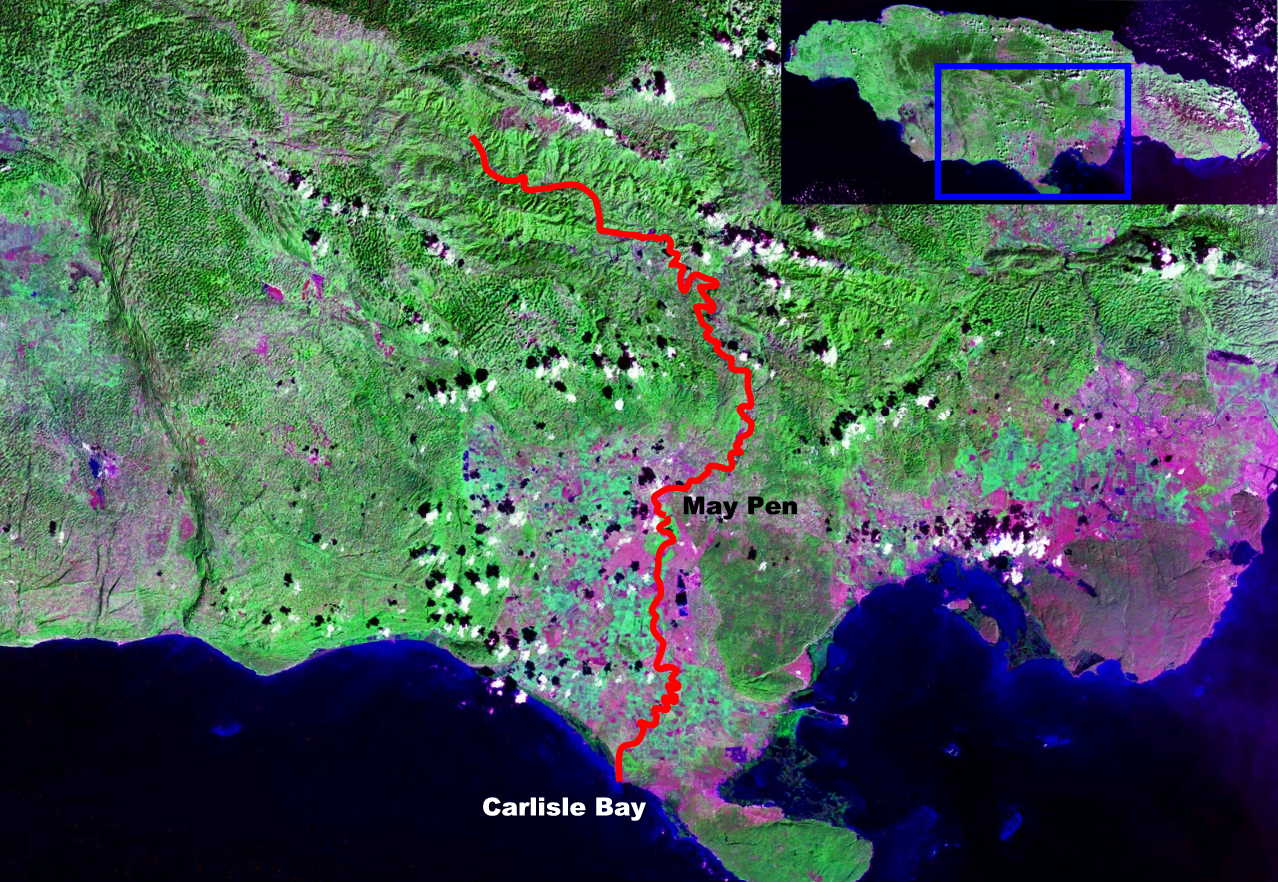
The Great Morass as a key ecosystem
The sources describe the Great Morass of Saint Elizabeth as one of the most important mangrove wetlands in Jamaica, habitat of the American crocodile and numerous birds, and the basis of the tourist safaris up the Black River.
Source: https://en.wikipedia.org/wiki/Black_River_(Jamaica)

📚 Bibliography

  • Wikipedia (EN) — «Black River, Jamaica»: https://en.wikipedia.org/wiki/Black_River,_Jamaica
  • Wikipedia (EN) — «Black River (Jamaica)»: https://en.wikipedia.org/wiki/Black_River_(Jamaica)
  • Wikipedia (EN) — «Saint Elizabeth Parish»: https://en.wikipedia.org/wiki/Saint_Elizabeth_Parish
  • Wikipedia (EN) — «Haematoxylum campechianum»: https://en.wikipedia.org/wiki/Haematoxylum_campechianum
  • Wikipedia (EN) — «History of Jamaica»: https://en.wikipedia.org/wiki/History_of_Jamaica
  • Wikipedia (EN) — «American crocodile»: https://en.wikipedia.org/wiki/American_crocodile
  • Wikipedia (EN) — «YS Falls»: https://en.wikipedia.org/wiki/YS_Falls
  • Visit Jamaica — «South Coast»: https://www.visitjamaica.com/places-to-go/regions/south-coast/

❓ Frequently asked questions

Is the Black River safari worth it?+
Yes, it is the star attraction of the area and one of the most popular nature excursions in southern Jamaica. On a pontoon boat you sail among the mangroves of the Great Morass to see American crocodiles in the wild and a wide variety of birds, with local guides who know the river thoroughly. The main operator, South Coast Safaris, charges US$ 25 per adult and US$ 12 per child (verified July 2026), with departures several times a day. It is an exciting, educational and photogenic experience, very different from beach tourism.
Is the crocodile safari safe?+
Yes, as long as the rules and the guides' instructions are respected. The crocodiles are observed from the boat at a safe distance; you must not feed them, put your hands outside the boat or try to get close. Experienced operators, like J. Charles Swaby's, know the animals' behavior and the river, and include a stop at a breeding nursery dedicated to the rescue of the species. It is an activity suitable for all ages when done responsibly.
What's historic about Black River?+
Black River was a pioneering and prosperous town: thanks to the sugar and logwood trade (logwood, a wood for dyes), it grew very rich in the late 19th century, and tradition holds that it was among the first in Jamaica to have electricity, telephones and automobiles. From that golden age remain the elegant Georgian wooden houses of its center, well worth exploring for free and on foot.
How much does admission to YS Falls cost?+
Admission to YS Falls costs US$ 25 per adult and US$ 16 per child (3-15) (verified July 2026), and includes the train that takes you from the entrance to the falls, the pools for swimming and the picnic areas. Jamaican residents with ID pay a local rate in Jamaican dollars. The zip line has an additional cost of US$ 49 for adults and US$ 39 for children. Check the current rate at ysfalls.com before you go.
When is the best time to go?+
The dry season (mid-December to April) offers the best days for safaris and excursions. From May to November there can be more rain; hurricane season runs from June to November, and after heavy rains the river can rise. For the safaris, a day of good weather is best. The area is little-touristed and can be enjoyed peacefully almost year-round.
How many days do I need in Black River?+
Black River can be seen well in 1 or 2 days, often combined with nearby Treasure Beach. The essentials are the river safari, the historic center and the excursion to the Pelican Bar; with another day you can add YS Falls. Many travelers use it as a stop or excursion base rather than a multi-day destination.
How do I get around the area?+
The center of Black River is explored on foot, and the safaris leave from the town. For excursions (YS Falls, Pelican Bar, Treasure Beach), the most comfortable option is a local driver-guide for the day (US$ 90-150 per vehicle) or licensed JUTA taxis (agree the fare beforehand). Route taxis are very cheap (J$ 150-400 per leg) but less comfortable. Renting a car (US$ 45-75/day) gives you freedom, but you drive on the left.
Why is it called 'black river' if the water is clear?+
The Black River owes its name to the fact that its waters look dark, almost black, especially in certain stretches. This is due to the peat bottom and the mangrove vegetation, which darken the reflection of the water, though the water itself is fairly clear. It is the longest and largest river in Jamaica, and the heart of the Great Morass ecosystem.
Sources consulted (17)
Still planning?
Explore more destinations in Jamaica
See all destinations →
Advertisements
Image credits
Photos from Wikimedia Commons, each under its own licence (CC BY, CC BY-SA or public domain). Open each file to see its author and licence.
RioMinhoJamaica