GO! Assistance has 50% off in October and, with our link, you get an extra 20%.
Pick origin, destination, dates and ages and see the price of your travel assistance in a minute.
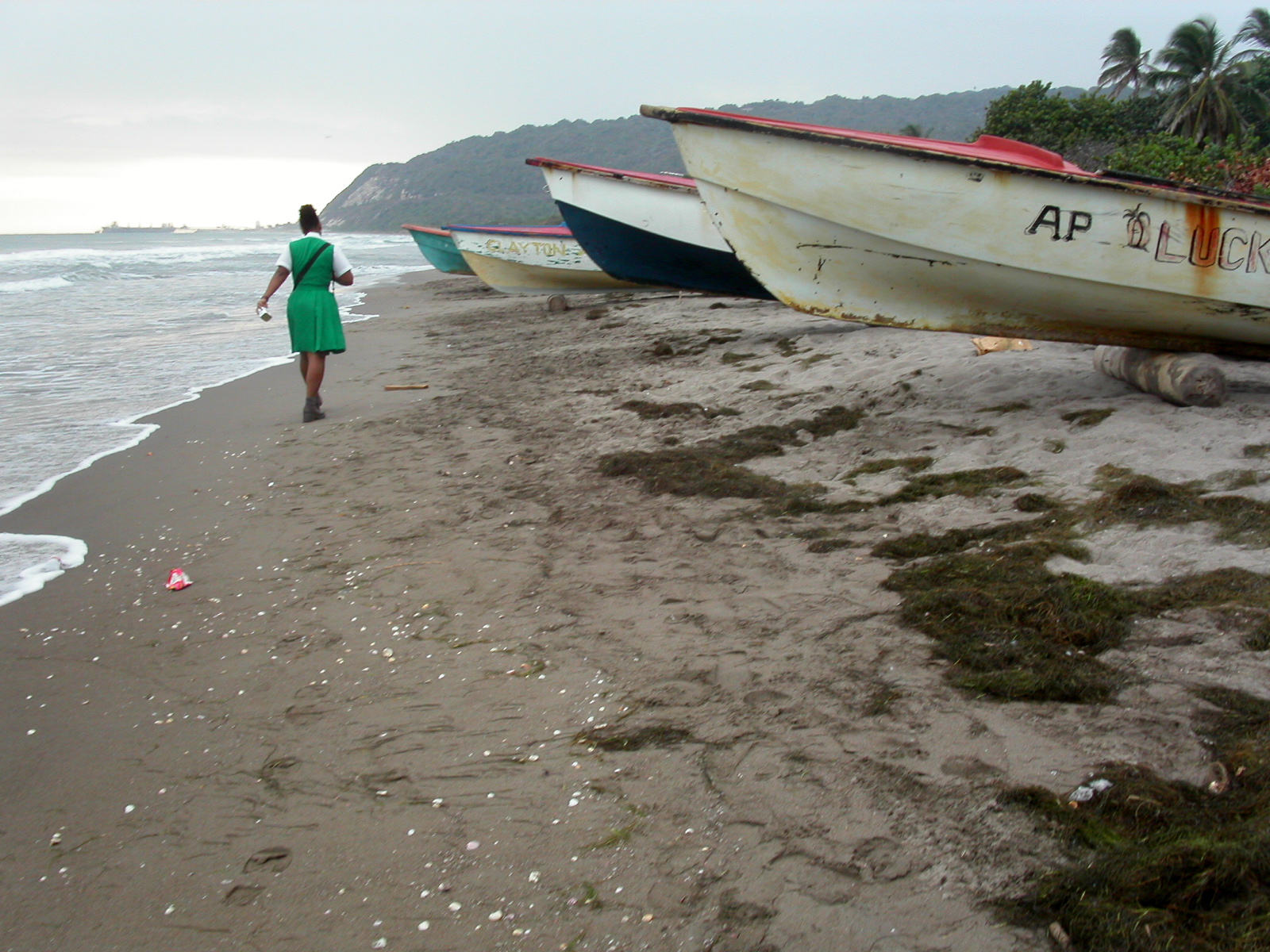
There is a Jamaica that doesn't appear in the brochures of the big resorts: the south, with its fishing villages, its dark-sand beaches and its slow pace. Alligator Pond is one of its best examples. This fishing village, straddling the parishes of Manchester and Saint Elizabeth, lives facing the Caribbean Sea and is famous across the island for one very specific thing: the freshest fish and seafood you could imagine, served almost at the feet of the boats that bring it in.
There are no big hotels or postcard attractions here: the plan is to sit down at a beachfront eatery, order a whole fried or steamed fish, lobster, shrimp or the famous conch, and wash it down with a Red Stripe while you watch the fishermen at work. The nearby Little Ochi area, reached by boat, is one of the most renowned food spots in the country. The atmosphere is authentic, loud, tasty and deeply Jamaican.
This guide brings together the practical side of visiting Alligator Pond: how to get there from Mandeville or Treasure Beach, what to eat and where, what to see in the village and along its coast, and how to combine it with the other attractions of the south of the island, like the Pelican Bar, the Black River or Lovers' Leap. It is an ideal stop for anyone who wants to experience the most genuine Jamaica, the one you taste with your hands, facing the sea.
Alligator Pond is a fishing village on Jamaica's south coast, located on the boundary between the parishes of Manchester and Saint Elizabeth, on a bay of the Caribbean Sea. Its name refers to the old sightings of crocodiles (in Jamaica colloquially called 'alligators', though strictly they are American crocodiles) in the wetlands and river mouths of the area, a habitat for these reptiles in the south of the island. Like much of the south coast, it was historically a region of fishing and small communities away from the sugar belt and, later, from the mass tourism of the north. Over time, the village became known throughout Jamaica for its fish market and its seafood cuisine, and very especially for the Little Ochi area, reached by crossing over by boat, which became a celebrated destination for eating fresh fish and seafood. The full history of the area and its natural surroundings is on our history page.
Read the full history ↓The quiet and arid south coast of Jamaica: land of Black River —the country's first town with electricity, in 1893— and its safaris among crocodiles, of Treasure Beach and its community tourism, of the iconic Pelican Bar raised over the sea, of the YS Falls waterfalls and of the Maroons of Accompong. The most authentic and relaxed face of the island.
Read the history of Parish of Saint Elizabeth →Abroad, getting sick is more than a bad day. In many destinations public healthcare depends on appointments, queues and availability, and private care is paid upfront. An emergency can cost thousands of USD, right when you are far from home and on a tight budget. That is why I recommend you never leave without travel assistance.
I recommend GO! Assistance because it covers what matters: medical care, emergencies, medication and hospitalization depending on the plan. It protects you 24 hours a day, anywhere in the world, with real-time solutions on the ground. GO! 365 ECO and GO! 365 give you USD 45,000 of global coverage: the first with a USD 100 deductible, the second with none.
If you quote from Argentina, in October GO! also offers 12 interest-free instalments on all its products.
GO! Assistance has 50% off in October and, with our link, you get an extra 20%.
Pick origin, destination, dates and ages and see the price of your travel assistance in a minute.
I have never been left without internet on a trip. I land and my phone connects to the strongest network in the country I am visiting: I can let people know I arrived, sort out transport, book tours and keep posting content at a super affordable price (really cheap!). I always use the Maya Mobile eSIM, check out its plans by clicking the banner. See Maya Mobile plans →
Affiliate link: we earn a commission.
No exact prices: a scale from $ (budget) to $$$$$ (luxury), with 2-3 options per category.
Origins, formation and what the sources say.
Picture a village whose name warns you, right away, that there were —and still are— crocodiles here. Alligator Pond is exactly that: a corner of Jamaica's south coast named for the reptiles that basked in its lagoons and estuaries, and which today is famous for something that seems its gentle opposite: the best fried fish on the island, served almost with your feet in the sand. Between those two extremes —the crocodile and the plate of conch— fits the whole history of this village.
The name Alligator Pond refers to the reptiles that inhabited —and still inhabit in smaller numbers— the wetlands, lagoons and river mouths of Jamaica's south coast. On the island these animals are colloquially called 'alligators', though in strict scientific terms it is the American crocodile (Crocodylus acutus), a species present in the Caribbean and along much of the tropical coasts of the Americas.
Jamaica's south coast, with its mangroves, estuaries and gentle rivers, is one of the main habitats of these crocodiles on the island. The nearby Black River, in the parish of Saint Elizabeth, is famous today precisely for its boat safaris to see crocodiles in their natural setting. It is no surprise, then, that a village and a bay in this area inherited the name of the animal that populated its waters and wetlands.
The place name is a good example of how Jamaican geography preserves in its names the imprint of local fauna. Beyond the crocodiles, Alligator Pond would become, over time, synonymous not with reptiles but with fresh fish and seafood cuisine, another way in which the village's life was tied to its natural surroundings and to the Caribbean Sea.
Alligator Pond belongs to the long tradition of fishing villages on Jamaica's south coast. Unlike the north of the island —turned since the mid-20th century toward resort and cruise tourism—, the south kept its rural and community character for much longer, with economies based on fishing, farming and raising animals.
Set on the boundary between the parishes of Manchester and Saint Elizabeth, on a bay open to the Caribbean Sea, the village organized its life around the sea. The fishermen head out in boats and canoes to fish and return with snapper, tuna, dorado, lobster, shrimp and conch, which are sold and cooked almost at the beach's edge. That daily activity, passed down from generation to generation, is the true historical and cultural engine of Alligator Pond.
The geographic setting —a coast more arid and dramatic than the north's, with hills dropping down to the sea and dark-sand beaches— also shapes the character of the place. Artisanal fishing, the fish markets and the seafood cuisine turned this corner into a culinary reference for Jamaicans themselves, long before the first foreign travelers arrived in search of the 'other Jamaica'.
If Alligator Pond is known today beyond the south coast, much of the credit goes to its culinary fame and, in particular, to the Little Ochi complex (also spelled 'Little Ochie'), set up on the outskirts of the village. What began as an area of informal seaside eateries became, over the years, one of the most celebrated fish and seafood destinations in all of Jamaica.
The offering is simple and powerful: super-fresh fish and seafood, brought in directly by the fishermen, prepared to the diner's taste —fried, steamed, escovitch, curried, jerk— and served at tables and huts almost on the sand. The freshness of the product and the relaxed atmosphere, with the sea in the background, turned Little Ochi into a culinary pilgrimage stop for Jamaicans from every parish, who come especially on weekends.
This culinary fame gave Alligator Pond its own identity on the island's tourist map: not that of a postcard resort, but that of a place where you eat exceptionally well and experience local culture authentically. Food thus became the village's main ambassador, drawing foreign travelers too who seek more genuine experiences in the Jamaican south.
Alligator Pond is part of what many travelers call the 'other Jamaica': the south, away from the mass tourism of Montego Bay, Ocho Rios and Negril, in the north and west. This region —covering the parishes of Saint Elizabeth, Manchester and Clarendon— offers fishing villages, arid and dramatic landscapes, traditional communities and an unhurried pace of life that contrasts with the big all-inclusive complexes.
Over recent decades, the south coast gained its own tourist profile, linked to community tourism, nature and food. Nearby attractions such as the bohemian community of Treasure Beach, the Lovers' Leap viewpoint, the unusual Floyd's Pelican Bar (a bar on stilts in the middle of the sea), YS Falls and the Black River safaris formed a circuit that showcases this lesser-known face of the island. Alligator Pond, with its fish market and its seafood cuisine, is a key piece of that route.
Visiting Alligator Pond is, in short, a glimpse of a more genuine, everyday Jamaica, where history is made not of grand monuments but of the daily relationship between the community and the sea. The fishing, the cooking and the atmosphere of the village tell, in their own way, the story of a place that knew how to make its natural surroundings and its seafaring tradition its greatest attraction.
Behind the village and along the south coast stretches a world of water that explains both the name of Alligator Pond and much of its identity: the great wetlands of southwestern Jamaica. The most important, the Great Morass of the Black River, in Saint Elizabeth, is the most extensive freshwater swamp on the island and one of the most valuable wetlands in the Caribbean, protected internationally under the Ramsar convention. It is there, among mangroves, reeds and channels of dark water, that the largest population of American crocodiles (Crocodylus acutus) in Jamaica survives.
That ecosystem is not a picturesque backdrop but part of the living history of the region. For generations, the fishermen of Alligator Pond and the neighboring villages coexisted with these reptiles, respecting and fearing them at once. Over the course of the 20th century, hunting and pressure on their habitat reduced their numbers, until the species became protected by law in Jamaica. Today the crocodiles are, paradoxically, a tourist resource: the Black River Safari shows them in the wild and several local projects work on their rescue and breeding, reversing the old logic of extermination.
Alligator Pond thus sits at the crossroads of two natures: that of the Caribbean Sea, which provides the fish and the economic life of the village, and that of the inland wetlands, which gave it its name and a unique fauna. Understanding that double geography —arid coast and lush swamp almost side by side— is to understand why this corner of the Jamaican south has such a different character from the rest of the island.