Affiliate link: we earn a commission.
📌Province
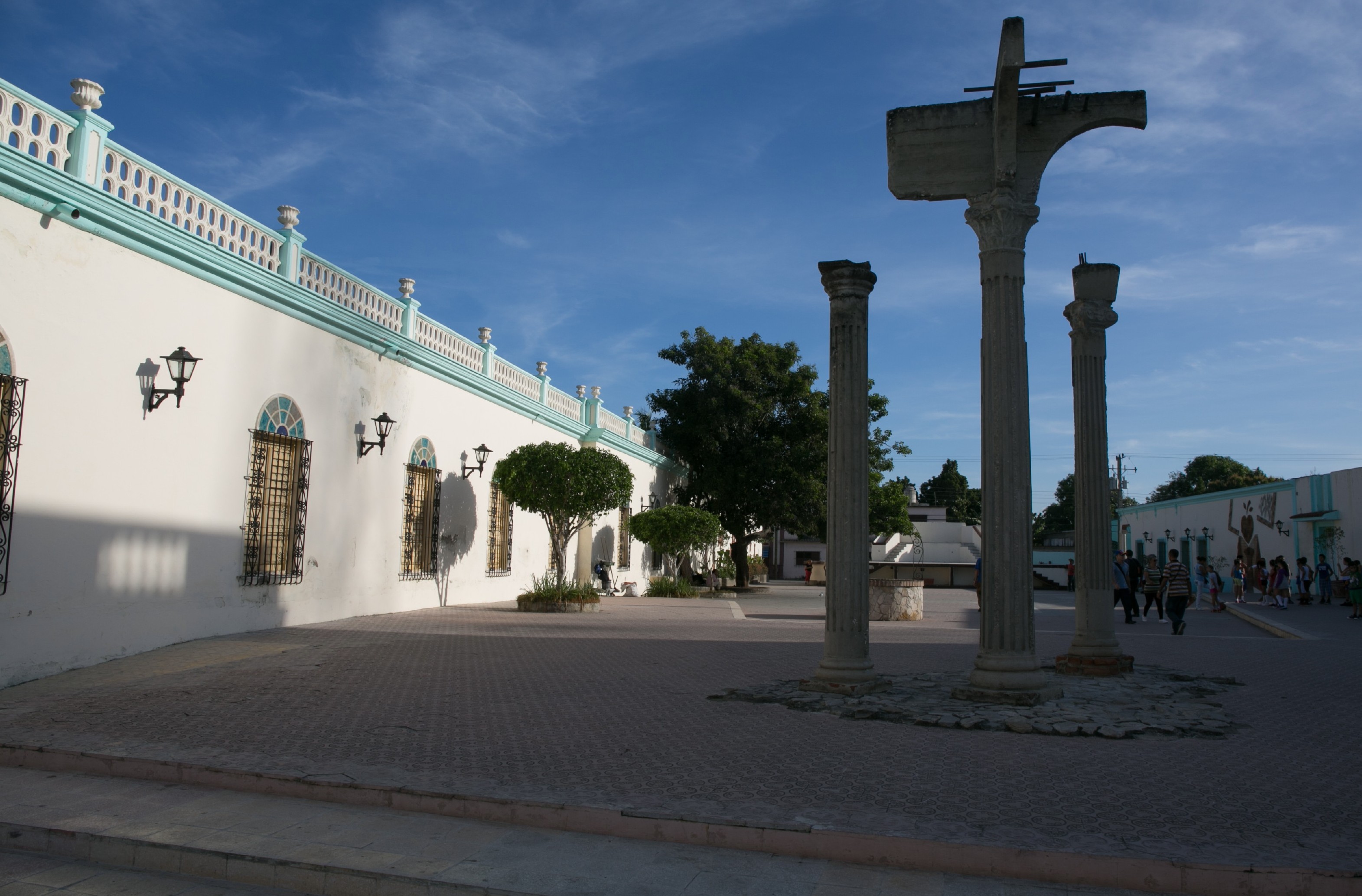
Las Tunas is the capital of the province of the same name, located at the entrance to eastern Cuba, between the provinces of Camagüey (to the west) and Holguín/Granma (to the east). It's known as the 'Capital of Cuban Sculpture' for its large number of outdoor sculptural works, and also as the 'City of Sculptures' or 'the Balcony of Eastern Cuba', for being the gateway to the eastern region. It also has a strong tradition in the décima and repentismo (improvised peasant poetry). It's a provincial city, quiet and little-touristy
📌Service town
Las Tunas itself is the province's service town: it has Hermanos Ameijeiras Airport (VTU), with limited flights (check), an interprovincial bus terminal (Víazul and national lines), hotels, casas particulares, banks and basic services. It sits on the Carretera Central, which makes it a natural crossroads of eastern routes: it connects with Camagüey, Holguín, Bayamo and, toward the north coast, with the province's beaches (like Playa Covarrubias) in the Puerto Padre area
📌Best time to go
The best time to visit Las Tunas is the dry season, from November to April, with sunny days, less rain and more pleasant temperatures. The region is warm and, in part, among the driest in the east. Summer (May to October) is hotter and more humid, with afternoon rains and the Caribbean hurricane season (most likely from August to October). A special time is late June, when the Cucalambeana Festival is held, the great celebration of the décima and Cuban peasant culture, which fills the city with music and poetry
📌Suggested days
One or two days are enough to see the essentials of Las Tunas: its central park (Parque Vicente García), the tour of its outdoor sculptures scattered around the city, its museums, the quiet atmosphere and the local life. Las Tunas works very well as a route stop between Camagüey and the deep east, or as a base for a getaway to the north coast beaches (Playa Covarrubias and the Puerto Padre area), which can add one or two more days
💱 CUP exchange rate
Loading rate…
Las Tunas is one of those Cuban cities that rarely appear on the major tourist circuits, but which hold a particular charm for anyone who dares to discover them. Located at the entrance to eastern Cuba, on the Carretera Central, it's known as the 'Capital of Cuban Sculpture': its streets, squares and corners are dotted with outdoor sculptural works, which turn the city into a kind of open museum.
It's also a land of poetry. Las Tunas is the cradle and bastion of the décima and repentismo, that tradition of improvised, sung poetry of the Cuban countryside, which has its great annual celebration here in the Cucalambeana Festival. Provincial, quiet and with warm people, the city offers an experience of the most authentic and unhurried Cuba, far from the bustle, and also serves as a gateway to the little-known beaches of the province's north coast.
This guide covers the practical side of Las Tunas with a realistic, warm eye: what to see in the city of sculptures, its poetic and musical tradition, how to get there and get around, where to stay and eat, and how to use it as a stop or base for exploring eastern Cuba and its hidden beaches. A visit for curious travelers looking to get off the most beaten paths.
📖 History of Las Tunas
The Las Tunas region was inhabited by native peoples before the conquest. The city grew around a colonial settlement whose name, 'Las Tunas', is associated with the prickly pear or tuna plant (a cactus) abundant in the area; for a time it bore the name Victoria de Las Tunas, in reference to feats of arms. The city and its region had a prominent role in the 19th-century wars of independence: General Vicente García, one of the great mambí leaders of the area, led famous episodes, among them fires of the city to prevent it from falling intact into Spanish hands, in a feat that recalls that of other patriotic cities of the east. That is why the central park and much of the local memory revolve around that figure and the independence struggle. In the 20th century and especially in recent decades, Las Tunas established itself as a provincial capital and developed a strong cultural identity: that of sculpture (with a movement that filled the city with outdoor works) and that of the peasant décima, embodied in the figure of the 19th-century décima poet Juan Cristóbal Nápoles Fajardo, 'El Cucalambé', in whose honor the Cucalambeana Festival is held. The full history —the origins, the mambí feat of Vicente García and the cultural traditions— is told on our history page.
Read the full history ↓🗺️ What to see
Tours nearby, in Holguin
Some places make no sense on your own; with someone explaining them, they change completely. We look ours up on Civitatis: guided in Spanish and booked online with no fuss. There are not many in Holguin, but the ones there are worth it. And there are free tours here: you book without paying and tip the guide whatever you think at the end, so trying one costs you nothing. Tap the cards below and have a look.
They depart from Holguin, 72 km away. Affiliate link: we earn a commission.
1
Parque Vicente García and the historic center
The central square dedicated to the city's mambí hero, heart of Las Tunas life and starting point of the tour.
Read more ↓
Parque Vicente García is the heart of Las Tunas and the best place to start getting to know the city. It's the central square, tree-lined and lively, dedicated to General Vicente García González, the great mambí (independence) leader of the region during the 19th-century wars, considered the local hero par excellence. His figure is very present in the city's memory, tied to the patriotic feats of Las Tunas.
Around the park are concentrated representative buildings, museums, shops and the pulse of local life: people strolling, chatting on the benches, the quiet, friendly atmosphere typical of the provincial cities of the east. It's an ideal spot to sit and watch Las Tunas life, get your bearings and begin to tour the center on foot.
From here you easily reach the central streets, several of the city's museums and the sculpture circuit that sets Las Tunas apart. The square is also the scene of events and celebrations throughout the year.
Getting there: it's right in the center, a short distance from most lodgings and the terminal. Best time to go: late afternoon-evening, when the park comes alive. Tips: use it as a reference for your tours, take the chance to chat with people and ask where to see sculptures, museums and live music. Bring cash, since the city is little-touristy.
ℹ️ Distance: Right in the center of Las Tunas (on foot from lodgings) · Best time to go: Late afternoon-evening, when life in the park picks up · Entry: Free (public space) · Duration: 30 minutes to 1 hour
2
The city of sculptures (open-air museum)
Dozens of sculptural works scattered around streets and squares make Las Tunas the 'Capital of Cuban Sculpture'.
Read more ↓
The great hallmark of Las Tunas is its status as the 'Capital of Cuban Sculpture'. The city is populated with outdoor sculptural works —monuments, ensembles, pieces in squares, parks and avenues— that turn it into a kind of open museum explored simply by walking its streets. This heritage is the fruit of a strong local sculptural movement and of events that, over the years, gradually added works to the urban landscape.
Exploring the city with an eye on its sculptures is an original and pleasant way to get to know it: each neighborhood and each square hides pieces of different styles and themes, from the patriotic and historical to the abstract and symbolic. There are emblematic sculptures well known by the tuneros (locals), which have become landmarks of the city and reference points.
It's a free attraction, ideal to combine with a visit to the center and the museums, and a perfect excuse to walk Las Tunas without rushing.
Getting there: the sculptures are scattered throughout the city; you discover them walking from the center. Best time to go: by day to appreciate them in good light; at dusk for the atmosphere. Tips: ask at your lodging or a tourist office if there's a sculpture map or route; comfortable footwear for walking; take the chance to take photos and discover pieces in unexpected corners.
ℹ️ Distance: Scattered throughout the city (walking tour from the center) · Best time to go: By day for the light; dusk for the atmosphere · Entry: Free (works in the public space) · Duration: Half a day (tour)
3
The Cucalambeana Festival and the décima culture
The great celebration of improvised poetry and Cuban peasant culture, in honor of the décima poet El Cucalambé.
Read more ↓
Las Tunas is one of the great centers of the décima and repentismo, the tradition of improvised, sung poetry of the Cuban countryside, in which the repentistas challenge each other to compose verses on the spot with guitar and lute. This culture has its highest expression in the Cucalambeana Festival, the city's most important celebration, dedicated to the décima, peasant music (the punto cubano) and rural traditions.
The Festival is held each year, around late June, and pays tribute to Juan Cristóbal Nápoles Fajardo, 'El Cucalambé', the famous 19th-century Cuban décima poet, a symbol of this tradition and a tutelary figure of the region. During the festival, the city and especially the El Cucalambé complex (on the outskirts) fill with repentistas, musicians, craftspeople, creole food and audiences from all over Cuba. It's one of the best opportunities to immerse yourself in the most genuine Cuban peasant culture.
Outside the festival dates, the décima and the punto cubano remain present at peñas (gatherings), culture houses and events throughout the year.
Getting there: the festival takes place in the city and at the El Cucalambé complex, on the outskirts (taxi/excursion transfer). Best time to go: late June for the Cucalambeana Festival (check dates); peñas and events during the rest of the year. Tips: if you travel in June, don't miss the festival; check the program locally. Bring cash for food, drink and crafts.
ℹ️ Distance: City of Las Tunas and the El Cucalambé complex (outskirts) · Best time to go: Late June (Cucalambeana Festival); peñas all year (check) · Entry: Many outdoor events are free; concerts and peñas approx. 25–100 CUP per person (verified July 2026) · Duration: From one day to several days (during the festival)
4
Las Tunas museums (memorial and provincial museum)
Spaces that tell the patriotic history of the city, the mambí feat and the local memory of Las Tunas.
Read more ↓
To understand the history and identity of Las Tunas it's worth visiting its museums, concentrated in the center and with a cheap entry. The Provincial Museum (often housed in a historic building in the center) reviews the history of the city and the region: the origins, the colonial era, the independence feat and local life, with pieces, documents and exhibitions.
The city also has memorial spaces dedicated to its patriotic history and to episodes and figures of local and national relevance, tied to the 19th-century mambí struggle (with General Vicente García as the central figure) and to more recent history. These museums let you understand why Las Tunas is a city of strong patriotic memory, marked by the fires of the city during the wars of independence and by its role in the east.
They are short but enriching visits, ideal to combine with a tour of the center and the sculptures, and to give context to what you see in the city.
Getting there: the main museums are in the center, on foot from Parque Vicente García. Best time to go: during museum hours (check opening days). Tips: confirm the hours before going (they may close on some day); admission is usually cheap; combine them with the sculpture tour and the historic center.
ℹ️ Distance: Center of the city (on foot from Parque Vicente García) · Best time to go: During museum hours (check opening days) · Entry: Approx. 25–100 CUP per person (provincial museums; usually very cheap) (verified July 2026) · Duration: 1 to 2 hours (several museums)
5
North coast beaches (Playa Covarrubias and Puerto Padre)
Little-known white sand beaches in the north of the province, with a resort, reefs and tranquility.
Read more ↓
Although Las Tunas is known above all for its cultural side, the province also has a north coast with little-known and very quiet beaches, ideal for those who want to combine the city with a bit of sea far from the crowds. The most notable is Playa Covarrubias, a beach of white sand and turquoise waters in the Puerto Padre area, in the north of the province, with nearby coral reefs for snorkeling and diving, and an all-inclusive hotel complex in a remote setting.
Unlike the big tourist hubs like Varadero or the cays, the north coast of Las Tunas is much quieter and more pristine, which makes it an attractive option for those seeking a beach without crowds. The Puerto Padre area, a northern port city, is the gateway to this coastal strip.
It's a perfect complement to a visit to the city: after touring the sculptures and the culture of Las Tunas, a getaway to the beach rounds off the experience very well.
Getting there: the north coast (Playa Covarrubias, Puerto Padre) is a considerable distance from the city of Las Tunas; reached by taxi, car or excursion (check distances and transport). Best time to go: dry season, with a calm sea and clear skies. Tips: confirm the distance and the transport (there are no frequent services); bring water, sunscreen and what you need for the beach; check whether there's sargassum and the state of the hotel/area services.
ℹ️ Distance: North coast of the province (Playa Covarrubias, Puerto Padre area), a good distance from the city · Best time to go: Dry season, with a calm sea · Entry: Public beaches free; resort day pass approx. US$ 25–50; snorkeling/diving US$ 10–40 · Duration: A day or more (with an overnight stay in the area)
6
El Cucalambé Cultural Complex Motel and House-Museum
The site on the city's outskirts, home to the Cucalambeana Festival and a center of Cuban peasant culture.
Read more ↓
A few kilometers from the city, on the Carretera Central toward Holguín, is the El Cucalambé Cultural Complex, the emblematic place of peasant culture and the décima in Cuba. It's dedicated to the memory of Juan Cristóbal Nápoles Fajardo, 'El Cucalambé', the great 19th-century décima poet, a symbol of improvised poetry and Cuban rural identity.
The site, next to a lagoon and surrounded by vegetation, has a motel, areas for shows and spaces dedicated to the peasant tradition. It's the main venue of the Cucalambeana Festival, the great annual celebration of the décima and the punto cubano that, each late June, fills the place with repentistas, musicians, craftspeople and audiences from all over the island. Outside those dates, it's a quiet place where you breathe the atmosphere of the Cuban countryside.
Visiting it lets you understand why Las Tunas is a bastion of the décima and get to know an aspect of Cuban culture that goes beyond son and rumba. It's reached by taxi or car from the city in a few minutes.
ℹ️ Distance: A few km from the city, on the Carretera Central (taxi or car) · Best time to go: Late June (Cucalambeana Festival); the rest of the year, a quiet atmosphere · Entry: Access to the site generally free; events approx. 25–100 CUP per person (verified July 2026) · Duration: 1 to 2 hours (more during the festival)
🛡️ Getting sick far from home shouldn't cost you thousands of USD
Abroad, getting sick is more than a bad day. In many destinations public healthcare depends on appointments, queues and availability, and private care is paid upfront. An emergency can cost thousands of USD, right when you are far from home and on a tight budget. That is why I recommend you never leave without travel assistance.
I recommend GO! Assistance because it covers what matters: medical care, emergencies, medication and hospitalization depending on the plan. It protects you 24 hours a day, anywhere in the world, with real-time solutions on the ground. GO! 365 ECO and GO! 365 give you USD 45,000 of global coverage: the first with a USD 100 deductible, the second with none.
If you quote from Argentina, in October GO! also offers 12 interest-free instalments on all its products.
An emergency abroad can cost thousands of dollars. Travel with assistance.
GO! Assistance has 50% off in October and, with our link, you get an extra 20%.
Pick origin, destination, dates and ages and see the price of your travel assistance in a minute.
📶 Internet from the moment you land
I have never been left without internet on a trip. I land and my phone connects to the strongest network in the country I am visiting: I can let people know I arrived, sort out transport, book tours and keep posting content at a super affordable price (really cheap!). I always use the Maya Mobile eSIM, check out its plans by clicking the banner. See Maya Mobile plans →
Affiliate link: we earn a commission.


💵 Prices
Tickets
| Type | Price |
|---|
| Parque Vicente García and city center | Free (public space) |
| Outdoor sculpture tour | Free (works in the public space) |
| Provincial Museum and city memorials | Approx. 25–100 CUP per person (verified July 2026; usually very cheap) |
| Cucalambeana Festival (events) | Many outdoor events free; concerts approx. 25–150 CUP per person (verified July 2026) |
| Culture houses / décima peñas | Approx. 25–100 CUP per person or free entry (verified July 2026) |
| North coast beaches (public) | Free (public beaches); resort day pass approx. US$ 25–50 |
🔄 updated monthlyOfficial / reference values · double-check when buying
Activities and tours
| Activity | Price | Duration | Operator |
|---|
| Walking tour of the center and the sculptures | Free (on your own) | Half a day | On your own or local guides |
| Visit to the city's museums | Approx. 25–100 CUP per person | 1-2 h | Local museums |
| Décima peña / punto cubano (improvised poetry) | Approx. 25–100 CUP per person or free entry | An evening | Culture houses / events |
| Cucalambeana Festival (late June) | Free events and concerts from 25–150 CUP (verified July 2026) | Several days | Provincial cultural event (check dates) |
| Beach getaway (Covarrubias / north coast) | Round-trip taxi approx. US$ 50–90; resort day pass US$ 25–50 | A day or more | Taxis, excursions, car |
🔄 updated monthlyOfficial / reference values · double-check when buying
🚌 How to get there and distances
Getting around
On foot around the center
Free
NotesLas Tunas's center is compact and easily walked: the park, the museums and many sculptures are all close together
Bicitaxi and horse-drawn carriage
NotesTypical, cheap means for getting around the city; the price is agreed before getting in and paid in cash in Cuban pesos
PriceTrips in the city US$ 2–6; to El Cucalambé or the north coast, US$ 15–60 depending on distance
NotesUseful for the airport, the terminal, El Cucalambé and, above all, for the north coast beaches. Agree the price and, if convenient, a round trip or wait. Paid in cash (USD/EUR or CUP), no meter
Urban bus (guagua) + 'La Guagua' app
NotesLas Tunas is, in fact, the birthplace of the official Cuban app 'La Guagua': it was born here from the local e-government project and today is also used in Holguín and Guantánamo. It shows in real time the location of the urban buses, the stops and the routes. The fare is paid in cash in Cuban pesos (about 5 CUP), not through the app; the digital payment (Transfermóvil/EnZona with QR) requires a Cuban card, of little use to the passing tourist (source: Granma / Cuban press, verified July 2026)
Interprovincial bus (Víazul / Viajando)
NotesLas Tunas sits on the Carretera Central, so it has good connections with Camagüey, Holguín, Bayamo and the rest of the country. Comfortable and cheap. The ticket is booked via the official 'Viajando' app (payment via Transfermóvil) or at the terminal; Víazul (tourist) is paid in euros/USD or by international card
NotesGives freedom to explore the province and reach the north coast beaches. Car rental in Cuba can be expensive and limited; book in advance. Fuel is paid separately and there may be lines to fill up
🔄 updated monthlyOfficial / reference values · double-check when buying
How to get there
Camagüey → Las Tunas (bus or taxi, Carretera Central)
Holguín → Las Tunas (bus or taxi)
Bayamo → Las Tunas (bus or taxi)
Approx. US$ 6–8 per person
Havana → Las Tunas (Víazul)
Avg. price€44.00 per trip ONE WAY for an adult (children €22.00). The official fare list has THREE bands and you have to read all three: RETURN €43.00 adult / €21.00 child per leg, and MULTI-DESTINATION €42.00 adult / €20.00 child. Includes 2 free bags. Víazul charges only in euros with an international Visa/Mastercard/Amex card, no cash, and is booked at viazul.wetransp.com. Havana–Las Tunas leg. (source: Víazul's official PDF fare list, «TARIFAS SERVICIO VIAZUL», downloaded from viazul.wetransp.com/assets/public/tarifas-descargables.pdf and read page by page on 10/08/2026)
Flight to Hermanos Ameijeiras Airport (VTU)
🔄 updated monthlyOfficial / reference values · double-check when buying
🏨 Where to stay
No exact prices: a scale from $ (budget) to $$$$$ (luxury), with 2-3 options per category.
Hotels in the center of Las Tunas
Recommended optionsUS$ 35–70 per night: state-run hotels in or near the center (such as the Hotel Las Tunas or the Cadillac), convenient for walking the city. Mid-range category, with basic services
Casas particulares in the center
Recommended optionsUS$ 15–30 per night: the most recommendable and authentic option, family homes in the center with a personal touch, homemade breakfast (US$ 3–5) and advice from the hosts. Excellent value for money in a little-touristy city
Budget houses and hostels
Recommended optionsUS$ 12–20 per night: simpler, cheaper casas particulares for travelers on a tight budget or passing through on the Carretera Central. It's best to choose the well-located ones in the center
Resort / lodging on the north coast
Recommended optionsUS$ 70–150 per person per night all-inclusive: a hotel complex on the province's north coast (Playa Covarrubias / Puerto Padre area), like the Brisas Covarrubias, in a remote and quiet setting. Availability varies; book in advance
🍴 Where to eat
Paladares (private restaurants) in the center
Options / signature dishUS$ 5–12 per dish: the paladares of Las Tunas offer homemade creole cuisine —pork, chicken, congrí, root vegetables— in a welcoming setting and at a good price. The best option to eat well and authentically in a little-touristy city
Creole food in casas particulares
Options / signature dishHome-cooked dinner approx. US$ 5–10; breakfast US$ 3–5: many casas particulares serve hearty meals with creole dishes. Practical and delicious for staying and eating in the same place
Cafeterias and simple food in the center
Options / signature dishApprox. 100–400 CUP per dish (US$ 1–4): around the park there are cafeterias, stalls and simple food places, ice cream and snacks. It's best to bring cash
Creole and peasant food (Cucalambé setting)
Options / signature dishUS$ 6–14 per dish: in the El Cucalambé area and during the festival, typical creole and peasant food is served (roast pork, root vegetables, casabe), very tied to Cuban rural culture
📖 History of Las Tunas
Origins, formation and what the sources say.
Origins and the name of Las Tunas
On the night of September 26, 1876, a man set fire to his own house so it would burn along with the whole city. It was General Vicente García, who preferred to see Las Tunas reduced to ashes rather than leave it intact in the hands of the Spanish army. From that decision was born the motto the city still repeats with pride: 'Burned yes, enslaved never'. Few Cuban cities have such a dramatic origin to their identity, and to understand it one must go much further back, to the dry landscape where the settlement grew.
The Las Tunas region, at the entrance to eastern Cuba, was inhabited by native peoples before the arrival of the Spanish. The area was settled later and more sparsely than other parts of Cuba, in a territory of plains, savannas and one of the driest areas in the east, historically devoted to cattle ranching and agriculture. The name 'Las Tunas' is associated with the abundance of the plant known as tuna or nopal (a type of cactus with edible fruit), very present in this landscape. Over time, the settlement grew and established itself as a key point on the road to the east, on the route that would later be the Carretera Central.
The city long bore the name Victoria de Las Tunas. That root —between the cactus landscape and the memory of war— accompanies the identity of a place that, in time, would become famous for very different and luminous reasons: the art of sculpture and the peasant poetry of the décima.
The origin of the name 'Las Tunas'
The sources associate the city's name with the abundance of the 'tuna' plant (nopal/cactus) in the region. The city also bore the name Victoria de Las Tunas. The details of the origin and the name changes are told with variations according to the sources.
Source: https://es.wikipedia.org/wiki/Las_Tunas_(Cuba)
The wars of independence and General Vicente García
The great historical chapter of Las Tunas was written during Cuba's wars of independence against Spain, in the second half of the 19th century. The region had a prominent role in the mambí struggle, and produced one of the great independence leaders of the east: General Vicente García González, a son of the city and a tutelary figure of its patriotic memory.
His most remembered action was the capture and burning of Las Tunas in September 1876, during the Ten Years' War (1868-1878). At dawn on September 23, with the support of the local population, the mambí troops surprised the Spanish garrison and, after about eight hours of machete combat, took the city (then Victoria de Las Tunas). Without the means to hold it against the inevitable counterattack, on the night of September 26 Vicente García ordered it reduced to ashes, starting with his own house. That phrase of his —to prefer the city burned rather than enslaved— gave rise to the Las Tunas motto 'Burned yes, enslaved never', and links the feat to that of other patriotic cities of the east like Bayamo.
For all this, the figure of Vicente García and the mambí struggle occupy a central place in the identity of Las Tunas. The city's main park bears his name, the Provincial Museum honors his figure, and much of the local monuments revolve around that history of resistance. The city was rebuilt after the wars, keeping the memory of that heroic era alive.
Vicente García and the fires of the city
The sources agree that the Las Tunas general Vicente García was a key figure of the independence struggle in the east, and that Las Tunas experienced episodes of combat and fires during the 19th-century wars. The specific details of each event vary according to the historical sources.
Source: https://es.wikipedia.org/wiki/Vicente_Garc%C3%ADa_Gonz%C3%A1lez
El Cucalambé and the tradition of the Cuban décima
Alongside the patriotic memory, there is another tradition that deeply defines Las Tunas: that of the décima and repentismo, the improvised, sung poetry of the Cuban countryside. And at the center of that tradition is the figure of Juan Cristóbal Nápoles Fajardo, known as 'El Cucalambé', a 19th-century Cuban décima poet, native to the region, considered one of the great representatives of the island's popular peasant poetry.
El Cucalambé embodies the soul of Cuban rural culture: the décima (a ten-line stanza), the punto cubano (the peasant musical genre), the lute and the guitar, and the art of improvising verses. His work and his figure became a symbol of this tradition, and the region adopted him as one of its greatest cultural references.
In his honor the Cucalambeana Festival is held each year, the great celebration of the décima and Cuban peasant culture, which brings together repentistas, musicians and audiences from all over the country around the El Cucalambé complex, on the outskirts of the city. This festival, together with the living tradition of the décima at peñas and culture houses, has made Las Tunas a bastion of Cuban improvised poetry, an intangible heritage deeply rooted in the local and national identity.
El Cucalambé, symbol of the décima
The sources present Juan Cristóbal Nápoles Fajardo, 'El Cucalambé', as an outstanding 19th-century Cuban décima poet, linked to the Las Tunas region and a symbol of peasant poetry, in whose honor the Cucalambeana Festival is held. Biographical details and details of his work vary according to the sources.
Source: https://es.wikipedia.org/wiki/Juan_Crist%C3%B3bal_N%C3%A1poles_Fajardo
Las Tunas, 'Capital of Cuban Sculpture'
In the 20th century, and especially in its last decades, Las Tunas developed the facet that today most distinguishes it for the visitor: that of the city of sculpture. A strong local sculptural movement, driven by artists of the region and by events and biennials dedicated to sculpture, gradually populated the city with outdoor works, until it earned the title of 'Capital of Cuban Sculpture'.
Monuments, sculptural ensembles and pieces of various styles and themes —patriotic, symbolic, abstract— were distributed around squares, parks, avenues and corners, turning the urban space into a kind of open-air museum. Some of these works became landmarks and symbols of the city, recognized by the tuneros and by visitors.
Thus, contemporary Las Tunas combines its different layers of identity: the dry landscape and the cactus name, the heroic memory of the mambí feat and of General Vicente García, the living tradition of the décima and the Cucalambeana Festival, and the sculptural vocation that fills its streets with art. A provincial capital, an eastern crossroads on the Carretera Central and a gateway to the quiet north coast beaches, the city offers an experience of the most authentic and cultural Cuba, far from the major tourist circuits.
The Las Tunas sculptural movement
The sources agree that Las Tunas is recognized as the 'Capital of Cuban Sculpture' for the large number of outdoor sculptural works scattered around the city, the fruit of a local artistic movement and of events dedicated to sculpture. The dates and the exact number of works vary according to the sources.
Source: https://es.wikipedia.org/wiki/Las_Tunas_(Cuba)
❓ Frequently asked questions
Why is Las Tunas called the 'Capital of Cuban Sculpture'?+
Because the city is populated with outdoor sculptural works, scattered around streets, squares and avenues, the fruit of a strong local sculptural movement and of events that added pieces to the urban landscape over the years. This turns it into a kind of open museum explored on foot. Discovering its sculptures is one of the main attractions (and it's free), ideal to combine with the historic center and the museums.
What is the Cucalambeana Festival?+
It's the great cultural celebration of Las Tunas, dedicated to the décima, repentismo and Cuban peasant music (the punto cubano). It's held each year around late June, in tribute to the 19th-century décima poet Juan Cristóbal Nápoles Fajardo, 'El Cucalambé'. During the festival, the city and the El Cucalambé complex fill with repentistas, musicians, craftspeople and audiences from all over Cuba. It's a unique immersion in Cuban peasant culture.
Is it worth stopping in Las Tunas?+
Yes, especially if you like the authentic, little-touristy Cuba. Las Tunas offers its sculpture circuit, a strong poetic and musical tradition (the décima), museums of patriotic history and a warm, provincial atmosphere. It sits on the Carretera Central, so it's a comfortable stop between Camagüey and the deep east, and it can serve as a base for a getaway to the quiet north coast beaches.
Are there beaches near Las Tunas?+
Yes, on the province's north coast, though a considerable distance from the city. The most notable is Playa Covarrubias, of white sand and turquoise waters, in the Puerto Padre area, with reefs for snorkeling and an all-inclusive resort. They are quiet, uncrowded beaches. It's best to confirm the distance and the transport (by taxi, car or excursion), since there are no frequent services to the coast.
What's the best time to visit Las Tunas?+
The dry season, from November to April, with sunny days, less rain and more pleasant temperatures (the region is warm and fairly dry). Summer (May to October) is hotter and more humid, with rain and the hurricane season (most likely from August to October). A very special time is late June, during the Cucalambeana Festival, when the city fills with peasant poetry and music.
How do I get around the city and how is transport paid?+
Las Tunas's center is compact and explored on foot, ideal for seeing the sculptures and the museums. For short distances there are bicitaxis and horse-drawn carriages (25–100 CUP); for the airport, the terminal, El Cucalambé or the beaches, a taxi is best (agreeing the price). All local transport is paid in cash in Cuban pesos (or dollars/euros with the taxi driver): there's no card or QR for the passing tourist. A curious fact: Las Tunas is the birthplace of the official Cuban app 'La Guagua', which shows in real time where the urban bus is and its stops. Between cities, the buses (tourist Víazul, or the Viajero ones booked via the 'Viajando' app) are comfortable and cheap, since Las Tunas sits on the Carretera Central.
Sources consulted (13)
- Wikipedia (ES) — «Las Tunas (Cuba)»: https://es.wikipedia.org/wiki/Las_Tunas_(Cuba)
- Wikipedia (ES) — «Vicente García González»: https://es.wikipedia.org/wiki/Vicente_Garc%C3%ADa_Gonz%C3%A1lez
- Wikipedia (ES) — «Juan Cristóbal Nápoles Fajardo»: https://es.wikipedia.org/wiki/Juan_Crist%C3%B3bal_N%C3%A1poles_Fajardo
- EcuRed — «Las Tunas (ciudad)»: https://www.ecured.cu/Las_Tunas_(ciudad)
- Cuba Travel (official) — «Las Tunas»: https://www.cuba.travel/
- Wikipedia (ES) — «Las Tunas (Cuba)»: https://es.wikipedia.org/wiki/Las_Tunas_(Cuba)
- Lonely Planet — «Las Tunas, Cuba»: https://www.lonelyplanet.com/cuba/eastern-cuba/las-tunas
- EcuRed — «Jornada Cucalambeana»: https://www.ecured.cu/Jornada_Cucalambeana
- Víazul (official, intercity buses): https://viazul.wetransp.com/
- Lonely Planet — «Las Tunas: getting there & around»: https://www.lonelyplanet.com/cuba/eastern-cuba/las-tunas
- Granma — «La Guagua, app para seguir en vivo los ómnibus urbanos» (project born in Las Tunas): https://www.granma.cu/cuba/2018-09-09/la-guagua-nueva-aplicacion-movil-para-seguir-en-vivo-a-los-omnibus-urbanos-09-09-2018-21-09-02
- Cuba Travel (official): https://www.cuba.travel/
- Lonely Planet — «Cuba: practical information»: https://www.lonelyplanet.com/cuba