Affiliate link: we earn a commission.
📌Province/State
Cayo Largo del Sur belongs to the special municipality of Isla de la Juventud, within the Canarreos archipelago, south of Cuba. It's a small coral island with no towns or local life beyond tourism: essentially a nature-and-resort enclave, devoted to sun, sea and rest
📌Best time to go
The best time is the dry season, from November to April, with sunny weather, little rain, a calm sea and excellent visibility for diving. Summer (May to October) is hotter and more humid and coincides with the Caribbean hurricane season (especially from August to October)
📌Suggested days
Cayo Largo is a destination for resting several days: stays of 3 to 7 nights at a resort are common, combining the beach with diving and excursions to the islets. It's also offered as a day trip from Havana or Varadero (a round-trip flight in one day), although the appeal is to stay
📌Currency
Cuban peso (CUP); at the resorts and for excursions, business is done mostly in foreign currency and by card (except cards issued by U.S. banks, which don't work in Cuba). It's best to bring some cash for tips and purchases
📌Getting there
Almost exclusively by plane, to Vilo Acuña Airport (CYO), with domestic flights from Havana and Varadero and international charters depending on the season. Access by sea is very limited. Most people arrive on packages that include the flight and transfer to the resort
💱 CUP exchange rate
Loading rate…
🌤️ Weather in Cayo Largo del Sur
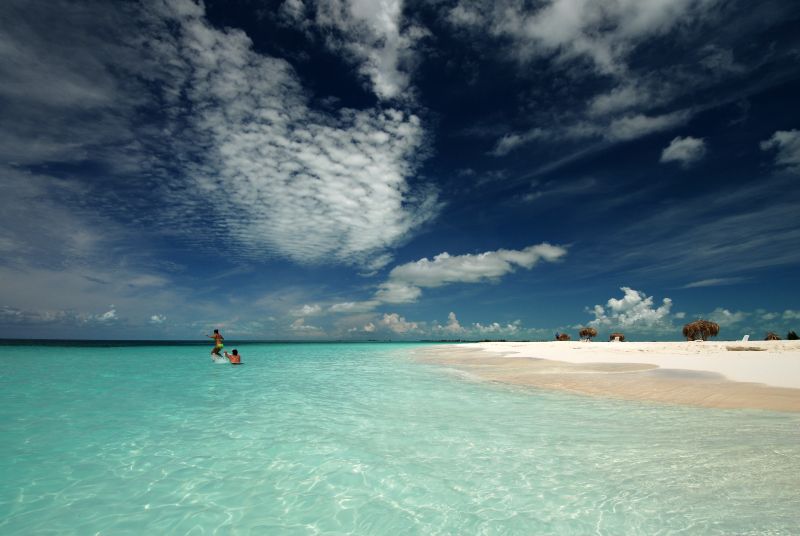
Cayo Largo del Sur is a beach paradise in its purest form: a small coral island in the Canarreos archipelago, south of Cuba, famous for some of the most beautiful beaches in the country and the Caribbean. Here there are no towns or local life beyond tourism: the cay is, essentially, an enclave of nature, dazzling white sand, turquoise waters and all-inclusive resorts, designed for completely disconnecting and devoting yourself to sun, sea and rest.
Its beaches are legendary: the long Playa Sirena, considered by many the best on the cay, with its fine sand and its calm sea; Playa Paraíso, with shallow, transparent waters; and long stretches of pristine coast where sea turtles nest. The waters, of extraordinary clarity, make Cayo Largo a first-rate destination for diving and snorkeling, with reefs, marine life and excellent visibility. You can also visit nearby islets teeming with iguanas and birds.
This guide covers the essentials of Cayo Largo del Sur with a practical eye: its must-see beaches, the sea activities (diving, snorkeling, catamaran rides), the wildlife —turtles, iguanas, birds—, the all-inclusive scheme and how to reach this isolated cay, accessible mainly by plane. It's a destination for those seeking a postcard beach, tranquility and marine nature, far from the bustle of the cities.
📖 History of Cayo Largo del Sur
Cayo Largo del Sur forms part of the Canarreos archipelago, south of Cuba, an area of coral cays with a history tied to navigation, fishing and, in other times, the passage of corsairs and pirates through the Caribbean. For centuries it was a practically uninhabited place, a refuge for wildlife and for sea turtles that come to lay their eggs on its beaches. Unlike most Cuban destinations, Cayo Largo has no urban or colonial past: its development is entirely touristic and recent, the result of Cuba's bet on sun-and-beach tourism in the last decades of the 20th century, which transformed it into an exclusive resort enclave while keeping its natural setting. The full history is on our history page.
Read the full history ↓🏛️ Cayo Largo del Sur is in Isla de la Juventud
The special municipality and Cuba's second island: the old 'Isla de Pinos', a pirate lair that inspired 'Treasure Island', land of the Presidio Modelo where Fidel Castro was imprisoned, of Taíno cave paintings and of the southern cays such as Cayo Largo.
Read the history of Isla de la Juventud →🗺️ What to see
Tours nearby, in Cienfuegos
Some places make no sense on your own; with someone explaining them, they change completely. We look ours up on Civitatis: guided in Spanish and booked online with no fuss. They have 5 activities in Cienfuegos. And there are free tours here: you book without paying and tip the guide whatever you think at the end, so trying one costs you nothing. Have a look below: tap any of them to see them all.
They depart from Cienfuegos, 129 km away. Affiliate link: we earn a commission.
1
Playa Sirena and Playa Paraíso
Two of the best beaches in Cuba: dazzling white sand and a turquoise, calm sea.
Read more ↓
The beaches are the reason for Cayo Largo's existence, and two stand out above the rest. Playa Sirena, at the western tip of the cay, is often considered the best beach in Cuba: a wide, very long stretch of fine white sand, with calm, shallow waters of a dazzling turquoise, ideal for swimming and spending the day. It usually has services (umbrellas, a restaurant, gear rental) and is reached by transfers from the hotels.
Next to it, Playa Paraíso lives up to its name: shallow, transparent, serene waters that look like a natural pool, perfect for relaxing. Both beaches, adjoining in the west of the cay, form a spectacular ensemble and are the great 'must-do' excursion of the island. It's best to set out early to enjoy them more calmly and to bring sun protection, water and everything you need for the day.
ℹ️ Distance: Western tip of the cay; access with a transfer (boat or vehicle) from the resorts · Best time to go: Dry season (November to April); early for more calm · Entry: Beaches free; boat transfer to Playa Sirena approx. US$ 10–20 round trip; lounger US$ 3–5 (2025; check) · Duration: Full day at the beach
2
Diving and snorkeling on the reefs
Crystal-clear waters and coral reefs that make Cayo Largo a first-rate diving destination.
Read more ↓
Cayo Largo del Sur is one of Cuba's great diving destinations. Its waters, of exceptional clarity and visibility, and its nearby coral reefs are home to rich marine life: corals, sponges, colorful fish, moray eels, lobsters, turtles, rays and, at some points, encounters with larger fauna. There are dives for all levels, from intro dives for beginners to spots for experienced divers, with walls, caves and sunken ships.
Snorkeling is also magnificent, accessible on boat outings to reefs and nearby islets. The cay's dive centers organize the activities and gear rental. The combination of warm waters, transparency and biodiversity makes the underwater world one of the island's great attractions. It's best to respect the corals and wildlife, use reef-friendly sunscreen and always follow the guides.
ℹ️ Distance: Reefs off the cay; outings from the marina's dive centers · Best time to go: Dry season, with better visibility and a calm sea · Entry: Two-tank dive approx. US$ 50–70; intro dive US$ 70–90; Open Water course US$ 350–450 (2025; check) · Duration: Half a day to a full day
3
Cayo Iguana and the wildlife islets
A classic excursion to Cayo Iguana, populated by iguanas, and to other islets of birds and pelicans.
Read more ↓
A classic Cayo Largo excursion is the visit to nearby islets, especially Cayo Iguana (Cayo Iguanas), populated by numerous iguanas that approach visitors in an almost prehistoric setting. The trip usually continues to other cays teeming with pelicans, gulls and various seabirds, and to sandbanks in the middle of the sea where the water barely reaches your waist.
The catamaran or launch rides combine sailing over turquoise waters, swimming at sandbanks, one or several snorkeling stops over reefs and the visit to these islets, often with a seafood lunch on board or on a cay. It's one of the most memorable days of the stay. It's best not to feed or disturb the wildlife, keep your distance and follow the guides' instructions.
ℹ️ Distance: Islets near the cay; reached by catamaran or launch from the marina · Best time to go: Dry season, with a calm sea · Entry: Catamaran excursion to the islets approx. US$ 60–95 per person, usually includes snorkeling and lunch (2025; check) · Duration: Full day
4
Turtle farm and the nesting beaches
The cay's sea turtle hatchery and the pristine beaches where these threatened species nest.
Read more ↓
The pristine beaches of Cayo Largo are nesting areas for sea turtles, and the cay has a turtle farm or center (hatchery) where you can see specimens of different species and learn about the protection and breeding work for these threatened animals. It's a short, accessible and educational visit, especially appreciated by families.
During the nesting season (which varies by species, generally between spring and summer), with luck and respect you can witness part of the turtles' cycle: the arrival of the females to lay eggs or the hatching of the young. The cay takes part in conservation programs, since these beaches are among the most important for turtles in Cuba. It's best to visit the farm with a guide and always respect the wildlife protection rules.
ℹ️ Distance: Turtle farm on the cay; nesting beaches along the coast · Best time to go: Nesting season (spring-summer depending on species) to see the cycle · Entry: Visit to the turtle farm approx. US$ 3–8 per person (2025; check) · Duration: 1 to 2 hours
5
Sport fishing and water sports
Deep-sea and fly-fishing in rich waters, plus water sports from the cay's marina.
Read more ↓
The waters surrounding Cayo Largo, rich and little-exploited, are a good setting for sport fishing: deep-sea fishing (marlin, mahi-mahi, tuna) in the deep waters of the south, and fly-fishing for bonefish, permit and tarpon in the shallows and mangroves of the Canarreos, in catch-and-release mode. The cay's marina organizes outings with guides and boats.
Beyond fishing, the resorts and the marina offer water sports: kayak, paddle, sailing catamaran, windsurfing and, in some cases, jet-ski, many included in the all-inclusive plan. It's an active way to enjoy the cay's turquoise sea. It's best to book the fishing outings in advance and check the season for each species.
ℹ️ Distance: Outings from the cay's marina · Best time to go: Dry season; season depending on the fishing species · Entry: Deep-sea fishing outing approx. US$ 300–500 per boat (half day); non-motorized water sports usually included at the resort (2025; check) · Duration: Half a day to a full day
6
The service village and sunset on the cay
The cay's small service hub (marina and airport) and the sunsets over the Caribbean.
Read more ↓
Although Cayo Largo has no towns or urban life, it does have a small service hub around the marina and Vilo Acuña airport: bars, a shop or two, the excursion pier and the base of the water-sports centers. It's the logistical heart of the cay, from where the boat rides to the western beaches and the islets depart, and a pleasant spot to have a drink by the sea.
One of the great pleasures of the cay, free and within everyone's reach, are its sunsets: the sun falls over the Caribbean horizon in a spectacle of colors that closes each beach day. Walking along the shore at dusk, with the warm sand and the glowing sky, is one of those simple experiences that sum up Cayo Largo's charm. It's best to book the excursions from the marina a day in advance.
ℹ️ Distance: Marina and airport area; shore just steps from the resorts · Best time to go: Sunset; any time of year · Entry: Strolling and watching the sunset is free; drinks at the bars separate · Duration: 1 to 2 hours
🛡️ Getting sick far from home shouldn't cost you thousands of USD
Abroad, getting sick is more than a bad day. In many destinations public healthcare depends on appointments, queues and availability, and private care is paid upfront. An emergency can cost thousands of USD, right when you are far from home and on a tight budget. That is why I recommend you never leave without travel assistance.
I recommend GO! Assistance because it covers what matters: medical care, emergencies, medication and hospitalization depending on the plan. It protects you 24 hours a day, anywhere in the world, with real-time solutions on the ground. GO! 365 ECO and GO! 365 give you USD 45,000 of global coverage: the first with a USD 100 deductible, the second with none.
If you quote from Argentina, in October GO! also offers 12 interest-free instalments on all its products.
An emergency abroad can cost thousands of dollars. Travel with assistance.
GO! Assistance has 50% off in October and, with our link, you get an extra 20%.
Pick origin, destination, dates and ages and see the price of your travel assistance in a minute.
📶 Internet from the moment you land
I have never been left without internet on a trip. I land and my phone connects to the strongest network in the country I am visiting: I can let people know I arrived, sort out transport, book tours and keep posting content at a super affordable price (really cheap!). I always use the Maya Mobile eSIM, check out its plans by clicking the banner. See Maya Mobile plans →
Affiliate link: we earn a commission.


💵 Prices
Tickets
| Type | Price |
|---|
| Access to the beaches (Sirena, Paraíso, etc.) | Free (public beaches); boat transfer to Playa Sirena approx. US$ 10–20 round trip (2025) |
| Dive / course | Two-tank dive US$ 50–70; intro dive US$ 70–90; Open Water course US$ 350–450 (2025; check) |
| Catamaran excursion (snorkeling + islets) | Approx. US$ 60–95 per person, usually includes lunch (2025; check) |
| Visit to the turtle farm | Approx. US$ 3–8 per person (2025; check) |
| All-inclusive stay (per person per night) | Approx. US$ 90–250 per person per night depending on the resort and season (2025; check) |
🔄 updated monthlyOfficial / reference values · double-check when buying
Activities and tours
| Activity | Price | Duration | Operator |
|---|
| Beach day at Playa Sirena / Paraíso | Boat transfer approx. US$ 10–20 round trip; lounger US$ 3–5 (2025) | Full day | Hotels and marina operators |
| Diving and snorkeling on reefs | Two-tank dive US$ 50–70; snorkeling outing US$ 30–50 (2025) | Half a day | The cay's dive centers (Marlin) |
| Catamaran excursion to islets (Cayo Iguana) | Approx. US$ 60–95 per person with snorkeling and lunch (2025) | Full day | Marina and water-sports operators |
| Visit to the turtle farm | Approx. US$ 3–8 per person (2025) | 1-2 h | The cay's turtle center |
| Sport fishing (deep-sea or fly) | Deep-sea outing US$ 300–500 per boat (half day); fly-fishing from US$ 300/day (2025) | Half a day to a full day | The cay's Marlin marina |
🔄 updated monthlyOfficial / reference values · double-check when buying
🚌 How to get there and distances
Getting around
Hotel transfers (resort shuttle)
PriceIncluded in many packages; some transfers to beaches/excursions separate (source: agencies and traveler reports, verified July 2026)
NotesThe resorts offer their own shuttle to the western beaches (Playa Sirena/Paraíso) and to the excursion points; it's the de facto 'local transport' on the island, since there is no urban bus service
PriceTransfer to Playa Sirena US$ 10–20 round trip; excursion to islets US$ 60–95 (source: cay agencies and forums, verified July 2026)
NotesThe main means for visiting the western beaches and the nearby islets (Cayo Iguana, Cayo Rico, Sirena)
Scooter / bicycle / electric car rental
PriceScooter approx. US$ 25–40 per day; electric car US$ 30–50 (source: cay rentals and forums, verified July 2026)
NotesFor getting around the cay independently; there is no city-style public transport
On foot along the beach and hotel zone
Free
Transport payment and apps (how it's paid today)
PriceCash in USD for boats, rentals and extras; transfers are usually in the package (source: agencies and traveler reports, verified July 2026)
NotesCayo Largo del Sur is an isolated resort island, with no causeway or local population: it's reached only by air (Vilo Acuña Airport, CYO, with charter flights from Havana, Varadero or abroad) or by boat. Within the island there is no urban bus or city taxis: getting around is handled with the hotel shuttle, rentals and boats. There is no real-time transport app: in Cuba apps like Moovit or Transit don't work, and 'La Nave' (the 'Cuban Uber') only operates in Havana. Everything extra is paid in cash, preferably in USD; there are very few ATMs and foreign cards rarely work, so it's best to bring the cash from the mainland
🔄 updated monthlyOfficial / reference values · double-check when buying
How to get there
| Route | Airlines / operators | Avg. price | Duration |
|---|
| Havana / Varadero → Cayo Largo (flight to Vilo Acuña Airport, CYO) | Domestic / charter flights (Aerogaviota and others) | Approx. US$ 120–220 round trip; day excursion with flight from US$ 150–250 (2025; check) | Approx. 40 min to 1 h of flight |
| International charter flights → Cayo Largo (CYO) | Charter airlines (Canada, Europe, depending on season) | Depending on origin and package (flight + all-inclusive resort) | Depending on origin |
| Access by sea (excursions, limited) | Boats (very limited service) | Variable and infrequent; the usual access is by plane (2025) | Variable |
🔄 updated monthlyOfficial / reference values · double-check when buying
🏨 Where to stay
No exact prices: a scale from $ (budget) to $$$$$ (luxury), with 2-3 options per category.
High-end all-inclusive resorts (5 stars)
Recommended optionsno establishment identified in this tier. Large beachfront all-inclusive complexes for rest, couples and divers: approx. US$ 160–250 per person per night in high season (2025, aggregators). The three names quoted by guides are out of date. WATCH THE CHAIN OF NAMES: Sol Cayo Largo was a Meliá brand, but Meliá released it long before its general exit from Cuba; the building went to Gran Caribe as Cayo Largo del Sol and then to Memories Cayo Largo. Separately, Meliá announced its exit from Cuba in 2026 (its first-half results release of 30/07/2026 refers to the exit from Cuba of its subsidiary Ilha Bela), while the Grand Aston left Archipelago International's catalogue, whose 'Overseas' tab today lists only Santo Domingo (
https://www.astonhotelsinternational.com/en/hotels, consulted 08/08/2026). Cayo Largo does not appear among the destinations of Gaviota's official portal either (
https://www.gaviotahotels.com/hoteles-cuba), so we could not confirm who runs its hotels today or under what name. NOTICE (verified 08/08/2026): watch the brand name, but the hotel is almost always still open. Melia Hotels International confirmed its exit from Cuba in its own first-half results release, published 30/07/2026, which refers to the exit from Cuba of its subsidiary Ilha Bela and to fully provisioning its Cuban balances and assets (
https://www.meliahotelsinternational.com/es/sala-de-prensa/noticias/resultados-primer-semestre-2026-melia-hotels-international). Iberostar, however, did NOT leave altogether:
iberostar.com redirects its Cuba section to its own domain
ibercuba.com, and the Cuban state agency Cubatur still lists Iberostar hotels on the island (
https://www.cubatur.cu, checked 08/08/2026). The buildings belong to the Cuban state groups Gaviota, Gran Caribe and Cubanacán and remain in operation: Cuban Tourism Ministry adviser José Antonio Aguilera stated that the hotels remain open and operating under national brands, without interruption. Confirm the hotel's current name before paying.
Mid-range all-inclusive resorts (3-4 stars)
Recommended optionsUpper-mid-range all-inclusive hotels (e.g. Playa Blanca, Villa Marinera): approx. US$ 90–160 per person per night, with pools, restaurants and activities (2025)
Lodging in the marina area
Recommended optionsA simpler offering near the marina (villas and bungalows): approx. US$ 60–100 per night. The cay is essentially a hotel enclave, with no casas particulares as in the rest of Cuba
Day trip (no overnight stay)
Recommended optionsFor those who don't want to stay, there are day trips from Havana or Varadero with a round-trip flight, beach day and lunch: approx. US$ 150–250 per person (2025)
🍴 Where to eat
Resort buffets and restaurants
Options / signature dishInternational and Cuban food on an all-inclusive basis, with buffets and themed restaurants. Extra meals outside the plan approx. US$ 15–30 per person (2025)
Lobster, shrimp and fresh fish
Options / signature dishThe cay's specialty: grilled lobster approx. US$ 12–25; shrimp and catch of the day US$ 8–15, at the à la carte restaurants of the hotels and beaches (2025)
Beach restaurant (Playa Sirena)
Options / signature dishFish, seafood and light dishes for the beach day at Playa Sirena: approx. US$ 10–20 per person with a drink (2025)
Options / signature dishCocktails, beer and snacks by the sea in the marina area and the beaches: cocktail approx. US$ 3–6, often included in the hotel plan (2025)
📖 History of Cayo Largo del Sur
Origins, formation and what the sources say.
The Canarreos archipelago and the Caribbean of corsairs
For almost five centuries, Cayo Largo del Sur interested no one: it was barely a tongue of sand and mangrove south of Cuba, without fresh water, without a town and with no permanent inhabitants beyond the turtles that came each year to lay their eggs on its beaches. Pirates and corsairs crossed it without stopping; the maps barely named it. And yet, that abandonment of centuries ended up being its greatest fortune: when Cuba looked toward tourism, it found here an intact paradise. Cayo Largo del Sur is one of the cays of the Canarreos archipelago, a long string of coral islets that stretches south of Cuba, between the main island and the Isla de la Juventud. Like so many Caribbean cays, for centuries it was a practically uninhabited place, a world of sand, mangrove, reef and open sea, a habitat for turtles, birds and iguanas, but with no permanent human settlements or resources to justify its colonization.
These waters south of Cuba, however, were not outside history. During the 16th to 18th centuries, the Caribbean was the scene of the passage of Spanish fleets laden with riches and, consequently, of the activity of pirates, corsairs and buccaneers who lay in wait for the galleons. The countless cays, shallows and channels of southern Cuba —including the Canarreos— offered ideal hideouts and refuges for these vessels, and the area became wrapped in tales of shipwrecks and treasures, part of the rich Caribbean pirate lore that also fed, not far away, the nearby Isla de la Juventud (the former Isla de Pinos, associated with pirate legends).
During all that time, Cayo Largo remained essentially pristine, frequented at most by fishermen and by the wildlife that inhabited it. Its beaches were still a natural sanctuary for the sea turtles that came to nest. That long stage of isolation and untouched nature would be, paradoxically, the cay's great asset when, centuries later, Cuba discovered in its sands a different treasure: that of tourism.
Turtle sanctuary and pristine nature
What for centuries made Cayo Largo a 'useless' place in the eyes of the colonizers —its lack of inhabitants, fresh water and exploitable resources— was, in reality, what preserved its greatest wealth: an extraordinarily well-preserved nature. The cay's beaches, of fine white sand, are among the most important sea turtle nesting areas in the region. Various turtle species come to its sands to lay their eggs, perpetuating a millennia-old natural cycle.
The neighboring islets are also home to notable populations of iguanas —like those that give Cayo Iguana its name— and abundant seabirds, among them pelicans. Underwater, the coral reefs surrounding the cay support a rich biodiversity of fish, corals and other species, favored by the transparency and warmth of these southern waters.
This natural richness has meant that, even with tourist development, conservation is a central value on Cayo Largo. There are programs and centers dedicated to protecting the turtles, and much of the surroundings is kept as a natural space. The visitor who arrives seeking dream beaches thus discovers that the cay is also a wildlife sanctuary, a place where the beauty of the landscape is inseparable from the fauna that inhabits it. Caring for that balance is the great challenge of a destination that bases its appeal, precisely, on its intact nature.
The birth of a tourist destination
Unlike most Cuban destinations —colonial cities, historic towns, villages with centuries of life—, Cayo Largo del Sur lacks an urban past: its history as an inhabited place is, in essence, the history of its tourist development, which began in the last decades of the 20th century. When Cuba decided to promote sun-and-beach tourism as an economic engine, the cays of turquoise waters and pristine beaches appeared as an asset of enormous value, and Cayo Largo, with some of the best beaches in the country, became one of the first and most exclusive enclaves developed.
An airport (Vilo Acuña) was built that allowed access by air —the main way to reach the cay— and all-inclusive resorts were raised in front of the beaches, while the rest of the island remained a natural space. The model bet on rest, diving and nature tourism, taking advantage of the beauty of Playa Sirena, Playa Paraíso and the reefs, without the presence of towns or local life that does characterize other destinations.
Today Cayo Largo del Sur is a leading beach destination in the Cuban Caribbean, popular above all among those seeking tranquility, sun and sea, as well as among diving lovers. Its history, brief but singular, makes it a case apart within Cuba: a place where the past is not in monuments or squares, but in the nature that remained pristine for centuries and that today, conveniently preserved, is its main attraction.
Cayo Largo today: international tourism and challenges
Since its tourist takeoff in the late 20th century, Cayo Largo del Sur has established itself as one of the most exclusive sun-and-beach destinations in Cuba, especially appreciated by travelers from Canada, Italy and other European countries, who arrive on direct charter flights to Vilo Acuña airport. The cay is managed as an autonomous tourist enclave: administratively it forms part of the special municipality of Isla de la Juventud, but it functions almost like an independent island devoted entirely to the visitor.
The model, however, has not been without ups and downs. Dependence on international tourism makes the cay very sensitive to external crises: the COVID-19 pandemic, from 2020, halted the arrival of travelers and hit destinations like this one hard, as they lack any other economy. To this are added Cuba's own challenges in recent years —fuel shortages, supply difficulties and the complex currency situation— that affect the operation of the resorts and the visitor experience.
Environmentally, the underlying challenge remains reconciling tourist development with the preservation of the turtle nesting beaches, the reefs and the wildlife islets, which are, precisely, the asset that gives the destination its value. Cayo Largo del Sur thus enters the decades of the 21st century as what it always was from its birth: a fragile, isolated beach paradise, whose future depends on caring for the balance between the tourism that sustains it and the nature that makes it unique.
❓ Frequently asked questions
How do you get to Cayo Largo del Sur and how much does it cost?+
Mainly by plane, to Vilo Acuña Airport (CYO), with domestic flights from Havana and Varadero (approx. US$ 120–220 round trip) and international charters depending on the season. There are also day trips from Havana or Varadero with the flight included (US$ 150–250 per person). Access by sea is very limited. Most people arrive on packages that include the flight and transfer to the resort.
Why are its beaches so famous?+
For their exceptional beauty: fine white sand, turquoise, transparent and calm waters, and a pristine setting. Playa Sirena is considered by many the best beach in Cuba, and Playa Paraíso, adjoining it, has shallow, paradise-like waters. The boat transfer to Playa Sirena costs about US$ 10–20 round trip (2025).
How much does diving cost and is it good?+
It's one of the best diving destinations in Cuba, with exceptional visibility and reefs rich in corals, fish, turtles and rays. A two-tank dive runs about US$ 50–70; an intro dive for beginners, US$ 70–90; and a full Open Water course, US$ 350–450 (2025 prices; check with the dive center). Snorkeling is also magnificent.
What wildlife can you see?+
Sea turtles (its beaches are a nesting area and there is a farm/hatchery, with a US$ 3–8 visit), iguanas on the famous excursion to Cayo Iguana, pelicans and numerous birds on the nearby islets, plus the rich marine life of the reefs. The catamaran excursion to the islets (US$ 60–95) is the best way to see this wildlife.
Are there towns or local life?+
Practically none. Unlike other Cuban destinations, Cayo Largo is an essentially tourist enclave, with no towns or urban life beyond the resorts, the marina and the airport. Those seeking cultural authenticity should combine it with other areas of Cuba; those seeking beach and rest will find a paradise here.
What's the best time to go?+
The dry season, from November to April, with sunny weather, little rain and a calm sea, ideal for beach and diving. Summer (May to October) is hotter and more humid and coincides with the Caribbean hurricane season (especially from August to October).
How do I get around Cayo Largo del Sur, and is there a transport app?+
Cayo Largo del Sur is an isolated resort island, with no causeway or local population, so it has no urban bus or city taxis. Within the island you get around with the hotel's own shuttle (to Playa Sirena and Paraíso), by renting a scooter, bicycle or electric car (US$ 25–50/day), or by boat/catamaran to visit the western beaches and the islets (Cayo Iguana, Cayo Rico). There is no real-time transport app: in Cuba apps like Moovit or Transit don't work, and 'La Nave' (the 'Cuban Uber') only operates in Havana. Everything extra is paid in cash, preferably in USD: there are very few ATMs, so it's best to bring the money from the mainland.
Sources consulted (9)
- Wikipedia (ES) — «Cayo Largo del Sur»: https://es.wikipedia.org/wiki/Cayo_Largo_del_Sur
- Wikipedia (EN) — «Cayo Largo del Sur»: https://en.wikipedia.org/wiki/Cayo_Largo_del_Sur
- Wikipedia (EN) — «Canarreos Archipelago»: https://en.wikipedia.org/wiki/Canarreos_Archipelago
- Cuba Travel (official, MINTUR) — https://www.cuba.travel/
- Numbeo — «Cost of Living in Cuba» (price reference 2025-2026): https://www.numbeo.com/cost-of-living/country_result.jsp?country=Cuba
- link out of service — Meliá Cuba, Cayo Largo hotels (https://web.archive.org/web/20230404042616/https://www.meliacuba.com/en/destinations/cayo-largo): the meliacuba.com domain no longer has an A record and the site does not load; Meliá announced its exit from Cuba in 2026 (its first-half results release of 30/07/2026 refers to the exit from Cuba of its subsidiary Ilha Bela) (checked 08/08/2026). no rate published in an official source for Cayo Largo hotels
- Wikipedia (ES) — «Aeropuerto Internacional Vilo Acuña (CYO)» (air access, flights): https://es.wikipedia.org/wiki/Aeropuerto_Internacional_Vilo_Acu%C3%B1a
- Cubas Best — «Transportation in Cuba [2026]» (apps, La Nave, cash payment): https://cubasbest.com/transportation-in-cuba/
- Cuba Travel (official, MINTUR) — https://www.cuba.travel/