Viajá con Gus
HomeCubaCamagüey
Camagüey
🇨🇺 Cuba · Eastern Cuba

Camagüey

📌Province
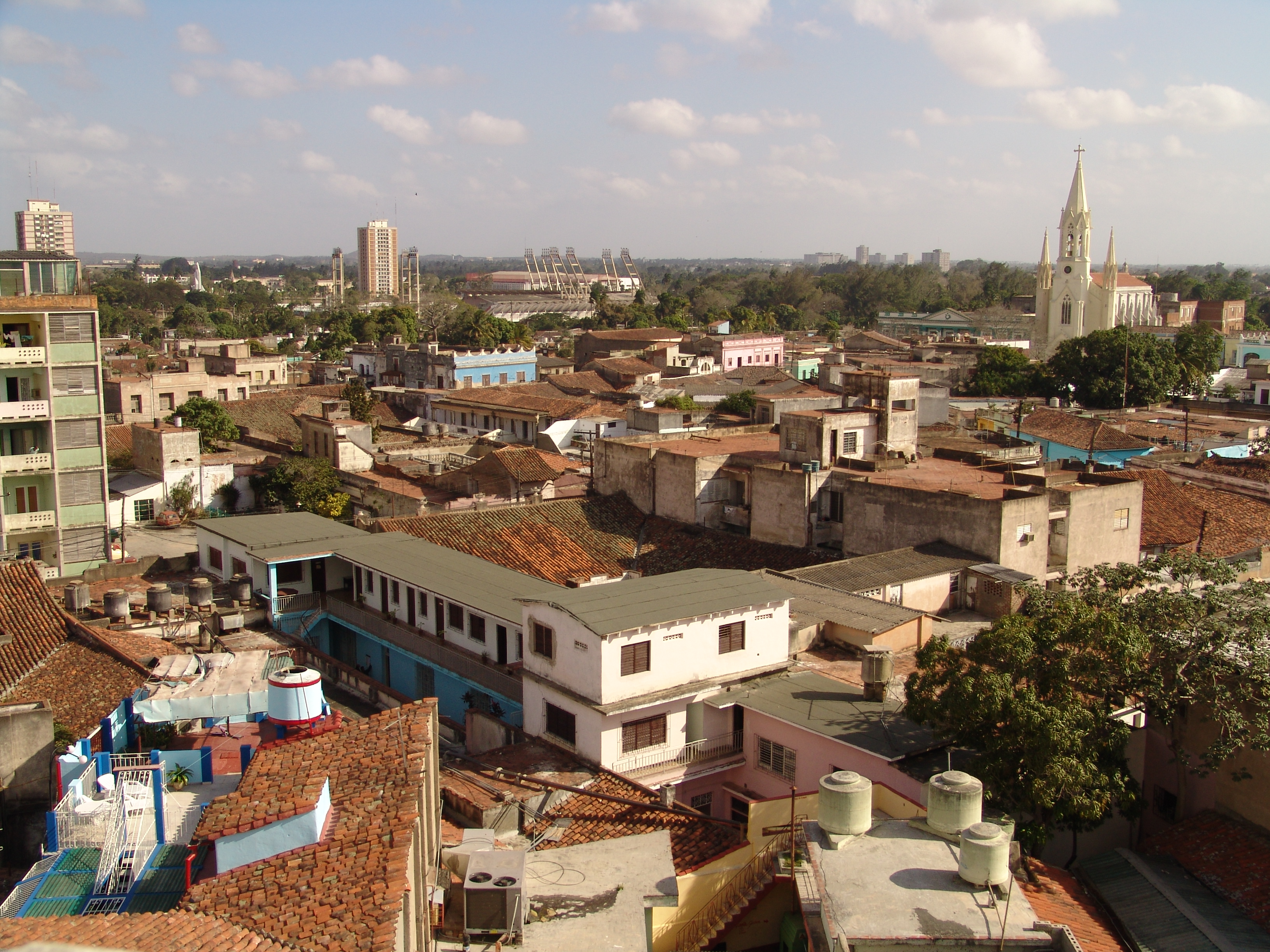
Camagüey is the capital of the province of the same name, in central-eastern Cuba, and one of the largest and oldest cities in the country, with several hundred thousand inhabitants. Its historic center is a UNESCO World Heritage Site (inscribed in 2008), famous for its layout of irregular, labyrinthine, winding streets —designed, according to tradition, to confuse pirates—, its many churches and squares, and the tinajones, the large clay jars that became the city's symbol. It is called the 'City of Tinajones' and the 'City of Churches'
📌Service town
Camagüey is an important hub in central Cuba. It has Ignacio Agramonte International Airport (CMW), with domestic and international flights (some linked to nearby Playa Santa Lucía). It has a long-distance bus terminal (Víazul and national lines), an important station on the central railway line linking Havana with Santiago, hospitals, banks and ATMs, casas particulares and hotels. It's a base for visiting Santa Lucía beach (on the province's north coast, with one of the most extensive coral reefs) and a natural stopping point on the route between western and eastern Cuba
📌Best time to go
The best time to visit Camagüey is the dry season, from November to April, with sunny days, less humidity and more pleasant temperatures for walking its maze of streets. Summer (May to October) is hotter and more humid, with the rainy season and the hurricane risk between August and October. The city has an intense cultural life all year round (it is home to the prestigious Ballet de Camagüey and a historic theater), and celebrates its patron-saint festivities and carnival (the Camagüeyan San Juan) in June
📌Suggested days
With 1 or 2 days you can get to know the historic center well: Parque Ignacio Agramonte, Plaza San Juan de Dios (the most beautiful and best preserved), Plaza del Carmen with its sculptures, the main churches, the Teatro Principal and the birthplace of Ignacio Agramonte, getting deliberately lost in its little streets. With 2 to 3 days you can add a beach day at Santa Lucía (about 110 km away, on the north coast) and take your time enjoying the city's cultural life. Camagüey is also an ideal stop on the Havana–Trinidad–east route
💱 Cambio de USD
Loading rate…
🌤️ Clima en Camagüey
Loading weather…

Camagüey is the most labyrinthine city in Cuba, and that is its greatest appeal. Unlike the grid layout of most Spanish-American colonial cities, its historic center is a tangle of narrow, twisting streets with no apparent logic, of alleys that end in unexpected squares and curve back on themselves. Tradition says it was designed this way on purpose, to confuse and trap the pirates who raided the city. Getting lost in Camagüey isn't a risk: it's the plan.

That unique layout, together with its exceptional heritage of churches, squares and colonial mansions, earned Camagüey its designation as a UNESCO World Heritage Site in 2008. The city is known by two nicknames that define it: the 'City of Churches', for the number of temples that dot its center, and the 'City of Tinajones', for the huge clay jars used to collect rainwater that became its symbol, present in patios, squares and corners throughout the city.

This guide covers the essentials of Camagüey with a practical, warm eye: how to explore its maze of squares and churches, what history it hides (it's the birthplace of the national hero Ignacio Agramonte and has a strong cultural tradition), where its atmosphere is best felt, how to combine it with Santa Lucía beach, where to eat and how to get around. Camagüey is one of Cuba's heritage jewels and one of the cities with the most personality on the whole island.

📖 History of Camagüey

Camagüey is one of the first towns founded by the Spanish in Cuba: it was born as Santa María del Puerto del Príncipe, one of the seven towns established by the adelantado Diego Velázquez around 1514, initially at another site on the north coast. After suffering attacks and problems, the town was relocated twice until it settled definitively, in the early 16th century (around 1528), at its current inland location, next to former lands of the indigenous chiefdom of Camagüey, a name that over time would end up prevailing over Puerto Príncipe. Its irregular, labyrinthine layout —so different from the usual colonial grid— is the subject of several explanations: the most widespread tradition holds that the streets were made this way to disorient the pirates and corsairs who raided the city (it suffered famous attacks, such as that of the pirate Henry Morgan in the 17th century); other historians attribute it to spontaneous, unplanned growth. The city prospered with cattle ranching on the vast surrounding savannas and with trade, and its scarcity of rivers led to the development of the tinajones, large clay jars for collecting and storing rainwater, which became its emblem. In the 19th century, Camagüey played a leading role in the wars of independence and was the birthplace of one of the great Cuban heroes, Ignacio Agramonte, 'El Mayor', a famous mambí (independence fighter) leader whose figure presides over the city. Camagüey also developed a notable cultural life, with a historic theater and a strong tradition of ballet and literature (it is the birthplace of the poet Nicolás Guillén). In 2008, UNESCO inscribed its historic center on the World Heritage List. The full history is on our history page.

Read the full history →

🗺️ What to see

1
The maze of streets in the historic center (UNESCO World Heritage Site)
Cuba's most singular urban layout: twisting, winding streets that, according to tradition, were made to confuse pirates.
Camagüey's great attraction is its own urban layout, unique in Cuba and one of the reasons for its designation as a UNESCO World Heritage Site in 2008. While almost all Spanish-American colonial cities were organized in a regular grid of straight streets crossing at right angles, Camagüey is just the opposite: a maze of narrow, curving, twisting streets with no apparent logic, of alleys that end in little squares, fork off or curve back on themselves. The most widespread and romantic explanation for this layout is that the streets were deliberately designed to disorient the pirates and corsairs who raided the city: an enemy entering the maze would be trapped and at the mercy of the residents. The city did indeed suffer famous pirate attacks. Other, more prosaic historians hold that the irregular layout was simply the result of spontaneous, unplanned growth. Whatever the reason, the result is a city with an unmistakable personality and charm. The best way to get to know Camagüey is precisely to get lost on foot through its historic center, letting the streets carry you with no fixed course, discovering squares, churches, tinajones and mansions at every turn. UNESCO recognized this ensemble as an exceptional example of a colonial city with a singular urban plan and very well-preserved architectural heritage. It's best to wear comfortable footwear, carry a map or your phone so you don't get completely disoriented, and be ready to enjoy the wandering.
ℹ️ Distance: The whole historic center of Camagüey; explored on foot · Best time to go: By day to explore; dry season for the weather · Entry: Free (walking the streets is open to all) · Duration: Half a day to a full day
2
Plaza San Juan de Dios
Camagüey's most beautiful and best-preserved colonial square, surrounded by colorful houses and the former hospital and convent.
Plaza San Juan de Dios is the jewel of Camagüey's historic center and one of the most beautiful and harmonious colonial squares in Cuba. It's an intimate, perfectly preserved space, surrounded by 18th- and 19th-century colonial buildings painted in cheerful pastel colors, with their roofs, balconies and arcades, forming an ensemble of great beauty and unity, as if frozen in time. The most important building on the square is the former complex of the Hospital and Church of San Juan de Dios, a colonial religious-charitable complex that preserves its church, its cloisters and its patios. The former hospital has added historical value: the body of the national hero Ignacio Agramonte passed through here at one time. Today the complex houses institutions linked to the conservation of the city's heritage and can be visited. The square is a place to sit, contemplate the architecture, have something at one of its charming restaurants and soak up Camagüey's colonial atmosphere. Its perfect preservation makes it one of the most photographed corners of the city and an obligatory stop on the tour of the UNESCO World Heritage center. It's especially lovely early in the morning or at dusk, with the golden light on the colorful façades.
ℹ️ Distance: Historic center of Camagüey (on foot) · Best time to go: Morning or dusk for the light on the façades · Entry: Square free; the San Juan de Dios complex usually charges a token entry of 25–50 CUP (source: local guides and traveler forums, verified July 2026) · Duration: 45 minutes to 1 hour
3
Plaza del Carmen and the tinajones
A charming square with bronze sculptures of local residents, giant tinajones and the Carmen church, a symbol of the city.
Plaza del Carmen is one of the most endearing and photogenic corners of Camagüey, and a place where two of the city's great symbols come together: the tinajones and everyday Camagüeyan life. Carefully restored, the square is cobbled, full of plants and presided over by the Church of Nuestra Señora del Carmen, a beautiful two-towered temple, unique in the city for its type. What makes this square special are its life-size bronze sculptures, the work of the Camagüeyan artist Marta Jiménez Pérez, which depict scenes of the city's everyday life: neighbors chatting, a couple, a woman reading the newspaper, a water carrier... These figures, scattered around the square, invite you to be photographed beside them and give the place a lively, warm air, as if the Camagüeyans of old were still there. The square also holds huge decorative tinajones. The tinajones, precisely, are Camagüey's great emblem. These large clay jars, descendants of Spanish jars, were made in the city to collect and store rainwater, a valuable resource in an area short of rivers. They became so numerous that they turned into the city's symbol, to the point that there is a legend that whoever drinks water from a Camagüeyan tinajón stays to live (or falls in love) in the city. Today they adorn squares, patios and corners throughout the center.
ℹ️ Distance: Historic center of Camagüey (on foot) · Best time to go: By day for the sculptures and photos; quiet atmosphere · Entry: Free (public space) · Duration: 30 to 45 minutes
4
Parque Ignacio Agramonte and the Cathedral
Camagüey's central square, with the equestrian statue of the national hero Ignacio Agramonte and the city's cathedral.
Parque Ignacio Agramonte is Camagüey's central square and the heart of the city's social life. It is dedicated to the great local hero, Ignacio Agramonte, 'El Mayor', one of the main military leaders of Cuba's first war of independence, and it is presided over by an imposing equestrian statue of the hero, one of the city's most recognizable images. The park is wide, tree-lined and always lively, a meeting point for Camagüeyans at all hours. Overlooking the park is the Cathedral of Nuestra Señora de la Candelaria, Camagüey's main church, dedicated to the city's patron saint. Like almost all Camagüeyan temples, it has been rebuilt and restored over the centuries. Its presence, along with that of other historic buildings surrounding the square, makes Parque Agramonte a good starting and reference point for orienting yourself in the labyrinthine center. Around the park and nearby are several attractions: the birthplace of Ignacio Agramonte (now a museum that recreates life of the era and honors the hero), churches, mansions and shops. Parque Agramonte is, for all this, an obligatory stop on the tour of the city and an ideal place to rest in the shade between one alley and the next. It's best to confirm the opening hours of the cathedral and the birthplace.
ℹ️ Distance: Historic center of Camagüey (on foot) · Best time to go: By day to explore and visit the cathedral and the birthplace · Entry: Park free; cathedral by donation; the birthplace of Ignacio Agramonte (opposite the Merced church) cheap entry of approx. 50–100 CUP (historical equivalent of 1 CUC), open Tue–Sat 9:00–17:00 and Sun until midday (source: visitarcuba.org / EcuRed, verified July 2026) · Duration: 1 to 2 hours (with the birthplace)
5
Camagüey's churches (the 'City of Churches')
The remarkable ensemble of colonial temples that dot the center, another of the city's great nicknames and attractions.
Camagüey is known as the 'City of Churches' for the abundance and beauty of its colonial temples, which dot the historic center and are one of the pillars of its designation as a UNESCO World Heritage Site. Exploring the city means coming across, at every step, a different church, many of them with towers that rise above the maze of roofs and serve as landmarks for orientation. Besides the Cathedral of la Candelaria (on Parque Agramonte) and the Carmen church (on its square), notable temples include the Church of la Soledad —one of the most beloved, with its brick tower and decorated interior—, the Church of la Merced (with its convent and remarkable religious artworks, such as a silver sepulcher and catacombs), the Church of Santo Cristo del Buen Viaje and that of the Sagrado Corazón, among others. Each has its own history, architecture and particular devotion. Many of these churches can be visited during set hours, and some allow you to climb their towers or see their cloisters and catacombs. For the traveler interested in religious art and colonial architecture, Camagüey's churches are a fascinating chapter. For those who simply stroll, their towers and façades are an inseparable part of the urban landscape of this deeply Catholic, heritage city. It's best to confirm the opening hours, which tend to be limited.
ℹ️ Distance: Scattered around the historic center (on foot) · Best time to go: During opening hours (usually limited; check) · Entry: Generally free or by donation; climbing the tower of the la Soledad church or other guided visits may cost 25–100 CUP (source: local guides and traveler forums, verified July 2026) · Duration: Half a day (several churches)
6
Teatro Principal and cultural life (Ballet de Camagüey)
The city's historic theater, home to one of the most prestigious ballet companies in Cuba, a symbol of vibrant Camagüeyan culture.
Camagüey is not only colonial heritage: it is also one of the cities with the greatest cultural life in Cuba, and its great emblem in that field is the Teatro Principal. This historic theater, of elegant architecture and decoration (with stained glass, chandeliers and marble that evoke the 19th-century era of splendor), is one of the most important venues in the country and a source of pride for the city. The Teatro Principal is the home of the Ballet de Camagüey, one of the most prestigious classical dance companies in Cuba and Latin America, founded in the second half of the 20th century and internationally recognized. Attending a ballet performance or a show in this theater is a first-rate cultural experience and a way to connect with the rich Camagüeyan artistic tradition. The city also has a notable literary tradition: it is the birthplace of the great national poet Nicolás Guillén, among other figures. Beyond the theater, Camagüey offers galleries, culture houses, artists' workshops (like that of the sculptor Marta Jiménez, creator of the figures in Plaza del Carmen) and a bohemian, artistic life that can be felt in its squares and streets. For anyone who wants to go beyond the monumental, immersing yourself in the city's living culture is highly recommended. It's best to check the Teatro Principal's program and performance times, which vary.
ℹ️ Distance: In the center of Camagüey (on foot) · Best time to go: According to the performance schedule; check the program · Entry: Tickets to Ballet de Camagüey performances and concerts: approx. 100–500 CUP depending on the show (source: Teatro Principal program and forums, verified July 2026) · Duration: A performance (an evening); a theater visit, shorter
7
Playa Santa Lucía
The province's great beach, on the north coast, with an extensive coral reef ideal for diving.
Although Camagüey is an inland city, its province has its own outlet to the Caribbean Sea with an outstanding beach: Playa Santa Lucía, on the north coast, about 110 km from the city. It's a long strip of sand (several kilometers) facing a calm, turquoise sea, protected by one of the most extensive coral reefs in the western hemisphere, which makes it a destination much appreciated by lovers of diving and snorkeling. Santa Lucía is a quiet beach resort, with some all-inclusive hotels and a more relaxed, less crowded atmosphere than other big Cuban beach destinations. Its great attraction, besides the sun and swimming, is the underwater world: the coral reef is home to rich marine life, and the area is famous for scuba diving, including the possibility (at certain points and with specialized operators) of diving alongside sharks, an experience for the more adventurous. Nearby is also Playa Los Cocos, very lovely. Getting to Santa Lucía from Camagüey takes about a couple of hours by car, taxi or excursion, which makes it a day trip or a beach-stay destination for those who want to combine the city's colonial heritage with the sea. Some flights to Camagüey's airport are, in fact, linked to Santa Lucía tourism. It's a good complement to round off a visit to the province.
ℹ️ Distance: North coast, about 110 km from Camagüey (car, taxi or excursion, around 2 h) · Best time to go: Dry season (November to April); sunny days · Entry: Public beach free; scuba dive approx. US$ 40–60 per outing at the Shark's Friends center in Santa Lucía (famous for bull shark diving) (source: PADI dive centers and forums, verified July 2026) · Duration: A day or more (beach stay)
What nobody tells you

💵 Prices

Tickets

TypePrice
Historic center (streets and squares)Free (public spaces)
Plaza San Juan de Dios (religious complex)Square free; token entry to the San Juan de Dios complex approx. 25–50 CUP (source: local guides and forums, verified July 2026)
Plaza del CarmenFree (public space)
Cathedral of la CandelariaFree or by voluntary donation
Birthplace of Ignacio Agramonte (museum)Approx. 50–100 CUP per person (historical equivalent of 1 CUC); open Tue–Sat 9:00–17:00 and Sun until midday (source: visitarcuba.org / EcuRed, verified July 2026)
Churches (la Merced, la Soledad, etc.)Generally free or by donation; climbing towers or guided visits (la Soledad church) approx. 25–100 CUP (source: local guides and forums, verified July 2026)
Teatro Principal (Ballet de Camagüey)Tickets approx. 100–500 CUP depending on the show (source: Teatro Principal program, verified July 2026)
Playa Santa LucíaPublic beach free; scuba dive approx. US$ 40–60 per outing (Shark's Friends center) (source: PADI dive centers and forums, verified July 2026)
🔄 updated monthlyOfficial / reference values · double-check when buying

Activities and tours

ActivityPriceDurationOperator
Guided city tour of the historic center (UNESCO World Heritage squares and churches)Approx. US$ 10–25 per person in a group; private guides from US$ 20–40 per half day (source: agencies and local guides, verified July 2026)Half a dayCubatur, Havanatur and certified local guides
Walking tour 'getting lost' in the Camagüeyan mazeFree on your own; with a local guide approx. US$ 10–20 per person (source: local guides, verified July 2026)Half a dayOn your own or a local guide
Visit to artists' workshops and galleries (Marta Jiménez's workshop)Free or donation; pieces and souvenirs for sale from a few USD (source: center workshops, verified July 2026)1-2 hWorkshops and galleries in the historic center
Ballet performance or show at the Teatro PrincipalApprox. 100–500 CUP per ticket depending on the show (source: Teatro Principal program, verified July 2026)An eveningTeatro Principal / Ballet de Camagüey
Full-day excursion to Playa Santa Lucía with transferApprox. US$ 25–50 per person on an organized excursion (transfer and guide); private taxi US$ 80–120 round trip per car (source: agencies and taxi drivers, verified July 2026)A dayCubatur, agencies and private taxi drivers
Bicitaxi or horse-drawn carriage ride around the centerApprox. 100–300 CUP per short trip; agree before getting in (source: traveler reports, verified July 2026)30 min – 1 hLocal bicitaxis and coachmen
🔄 updated monthlyOfficial / reference values · double-check when buying

🚌 How to get there and distances

Getting around

ModePriceDurationNotes
On footFreeVariableThe historic center is explored on foot, and getting lost in its maze of streets is part of the experience. It's best to carry a map or phone so you don't get completely disoriented
Bicitaxi / horse-drawn carriageApprox. 100–300 CUP per trip in the center (source: traveler reports, verified July 2026)VariableTypical means for getting around the city and resting your legs; agree the price before getting in
Private taxi / classic carUrban trip approx. 300–800 CUP; to Santa Lucía US$ 80–120 round trip per car (source: traveler reports, verified July 2026)VariableThe most comfortable way to go to Playa Santa Lucía, the airport or the terminal. Agree the price in advance, especially for the beach
Collective cars / 'máquinas'Approx. 50–150 CUP per urban trip (source: traveler reports, verified July 2026)VariableShared cars on fixed routes at popular prices, much used by locals to get around the city
Urban busApprox. 1–5 CUP per ride (state fare; source: traveler reports, verified July 2026)VariableVery cheap but crowded; for the traveler, a taxi or classic car is usually more practical for long distances. There is no real-time app showing the bus location: in Cuba apps like Moovit or Transit don't work, and 'La Nave' (the 'Cuban Uber') only operates in Havana. Google Maps helps you orient yourself in the Camagüeyan maze of streets, but it doesn't give reliable bus schedules
Transport payment and apps (how it's paid today)Cash: CUP for buses, collectives, bicitaxis and carriages; USD cash for Víazul and tourist taxis (source: Víazul and Ómnibus Nacionales, verified July 2026)In August 2025 Ómnibus Nacionales (the state interprovincial line) enabled QR-code payment with the Cuban apps Transfermóvil and EnZona, with a 6% discount; but they require a Cuban SIM and bank account, so they're useless to the foreign tourist. For the traveler: Víazul charges foreigners in USD cash or via its website (viazul.wetransp.com), and taxis, collectives, bicitaxis and carriages are paid in cash (USD or CUP as you agree). Always carry cash: in Cuba foreign cards rarely work and ATMs often run out of bills
🔄 updated monthlyOfficial / reference values · double-check when buying

How to get there

RouteAirlines / operatorsAvg. priceDuration
Ignacio Agramonte Airport (CMW) → city of CamagüeyTaxis and transfersApprox. US$ 15–25 or equivalent in CUP for the taxi; agree beforehand (source: traveler reports, verified July 2026)15 to 25 min
Havana → Camagüey (Víazul bus)Víazul (bus, official)US$ 35 per person (Víazul fare in USD, in effect since June 2026; card payment from abroad) (source: Víazul / directoriocubano.info, verified July 2026)Approx. 8 to 9 h
Havana ↔ Santiago → Camagüey (central line train)Ferrocarriles de CubaApprox. US$ 20–30 or its equivalent for foreigners; irregular service, best to check availability (source: Ferrocarriles de Cuba and forums, verified July 2026)Many hours; Camagüey is a stop on the central line
Trinidad / Santa Clara / Holguín / Santiago → Camagüey (Víazul)Víazul and collective taxisApprox. US$ 15–33 per person on Víazul depending on the leg (source: Víazul, verified July 2026)Depending on origin (Camagüey is a central stage of the west-east route)
Playa Santa Lucía → Camagüey (taxi or transfer)Taxis and hotel transfersApprox. US$ 60–90 per car (about 110 km) (source: taxi drivers and hotel transfers, verified July 2026)Approx. 2 h
🔄 updated monthlyOfficial / reference values · double-check when buying

🏨 Where to stay

No exact prices: a scale from $ (budget) to $$$$$ (luxury), with 2-3 options per category.

CategoryPriceRecommended options
Boutique hotels in the historic center$$$$$Hotels set in restored colonial mansions of the UNESCO World Heritage center (e.g. Gran Hotel Camagüey, Hotel E Camino de Hierro, Hotel Santa María): approx. US$ 60–120 per night depending on the season. Patios, tinajones and lots of charm (source: hotel aggregators and forums, verified July 2026)
Mid-range urban hotels$$$$$Comfortable hotels in the center or its surroundings (e.g. Hotel Plaza, Hotel Colón, Islazul): approx. US$ 40–80 per night. Good location for seeing the city and using as a base for excursions (source: hotel aggregators and forums, verified July 2026)
Casas particulares in the historic center$$$$$The most authentic option: family colonial houses with patios and tinajones, homemade breakfast and a warm welcome. Approx. US$ 15–30 per night (breakfast US$ 5–8 separate). The best way to experience Camagüey (source: Airbnb and traveler forums, verified July 2026)
All-inclusive resorts at Playa Santa Lucía$$$$$To combine with the beach, all-inclusive hotels on the north coast (e.g. Brisas Santa Lucía, by Cubanacán, 4 stars; Club Amigo Caracol): approx. US$ 70–150 per person per night on an all-inclusive basis (source: Cubanacán / Solways / Holiplus, verified July 2026)

🍴 Where to eat

TypePriceOptions / signature dish
Paladares (private restaurants) in colonial mansions$$$$$Family restaurants in colonial patios of the center, with creole cuisine: roast pork, congrí, ropa vieja, root vegetables. Approx. US$ 8–15 per main dish; full menu US$ 12–20 (source: traveler reports, verified July 2026)
Restaurants on the squares (San Juan de Dios, el Carmen)$$$$$Venues with tables on the prettiest squares, ideal for eating surrounded by colonial architecture. Approx. US$ 10–20 per person with a drink (source: traveler reports, verified July 2026)
Fish, lobster and seafood (Santa Lucía and coast)$$$$$At Playa Santa Lucía and along the coast, fresh fish, lobster and shrimp by the sea. Grilled lobster approx. US$ 10–18; catch of the day US$ 8–14 (source: traveler reports, verified July 2026)
Cafeterias and cheap food$$$$$Pizzas, sandwiches, natural juices, ice cream (the state Coppelia ice-cream parlor) and boxed creole meals at simple places in the center: approx. 100–400 CUP per dish (a couple of USD) (source: traveler reports, verified July 2026)

❓ Frequently asked questions

Is it worth visiting Camagüey?+
Very much so. Camagüey has the most singular historic center in Cuba, a UNESCO World Heritage Site: a maze of twisting streets that, according to tradition, was made to confuse pirates, dotted with beautiful squares (San Juan de Dios, el Carmen), numerous churches and the tinajones, its emblematic clay jars. Add an intense cultural life (the Ballet de Camagüey, the Teatro Principal) and an authentic atmosphere. It's one of the cities with the most personality in the country.
Why are Camagüey's streets so labyrinthine?+
The most widespread and romantic explanation is that the irregular layout of twisting, winding streets was deliberately designed to disorient and trap the pirates and corsairs who raided the city. Other historians attribute it to spontaneous, unplanned growth. Whatever the reason, that maze is precisely what makes Camagüey unique, and getting lost in it is part of the experience.
What are Camagüey's tinajones?+
They are large clay jars, descendants of Spanish jars, that were made in the city to collect and store rainwater, a scarce resource in an area with few rivers. They became so numerous that they turned into the city's symbol (hence the nickname 'City of Tinajones'). Today they adorn patios, squares and corners. Legend says that whoever drinks water from a Camagüeyan tinajón stays to live in the city.
How many days do I need in Camagüey?+
With 1 or 2 days you can get to know the historic center well: Parque Agramonte, Plaza San Juan de Dios, Plaza del Carmen, the main churches, the Teatro Principal and Agramonte's birthplace, getting lost in its little streets. With 2 to 3 days you can add a beach day at Santa Lucía. It's also an ideal stop on the route between the west (Havana, Trinidad) and the east (Holguín, Santiago).
When is the best time to go?+
The best time is the dry season, from November to April, with sunny days and more pleasant weather for walking. Summer (May to October) is hotter, more humid and rainier, with a hurricane risk between August and October. The city has cultural life all year and celebrates its festivities (the Camagüeyan San Juan) in June.
Can Camagüey be combined with a beach?+
Yes. The province has its outlet to the sea at Playa Santa Lucía, on the north coast, about 110 km from the city (around 2 hours by car). It's a long beach protected by an extensive coral reef, much appreciated for diving and snorkeling (there are even shark dives for the more adventurous). You can go for the day or stay at its resorts.
Who was Ignacio Agramonte?+
Ignacio Agramonte, 'El Mayor', was one of the great heroes and military leaders of Cuba's first war of independence (the Ten Years' War), born in Camagüey. He is the city's great hero: his equestrian statue presides over the central park that bears his name, and his birthplace is now a museum. Camagüey proudly claims this hero as one of its most illustrious sons.
How do you pay for transport in Camagüey, and is there a bus app?+
In cash. The urban bus, the collective cars ('máquinas'), bicitaxis and horse-drawn carriages are paid in Cuban pesos (CUP), and taxis and tourist transfers in USD. Víazul, for interprovincial buses, charges foreigners in USD cash or via its website (viazul.wetransp.com). There is no real-time app showing where the bus is coming: in Cuba apps like Moovit or Transit don't work, and 'La Nave' (the 'Cuban Uber') only operates in Havana; Google Maps locates you in the Camagüeyan maze but doesn't give reliable bus schedules. In 2025 Ómnibus Nacionales added QR payment with Transfermóvil and EnZona (6% discount), but they need a Cuban SIM and bank account, so they're useless to the tourist. Always carry cash: foreign cards almost never work and ATMs are often empty.
Sources consulted (19)
Still planning?
Explore more destinations in Cuba
See all destinations →