Affiliate link: we earn a commission.
📌Province
Bayamo is the capital of Granma province, in eastern Cuba. It is one of the first towns founded by the Spanish (1513) and is considered the cradle of Cuban nationhood: the National Anthem was born here and founding episodes of the wars of independence took place here. It sits on the banks of the Bayamo river (a tributary of the Cauto, Cuba's largest river), on a fertile plain of the Cauto valley, not far from the foothills of the Sierra Maestra. It is a quiet city, of patriotic tradition and unhurried life
📌Service town
Bayamo itself is the service town of Granma province: it has Carlos Manuel de Céspedes Airport (BYM), with domestic flights (check frequencies), an interprovincial bus terminal (Víazul and national lines), hotels, casas particulares, hospitals, banks and agencies. It's a comfortable base for exploring the east: from here you can reach the Sierra Maestra (and Pico Turquino), Manzanillo and Desembarco del Granma National Park, and it connects by road with Holguín, Las Tunas and Santiago de Cuba
📌Best time to go
The best time to visit Bayamo is the dry season, from November to April, with sunny days, more pleasant temperatures and less rain; it coincides with Cuba's high tourist season. Summer (May to October) is hot and humid, with afternoon rains and the Caribbean hurricane season (most likely from August to October). Eastern Cuba tends to be warm all year round. The patriotic and cultural festivities (around historic dates and the traditional 'Bayamo Saturdays' in the street) are a good time to feel the local atmosphere
📌Suggested days
One or two days are enough to see the essentials of Bayamo: Parque Céspedes (Plaza de la Revolución), the birthplace of Carlos Manuel de Céspedes, the church (Cathedral of the Santísimo Salvador), the historic center with its streets, the horse-drawn carriages and the city's patriotic atmosphere. Bayamo works very well as a base or stop on a route through the east: adding days, it can be used as a starting point toward the Sierra Maestra, Pico Turquino, Manzanillo and Desembarco del Granma National Park
💱 CUP exchange rate
Loading rate…
Bayamo is one of those Cuban cities where history can be breathed on every corner. Capital of Granma province, in the east of the island, it is one of the first towns founded by the Spanish and, above all, the cradle of Cuban nationhood: the National Anthem was born here, decisive steps toward independence were taken here, and here the Bayamans themselves chose to burn their city rather than hand it over to colonial rule. That patriotic epic defines its identity.
But Bayamo is also a quiet and friendly city, of streets where horse-drawn carriages still roll, of tree-lined squares and of an unhurried life far from the tourist bustle. Overlooking the Bayamo river and surrounded by the fertile plain of the Cauto valley, with the Sierra Maestra outlined in the distance, it keeps a provincial, authentic charm that wins over those who dare to leave the more beaten paths.
This guide covers the essentials of Bayamo with a practical, warm eye: what to see in its historic, patriotic center, how to get there and get around, where to stay and eat, and how to use it as a base to explore eastern Cuba —the Sierra Maestra, Pico Turquino, Manzanillo and the Granma coast—. It's a stop with soul for understanding where the Cuba we know today comes from.
📖 History of Bayamo
Bayamo was founded by Diego Velázquez around 1513 under the name San Salvador de Bayamo, as the second of Cuba's first towns (after Baracoa). Its name comes from a cacique or from an indigenous term of the region. During the colonial era it prospered thanks to cattle ranching, the agriculture of the Cauto valley and trade (legal and illegal, with active smuggling along the river and the nearby coast). But Bayamo's place in history was cemented in the 19th century: on October 10, 1868, the landowner Carlos Manuel de Céspedes freed his slaves and began the Ten Years' War, the first great Cuban independence uprising. Bayamo was taken by the insurgents and, in its church, 'La Bayamesa' was sung for the first time —the song by Perucho Figueredo that became Cuba's National Anthem ('To battle, run, Bayamans...'). When, in January 1869, Spanish troops approached to reconquer the city, the Bayamans themselves burned it rather than surrender it, in a heroic gesture that marked their identity forever. For all this, Bayamo is recognized as the cradle of Cuban nationhood, and Carlos Manuel de Céspedes as the 'Father of the Homeland'. The full history —the founding, the fire, the anthem and the national heroes— is told on our history page.
Read the full history ↓🏛️ Bayamo is in Granma
The cradle of independence and of the Revolution: land of Bayamo —where the national anthem was born—, of the La Demajagua sugar estate, of the landing of the yacht Granma in 1956 and of the Sierra Maestra, refuge of Fidel Castro's guerrillas and roof of Cuba.
Read the history of Granma →🗺️ What to see
Tours nearby, in Holguin
Some places make no sense on your own; with someone explaining them, they change completely. We look ours up on Civitatis: guided in Spanish and booked online with no fuss. There are not many in Holguin, but the ones there are worth it. And there are free tours here: you book without paying and tip the guide whatever you think at the end, so trying one costs you nothing. Tap the cards below and have a look.
They depart from Holguin, 69 km away. Affiliate link: we earn a commission.
1
Parque Céspedes (Plaza de la Revolución)
The historic heart of Bayamo, dedicated to the Father of the Homeland, with its statue, its trees and the pulse of the city.
Read more ↓
Parque Céspedes —also called Plaza de la Revolución— is the heart of Bayamo and the point from which it's best to start any tour. It's a wide tree-lined square, presided over by the bronze statue of Carlos Manuel de Céspedes, the Father of the Homeland, who began the fight for Cuba's independence in 1868. The square is the focus of the city's social life: people strolling, chatting on the benches, children playing and the relaxed atmosphere typical of Bayamo.
Around the square and nearby are several of the city's most important buildings, including the birthplace of Céspedes and other historic mansions. There is also a monument or bust dedicated to Perucho Figueredo, author of the lyrics of the National Anthem, with its verses engraved. It's a place charged with patriotic symbolism, since almost everything surrounding the square has to do with the national heroes and the founding events of the Cuban nation.
It is also an excellent starting point for walking the historic center, taking a horse-drawn carriage or simply sitting to watch Bayaman life.
Getting there: it's right in the center of Bayamo, a short walk from the terminal and most lodgings. Best time to go: late afternoon-evening, when the square fills with people and atmosphere. Tips: take the chance to read the patriotic inscriptions, photograph the statue and use the square as a reference to orient yourself around the historic center.
ℹ️ Distance: Right in the center of Bayamo (on foot from lodgings in the historic center) · Best time to go: Late afternoon-evening, when life in the square picks up · Entry: Free (public space) · Duration: 30 minutes to 1 hour
2
Birthplace of Carlos Manuel de Céspedes
The house where the Father of the Homeland was born, now a museum dedicated to the initiator of Cuban independence.
Read more ↓
Facing Parque Céspedes stands the birthplace of Carlos Manuel de Céspedes, the colonial mansion where the man who would start the fight for Cuba's independence was born in 1819. Today it is a museum (Museo Casa Natal de Carlos Manuel de Céspedes), one of the most visited places in Bayamo and an essential stop for understanding the city's patriotic history.
The two-story, colonial-style house preserves period furniture, personal objects, documents and pieces related to the life of Céspedes and to the events of 1868. Through its rooms you follow the figure of the Father of the Homeland: the landowner who, on October 10, 1868, freed his slaves at his La Demajagua sugar mill and began the Ten Years' War. It is also one of the few buildings that survived the 1869 fire of Bayamo, which makes it doubly valuable.
The visit lets you understand the context of the era, Bayamo's role in the independence struggle and the stature of the figure the museum honors.
Getting there: it's on Parque Céspedes, right in the center. Best time to go: during museum hours (check opening days and times). Tips: confirm the schedule before going, as museums may close on some day of the week; combine it with a visit to the square and the church, all just steps away. Admission is usually cheap (check).
ℹ️ Distance: On Parque Céspedes (Maceo Street No. 57), center of Bayamo · Best time to go: Tuesday to Friday 9:00 to 17:00; Saturday mornings; Sundays until midday (check) · Entry: Cheap admission, approx. US$ 1–2 per person; a separate fee for photography is usually charged (source: visitarcuba.org / EcuRed, verified July 2026) · Duration: 45 minutes to 1 hour
3
Cathedral of the Santísimo Salvador (Iglesia Mayor) and the Chapel of La Dolorosa
The church where the National Anthem was first sung, with its colonial chapel that survived the fire.
Read more ↓
The Iglesia Mayor de San Salvador (Cathedral of the Santísimo Salvador de Bayamo) is one of the most history-laden buildings in Cuba. It was in this church that, in 1868, 'La Bayamesa' was first sung —the song by Perucho Figueredo that would become the Cuban National Anthem. That is why it is a place of enormous symbolic value for the national identity.
The church you see today is largely a reconstruction, as the building suffered the effects of the 1869 fire of Bayamo, when the inhabitants themselves set fire to the city rather than hand it over to the Spanish. However, a treasure that survived the flames is preserved: the Chapel of La Dolorosa, a colonial chapel with a valuable baroque altarpiece, considered a jewel of religious art and one of the few original colonial remains in the city.
Inside the church you can also see references to that historic anthem debut. It's a short but very meaningful visit, ideal to combine with a tour of the historic center.
Getting there: in the historic center, a short distance from Parque Céspedes, next to Plaza del Himno. Best time to go: during the church's opening hours (check). Tips: pay attention to the Chapel of La Dolorosa and its altarpiece; dress respectfully when entering; combine it with Plaza del Himno, right next door, where the first singing of the anthem is commemorated.
ℹ️ Distance: Historic center, next to Plaza del Himno (on foot from Parque Céspedes) · Best time to go: During the church's opening hours (check) · Entry: Free access to the church (suggested donation; check hours and guided visits) · Duration: 30 to 45 minutes
4
Plaza del Himno and the historic center
The square commemorating the birth of the National Anthem and the ensemble of Bayamo's colonial streets.
Read more ↓
Next to the Iglesia Mayor opens Plaza del Himno (Plaza del Himno Nacional), a space charged with symbolism dedicated to commemorating the first singing of 'La Bayamesa', today Cuba's National Anthem. It's a compact, quiet square, an essential part of the patriotic tour of the city, connecting the church with the rest of the historic center.
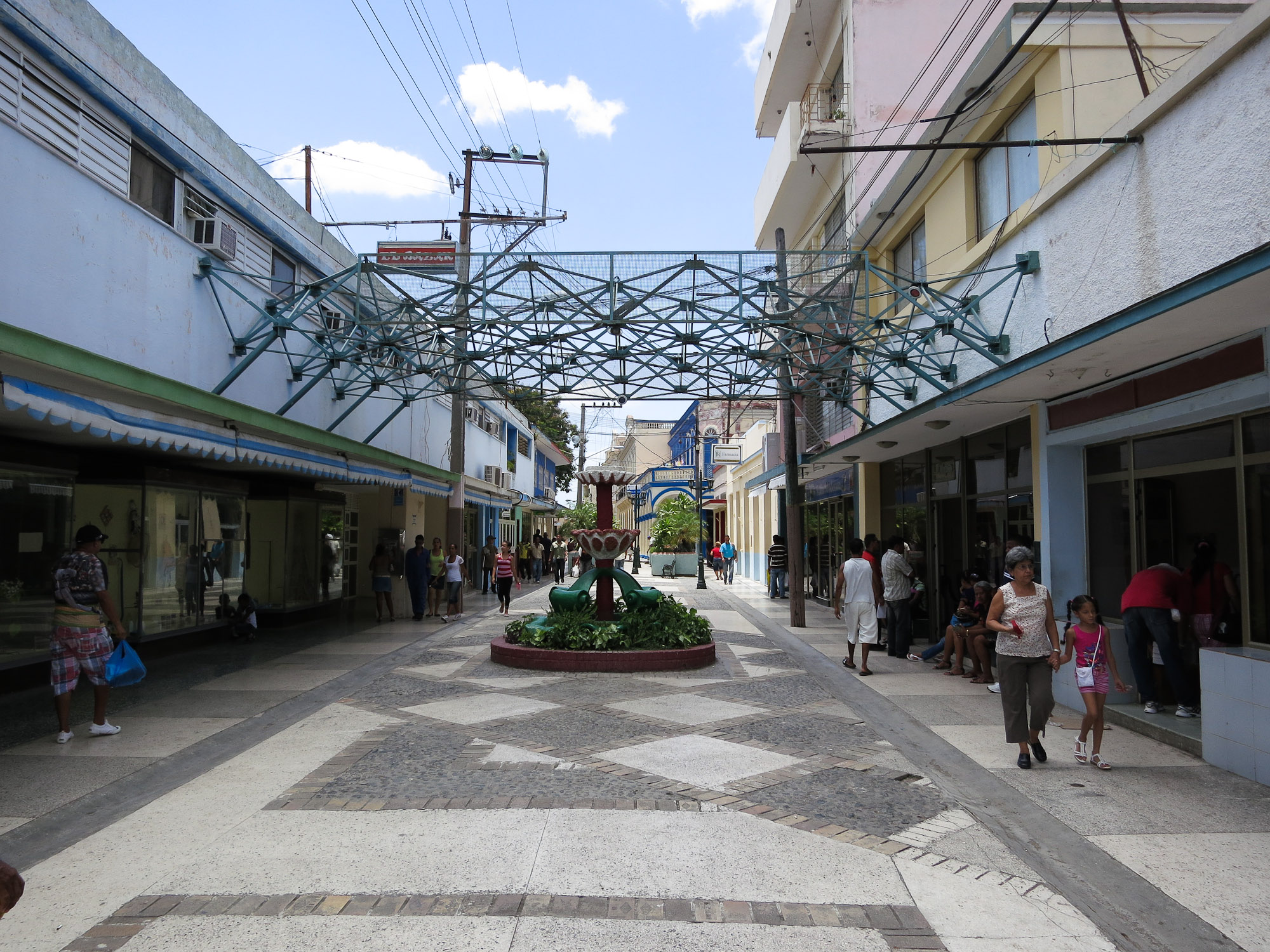
Bayamo's historic center, although marked by the 1869 fire (which destroyed much of the original colonial architecture), keeps a pleasant, provincial atmosphere. Streets like the Paseo Bayamés (a pedestrian and commercial artery), tree-lined squares and rebuilt mansions make up a quiet center, ideal for walking without rushing. Through its streets roll the typical horse-drawn carriages, one of the city's symbols and a real means of transport for the Bayamans.
Walking the historic center lets you catch Bayamo's character: a patriotic but also unhurried and friendly city, where life goes by calmly.
Getting there: the whole historic center is walked on foot from Parque Céspedes. Best time to go: by day for the museums and churches; at dusk for the atmosphere in the streets and squares. Tips: go for a ride in a horse-drawn carriage, walk the Paseo Bayamés and notice the patriotic tributes scattered around the center. Comfortable footwear for walking.
ℹ️ Distance: Historic center of Bayamo (on foot) · Best time to go: By day for visits; dusk for the atmosphere · Entry: Free (walking the streets and squares) · Duration: Half a day
5
Luz Vázquez's window and the 'Bayamo Saturdays'
A romantic corner tied to an old song, and the folk festival that takes over the streets every Saturday.
Read more ↓
Among Bayamo's charming corners is Luz Vázquez's window (Ventana de Luz Vázquez), a colonial window associated with the romantic legend of 'La Bayamesa' (the 19th-century love song, earlier and different from the anthem), a small sentimental landmark of the city closely tied to its musical and poetic tradition. It's a pleasant stop within the walk through the historic center.
But if there's one thing that defines Bayamo's social life, it's the 'Bayamo Saturdays' (the 'Fiesta de la Cubanía' or Saturday festival): every Saturday night, the historic center and the Paseo Bayamés fill with music, food, drink and a lively popular atmosphere. Stalls of creole food are set up, music plays, people dance and the city celebrates its culture. It's one of the best ways to experience authentic Bayaman life and mingle with the locals.
This combination of musical tradition, romantic legends and folk festivity is part of Bayamo's cultural soul, a city that is as proud of its patriotic history as of its cubanía (Cuban spirit).
Getting there: in the historic center, on foot. Best time to go: Saturday nights for the festival; any day for the historic corners. Tips: if your visit coincides with a Saturday, don't miss the night festival; bring cash for food and drink from the stalls, and enjoy the atmosphere with the locals.
ℹ️ Distance: Historic center of Bayamo (on foot) · Best time to go: Saturday nights for the folk festival · Entry: Free (open access; food and drink separate) · Duration: One night (the festival); minutes (the window)
6
Bayamo river and natural surroundings
The river that gives the city its name, with its banks, and the gateway to the Cauto valley and the Sierra Maestra.
Read more ↓
Bayamo sits on the banks of the Bayamo river, a tributary of the Cauto (Cuba's largest river), which gives the city its name and has been part of its history since its founding. The riverbank offers a natural setting and walking areas where you can get in touch with the landscape, and recalls the importance the waterway had in colonial trade and smuggling.
Beyond the river, Bayamo is the gateway to one of Cuba's most imposing landscapes: surrounded by the fertile plain of the Cauto valley and with the Sierra Maestra rising to the south, the city is a natural base for nature and mountain excursions. From here, trips are organized or begun toward the Sierra Maestra and Pico Turquino (the highest point in Cuba), toward the historic area of the La Plata Command Post and toward the Granma coast and Desembarco del Granma National Park.
For anyone looking to combine history and nature, Bayamo is the ideal starting point in eastern Cuba.
Getting there: the river runs through the city itself; excursions to the Sierra and the coast are booked in Bayamo or in Manzanillo. Best time to go: dry season for mountain and nature excursions. Tips: guides and permits are required for the Sierra Maestra and Pico Turquino; get informed and book in advance. Bring suitable footwear and clothing if you're going to do nature excursions.
ℹ️ Distance: River in the city itself; Sierra Maestra and Granma coast via Bayamo/Manzanillo · Best time to go: Dry season (November to April) for nature excursions · Entry: Riverbank free; excursions to the Sierra Maestra/Pico Turquino with guide and permit approx. US$ 30–60 per person/day (source: Ecotur agencies and traveler forums, verified July 2026) · Duration: 1 hour (river); full days for the excursions
🛡️ Getting sick far from home shouldn't cost you thousands of USD
Abroad, getting sick is more than a bad day. In many destinations public healthcare depends on appointments, queues and availability, and private care is paid upfront. An emergency can cost thousands of USD, right when you are far from home and on a tight budget. That is why I recommend you never leave without travel assistance.
I recommend GO! Assistance because it covers what matters: medical care, emergencies, medication and hospitalization depending on the plan. It protects you 24 hours a day, anywhere in the world, with real-time solutions on the ground. GO! 365 ECO and GO! 365 give you USD 45,000 of global coverage: the first with a USD 100 deductible, the second with none.
If you quote from Argentina, in October GO! also offers 12 interest-free instalments on all its products.
An emergency abroad can cost thousands of dollars. Travel with assistance.
GO! Assistance has 50% off in October and, with our link, you get an extra 20%.
Pick origin, destination, dates and ages and see the price of your travel assistance in a minute.
📶 Internet from the moment you land
I have never been left without internet on a trip. I land and my phone connects to the strongest network in the country I am visiting: I can let people know I arrived, sort out transport, book tours and keep posting content at a super affordable price (really cheap!). I always use the Maya Mobile eSIM, check out its plans by clicking the banner. See Maya Mobile plans →
Affiliate link: we earn a commission.


💵 Prices
Tickets
| Type | Price |
|---|
| Parque Céspedes (Plaza de la Revolución) | Free (public space) |
| Birthplace of Carlos Manuel de Céspedes (museum) | Cheap admission approx. US$ 1–2 per person; separate fee for photography (source: visitarcuba.org / EcuRed, verified July 2026) |
| Cathedral of the Santísimo Salvador and Chapel of La Dolorosa | Free access (suggested donation; check hours) |
| Plaza del Himno | Free (public space) |
| Historic-center museums (several) | Approx. US$ 1–3 per person each (usually very cheap; source: travel guides and forums, verified July 2026) |
| Bayamo Saturday (folk festival) | Free (access); food and drink at the stalls from US$ 1–5 (source: traveler reports, verified July 2026) |
🔄 updated monthlyOfficial / reference values · double-check when buying
Activities and tours
Patriotic walking tour of the historic center
PriceFree on your own; with a local guide approx. US$ 10–20 per person (source: local guides and traveler forums, verified July 2026)
Horse-drawn carriage ride around the city
PriceApprox. US$ 2–5 per trip/person; sightseeing ride from US$ 5–10 (source: traveler reports, verified July 2026)
Excursion to the Sierra Maestra / Pico Turquino
PriceUS$ 30–60 per person/day with guide and permit; the full multi-day ascent is more expensive (source: Ecotur agencies and forums, verified July 2026)
Excursion to Desembarco del Granma National Park
PriceUS$ 30–55 per person with transport and guide; park entry approx. US$ 5–10 (source: eastern agencies / Ecotur, verified July 2026)
Visit to the La Demajagua sugar mill (near Manzanillo)
PriceMuseum-site entry approx. US$ 1–2; transfer separate (taxi US$ 30–50 round trip) (source: EcuRed and traveler forums, verified July 2026)
PriceFree (access); food and drink at stalls from US$ 1–5 (source: traveler reports, verified July 2026)
🔄 updated monthlyOfficial / reference values · double-check when buying
🚌 How to get there and distances
Getting around
On foot around the historic center
Free
NotesBayamo's center is compact and easily walked: the square, the museums, the church and the Paseo Bayamés are all a short distance from each other
PriceApprox. US$ 2–5 per trip/person (source: traveler reports, verified July 2026); agree before getting in
NotesBayamo's typical, cheap means of transport, used by both tourists and locals. An experience in itself for touring the city
PriceApprox. US$ 1–3 per trip within the city (source: traveler reports, verified July 2026)
NotesHandy for short trips within the city; the price is agreed before getting in
PriceTo the airport or terminal US$ 5–10; excursions US$ 30–60 depending on distance (source: traveler reports, verified July 2026)
NotesUseful for reaching the airport, the bus terminal or for excursions to the Sierra Maestra, Manzanillo and the coast. There are private and state taxis
PriceFrom approx. US$ 70–100 per day; in Cuba it's usually expensive and with limited availability (source: rental agencies and traveler forums, verified July 2026)
NotesComfortable for exploring the east (Sierra Maestra, Manzanillo, Desembarco del Granma, Santiago). Car rental in Cuba can be expensive and limited; book in advance
Urban bus (guagua) and trucks
PriceLocal fare in Cuban pesos (CUP), very low (a few pesos); paid in cash (source: traveler reports and local press, verified July 2026)
NotesBayamo has urban guaguas and adapted trucks used mostly by locals; they run full, with unpredictable schedules and no clear information for tourists. For the visitor it's more worthwhile to walk the compact historic center or take a horse-drawn carriage, bicitaxi or taxi. There is no real-time app showing the bus location: in eastern Cuba apps like Moovit/Transit don't work, and the app 'La Nave' (the 'Cuban Uber') only operates in Havana. Google Maps helps you locate yourself and plot walking or driving routes, but it doesn't give reliable urban bus schedules
Transport payment and apps (how it's paid today)
PriceCash in CUP for guaguas and carriages; USD cash for Víazul and tourist taxis (source: Víazul and Ómnibus Nacionales, verified July 2026)
NotesIn August 2025 Ómnibus Nacionales (the state interprovincial line) enabled QR-code payment via the Cuban apps Transfermóvil and EnZona, with a 6% discount; but they require a Cuban SIM and bank account, so in practice they're useless to the foreign tourist, and in the east digital payment often fails due to connectivity. For the traveler: Víazul charges foreigners in USD cash (or via its website viazul.wetransp.com), and horse-drawn carriages, bicitaxis, taxis and guaguas are paid in cash (USD or CUP as you agree). Always carry cash: in Cuba foreign cards rarely work
🔄 updated monthlyOfficial / reference values · double-check when buying
How to get there
Domestic flight to Carlos Manuel de Céspedes Airport (BYM)
Avg. priceFare varies with availability; domestic flights in Cuba are scarce and unreliable (source: Cubana de Aviación / traveler forums, verified July 2026)
Interprovincial bus to Bayamo (Víazul)
Avg. priceFrom Havana US$ 48 (Víazul fare in USD, in effect since June 2026); the full journey runs about 13-14 h (source: Víazul / directoriocubano.info, verified July 2026)
Holguín → Bayamo (bus or taxi)
Avg. priceVíazul approx. US$ 6–10; collective taxi US$ 5–10 per person (source: Víazul and traveler forums, verified July 2026)
Santiago de Cuba → Bayamo (bus or taxi)
Avg. priceVíazul approx. US$ 7–12; collective taxi US$ 8–15 per person (source: Víazul and traveler forums, verified July 2026)
Las Tunas → Bayamo (bus or taxi)
Avg. priceVíazul approx. US$ 6; collective taxi US$ 5–8 per person (source: Víazul and traveler forums, verified July 2026)
🔄 updated monthlyOfficial / reference values · double-check when buying
🏨 Where to stay
No exact prices: a scale from $ (budget) to $$$$$ (luxury), with 2-3 options per category.
Hotels in the center of Bayamo
Recommended optionsApprox. US$ 35–70 per night. State-run hotels right in the historic center: the Hotel E Encanto Royalton (Islazul), a restored 1940s building facing Parque Céspedes —it has NO connection with the Canadian chain Royalton / Blue Diamond, which left Cuba in 2026: it is a Cuban hotel that has borne that name for decades—, and the Hotel Telégrafo, also in the center. Mid-range category with basic services, convenient for walking the city (source: Islazul / Holiplus, verified July 2026)
Casas particulares in the historic center
Recommended optionsUS$ 20–35 per night (breakfast US$ 4–6, dinner US$ 7–12 separate). The most recommendable and authentic option: family homes in the center of Bayamo, with a personal touch, homemade breakfast and advice from the hosts. Excellent value for money (source: Airbnb and traveler forums, verified July 2026)
Budget houses and hostels
Recommended optionsUS$ 15–20 per night. Simpler, cheaper casas particulares for budget travelers or those passing through on a route across the east. It's best to choose the well-located ones in the center (source: traveler forums, verified July 2026)
Hotels / lodgings toward the Sierra and the coast (excursion base)
Recommended optionsUS$ 40–90 per night. To combine Bayamo with the nature of the east, there are mountain and coastal lodgings (Villa Santo Domingo in the Sierra Maestra, Marea del Portillo) that serve as a base for excursions. Availability varies; book in advance (source: agencies and traveler forums, verified July 2026)
🍴 Where to eat
Paladares (private restaurants) in the center
Options / signature dishUS$ 5–12 per dish. Bayamo's paladares offer homemade creole cuisine —pork, chicken, congrí (rice and beans), root vegetables, salads— in a welcoming setting and at a good price. The best option to eat well and authentically in the city (source: traveler reports, verified July 2026)
Creole food in casas particulares
Options / signature dishBreakfast US$ 4–6; hearty home-cooked dinner US$ 7–12. Many casas particulares serve meals with creole dishes and fresh regional produce. Practical and delicious for staying and eating in the same place (source: traveler reports, verified July 2026)
Food stalls of the Bayamo Saturday
Options / signature dishUS$ 1–5 per portion. During the Saturday festival, the historic center fills with stalls of popular food: roast pork, fritters, sweets and drinks. A street-side, cheap experience to taste Bayaman cubanía (source: traveler reports, verified July 2026)
Cafeterias and bars along the Paseo Bayamés
Options / signature dishCoffee US$ 0.50–2; ice cream or snack US$ 1–4. Along the Paseo Bayamés and around the square there are cafeterias, bars and places for a drink, ideal for a break during the tour (source: traveler reports, verified July 2026)
📖 History of Bayamo
Origins, formation and what the sources say.
The founding: San Salvador de Bayamo (1513)
In January 1869, the inhabitants of Bayamo made a decision that very few cities in the world have dared to make: rather than hand their city over to the Spanish troops coming to reconquer it, they set it on fire with their own hands. That night, one of the oldest towns in Cuba burned to the ground by the will of its own people. To understand such a gesture, one must go back three and a half centuries, to the birth of the city. Bayamo was founded by the adelantado Diego Velázquez de Cuéllar around 1513, under the name San Salvador de Bayamo, as the second of the first towns the Spanish established on the island (after Nuestra Señora de la Asunción de Baracoa). It was built inland, on a fertile plain in the east, on the banks of the Bayamo river, in a region inhabited by native peoples.
The name 'Bayamo' is of indigenous origin (Taíno or from the languages of the peoples who inhabited the area); some sources associate it with the name of a local cacique. That pre-Hispanic root connects the city with the inhabitants who populated the region before the conquest, devoted to agriculture, hunting and fishing in the Cauto valley.
From its earliest days, Bayamo established itself as a center of cattle ranching and agriculture in the fertile Cauto valley, Cuba's largest river system. Its inland location, far from the great ports but connected to the sea by the river and the nearby coast, would shape its development and its character over the centuries.
Bayamo, Cuba's second town (c. 1513)
The sources agree that Bayamo was founded by Diego Velázquez around 1513 as one of Cuba's first towns, generally cited as the second after Baracoa. The exact date may vary slightly between sources.
Source: https://es.wikipedia.org/wiki/Bayamo
The origin of the name
The place name 'Bayamo' is considered to be of indigenous origin. Some sources link it to a cacique or to a term from the native languages of the region; the exact details of the origin vary and should be taken as approximations.
Source: https://www.ecured.cu/Bayamo
The colonial era: ranching, trade and smuggling
During the colonial centuries, Bayamo prospered as one of the most important centers of eastern Cuba. Its economy was based on cattle ranching, the agriculture of the Cauto valley and active trade. The city, located inland but connected to the sea through the Bayamo river and the nearby coast, also developed a notable smuggling activity, which allowed it to trade outside Spain's rigid monopoly with ships of other nations.
That trade —legal and illegal— made Bayamo a prosperous and relatively autonomous town, with a well-off creole society that over time would develop a strong sense of its own identity. The ranching and agricultural wealth, added to the independent character of its inhabitants, gradually created the breeding ground for what would later manifest itself on the political plane.
Throughout the colonial period, Bayamo was also the scene of tensions, slave rebellions and conflicts, and it always kept the character of a proud, unruly city in the face of central power. That spirit would prove decisive in the 19th century, when Bayamo became one of the epicenters of the fight for Cuba's independence.
Bayamo's smuggling
The sources emphasize that, during the colonial period, Bayamo developed an important smuggling trade taking advantage of its river and coastal connections, which contributed to its prosperity and to its relative autonomy from the Spanish monopoly. The details and scale vary according to the historical sources.
Source: https://es.wikipedia.org/wiki/Bayamo
Carlos Manuel de Céspedes and the start of independence (October 10, 1868)
The moment that changed the history of Bayamo —and of Cuba— came on October 10, 1868. That day, the Bayaman landowner Carlos Manuel de Céspedes, at his La Demajagua sugar mill (near Manzanillo), freed his slaves, called on them to join the fight and proclaimed the start of the war for Cuba's independence from Spanish rule. This act, known as the 'Grito de Yara' or 'Grito de La Demajagua', began the Ten Years' War (1868-1878), the first great Cuban independence conflict.
A few days later, the insurgent forces took the city of Bayamo, which became one of the first liberated territories and the symbolic capital of the revolution. Céspedes, recognized as the 'Father of the Homeland', embodied the ideal of a free Cuba and of the abolition of slavery, two causes that intertwined in the struggle.
The capture of Bayamo by the independence fighters was an event of enormous symbolic value: for the first time, an important city was in Cuban hands, under a banner of freedom. In that atmosphere of patriotic exaltation, another of the nation's great symbols was born: the anthem that would soon resound in its church.
The Grito de La Demajagua / Yara (1868)
The sources agree that Carlos Manuel de Céspedes began the Ten Years' War on October 10, 1868 by freeing his slaves at the La Demajagua sugar mill and proclaiming independence. The episode is known as the Grito de Yara or de La Demajagua; the nuances of the name and the exact sequence of events vary according to the sources.
Source: https://es.wikipedia.org/wiki/Carlos_Manuel_de_C%C3%A9spedes
The National Anthem and the fire of Bayamo (1868-1869)
In the climate of patriotic fervor that followed the taking of Bayamo, one of the supreme symbols of the Cuban nation was born: its anthem. Perucho Figueredo (Pedro Felipe Figueredo), a Bayaman patriot, had composed a march that would become known as 'La Bayamesa' or 'Himno de Bayamo'. Its lyrics, with the famous verse 'To battle, run, Bayamans, / for the homeland watches you proudly...', were sung for the first time before a crowd in Bayamo's Iglesia Mayor. That song became Cuba's National Anthem.
But the glory was brief. In January 1869, Spanish troops advanced to reconquer the city. Faced with the impossibility of defending it and rather than see it fall again into colonial hands, the inhabitants of Bayamo themselves made a heroic and tragic decision: they burned their city. The fire destroyed much of Bayamo's colonial architecture, which was left in ruins. That gesture, which preferred destruction to surrender, sealed forever the city's patriotic fame.
The fire explains why today Bayamo preserves few original colonial remains: much of what you see is later reconstruction. Among the few treasures that survived the flames is the Chapel of La Dolorosa, in the Iglesia Mayor, with its valuable baroque altarpiece. Because of the anthem and the fire, Bayamo was consecrated as the cradle of Cuban nationhood.
The fire of 1869
Cuban historiography agrees that, in January 1869, the inhabitants of Bayamo burned the city rather than hand it over to the Spanish troops, destroying much of its colonial heritage. It is one of the most famous episodes of the independence struggle; the specific details vary according to the sources.
Source: https://es.wikipedia.org/wiki/Bayamo
The anthem and Perucho Figueredo
The sources attribute to Perucho Figueredo the authorship of 'La Bayamesa' / Himno de Bayamo, sung for the first time around the taking of the city in 1868 and later adopted as Cuba's National Anthem. The exact circumstances of the first singing are told with variations.
Source: https://es.wikipedia.org/wiki/Himno_de_Bayamo
Modern Bayamo: capital of Granma and guardian of patriotic memory
After the fire of 1869 and the end of the wars of independence, Bayamo was rebuilt little by little, keeping its layout and recovering its role as a center of eastern Cuba. The city always kept the pride of its history alive, becoming a kind of sanctuary of Cuban patriotic memory: here are the birthplace of Céspedes, Plaza del Himno and the places tied to the birth of the nation.
With the political reorganization of Cuba, Bayamo became the capital of Granma province (a name that recalls the yacht 'Granma' on which Fidel Castro and his companions landed in 1956 to begin the revolutionary struggle, on the coast of this very province). Thus, Granma and its capital hold key chapters of both the 19th-century independence and the 20th-century Revolution.
Today Bayamo is a quiet and proud city, known for its horse-drawn carriages, its clean tree-lined streets, its 'Bayamo Saturdays' (the weekly folk festival) and its strong cultural identity. It combines the weight of its history with an unhurried, friendly life, and it serves as the gateway to the deep east: the Sierra Maestra, Pico Turquino, the Granma coast and Desembarco del Granma National Park. To visit Bayamo is, to a large extent, to visit the place where the very idea of Cuba began to be forged.
The name of Granma province
The sources note that Granma province takes its name from the yacht 'Granma', on which the group led by Fidel Castro landed in 1956 on the coast of this region to begin the revolutionary struggle. Bayamo is the provincial capital. The details of the landing are associated with Desembarco del Granma National Park.
Source: https://es.wikipedia.org/wiki/Provincia_de_Granma
❓ Frequently asked questions
Why is Bayamo the 'cradle of Cuban nationhood'?+
Because founding events of the nation took place in Bayamo. On October 10, 1868, Carlos Manuel de Céspedes began the Ten Years' War from the region, the first great independence uprising. In Bayamo's church, 'La Bayamesa' —today the National Anthem ('To battle, run, Bayamans...')— was sung for the first time. And in January 1869, the Bayamans themselves burned their city rather than hand it over to the Spanish. For all this it is considered the cradle of Cuban nationhood.
How many days do I need to see Bayamo?+
One or two days are enough for the essentials: Parque Céspedes, the birthplace of Céspedes, the Iglesia Mayor and the Chapel of La Dolorosa, Plaza del Himno and the historic center, with its patriotic atmosphere and horse-drawn carriages. If you use it as a base to explore the east (Sierra Maestra, Pico Turquino, Manzanillo, Desembarco del Granma), add several more days depending on the excursions.
Is Bayamo a good base to visit the Sierra Maestra?+
Yes. Bayamo, capital of Granma, is one of the gateways to the east and to the Sierra Maestra. From here (and from Manzanillo) excursions are organized toward the Sierra, Pico Turquino (the highest point in Cuba), the La Plata Command Post area and the Granma coast with Desembarco del Granma National Park. Guides and permits are required for the mountain and Turquino; it's best to get informed and book in advance.
What are the 'Bayamo Saturdays'?+
They are Bayamo's weekly folk festival: every Saturday night, the historic center and the Paseo Bayamés fill with music, creole food stalls, drink and a festive atmosphere. It's one of the best ways to experience authentic cubanía and mingle with the locals. If your visit coincides with a Saturday, don't miss it; bring cash for food and drink.
How do I get around the city?+
Bayamo's historic center is compact and easily walked on foot. For longer distances or just for fun, you can use the typical horse-drawn carriages (a symbol of the city) or bicitaxis. To reach the airport, the terminal or to head out on an excursion, there are private and state taxis. If you want to explore the east freely, a rental car is comfortable, though it can be expensive and limited in Cuba.
How do you pay for transport in Bayamo, and is there a bus app?+
In cash. Horse-drawn carriages, bicitaxis, taxis and urban guaguas are paid by hand: tourist services in USD and local transport in Cuban pesos (CUP). Víazul, for interprovincial buses, charges foreigners in USD cash or via its website (viazul.wetransp.com). There is no real-time app showing where the bus is coming: in eastern Cuba apps like Moovit or Transit don't work, and 'La Nave' (the 'Cuban Uber') only operates in Havana. Google Maps helps you orient yourself, but it doesn't give reliable bus schedules. In 2025 Ómnibus Nacionales added QR payment with the Cuban apps Transfermóvil and EnZona (6% discount), but they need a Cuban SIM and bank account, so in practice they're useless to the tourist. Always carry cash: foreign cards almost never work.
What's the best time to visit Bayamo?+
The dry season, from November to April, with sunny days, less rain and more pleasant temperatures (it's the high tourist season). Summer (May to October) is hot and humid, with afternoon rains and the hurricane season (most likely from August to October). Eastern Cuba is warm almost all year round. Visiting around patriotic dates or on a Bayamo Saturday adds atmosphere.
Sources consulted (17)
- Wikipedia (ES) — «Bayamo»: https://es.wikipedia.org/wiki/Bayamo
- Wikipedia (ES) — «Carlos Manuel de Céspedes»: https://es.wikipedia.org/wiki/Carlos_Manuel_de_C%C3%A9spedes
- Wikipedia (ES) — «Himno de Bayamo»: https://es.wikipedia.org/wiki/Himno_de_Bayamo
- Wikipedia (ES) — «Guerra de los Diez Años»: https://es.wikipedia.org/wiki/Guerra_de_los_Diez_A%C3%B1os
- Cuba Travel (official) — «Bayamo»: https://www.cuba.travel/
- Wikipedia (ES) — «Bayamo»: https://es.wikipedia.org/wiki/Bayamo
- Lonely Planet — «Bayamo, Cuba»: https://www.lonelyplanet.com/cuba/eastern-cuba/bayamo
- EcuRed — «Bayamo»: https://www.ecured.cu/Bayamo
- Víazul (official, intercity buses): https://viazul.wetransp.com (official site out of service: the domain was taken over by a third party, check at the terminal)
- Directorio Cubano — «Boletos de Víazul: rutas y precios en USD»: https://www.directoriocubano.info/panorama/cuba-ya-estan-a-la-venta-los-boletos-de-viazul-rutasprecios-en-usd/
- Escambray — «Nuevo sistema de pago digital agiliza servicios en Ómnibus Nacionales» (QR with Transfermóvil/EnZona, Aug. 2025): https://www.escambray.cu/2025/cuba-nuevo-sistema-de-pago-digital-agiliza-servicios-en-omnibus-nacionales/
- Cubas Best — «Transportation in Cuba [2026]» (apps, La Nave, pago): https://cubasbest.com/transportation-in-cuba/
- Lonely Planet — «Bayamo: getting there & around»: https://www.lonelyplanet.com/cuba/eastern-cuba/bayamo
- Cuba Travel (official): https://www.cuba.travel/
- Visitar Cuba — «Casa Natal de Carlos Manuel de Céspedes, Bayamo»: https://www.visitarcuba.org/casa-natal-carlos-manuel-cespedes-bayamo
- Islazul / Holiplus — «Hotel Encanto Royalton, Bayamo»: https://holiplus.com/en/hotel/522ik/encanto-royalton-hotel
- Lonely Planet — «Cuba: practical information»: https://www.lonelyplanet.com/cuba