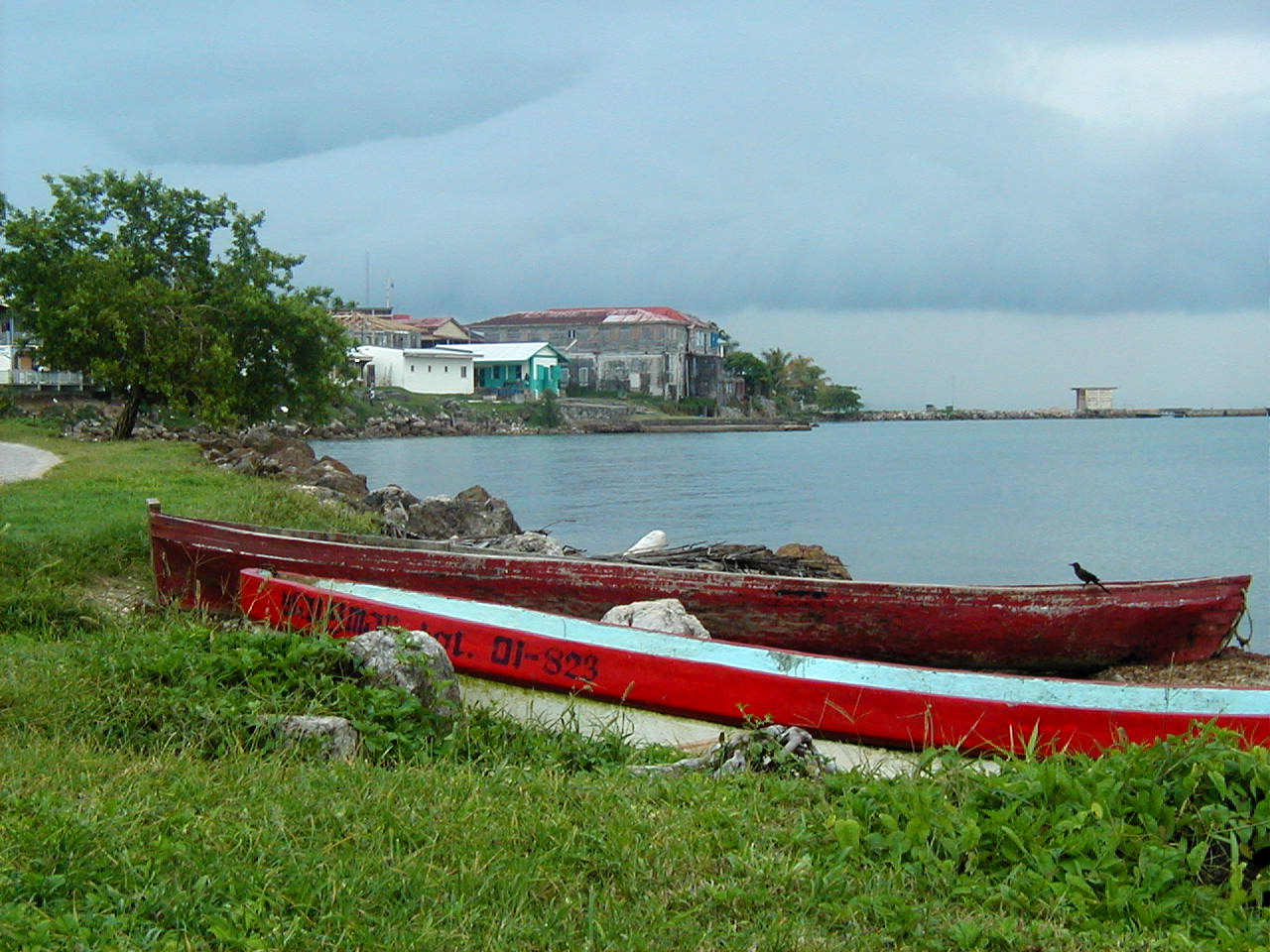
📌Town
Punta Gorda (known locally as 'PG') is the southernmost town in Belize and the seat of the Toledo District, on the Caribbean coast, near the border with Guatemala and Honduras. It's the most remote, green and least touristy region of the country, known as the 'Forgotten District'. Punta Gorda is an extraordinary cultural melting pot: Garifuna, Maya (Mopan and Kekchi), Creoles, mestizos, descendants of Chinese and of East Indians, and more coexist. It's the gateway to a deep Belize of jungle, rivers, cacao, Maya villages and pristine reef.
📌Gateway town
Punta Gorda offers the services of a small town: banks, market, hospital, hotels, restaurants and a bus terminal, plus an airport (Punta Gorda / PND) with small-plane flights from Tropic Air and Maya Island Air. It's at the end of the Southern Highway, reached after a long journey from the center of the country. It also has an international sea connection: boats (ferries) leave toward Puerto Barrios and Livingston, in Guatemala. It's a base for exploring the Maya villages, the ruins, the caves and the rivers of the deep south.
📌Best time
The dry season (late November to mid-April) is the best for touring the region, its roads, rivers and villages, and for the reef. Toledo is the rainiest district in Belize, so the rainy season (June to November) brings abundant downpours, humidity and difficult roads, though the jungle looks splendid. Cacao is a symbol of the area, with associated festivities (the Chocolate Festival of Belize is usually held in May). There's a possibility of hurricanes in the season (peak Aug-Oct).
📌Currency
Belize dollar (BZD), pegged at 2 BZD = 1 USD. US dollars are accepted; there are banks and ATMs in town. For the villages, ferries and community experiences it's a good idea to carry cash in small bills, since there isn't always a card terminal
📌Suggested days
Punta Gorda and Toledo reward those who stay several days. With 3 to 4 days you get to know the town and its cultural mosaic, visit a Maya village (with cacao and cooking experiences), do an excursion to ruins (Lubaantun, Nim Li Punit) or to a cave, and perhaps an outing to the reef or the cayes. With 5 to 7 days you go deeper into the nature (rivers, waterfalls, jungle), the community tourism in villages, the artisanal chocolate and, eventually, a crossing to Guatemala. It's a destination for curious and patient travelers.
💱 Cambio de USD
Loading rate…
🌤️ Clima en Punta Gorda
Loading weather…
Punta Gorda, or simply 'PG' to those who know it, is the end of the road in Belize: the country's southernmost town, seat of the remote and very green Toledo District, which many affectionately call the 'forgotten district'. It's the deepest and least touristy Belize, a territory of lush jungle, rivers, waterfalls, Maya villages and an almost pristine reef, where the journey is lived at another rhythm and the reward is authenticity.
Its greatest treasure is human: few places in the world concentrate so much diversity in so little space. In Punta Gorda and its surroundings, Garifuna, Mopan and Kekchi Maya, Creoles, mestizos, descendants of Chinese and of East Indians, Mennonites and more coexist, in a fascinating cultural mosaic. To that is added cacao: Toledo is the cradle of Belize's fine cacao, and the region has made a name for itself with its artisanal chocolate, its farms and its festival, a sweet story that links the present with the millennia-old Maya heritage.
This guide covers the essentials of Punta Gorda with a practical and warm eye: its extraordinary melting pot, the Maya villages and community tourism, the ruins and caves of the south, the rivers and the reef, the cacao route and how to get around this remote region and even cross to Guatemala. Far from the postcard Belize, Punta Gorda offers something different and deep: the encounter with the land, the jungle and the many peoples that make this southern corner one of the most authentic and memorable in the country.
📖 History of Punta Gorda
The Toledo region, in the deep south of Belize, has a very long Maya history: cities like Lubaantun and Nim Li Punit flourished here, and even today living Maya peoples inhabit the area, the Mopan and the Kekchi (Q'eqchi'), who keep their language, their culture and their way of life in numerous villages. After the colonial era —marked by remoteness and isolation—, Punta Gorda grew in the 19th century with a notable mix of settlers: Garifuna who settled on the southern coast, former Confederate African-American soldiers who arrived after the American Civil War to grow cane, immigrants from the East Indies and from China brought as workers, Creoles and mestizos. That diversity of origins made Punta Gorda a unique cultural melting pot. The economy historically revolved around agriculture (cane, rice, beans) and fishing, in a region always more secluded and less developed than the rest of the country, hence its nickname of 'forgotten district'. In recent times, Toledo's fine cacao, community tourism in the Maya villages and ecotourism have opened new opportunities, without the region losing its remote and authentic character. The full history is on our history page.
Read the full history →
🗺️ What to see
1
Maya villages and community tourism (Mopan and Kekchi)
The chance to get to know the life of the living Maya peoples of Toledo, their culture, food and cacao.
The greatest treasure of Punta Gorda and the Toledo District are its living Maya peoples: the Mopan and Kekchi (Q'eqchi') communities that inhabit numerous villages in the jungle and hills of the south. Unlike the ruins, which show the Maya past, these villages offer the encounter with living Maya culture, with their languages, their traditions, their agriculture, their crafts and their cuisine, in a rural and jungle setting.
The richest and most respectful way to get to know them is through community tourism, which has existed in Toledo for years: programs like that of the Toledo Ecotourism Association (TEA) that let you visit villages, stay in family homes (homestays) or in community guesthouses, share traditional meals, take part in making tortillas and artisanal chocolate from cacao, learn about traditional medicine, dances and music (like the marimba), and walk through the jungle with local guides. It's a transformative experience, which directly benefits the communities.
Among the villages known for their tourist and cultural initiatives are communities like San Antonio, San Pedro Columbia, San Miguel or Big Falls, among others. How to arrange it: through the community-tourism networks and guides of Punta Gorda. Best time: dry season for the roads; it's best to coordinate the visit in advance. Tips: approach with respect and humility, value the chance to learn, support the communities economically, ask permission before photographing and follow the hosts' instructions. It's the essence of the trip to Toledo.
ℹ️ Distance: Villages spread across the Toledo District, around Punta Gorda · Best time: Dry season (passable roads); coordinate in advance · Admission: US$ 20–40 per person a night with meals (range per Toledo Ecotourism Association and travel blogs, verified July 2026); workshops and guides separate · Duration: Half day to several days (depending on the experience)
2
Maya ruins of Lubaantun and Nim Li Punit
Archaeological sites of the south: Lubaantun, of mortarless stones, and Nim Li Punit, with its stelae.
The Toledo District holds important Maya archaeological sites, less visited but very interesting, that can be reached from Punta Gorda. The most famous is Lubaantun ('Place of the Fallen Stones'), a Late Classic-period site with a notable peculiarity: its structures are built with carefully carved stone blocks fitted without mortar, a distinctive technique. Lubaantun is also famous for being tied to the legend (much disputed and considered a fraud by experts) of the 'crystal skull' supposedly found there, a tale worth taking with skepticism but that surrounds the site with a certain aura.
The other prominent site is Nim Li Punit ('The Big Hat'), known above all for its stelae: carved stone monuments with inscriptions and figures, among which is one of the tallest stelae in the Maya world. Nim Li Punit has a small museum and a pleasant setting, and lets you glimpse the art and history of the southern Maya. Both sites are more modest than the great cities of the west (like Caracol), but they have their charm and their value, and are visited calmly and with few people.
Visiting them completes the immersion in Toledo's Maya heritage, joining the past (the ruins) with the present (the living villages). Getting there: on an excursion or by vehicle from Punta Gorda, along the region's roads. Best time: dry season for the roads. Tips: bring water, repellent, a cap and comfortable footwear; it's a good idea to go with a guide to understand the history of the sites, and be wary of sensationalist tales like that of the 'crystal skull'.
ℹ️ Distance: Lubaantun and Nim Li Punit, in the Toledo District (excursion from Punta Gorda) · Best time: Dry season (passable roads); morning for the weather · Admission: BZ$ 10 / US$ 5 foreigners per site (source: NICH, Belize Institute of Archaeology, verified July 2026); combined tour with guide US$ 75–150 per person (range per local operators like Belize Scenic Adventures, verified July 2026) · Duration: Half day to full day (one or both sites)
3
The cacao route and artisanal chocolate
Toledo, cradle of Belize's fine cacao: farms, artisanal making and the Chocolate Festival.
Toledo is the cradle of cacao in Belize, and the 'cacao route' has become one of the sweetest and most representative experiences of the region. Cacao has millennia-old roots here —the Maya cultivated and revered it, using it as a ritual drink and even as currency— and that heritage remains alive in the Maya villages, where high-quality fine cacao is grown, much appreciated by international chocolatiers.
Visiting the cacao region lets you get to know the whole process: touring cacao farms and plantations deep in the jungle, seeing how the pod grows, taking part in the harvest, the fermentation and the drying, and, above all, making chocolate in an artisanal way in the traditional manner, roasting and grinding the beans and tasting the result. Many of these experiences are offered in the Maya villages themselves, as part of the community tourism, which makes them especially authentic and beneficial for the communities. E.g.: Ixcacao Maya Belizean Chocolate, in San Felipe, or Cotton Tree Chocolate.
The culminating point is the Chocolate Festival of Belize, held in Punta Gorda around late May (it's worth verifying dates), a celebration dedicated to cacao and Toledo culture, with tastings, music, dance and a market. How to experience it: on farms and in villages with cacao experiences, and at the festival. Best time: all year for the farms; May for the festival. Tips: dare to try the traditional chocolate and cacao drinks, support the local producers and combine the cacao experience with the visit to the Maya villages, where it comes from.
ℹ️ Distance: Farms and villages of the Toledo District; festival in Punta Gorda · Best time: All year (farms); festival in late May (check) · Admission: US$ 15–40 per person for the cacao workshop (range per farms like Ixcacao Maya Belizean Chocolate and Cotton Tree Chocolate, verified July 2026); festival with variable admission depending on the day · Duration: Half day (farm) or the festival (days)
4
The cultural melting pot of Punta Gorda
One of the most diverse towns in the Americas: Garifuna, Maya, Creoles, Chinese, Indians and more.
Punta Gorda is, in itself, one of the attractions of Toledo for its extraordinary cultural melting pot, perhaps the most diverse in Belize (which is already a very mixed country in itself). In this small southern town, peoples of very different origins coexist in notable harmony: Garifuna (Afro-Indigenous) on the coast, Mopan and Kekchi Maya from the interior, Creoles (Afro-European), mestizos of Hispanic root, descendants of Chinese and East Indian (Indian) immigrants, and other groups. That mix is reflected in the faces, the languages, the religions, the music and, very especially, the food.
Touring Punta Gorda is to glimpse that mosaic: its market, particularly lively and diverse on market days (Wednesdays and Saturdays, when the Maya come down from the villages with their produce), is a good place to feel the multicultural pulse of the town. Temples and churches of different denominations, restaurants of diverse cuisines, festivities of the various communities and the warm dealings of the people make up the atmosphere of 'PG'. It's a quiet town, without great monuments, but with a very rich human soul.
Understanding Punta Gorda as a cultural melting pot is key to enjoying it: more than seeing 'things', it's about getting to know people and ways of life. How to experience it: touring the town and, above all, its market and its neighborhoods; talking with the people. Best time: market days for maximum diversity. Tips: take time to chat, try the different cuisines, respect the customs of each community and enjoy the relaxed and genuine atmosphere of one of the most diverse and welcoming towns in Belize.
ℹ️ Distance: In the town of Punta Gorda itself (market, neighborhoods, daily life) · Best time: Market days (Wednesdays and Saturdays) for maximum diversity · Admission: Free (touring the town and the market) · Duration: A few hours (tour of the town)
5
Nature of Toledo: rivers, caves, waterfalls and reef
Crystal-clear rivers, caves, waterfalls, jungle and pristine cayes in the greenest district of Belize.
The Toledo District is one of the greenest, rainiest and wildest in Belize, which makes it a paradise for nature lovers off the mass circuits. From Punta Gorda you access a range of experiences deep in the jungle: crystal-clear rivers to swim in and kayak, caves to explore (some with Maya vestiges), hidden waterfalls and trails through tropical forests brimming with wildlife and birds, in a region of extraordinary biodiversity at the foot of the Maya Mountains.
Among the area's natural attractions are rivers and pools to cool off near the villages (like the Río Blanco waterfalls, in the Río Blanco National Park, or those of Blue Creek), caves that combine geology and archaeology, and jungle reserves. The birdwatching is exceptional. And out to sea, off the coast of Toledo, extends a sector of the reef and some especially pristine and little-visited cayes (like the Sapodilla Cayes, at the far south of the Barrier Reef), a dream for snorkeling, diving and fishing in almost solitary waters, though harder to reach.
All this nature is experienced in a more authentic and quiet way than in more touristy destinations, often at the hand of local guides and communities. Getting there: with operators and guides from Punta Gorda, along the region's roads or by boat for the cayes. Best time: dry season (Toledo is very rainy; in the wet season the roads and rivers get complicated). Tips: bring repellent, suitable footwear, a swimsuit and sun protection; coordinate the outings in advance, since the region is remote and the services more limited.
ℹ️ Distance: Rivers, caves and waterfalls in the Toledo District; cayes off the coast (by boat) · Best time: Dry season (Toledo is the rainiest district) · Admission: Río Blanco National Park BZ$ 10 / US$ 5 (source: community management of the park, verified July 2026); excursion to Sapodilla Cayes US$ 100–180 per person (range per PG watersports operators, verified July 2026) · Duration: Half day to full day per excursion
6
Crossing to Guatemala by sea (Puerto Barrios and Livingston)
The international boat connection from PG toward the Guatemalan Caribbean, uncommon and useful.
One of Punta Gorda's logistical peculiarities is its status as an international port: from its municipal dock, boats (ferries) leave that cross the Gulf of Honduras toward Puerto Barrios and Livingston, on the Caribbean coast of Guatemala. It's an uncommon connection that makes PG a natural gateway to combine Belize with Guatemala (and, by extension, with Honduras), without having to return to the center of the country.
The crossing is short —about an hour to Puerto Barrios— and lets you, for example, continue your journey toward Lake Izabal, Río Dulce or Livingston (with its own Garifuna culture), or connect with routes toward Tikal and the rest of Guatemala. You have to keep in mind the immigration procedures (exit stamp from Belize, with its fee, and entry to Guatemala) and that the boats usually operate only Monday to Friday, not on weekends or holidays, so it's a good idea to plan carefully.
For many travelers, making this crossing is an adventure in itself and an efficient way to link two countries. How to arrange it: with the boat services of PG (like Requena's Charter Service or shuttle operators); book and confirm schedules in advance. Best time: any weekday; calmer sea in the dry season. Tips: bring your passport, cash for the exit fees, and arrive at the dock with time for the procedures.
ℹ️ Distance: Sea crossing PG → Puerto Barrios / Livingston (Guatemala) · Best time: Weekdays (Mon-Fri); calmer sea in the dry season · Admission: US$ 25 the Requena's Charter Service ferry (source: Requena's / Puntagordabelize.com, verified July 2026); alternative shuttles US$ 50–60 (range per Bookaway, verified July 2026); plus Belize exit fee (~BZ$ 40) · Duration: Approx. 1 to 1.5 h crossing + procedures
What nobody tells you💵 Prices
Tickets
| Type | Price |
|---|
| Community-tourism experiences in Maya villages (homestay with meals) | US$ 20–40 per person a night with meals (range per Toledo Ecotourism Association and travel blogs, verified July 2026) |
| Entrance to Lubaantun / Nim Li Punit (ruins, per site) | BZ$ 10 / US$ 5 foreigners per site (source: NICH, Belize Institute of Archaeology, verified July 2026) |
| Cacao / artisanal chocolate experience | US$ 15–40 per person for the workshop (range per Ixcacao Maya Belizean Chocolate and Cotton Tree Chocolate, verified July 2026) |
| Chocolate Festival of Belize (program admission) | US$ 15–35 per day approx. depending on the day and activities (range per previous editions of the festival, verified July 2026; held in May, confirm date each year) |
| Excursion to cayes / reef (Sapodilla Cayes) | US$ 100–180 per person for the full day (range per PG watersports operators, verified July 2026) |
| Touring the town and the market | Free (consumption separate) |
🔄 updated monthlyOfficial / reference values · double-check when buying
Activities and tours
| Activity | Price | Duration | Operator |
|---|
| Community tourism in Maya villages (homestay, cooking, marimba) | US$ 20–60 per person depending on program and nights (source: Toledo Ecotourism Association, verified July 2026) | Half day to several days | Toledo Ecotourism Association (TEA) and community networks |
| Visit to Maya ruins (Lubaantun, Nim Li Punit) | Entrance BZ$ 10 / US$ 5 each (source: NICH, verified July 2026); combined tour US$ 75–150 per person (source: Belize Scenic Adventures, verified July 2026) | Half day to full day | Guides and operators of Punta Gorda |
| Cacao and artisanal chocolate experience | US$ 15–40 per person (source: Ixcacao, Cotton Tree Chocolate, verified July 2026) | Half day | Farms and villages (Ixcacao, Cotton Tree Chocolate) |
| Excursion to rivers, waterfalls and caves (Blue Creek, Río Blanco) | US$ 40–90 per person (range per local guides, verified July 2026); park entrance BZ$ 10 / US$ 5 | Half day to full day | Local nature guides |
| Snorkeling/diving and fishing in the southern cayes (Sapodilla Cayes) | US$ 100–180 per person full day, with reserve fees (range per PG watersports operators, verified July 2026) | Full day | PG watersports operators (Garbutt's, TIDE Tours) |
| Birdwatching in the Toledo jungle | US$ 40–80 per person with guide (range per specialized guides of the area, verified July 2026) | Half day | Specialized guides |
🔄 updated monthlyOfficial / reference values · double-check when buying
🚌 How to get there and distances
Getting around
| Mode | Price | Duration | Notes |
|---|
| On foot | Free | Variable | The center of Punta Gorda, by the coast, is toured on foot. A small, quiet town |
| Taxi | BZ$ 8–30 / US$ 4–15 within and near the town (range per travel forums, verified July 2026); agree beforehand | Variable | For the airport, the docks, the ruins or the start of excursions. Agree on the fare before getting in |
| Bus terminal | BZ$ 22 (regular) / BZ$ 24 (express) to Belize City (source: James Bus Line, verified July 2026); short legs much less | Variable | Punta Gorda is at the end of the Southern Highway; there are buses (James Bus Line) to the north (Dangriga, Belmopan, Belize City) and, with limited schedules, to some villages |
| Excursion with guide / community operator | US$ 40–150 per person depending on the outing (range per local operators, verified July 2026) | Variable | For the villages, ruins and nature, the most practical is to hire guides or operators, given the dispersion and the state of the roads |
| Boat / international ferry (to Guatemala) | US$ 25 the Requena's Charter Service ferry (source: Requena's / Puntagordabelize.com, verified July 2026); alternative shuttles US$ 50–60 per person (source: Bookaway, verified July 2026), plus Belize exit fee (~BZ$ 40) | Approx. 1 to 1.5 h crossing | From Punta Gorda boats leave to Puerto Barrios and Livingston (Guatemala), Monday to Friday. Book in advance |
🔄 updated monthlyOfficial / reference values · double-check when buying
How to get there
| Route | Airlines / operators | Avg. price | Duration |
|---|
| Belize City → Punta Gorda by small plane | Tropic Air, Maya Island Air | From US$ 205 per leg, round trip from US$ 387–412 (source: Tropic Air / Travelocity, verified July 2026; fuel surcharge in force since April 2026) | Flight (with possible stops in the south) |
| Belize City → Punta Gorda by land (Hummingbird + Southern Highway) | National buses (James Bus Line); car | BZ$ 22 (regular) / BZ$ 24 (express), approx. US$ 11–12 (source: James Bus Line, verified July 2026) | Approx. 5 to 7 h (it's the far south of the country) |
| Dangriga / Placencia → Punta Gorda | National buses; car | BZ$ 10–20 / US$ 5–10 (range per James Bus Line and travel forums, verified July 2026) | Approx. 2 to 4 h depending on origin |
| Guatemala (Puerto Barrios / Livingston) → Punta Gorda (ferry) | International boats (Requena's and shuttles) | US$ 25–60 per person (range per Requena's and Bookaway, verified July 2026), plus border fees | Short crossing (~1-1.5 h) + border procedures |
| Philip Goldson International Airport (BZE) → Punta Gorda | Small plane or land transfer (long) | Flight from US$ 205 (source: Tropic Air, verified July 2026); bus much less | Depending on the means (flight or 5-7 h by land) |
🔄 updated monthlyOfficial / reference values · double-check when buying
🏨 Where to stay
No exact prices: a scale from $ (budget) to $$$$$ (luxury), with 2-3 options per category.
| Category | Price | Recommended options |
|---|
| Jungle and river eco-lodges (high-end) | $$$$$ | US$ 330–525 per person a night with breakfast included (Copal Tree Lodge, formerly Belcampo Lodge, by the Rio Grande river; source: lodge's official site, verified July 2026, plus 9% tax and 10% service); Cotton Tree Lodge (cacao lodge by the Moho river) in a similar high-end range |
| Mid-range hotels and B&Bs in town | $$$$$ | US$ 80–184 a night (range per Booking.com and ZenHotels for Coral House Inn, a B&B with pool, verified July 2026); Hickatee Cottages (cabins in the nearby jungle) in a similar range |
| Homestays and community guesthouses (Maya villages) | $$$$$ | US$ 20–40 per person with meals (source: Toledo Ecotourism Association, verified July 2026); family homes and guesthouses managed by the Maya communities, the most authentic and solidarity-based option. Simple services |
| Guesthouses and budget hotels in town | $$$$$ | US$ 25–50 a night (range per Tripadvisor and travel blogs, verified July 2026); simple guesthouses in the center of PG. E.g.: Tate's Guest House, Nature's Way Guest House and small family inns |
🍴 Where to eat
| Type | Price | Options / signature dish |
|---|
| Garifuna and Creole cuisine | $$$$$ | US$ 6–15 per dish (range per Tripadvisor and travel blogs, verified July 2026); hudut (fish in coconut milk with mashed plantain), Garifuna dishes, rice and beans, stewed chicken and Creole breakfasts. E.g.: Asha's Culture Kitchen (seafront) |
| Maya and village cuisine (broth, tamales, cacao) | $$$$$ | US$ 5–12 per dish (range per community experiences and blogs, verified July 2026); handmade tortillas, broths, tamales, milpa dishes and traditional cacao drinks and chocolate, in villages and community experiences |
| Diverse cuisine of the PG melting pot (vegetarian, Chinese, Indian) | $$$$$ | US$ 8–20 per dish (range per Tripadvisor, verified July 2026); a reflection of the cultural mosaic: restaurants with Chinese, East Indian influences and vegetarian cuisine. E.g.: Gomier's (vegetarian and soy) |
| Fish, seafood and market | $$$$$ | US$ 3–12 (range per travel blogs and local market, verified July 2026); fresh Caribbean fish and seafood, and the food and produce of the lively market, especially on market days (Wednesdays and Saturdays) |
❓ Frequently asked questions
How much does it cost to get to Punta Gorda?+
By air, in a small plane (Tropic Air or Maya Island Air) from Belize City, from US$ 205 per leg (source: Tropic Air, verified July 2026; it's the fastest). By land, by bus along the Southern Highway (James Bus Line) for BZ$ 22–24 (source: James Bus Line, verified July 2026), a long journey of 5 to 7 hours to the far south. There are also international boats to Puerto Barrios (Guatemala) for US$ 25–60 plus fees (source: Requena's / Bookaway, verified July 2026). Check prices and schedules when planning.
What is community tourism in the Maya villages?+
It's the possibility of visiting and, sometimes, staying in the Mopan and Kekchi villages of the district (US$ 20–40 per person a night with meals, range per the Toledo Ecotourism Association, verified July 2026), sharing the life, the food (tortillas, broths), the making of cacao chocolate, the music (marimba) and the traditions of the living Maya peoples. It directly benefits the communities and is one of the richest experiences in Belize. It's a good idea to coordinate it with respect and in advance.
What Maya ruins are nearby and how much do they cost?+
The main ones are Lubaantun ('Place of the Fallen Stones'), with its mortarless construction technique and its disputed 'crystal skull' legend (considered a fraud), and Nim Li Punit, famous for its stelae. Entrance to each site is BZ$ 10 / US$ 5 for foreigners (source: NICH, verified July 2026); a combined tour with guide and transfer is around US$ 75–150 per person (source: Belize Scenic Adventures, verified July 2026). They are little-visited sites that complement the living Maya villages.
Why is Toledo's cacao famous?+
Because Toledo is the cradle of Belize's fine cacao, with millennia-old Maya roots. Today the villages produce high-quality cacao, appreciated by international chocolatiers, and offer farm and artisanal chocolate-making workshops (US$ 15–40 per person, source: Ixcacao and Cotton Tree Chocolate, verified July 2026). There's also a Chocolate Festival in Punta Gorda in May. The cacao route is one of the most representative experiences of the district.
Can you cross to Guatemala from Punta Gorda?+
Yes. From the PG dock, boats leave (Monday to Friday) to Puerto Barrios and Livingston, in Guatemala, on a crossing of about an hour. The Requena's ferry costs US$ 25 and the shuttles US$ 50–60 (source: Requena's / Bookaway, verified July 2026), to which you have to add the Belize exit fee (~BZ$ 40) and the immigration procedures. It's a convenient gateway to combine Belize with Guatemala (Río Dulce, Livingston, Tikal). Book in advance.
Is it a good place for beach and reef?+
It's not a classic beach destination like Placencia or the cayes: its coast is more mangrove and town than sand. However, off the coast of Toledo there's a sector of the reef and some especially pristine cayes (like the Sapodilla Cayes), magnificent for snorkeling, diving and fishing in almost solitary waters, though harder and more expensive to reach (excursions of US$ 100–180 per person, source: PG watersports operators, verified July 2026). PG's strength is the culture, the jungle and the rivers rather than the beach.
What's the best time to visit?+
The dry season (late November to mid-April) is the best, especially because Toledo is the rainiest district in Belize: in the wet season (June to November) there are abundant downpours and the roads get complicated, plus the possibility of hurricanes (peak from August to October). In the dry season, the rivers, the villages and the ruins are much more accessible. Check the date of the Chocolate Festival (May) if you're interested.
Sources consulted (21)
- Wikipedia (EN) — «Punta Gorda, Belize»: https://en.wikipedia.org/wiki/Punta_Gorda,_Belize
- Wikipedia (EN) — «Toledo District»: https://en.wikipedia.org/wiki/Toledo_District
- Wikipedia (EN) — «Garifuna»: https://en.wikipedia.org/wiki/Garifuna
- Wikipedia (EN) — «History of Belize»: https://en.wikipedia.org/wiki/History_of_Belize
- Travel Belize (oficial) — «Punta Gorda / Toledo»: https://www.travelbelize.org/destinations/toledo/
- Wikipedia (EN) — «Lubaantun»: https://en.wikipedia.org/wiki/Lubaantun
- Wikipedia (EN) — «Nim Li Punit»: https://en.wikipedia.org/wiki/Nim_Li_Punit
- Wikipedia (EN) — «Sapodilla Cayes Marine Reserve»: https://en.wikipedia.org/wiki/Sapodilla_Cayes_Marine_Reserve
- Tropic Air — vuelos a Punta Gorda (desde US$205, recargo de combustible desde abril 2026): https://www.tropicair.com/punta-gorda/ y https://flights.tropicair.com/en/flights-to-punta-gorda
- Travelocity — tarifas Tropic Air BZE-PND (desde US$205): https://www.travelocity.com/lp/flight-routes/tropic-air-from-philip-s-w-goldson-intl-to-punta-gorda/9n/bze/pnd
- James Bus Line — tarifas y horarios (BZ$22 regular / BZ$24 express): https://go.jamesbus.bz/
- Nayawalk — Belize to Guatemala ferry guide (Requena's US$25, shuttles US$50–60): https://www.nayawalk.com/guatemala/ferry/
- Requena's Charter Service / Puntagordabelize.com (ferry Requena's US$25): http://www.puntagordabelize.com/pg/requena/index.htm
- Bookaway — Puerto Barrios a Punta Gorda (desde US$60): https://www.bookaway.com/routes/belize/puerto-barrios-to-punta-gorda
- Institute of Archaeology (NICH) Belize — entradas Lubaantun/Nim Li Punit (BZ$10/US$5): https://nichbelize.org/iarchaeology/
- Belize Scenic Adventures — tours Lubaantun & Nim Li Punit: https://belizescenicadventures.com/tours/lubaantun-nim-li-punit/
- Tripadvisor — Hoteles en Punta Gorda: https://www.tripadvisor.com/Hotels-g291980-Punta_Gorda_Toledo_District-Hotels.html
- Coral House Inn (oficial): https://www.coralhouseinn.com/rooms-rates/
- Booking.com — Coral House Inn (desde US$80-184/noche): https://www.booking.com/hotel/bz/coral-house-inn.html
- Copal Tree Lodge (ex Belcampo Lodge), tarifas oficiales (US$330-525 p/persona): https://leisuretimetravel.com/belcampo-belize-rates/ y https://absolutebelize.com/places-to-stay/southern-belize/copaltreelodge/the-resort-rooms-2/
- Wikipedia (EN) — «Belizean cuisine»: https://en.wikipedia.org/wiki/Belizean_cuisine