
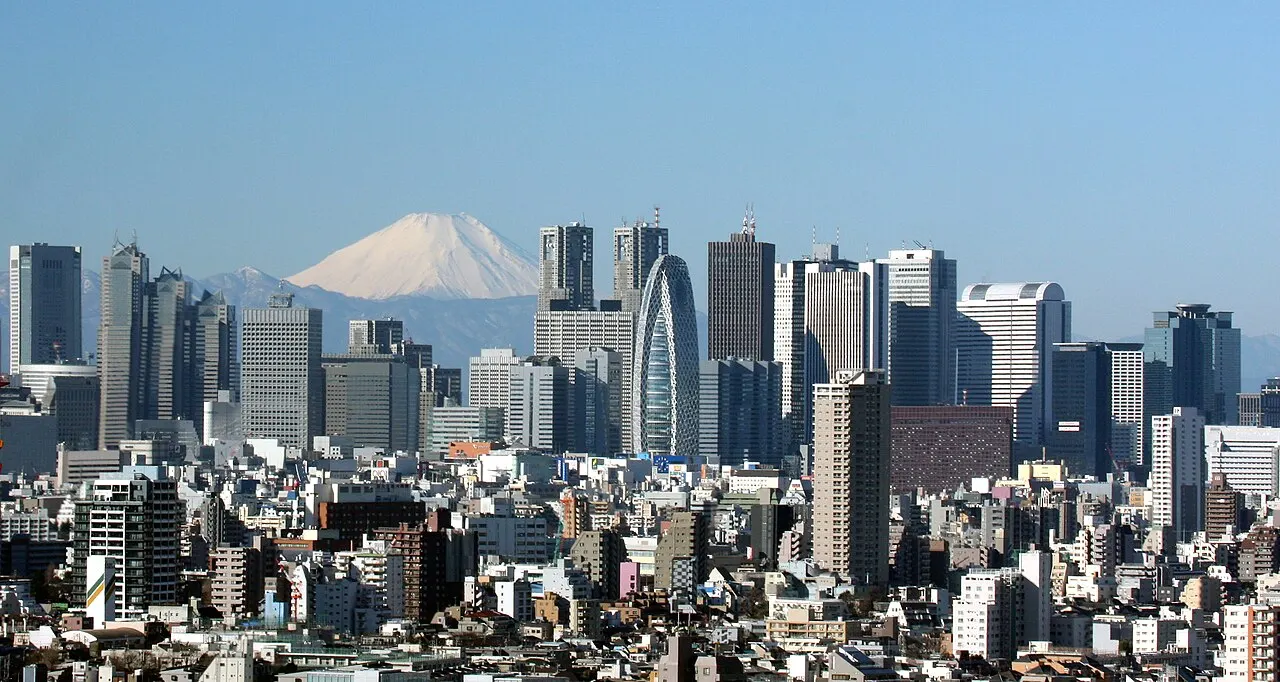
What is daily life like in Japan on the Working Holiday?
Daily life in Japan is safe, orderly and comfortable: punctual trains and convenience stores (konbini) for everyday needs. The big barrier is language: outside tourist areas, little English is spoken. The rules are clear: quiet on public transport, punctuality, and garbage separated by type, on the day and at the time each municipality sets. Cash is widely used, although PayPay and cards are growing. The power is 100 V: appliances that aren't dual-voltage need a transformer.
- Is Japan safe?
- Yes, and you can walk around at night with peace of mind.
- Is English spoken in Japan?
- Not much, outside tourist areas.
- What voltage is used in Japan?
- 100 V across the country, with 50 Hz in the east and 60 Hz in the west.
- What tax do you pay when eating in Japan?
- 10% dine-in; 8% for food and non-alcoholic drinks to take away.
- Which payment app is used in Japan?
- PayPay, in addition to cash and cards.
🏡 What is day to day like in Japan on the Working Holiday?
Day to day in Japan is safe, orderly and comfortable: the trains are on time, there's a convenience store on every corner and everything works. The big barrier is language, and culture shock exists: people are more indirect and formal.
🧭 Which house rule applies in Japan in each place?
Where it comes from: the sections of this guide.
🛡️ Is it safe to live in Japan?
Yes: Japan is safe and orderly to live in, and you can walk around at night with peace of mind. Lost items usually turn up.
🈳 Can you live in Japan without speaking Japanese?
You can, but language is Japan's big barrier: outside tourist areas little English is spoken, and almost all signs and procedures are in Japanese. Learning hiragana and katakana, the two syllabaries, and a few basic phrases makes a difference: it lets you read menus, station signs and labels.
🤫 What house rules do you need to respect in Japan?
In Japan there are four house rules: silence on public transport, punctuality, separated garbage, and not eating while walking in many places. The rules are clear, and everyone is expected to follow them.
| Rule | What it's like |
|---|---|
| Silence on public transport | Phone on silent and no calls |
| Punctuality | At work and at any appointment |
| Garbage separated | By type, each type on its own day |
| No eating while walking | Frowned upon in many places |
| Manners | More indirect and formal than in Latin America |
🚮 How is garbage separated in Japan?
In Japan garbage is separated by type, and each type is put out on the day and at the time your municipality sets. The categories, days and times change from city to city: ask for the calendar and the separation guide at city hall when you register your address.
🏪 What can you do at a convenience store in Japan (konbini)?
At a convenience store in Japan you can withdraw cash with foreign cards, print documents, send parcels and buy the day's food. Where to pay the national health insurance and pension bills is set out by the municipal office and Japan Pension Service. The chains are 7-Eleven, FamilyMart and Lawson.
| What | What it's for |
|---|---|
| ATM | Accepts foreign cards |
| Printer | Print documents |
| Parcels | Send packages |
| Food | Meals and coffee |
💴 How do you pay in Japan: cash, card or PayPay?
Cash is used a lot in Japan, although PayPay and cards are gaining ground. The transit card also pays at convenience stores, vending machines and many shops.
🍜 What tax do you pay when eating in Japan?
In Japan, eating in at a restaurant is charged the standard consumption tax of 10%, and food and non-alcoholic drinks to take away are charged the reduced rate of 8%, according to the National Tax Agency of Japan. Food prices vary by city and by restaurant: check them on the menu or in the window before ordering.
Why do they ask in Japan whether it's to eat in or to take away? Because the consumption tax changes: eating in pays 10%, and food and non-alcoholic drinks to take away pay 8%. Alcoholic drinks always pay 10%.
🍻 What are going-out customs like in Japan?
In Japan social life revolves around izakayas, karaoke, public baths and the festivals of each season. The expense people most underestimate is going out often to bars downtown.
🍶 What is the nomikai and do you have to go?
The nomikai is an outing for drinks with coworkers, where hierarchy loosens and relationships are built. It isn't mandatory, but going now and then changes the experience of a job.
🔌 What voltage is used in Japan?
In Japan the power is 100 V across the country, with 50 Hz in the east and 60 Hz in the west, which includes Nagoya, Kyoto and Osaka. Dual-voltage appliances work anywhere in Japan; the others need a transformer. Adapters and transformers are sold at electronics stores such as Yodobashi Camera or Bic Camera.
📱 What apps do you need to live in Japan?
To live in Japan you need five types of apps: messaging, payments, trains, translator and job search.
| App | What it's for |
|---|---|
| LINE | Messaging: used for work and friendships |
| PayPay | Phone payments |
| Google Maps and Jorudan | Trains and routes |
| Suica or Pasmo on your phone | Transport |
| Google Translate and Papago | Translate signs and conversations |
| GaijinPot, TownWork and Indeed | Find work |
🔏 Is a personal seal (hanko) needed in Japan?
Japan's personal seal serves as a signature. Handwritten signatures are increasingly accepted, but banks and some contracts still ask for the seal.
🌏 What is culture shock like in Japan?
Culture shock in Japan comes from the way people treat you, which is more indirect and formal, and from the language. Community groups, language exchanges and a shared house with Japanese people help.
📂 What do you need ready for day to day in Japan?
For day to day in Japan, six things need to be ready: both syllabaries, a transformer if needed, LINE, PayPay, the garbage calendar and cash.
✅ Day-to-day checklist for Japan
🪜 How do you adapt to daily life in Japan, step by step?
Daily life in Japan comes in six steps: learn the syllabaries, install LINE and PayPay, carry cash, get the garbage calendar, learn the train rules and go to a work outing.
- 1Learn hiragana and katakanaAlmost all signs and procedures are in Japanese: reading both syllabaries changes the experience.
- 2Install LINE and PayPayLINE is Japan's messaging app, and PayPay is a payment app.
- 3Carry cashIt's used a lot, especially in small shops.
- 4Get the garbage calendarEach type of waste has its own day and time, and it changes by municipality.
- 5Learn the train rulesSilence and phones on silent.
- 6Go out with your coworkersThat's where work relationships are built.
⚠️ What house-rule mistakes should you avoid in Japan?
The most common house-rule mistakes in Japan are six: talking on the phone on the train, putting out garbage wrong, going out without cash, being late, bringing appliances that don't work on 100 V, and not learning the syllabaries.
- Talking on the phone on the train: travel in silence.
- Putting out garbage wrong: each type has its own day and time.
- Going out without cash: many small shops don't accept cards.
- Being late: punctuality is strict.
- Bringing appliances that don't work on 100 V: if they aren't dual-voltage, they need a transformer.
- Not learning hiragana and katakana: almost all signs are in Japanese.
➡️ What to do after getting to know daily life in Japan?
With daily life in Japan clear, the next step is learning basic Japanese, finding the community and seeing how you can stay longer.
🛂 What is the Working Holiday in Japan like by citizenship?
The Working Holiday in Japan has a different quota, opening date and procedure depending on your citizenship: choose yours to see the requirements.
🧭 What guides are there for doing the Working Holiday in Japan?
Viaja con Gus's Working Holiday guides for Japan cover everything from the form to day-to-day life: where to live, the bank account, SIM cards, transport and taxes when you leave.
📶 How do you get internet, use a VPN and send money from Japan on the Working Holiday?
When you arrive you'll need data to let people know you've landed, find your accommodation and start looking for work. And when you work in another country, sooner or later you'll want to send money home. This is what I use myself.
 Maya eSIMESIM
You land and your phone already has data, without changing SIM or looking for wifi. With the code VIAJACONGUS you get 10% off.
See Maya Mobile plans → SurfsharkVPN
Connecting to hostel and airport wifi isn't safe. A VPN protects your data, your passwords and your banking apps.
Learn about Surfshark → RemitlySENDING MONEY
Send money home in minutes, with low fees. With the code AMB6M8 you get USD 20 off your first transfer.
See discounts →Affiliate links: we earn a commission. Ad - paid Remitly Ambassador. The Remitly code applies to transfers from the countries where it operates: check in the app whether it applies to yours.
What is an eSIM and does it work for the Working Holiday in Japan? It's a virtual SIM installed from an app or a QR code, with no physical card. It gives you data as soon as you land, before you get a local number; afterwards many switch to a prepaid plan in the country to get their own number.
Is my phone compatible with eSIM for travel to Japan? Most iPhones from the XS onward and many recent Androids are. Check it in your phone's settings before you travel and confirm it's unlocked.
Do you need a local number on the Working Holiday in Japan? Yes, in the long run: banks, employers and procedures ask for it. The eSIM covers the first few days; after that, get a SIM or a plan from the country.
What is a VPN for on the Working Holiday in Japan? To protect your data and banking apps when you use wifi at hostels, airports or cafés, where anyone on the same network could see your traffic.
What's the cheapest way to send money home from Japan on the Working Holiday? A remittance service that shows the fee and the final amount before you send, usually cheaper than an international bank transfer.
❓ Frequently asked questions about daily life in Japan on the Working Holiday
What is living in Japan like?
Living in Japan is safe, orderly and comfortable; the big barrier is the language.
How day to day works →Can you live in Japan without speaking Japanese?
You can, but outside tourist areas little English is spoken and procedures are in Japanese.
Language →What's worth learning in Japanese before you travel?
Before traveling to Japan it's worth learning hiragana and katakana, the two syllabaries, and basic phrases.
Language →Can you talk on the phone on the train in Japan?
On Japanese trains the custom is to travel in silence, with your phone on silent.
House rules →Can you eat while walking in Japan?
Eating while walking is frowned upon in many places in Japan.
House rules →How is garbage separated in Japan?
In Japan garbage is separated by type, and each type is put out on the day and at the time set by the municipality.
Garbage →What can you pay for at a konbini?
Where to pay the national health insurance and pension bills is set out by the municipal office and the Japan Pension Service.
The konbini →Can you withdraw cash with a foreign card in Japan?
Yes, you can withdraw cash with a foreign card in Japan: at the ATMs in convenience stores.
The konbini →In Japan, do you pay with cash or card?
Cash is used a lot in Japan; PayPay and cards are growing.
How to pay →What tax do you pay when eating in Japan?
In Japan, eating in at a restaurant is charged 10% consumption tax; food and non-alcoholic drinks to take away are charged 8%.
Tax on eating out →What voltage is used in Japan?
In Japan the voltage is 100 V across the country, with 50 Hz in the east and 60 Hz in the west.
Voltage →Do you need a transformer in Japan?
Yes, you need a transformer in Japan for appliances that aren't dual-voltage, because the power is 100 V.
Voltage →Which apps should you use in Japan?
In Japan it's worth using LINE, PayPay, Google Maps, Jorudan and a translator.
Apps →What is a hanko?
A hanko is the personal seal that serves as a signature in Japan; banks and some contracts still ask for it.
The personal seal →What is culture shock like in Japan?
Culture shock in Japan comes from the way people treat you, which is more indirect and formal, and from the language.
Culture shock →
💬 Comments and questions: Daily life in Japan on the Working Holiday
There are no comments yet. Be the first.
Still have a question? Leave it below and I'll answer you personally. And if you've already been through this, tell us how it went: your experience helps the next traveler.
🛠️ Working Holiday tools
📚 More Working Holiday guides
📑 Sources on daily life in Japan on the Working Holiday
See sources ▾
- JNTO (Japan National Tourism Organization): Plugs & Electricity
- National Tax Agency of Japan: Consumption Tax rate
- Seven Bank: ATMs for cards issued overseas
- Viaja con Gus: guides to Japan's 14 cities
Last verified: November 2026. Rules, quotas and amounts change often: always confirm with the official source before starting any procedure. How we verify →

I've worked in tourism in Argentina, Brazil, Paraguay, Croatia and the United States. I check every fact in this guide against the official source and update it when it changes.
