
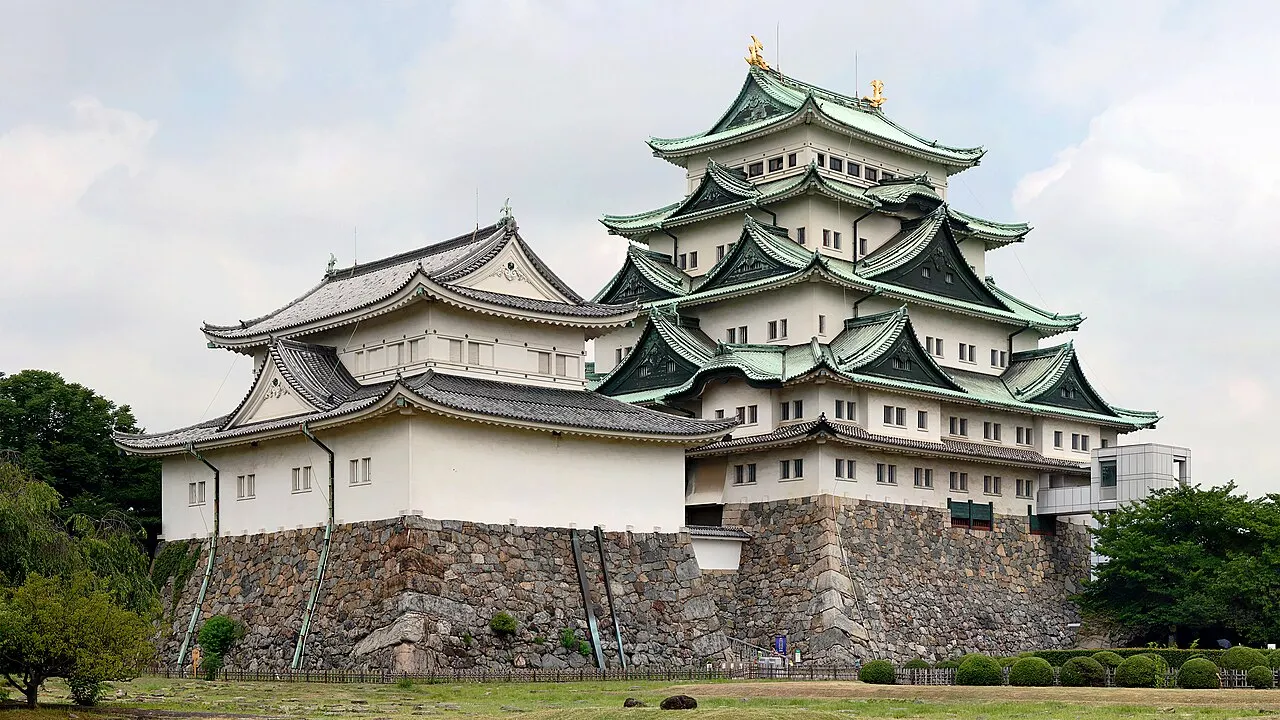
What is it like to live in Nagoya on a Working Holiday?
Nagoya is the big industrial city of Aichi Prefecture, home to Toyota. There is a lot of factory, logistics and warehouse work that you can get without Japanese through staffing agencies (haken), and there is a Latin community. The Aichi minimum wage is ¥1,195 per hour since 1/10/2026, and night shifts add a minimum surcharge of 25%. There is no official figure for the price of an agency room or accommodation: ask for it in writing before you sign.
- How much does factory work pay in Nagoya?
- Each agency sets it, never less than the Aichi minimum (¥1,195 per hour); night shifts add a minimum surcharge of 25%.
- What is the minimum wage in Nagoya?
- ¥1,195 per hour since 1/10/2026, the rate for Aichi Prefecture.
- How many days do you have to register your address in Nagoya?
- 14 days from when you have a place to live.
- How hot is Nagoya?
- Average high of 33.2 °C in August and 9.3 °C in January.
🏭 What is it like to live in Nagoya on a Working Holiday?
Nagoya is the big industrial city of Aichi Prefecture, home to Toyota and its supplier chain. It is a large, wide and orderly city, more functional than pretty, with a lot of factory and logistics work and a Latin community.
How is the city of Nagoya organized? Nagoya is organized around Nagoya Station and the Sakae shopping district, linked by a simple subway system. Around them stretches an industrial plain, with residential neighborhoods and the factories of the Aichi region.
What is surprising about living in Nagoya? What surprises in Nagoya is its own food, 'Nagoya meshi' (miso katsu, tebasaki, hitsumabushi), and how little touristy it is.
🎯 Who should live in Nagoya on a Working Holiday?
Nagoya suits people coming to work in a factory to save money, people who do not speak Japanese, and Latin Americans looking for community. It does not suit anyone looking for a postcard city.
| Nagoya suits you if… | Nagoya does not suit you if… |
|---|---|
| You are coming to work in a factory or warehouse and save money | You want a touristy, pretty city |
| You do not speak Japanese | You cannot handle 33.2 °C summers with humidity |
| You are looking for a Latin community | You want everything within walking distance: the city is wide |
| You want a big city with a lot of industrial work | You are looking for a ski or beach season |
🌡️ What is Nagoya's climate like, month by month?
Nagoya has a hot summer, with an average high of 33.2 °C and heavy humidity in August, and dry, sunny, cool winters, with an average high of 9.3 °C in January and occasional snowfall that does not build up. For those coming from the southern hemisphere, the seasons are reversed.
| Month | Average high | Average low | Rain | Humidity |
|---|---|---|---|---|
| January | 9.3 °C | 1.1 °C | 50.8 mm | 64% |
| February | 10.5 °C | 1.4 °C | 64.7 mm | 60% |
| March | 14.5 °C | 4.6 °C | 116.2 mm | 58% |
| April | 20.1 °C | 9.7 °C | 127.5 mm | 59% |
| May | 24.6 °C | 14.9 °C | 150.3 mm | 64% |
| June | 27.6 °C | 19.4 °C | 186.5 mm | 71% |
| July | 31.4 °C | 23.5 °C | 211.4 mm | 73% |
| August | 33.2 °C | 24.7 °C | 139.5 mm | 69% |
| September | 29.1 °C | 21 °C | 231.6 mm | 70% |
| October | 23.3 °C | 14.8 °C | 164.7 mm | 68% |
| November | 17.3 °C | 8.6 °C | 79.1 mm | 66% |
| December | 11.7 °C | 3.4 °C | 56.6 mm | 66% |
🧭 What is the weather in Nagoya in the month you arrive?
Source: the Japan Meteorological Agency's climate normals for Nagoya station.
🗓️ What is the best month to arrive in Nagoya on a Working Holiday?
The most comfortable months to arrive in Nagoya are April, May, October and November, with average highs of 20.1 °C, 24.6 °C, 23.3 °C and 17.3 °C. July and August reach average highs of 31.4 °C and 33.2 °C, and September is the rainiest month, with 231.6 mm. January is the driest (50.8 mm).
- Spring (March to May): from 14.5 to 24.6 °C high.
- Summer (June to September): rain in June and 33.2 °C in August.
- Autumn (October and November): from 17.3 to 23.3 °C high.
- Winter (December to February): dry and sunny, with lows of 1.1 to 3.4 °C.
💼 What kind of work can you do in Nagoya on a Working Holiday?
In Nagoya, on a Working Holiday, most work is in auto parts and electronics factories, in logistics and warehouses, and also in restaurants, shops and language teaching. What sets Nagoya apart from other cities is that factory work can be found without Japanese.
| Sector | Where | Japanese |
|---|---|---|
| Factory | Auto parts and electronics, in Nagoya and the Aichi region, through an agency | None |
| Logistics and warehouse | Minato, Nakagawa and the port area | None |
| Restaurants | Sakae and Nagoya Station | Basic, for serving customers; none in the kitchen |
| Shops | Sakae and Nagoya Station | Basic conversation |
| Language teaching | Language schools | Basic or English |
🧭 Which job suits you while living in Nagoya?
Source: the Viaja con Gus Nagoya guide.
💴 What is the minimum wage in Nagoya and how much is paid per hour?
Nagoya's minimum wage is the Aichi Prefecture rate: ¥1,195 per hour since 1/10/2026. No factory job can pay less. The hourly rate is set by each agency, and the night shift (from 22:00 to 05:00) adds a minimum surcharge of 25%, sometimes with overtime.
| Work | Hourly pay |
|---|---|
| Aichi minimum wage | ¥1.195 |
| Night shifts | At least 25% more (22:00 to 05:00) |
| Overtime | On top, depending on the factory |
🏭 How do you get factory work in Nagoya without speaking Japanese?
Factory work in Nagoya is found through staffing agencies (haken), which hire foreigners without Japanese and often have staff who speak Spanish or Portuguese. Before signing, ask in writing for the hourly pay and the net pay.
What should you watch out for with job agencies (haken) in Nagoya? With haken agencies in Nagoya, check the net pay after deductions for accommodation and transport, which can sometimes cut it a lot. It is worth asking for the conditions in writing and asking in community groups which agencies have a good reputation.
🔎 Where to look for work in Nagoya on a Working Holiday?
In Nagoya, factory work is found through haken agencies and by word of mouth in the community; restaurant and shop work on Townwork, Baitoru, Indeed and Hello Work.
- Haken agencies: for factory, logistics and warehouse work, many with bilingual staff.
- Townwork, Baitoru and Indeed: hourly job portals, in Japanese.
- Hello Work: the public employment agency, free of charge.
What do you need in order to get hired in Nagoya? To be paid on the books in Nagoya you need a bank account (Japan Post Bank is the easiest for someone who has just arrived) and a My Number.
🗣️ Which Japanese phrases are useful for finding work and a room in Nagoya?
To look for work and a room in Nagoya, five phrases in Japanese are enough: saying you are looking for factory work, asking how much the net pay is, whether there is accommodation, whether you can see the room, and how much the rent is.
| In English | In Japanese | How it sounds | Copy |
|---|---|---|---|
| I am looking for factory work | 工場の仕事を探しています | Kōjō no shigoto o sagashite imasu | |
| How much is the net pay? | 手取りはいくらですか | Tedori wa ikura desu ka | |
| Is there company accommodation? | 寮はありますか | Ryō wa arimasu ka | |
| Can I see the room? | 部屋を見てもいいですか | Heya o mite mo ii desu ka | |
| How much is the rent per month? | 家賃は月いくらですか | Yachin wa tsuki ikura desu ka |
📍 Which neighborhood in Nagoya suits living on a Working Holiday?
In Nagoya, the most practical neighborhoods for living on a Working Holiday are Sakae, in the center; Minato and Nakagawa, near the port and the factories; Kanayama, the best connected; and Ozone, in the north. The room price is checked at each share house.
| Neighborhood | How it is | Who it suits |
|---|---|---|
| Sakae (center) | The commercial and nightlife heart, with restaurant and shop work close by. Central. | For those who want to live downtown without depending on the subway |
| Minato / Nakagawa (southwest industrial) | Port and factory area, with a lot of logistics and warehouse work. | For those who work in industry |
| Kanayama | Rail and subway hub between Nagoya Station and Sakae, very well connected. | For those who need to get around a lot |
| Ozone / Higashi-ku (north) | Quiet residential neighborhood, well connected by subway and JR. | For those who want to live quietly |
🏠 How do you rent a room in Nagoya on a Working Holiday?
In Nagoya, a private room in a share house comes furnished with bills included; the price is checked at each share house. Many factory agencies offer accommodation deducted from your pay: ask for the amount in writing.
What are the danchi in Nagoya and Toyota? Danchi are public housing complexes, like those in Toyota and the outskirts of Nagoya, which are far from the center.
🔑 Can you rent your own apartment in Nagoya as a newcomer?
Renting a traditional apartment in Nagoya as a newcomer is difficult: when you move in you pay several items apart from the rent, and they ask for a guarantor. With a stable job it becomes easier.
| Item | Amount | Refunded |
|---|---|---|
| Deposit (敷金, shikikin) | Depends on the contract | Yes |
| Gratitude money (礼金, reikin) | Depends on the contract | No |
| Real estate agency fee | Separate | No |
| Guarantor or guarantor company | Separate | No |
| Insurance | Separate | No |
🚉 How to get around Nagoya and how much transport costs
Nagoya has a subway, JR and private lines (Meitetsu and Kintetsu), and buses. The subway charges by distance: check the current fare on the operator's website. The city is wide and flat, and many people combine the subway with cycling. At the factories on the outskirts, the company sometimes provides staff transport. You do not need a car in the city.
🍜 What to eat in Nagoya and where to shop?
Nagoya has its own food, 'Nagoya meshi': miso katsu, tebasaki, kishimen and hitsumabushi. Discount supermarkets are plentiful; prices are checked at each store.
🛬 How much money do you need to set up in Nagoya for the first month?
There is no official figure for the cost of setting up in Nagoya: the first month depends on the room and on whether you go through an agency that provides accommodation. The funds the visa requires are set by the Embassy of Japan depending on your citizenship: check them there.
⚖️ How does Nagoya compare with Tokyo?
The Aichi minimum wage, ¥1,195 per hour, is lower than Tokyo's, ¥1,280, both since 1/10/2026. Rents and food have no comparable official figure: check them in each city.
🪪 What paperwork do you need to do when you arrive in Nagoya on a Working Holiday?
When you arrive in Nagoya you need to register your address at your neighborhood municipal office within 14 days of having somewhere to live, sign up for national health insurance and open a bank account.
- 1Address registrationAt your neighborhood municipal office, with your residence card, or with your passport if it says 'Residence card to be issued later' (Immigration Services Agency).
- 2National health insuranceAt the municipal office.
- 3Bank accountJapan Post Bank is the easiest for someone who has just arrived.
- 4SIM card or phone lineBanks and employers ask for it.
🛡️ How much does travel insurance cost for living in Nagoya on a Working Holiday?
Travel insurance for living in Nagoya on a Working Holiday is priced according to your country of residence and the length of the trip, with 50% OFF on GO! + 20% extra OFF from Viaja con Gus.
🌎 Is there a Latin community in Nagoya?
Yes: in Nagoya and the Aichi region there is a Latin community, including Japanese descendants (nikkei) from Brazil and Peru who work in industry. In some neighborhoods you can hear Portuguese and Spanish on the street.
- Home food: Latin grocery stores, bakeries and restaurants.
- Get-togethers: masses, fairs and football tournaments in Spanish and Portuguese.
🏯 What is social life like in Nagoya and what is free?
Nagoya's social life revolves around bars, izakayas and karaoke in Sakae, and get-togethers with the Latin community, with barbecues and football. For free there are parks, Atsuta Shrine, festivals and the grounds around Nagoya Castle.
🧭 What cities are near Nagoya for finding work?
From Nagoya, in the same Chūbu region there is Kanazawa; in Kansai there are Kyoto, Osaka and Kobe, and in Kantō, Yokohama and Tokyo.
📂 What do you need ready before traveling to Nagoya on a Working Holiday?
Before traveling to Nagoya on a Working Holiday you need six things: travel insurance, savings for the first month, a hostel for the first nights, share houses you have already looked at, questions for the agency and a transport card.
✅ Checklist before traveling to Nagoya on a Working Holiday
🪜 How do you set up in Nagoya on a Working Holiday, step by step?
Setting up in Nagoya on a Working Holiday takes five steps: a hostel for the first nights, a share house, address registration, a bank account and the agency's conditions in writing.
- 1Book your first nights in a hostelNear Nagoya Station, while you look for a room and work.
- 2Look for a share houseA furnished room, with no guarantor or reikin.
- 3Register your address at your neighborhood municipal officeWithin 14 days of having somewhere to live. This is also when you sign up for national health insurance.
- 4Open a bank accountJapan Post Bank is the easiest bank for someone who has just arrived.
- 5Ask for the agency's conditions in writingNet pay after deductions for accommodation and transport, before you sign.
⚠️ What mistakes should you avoid when setting up in Nagoya?
The four most common mistakes when setting up in Nagoya are signing with an agency without knowing the net pay, accepting agency accommodation without checking the deductions, living far from work, and paying a deposit without seeing the room.
- Signing with an agency without knowing the net pay: deductions can cut it down a lot.
- Accepting agency accommodation without checking the terms: it is deducted from your pay.
- Living far from work: the city is wide and the factories are on the outskirts.
- Paying a deposit without seeing the room: is never done.
📖 What do haken, tedori and danchi mean when living in Nagoya?
To live in Nagoya it helps to know fourteen Japanese terms: those for factory work and agencies, and those for housing and rent.
- Staffing agency (派遣)
- Haken. The company that hires you and sends you to work at a factory or warehouse.
- Factory (工場)
- Kōjō. In Nagoya and Aichi, mainly auto parts and electronics.
- Company accommodation (寮)
- Ryō. The room offered by the agency, deducted from your pay.
- Net pay (手取り)
- Tedori. What you receive after deductions.
- Night shift (夜勤)
- Yakin. Adds a minimum surcharge of 25%.
- Overtime (残業)
- Zangyō. Sometimes boosts factory pay.
- Housing complex (団地)
- Danchi. Public housing complexes, such as those by Toyota and in the outskirts.
- Descendants of Japanese emigrants (日系)
- Nikkei. In Aichi there are, for example, people from Brazil and Peru.
- Nagoya food (名古屋めし)
- Nagoya meshi. Miso katsu, tebasaki, kishimen and hitsumabushi.
- Share house (シェアハウス)
- Share house (シェアハウス). Furnished room with shared kitchen and bathroom, no guarantor.
- Traditional rental (賃貸)
- Chintai. The apartment rented through a real estate agent.
- Deposit (敷金)
- Shikikin. Security deposit, refundable.
- Gratitude money (礼金)
- Reikin. Payment to the landlord that is not refunded.
- Guarantor (保証人)
- Hoshōnin. The person who is responsible for the rent; it can be replaced by a guarantor company.
➡️ What to do after choosing Nagoya for your Working Holiday?
With Nagoya chosen, the next steps are to book where to live, prepare your job search and set a budget.
🛂 How does the Japan Working Holiday work according to your citizenship?
The Working Holiday in Japan has different quotas and procedures depending on your citizenship, according to the Ministry of Foreign Affairs of Japan: choose yours to see the requirements.
🧭 What guides are there for doing the Working Holiday in Japan?
Viaja con Gus's Working Holiday guides for Japan cover the whole process: the form, the first procedures, where to live, work, money and daily life.
📶 How do you get internet, use a VPN and send money from Japan on the Working Holiday?
When you arrive you will need data to let people know you arrived, find accommodation and start looking for work. And when you work in another country, sooner or later you will want to send money home. This is what I use myself.
 Maya eSIMESIM
You land and your phone already has data, without changing SIM or looking for wifi. With the code VIAJACONGUS you get a 10% discount.
See Maya Mobile plans → SurfsharkVPN
Connecting to hostel and airport wifi is not safe. With a VPN you protect your data, your passwords and your banking apps.
Learn about Surfshark → RemitlyTRANSFERS
Send money home in minutes and with low fees. With the code AMB6M8 you get USD 20 off your first transfer.
See discounts →Affiliate links: we earn a commission. Ad - paid Remitly Ambassador. The Remitly code applies to transfers from the countries where it operates: confirm in the app whether it applies in yours.
What is an eSIM and is it useful for the Working Holiday in Japan? It is a virtual SIM that is installed from an app or a QR code, with no physical card. It gives you data as soon as you land, before you get a local number; afterwards many switch to a prepaid plan in the country to have their own number.
Is my phone compatible with an eSIM for traveling to Japan? Most iPhones from the XS onward and many recent Android phones are. Check it in your phone's settings before traveling and confirm that it is unlocked.
Do you need a local number on the Working Holiday in Japan? Yes, in the long run: banks, employers and paperwork ask for it. An eSIM covers the first days; after that get a SIM or a plan from the country.
What is a VPN for on the Working Holiday in Japan? To protect your data and your banking apps when you use wifi in hostels, airports or cafés, where anyone on the same network could see your traffic.
What is the cheapest way to send money home from Japan on the Working Holiday? A transfer service that shows the fee and the final amount before sending, generally cheaper than an international bank transfer.
❓ Frequently asked questions about living in Nagoya on a Working Holiday
Is it easy to find work in Nagoya on a Working Holiday?
Yes, finding work in Nagoya on a Working Holiday is easy: factory, logistics and warehouse work is available even without Japanese, through haken agencies that serve the Latin community.
What kind of work →Can you work in a Nagoya factory without speaking Japanese?
Yes, you can work in a Nagoya factory without speaking Japanese: many haken agencies hire foreigners and have staff who speak Spanish or Portuguese.
Agency factory work →How much does factory work pay in Nagoya?
Factory work in Nagoya pays whatever each agency sets, never less than the Aichi minimum wage (¥1,195 per hour since 1/10/2026). Night shifts add a minimum surcharge of 25%, and there is sometimes overtime.
Minimum wage and pay →What is the minimum wage in Nagoya?
The minimum wage in Nagoya is ¥1,195 per hour since 1/10/2026, the rate for Aichi Prefecture.
Minimum wage and pay →What is a haken agency in Nagoya?
A haken agency in Nagoya is a staffing agency: it hires you and sends you to work at a factory or warehouse.
Agency factory work →What should you watch out for with job agencies in Nagoya?
With job agencies in Nagoya, watch the net pay after deductions for accommodation and transport, and ask for the conditions in writing.
Agency factory work →Where do you look for work in Nagoya?
In Nagoya, factory work is found through haken agencies and by word of mouth in the community; restaurant and shop work on Townwork, Baitoru, Indeed and Hello Work.
Where to look for work →Do factory agencies in Nagoya provide accommodation?
Many factory agencies in Nagoya provide accommodation, deducted from your pay: ask for the amount in writing before you sign.
Rent →Is the minimum wage in Nagoya lower than in Tokyo?
Yes: the Nagoya (Aichi) minimum wage is ¥1,195 per hour and Tokyo's is ¥1,280, both since 1/10/2026.
Nagoya and Tokyo →Can you rent an apartment in Nagoya as a newcomer?
Renting an apartment in Nagoya as a newcomer is difficult: they ask for a guarantor, and when you move in you pay a deposit, reikin, agency fee and insurance on top of the rent.
Your own apartment →Is Nagoya a good city for Latin Americans?
Yes, Nagoya suits Latin Americans: it has a Latin community, home food and bilingual job agencies.
Latin community →Which neighborhood in Nagoya is best connected?
The best-connected neighborhood in Nagoya is Kanayama, a rail and subway hub between Nagoya Station and Sakae.
Neighborhoods →Do you need a car in Nagoya?
In the city of Nagoya you do not need a car; in remote industrial areas some people use one.
How to get around →Can you ride a bicycle in Nagoya?
Yes, you can ride a bicycle in Nagoya: the city is flat and many people combine cycling with the subway.
How to get around →What is Nagoya meshi?
Nagoya meshi is Nagoya's own food: miso katsu, tebasaki (chicken wings), kishimen and hitsumabushi (eel).
Food and shopping →How hot is Nagoya in summer?
In Nagoya, the average high in August is 33.2 °C, with 69% humidity, according to the Japan Meteorological Agency.
The weather, month by month →Is Nagoya cold in winter?
In Nagoya, in January the average high is 9.3 °C and the average low is 1.1 °C; winter is dry and sunny.
The weather, month by month →Does it snow in Nagoya?
Nagoya gets occasional snowfall, without snow building up.
The weather, month by month →What is Nagoya's rainiest month?
Nagoya's rainiest month is September, with 231.6 mm.
The weather, month by month →How much does travel insurance cost for living in Nagoya on a Working Holiday?
Travel insurance for living in Nagoya on a Working Holiday is priced according to your country and the length of stay, with 50% OFF on GO! + 20% extra OFF from Viaja con Gus.
Traveler assistance (travel insurance) →What paperwork do you need to do when you arrive in Nagoya?
When you arrive in Nagoya, register your address within 14 days of having somewhere to live, sign up for national health insurance and open a bank account.
Paperwork on arrival →What is there to do for free in Nagoya?
In Nagoya there is plenty to do for free: parks, Atsuta Shrine, festivals and the grounds around Nagoya Castle.
Social life and what is free →What cities are near Nagoya?
Near Nagoya, in the Kansai region, are Kyoto, Osaka and Kobe; in the same Chūbu region, Kanazawa.
Nearby cities →
💬 Comments and questions: Living in Nagoya on a Working Holiday
There are no comments yet. Be the first.
Do you have any doubts? Leave your question down here and I will answer you personally. And if you have already been through this, tell us how it went: your experience helps the next traveler.
🛠️ Working Holiday tools
📚 More Working Holiday guides
📑 Sources on living in Nagoya on a Working Holiday
See sources ▾
- Japan Meteorological Agency (JMA): Nagoya climate normals
- Ministry of Health, Labour and Welfare (MHLW): minimum wage by prefecture
- MHLW: 2026 minimum wages for all prefectures (PDF)
- Japan Labor Standards Act, art. 37 (e-Gov): night-shift surcharge
- Immigration Services Agency (ISA): address registration within 14 days
- Viaja con Gus: the guides to each city in Japan
Last verification: November 2026. Rules, quotas and amounts change often: always confirm with the official source before starting any procedure. How we verify →

I worked in tourism in Argentina, Brazil, Paraguay, Croatia and the United States. I verify every fact in this guide against the official source and update it when it changes.
